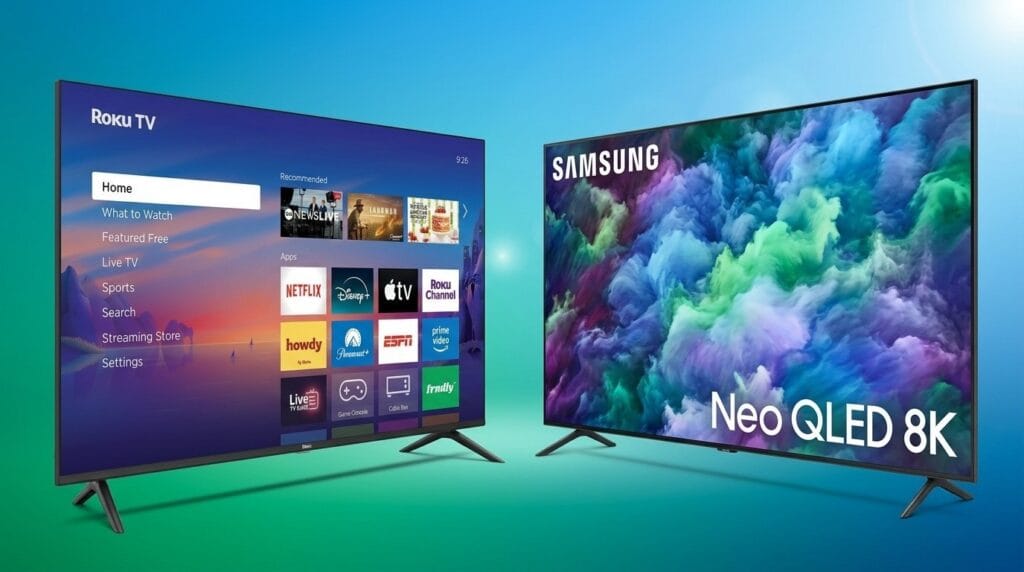
We test picture, sound, setup, and ecosystem to decide whether the inky blacks and sleek design of OLED or the big-screen bang of a projector gives you the better living‑room theater—and why that choice matters for streaming, space, and smart‑home integration.
We judge light and shadow—so you don’t have to. We cut to the core: choosing between the LG 65″ (oled)evo C4 and the Epson Home Cinema 3800 is a room-and-priority problem, and we map design, picture, sound, ecosystem, and ownership trade-offs, showing what matters in this comparison.
Cinematic OLED

Bright Projector

LG C4 OLED
- Best-in-class black levels and contrast thanks to self-lit pixels
- Excellent gaming feature set (HDMI 2.1, VRR, 120–144Hz support, 0.1ms response)
- Refined image processing (α9 Gen7) and strong ecosystem integration via webOS
- Peak brightness lags top LCD/QD‑OLEDs in very bright rooms
- OLED carries a low but non-zero risk of image retention with heavy static UI use
Epson 3800 Projector
- Very bright 3‑chip 3LCD engine with strong HDR handling and no rainbow artifacts
- Excellent color accuracy and large‑screen capability for true cinematic scale
- Flexible lens shift and precision lens deliver sharp edge‑to‑edge focus
- Requires a darkened room and a projection surface to reach its full potential
- Installation, alignment, and lamp/maintenance considerations add complexity
Feature Comparison
| Cinematic OLED LG 65-inch OLED evo C4 4K TV | VS | Bright Projector Epson Home Cinema 3800 4K PRO‑UHD Projector |
|---|---|---|
Self‑lit OLED (WOLED) | Display Type |
True 3‑chip 3LCD with 4K PRO‑UHD pixel‑shifting |
3840 x 2160 (native 4K) | Native Resolution |
1920 x 1080 native with 4K pixel‑shifting |
Dolby Vision, HDR10, HLG | HDR Support |
HDR10, HLG (full 10‑bit passthrough) |
Brightness Boost tech (good HDR punch, moderate peak nits) | Brightness |
3,000 lumens (color & white) |
Infinite contrast (true blacks via pixel shutoff) | Contrast Ratio |
Up to 100,000:1 (dynamic iris) |
100% Color Volume, α9 Gen7 processing | Color Technology |
3LCD 3‑chip — 100% of RGB per frame, no rainbow effect |
Native 120Hz, supports up to 144Hz modes (HDMI 2.1) | Refresh Rate |
4K HDR at up to 60Hz (HDMI 2.0, 18 Gbps) |
0.1 ms (near‑instant pixel response) | Response Time |
Typical projector pixel response (varies by mode) |
VRR, NVIDIA G‑Sync support, AMD FreeSync Premium, ALLM, Game Optimizer | Gaming Features |
Low‑latency modes for consoles/PCs at 60Hz, no HDMI 2.1 VRR support |
4 × HDMI 2.1 | HDMI Inputs |
2 × HDMI 2.0 (18 Gbps) |
webOS 24 with built‑in apps, voice assistants, and multi‑year updates | Smart Platform |
No native smart OS — relies on external sources (streamers/consoles) |
Built‑in speakers with Dolby Atmos passthrough (best paired with soundbar) | Audio |
Built‑in 2 × 10W speakers and aptX Bluetooth output |
Best for up to ~75–83 inch living‑room setups | Ideal Screen Size |
Designed for 100–150 inch projection for true cinematic scale |
Moderate to dim lighting — performs best in controlled/darker rooms | Suitable Room Lighting |
Best in dark or controlled lighting environments for optimal contrast |
No lamps or filters; software updates available; typical OLED longevity with potential image‑retention precautions | Maintenance & Life |
Lamp/laser life and occasional filter/optics maintenance required |
Low but present with heavy static content over long periods | Burn‑in Risk |
No burn‑in; light engine wear over time instead |
$$ | Price |
$$$ |
Standard TV manufacturer warranty | Warranty |
Projector manufacturer warranty (varies by region) |
$1,247.90 | Current price |
$1,579.00 |
| Buy for $1,247.90 | Buy for $1,579.00 |
OLED vs 4K Projector: Which Screens Your Setup Better?
Design & Setup — How each system fits into our living space
LG 65-inch OLED evo C4 — minimal, plug‑and‑play
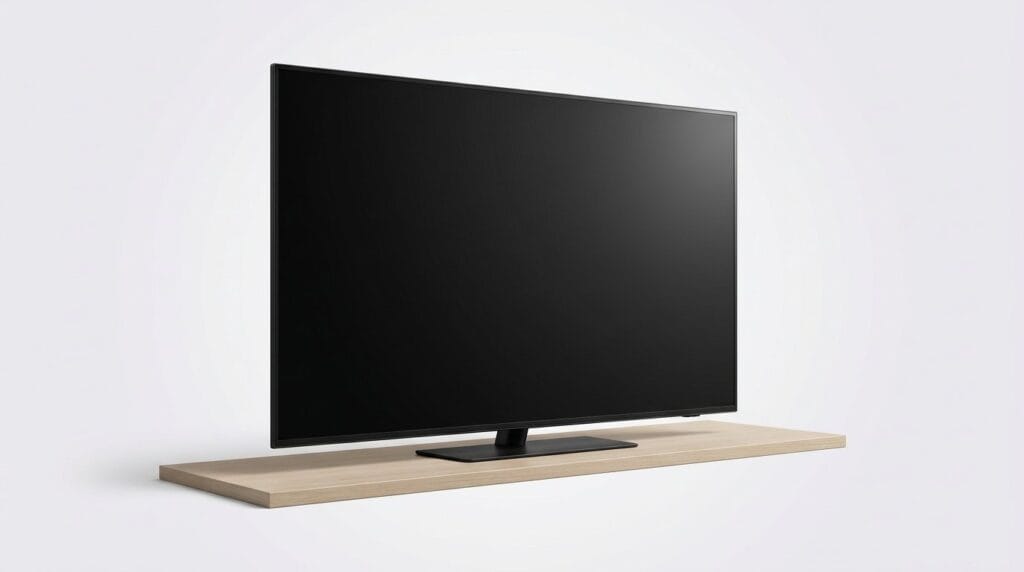
The C4 behaves like a modern piece of furniture: an ultra-thin panel, near‑invisible bezels, and a low visual profile that hangs flat on a wall or sits on a low console. Out of the box it’s essentially ready—wall‑mount brackets are standard, cable management is straightforward, and LG’s factory picture presets plus a quick auto‑calibration get you very close to accurate color without fuss. At ~65 inches and ~41 pounds, it’s light enough for a two‑person mount and doesn’t require special ceiling hardware or a permanent room reconfiguration.


Epson Home Cinema 3800 — installation first, screen second
The 3800 is a purpose‑built projector: it demands planning. You’ll need to consider throw distance and either a table position or a ceiling mount, and choose a screen that matches room size and ambient light. The projector’s generous 3,000 lumens and flexible lens shift give placement options, but to get deep blacks and vivid HDR you’ll want a dedicated screen (or a high‑gain ALR surface) and serious control over ambient light—blackout curtains, fixed shades, or a proper tubed screen. Expect alignment, zoom, and keystone tuning during setup, plus occasional lamp and filter maintenance over the years.


Why setup and space matter
We live in multifunctional rooms; ease of setup determines whether equipment becomes central or ends up in a closet. Quick checklist for deciding:
Picture & Performance — Blacks, brightness, HDR, motion, and gaming
We dig into what actually appears on screen. Here’s how the LG C4 olenders and Epson 3800 differ where it matters: contrast, HDR tone mapping, motion handling, and gaming responsiveness.
Black levels & perceived contrast
OLED’s self‑lit pixels give us near‑perfect blacks and unrivaled uniformity. The C4’s evo panel and α9 Gen7 processor mean scenes have true shadow detail and specular highlights that pop against absolute black—this creates cinematic depth you can’t fake with brightness alone.


The Epson 3800 can deliver deep, detailed images for a projector, especially with a high‑contrast screen, but it can’t reach OLED’s absolute black. Even with its claimed high contrast, blacks look like dark grays in non‑ideal rooms, which flattens perceived contrast on very large screens.
Brightness & HDR tone‑mapping
Epson’s 3,000 lumens per watt and 3‑chip 4K PRO‑UHD engine win in bright rooms and when you want massive screen sizes—the projector preserves HDR detail across large highlights better in well‑lit spaces because it simply outputs more light. However, projectors must tone‑map HDR to their dynamic range, so bright specular highlights can be compressed or clipped compared with OLED’s punchy, localized highlights.
Motion, input lag, and gaming
The C4’s near‑instant pixel response, native 120–144Hz modes, HDMI 2.1 inputs, VRR and 0.1ms response make it the clear pick for fast competitive gaming and next‑gen features (4K120). The Epson supports 4K60 over HDMI 2.0 and can be smooth for cinematic motion, but it won’t deliver 4K120 or the same low latency floor for elite gamers.
Upscaling, color, and source handling
LG’s α9 Gen7 uses AI upscaling and scene tuning to clean lower‑bitrate streaming HDR; color accuracy and uniformity are consistently excellent. Epson’s true 3‑chip engine avoids rainbow artifacts and gives rich, accurate color at large sizes, plus robust 12‑bit processing for smoother gradients.
Ecosystem, sound, and everyday UX — Smart features, controls, and audio
Smart platform & ecosystem
We appreciate how the C4 tries to be the one remote and one OS that runs the living room. webOS is polished, fast, and full-featured: universal search, a clear app catalog, Magic Remote pointer + scroll wheel, built‑in Alexa, and LG’s webOS Re:New promise of five years of updates. That matters when we want fewer boxes, consistent UI behavior, and regular feature updates instead of firmware tumbleweed.
Projector modularity
The Epson assumes you’ll bring your own smart box or AVR. That’s flexible — we can pick a streamer, console, or HTPC — but it adds cables, another remote, and more setup time. For media aficionados this is an advantage; for someone who wants “turn it on and watch,” it’s friction.


Audio, calibration, and controls
LG’s C4 ships with okay built‑in speakers and Dolby Atmos passthrough; more importantly, it supports eARC so we can plug a soundbar or AVR and get lossless object audio and simplified HDMI switching. The Magic Remote remains one of the best living‑room remotes for casual navigation and voice search. LG’s FILMMAKER mode and onboard AI picture presets make basic calibration trivial.
Epson includes small internal speakers and Bluetooth pairing for convenience, but for anything cinematic we pair it with a soundbar or AVR. Its menu gives good color controls and lens adjustments, but you’ll likely need a separate calibration tool or pro tune to get the most from a large projected image.
Quick takeaways
Value, ownership costs, and who should pick which
Up‑front and ongoing costs
We put sticker prices in context: the LG C4 (about $1,200) bundles a polished, all‑in‑one TV experience. The Epson 3800 sits higher (around $1,600) but buys a much larger image potential. After purchase, expect these typical add‑ons:
Maintenance, warranties, and risks
Projectors cost more to maintain. The Epson uses a lamp with a useful life typically in the 3,000–5,000‑hour range depending on mode; brightness and color slowly decline and lamps must be replaced. Dust and alignment can require occasional cleaning or pro service. The LG C4 has no consumables; its primary ownership risk is OLED image retention/burn‑in in extreme, static‑UI scenarios. That risk is low for mixed use, but most manufacturer warranties don’t cover burn‑in, while projector lamps are clearly a consumable expense.
Typical resale and longevity
We find TVs easier to resell and trade in; buyers prefer a working screen with no lamp hours to worry about. Projectors can hold value if lamp hours are low, but replacement‑lamp cost factors into resale price.
Who should pick which
Frequently asked questions
Which is better, OLED TV or Projector?
There is no universal winner: OLED TV fits some buyers and Projector fits others. We compare specs, daily use, and trade-offs in this guide so you can match the pick to your budget and workflow, not a single spec sheet.
What is the main difference between OLED TV and Projector?
OLED TV and Projector target overlapping but not identical use cases. The sections above break down design, performance, ecosystem, and value so you can see where each product pulls ahead and where it compromises.
Should I buy OLED TV or Projector first?
Buy the product that removes your biggest daily friction first. If OLED TV solves your primary pain point, start there; if Projector is the bottleneck in how you actually work or play, prioritize it. Many households add the other later.
Is OLED TV worth it over Projector?
OLED TV is worth the premium over Projector when you will use the features that justify the price—extra performance, build quality, or ecosystem lock-in. If those extras go unused, Projector usually delivers better value.
Can OLED TV replace Projector?
For some users, yes; for others, no. OLED TV can cover most tasks Projector handles, but gaps in compatibility, accessories, or specialized workflows may still matter. Use our comparison table and verdict to see which gaps apply to you.
Who should choose OLED TV vs Projector?
Choose OLED TV if its strengths match how you will use it every day; choose Projector if you need its specific advantages or a lower entry price. When in doubt, favor the option that fixes your most frequent frustration—not the highest spec on paper.
Final verdict — Which we’d choose and why
We’d pick the LG 65″ OLED evo C4 as our default home-theater choice: it delivers turnkey, premium picture quality with true blacks, excellent HDR tone mapping, and seamless smart-TV integration that matters for day-to-day living rooms and mixed use. The design and AI-powered UI reduce fiddly setup and let audio, streaming, and calibration simply work — in 2024 that convenience is a substantive part of the value proposition.
Choose the Epson Home Cinema 3800 only when you need a much larger image or brighter output in non-dark rooms and accept extra setup, an AV stack, and external speakers. For most buyers who want simplicity plus top-tier HDR performance, the LG OLED is the clear winner. Ready to upgrade? Check local deals and compare warranties.

Princess Rioboca is the Lead Editorial Writer at Option Cutter, bringing over seven years of hands-on experience in consumer technology journalism. Specializing in home networking and smart home architecture, she transforms complex technical data into practical, real-world upgrades. Princess personally tests and audits every product she reviews—evaluating real-world Wi‑Fi throughput, cable management durability, and streaming ecosystem stability—to filter out spec-sheet noise. Her rigorous, field-tested insights are designed to give readers transparent, unbiased buying advice on what to purchase, what to skip, and exactly why.