We pit LG’s color‑true, HDMI‑rich C4 against Samsung’s blisteringly bright, color‑popping S95C — which one actually improves our living room setup, streamlines our devices, and justifies the premium?
Big TVs, serious pixels — we’re obsessed. We compare LG’s 2024 C4 OLED and Samsung’s 2023 S95C QD-OLED, both 77 inch flagships that chase picture quality but diverge on color, brightness, ecosystem, and what matters for living rooms and gaming.
Gaming Focused

Color Champion

LG C4 OLED
- Why You’ll Love It
- Excellent OLED contrast and color fidelity with α9 Gen7 processing
- Very strong gaming credentials (144 Hz, 0.1 ms response, VRR, four HDMI 2.1)
- Refined webOS experience with five-year Re:New updates and Dolby Vision support
- Slim, minimalist design that integrates well into living rooms
- Not as bright as Samsung’s QD-OLED in HDR scenes
- Built-in speakers are competent but less immersive than higher-channel systems
Samsung S95C OLED
- Why You’ll Love It
- Best-in-class QD‑OLED color volume and unusually high OLED brightness
- Immersive audio features (Object Tracking Sound+, Dolby Atmos) and Q‑Symphony
- Refined industrial design with Infinity One and Slim One Connect option
- Strong upscaling and scene-by-scene processing from Neural Quantum processor
- One Connect box has some practical limits (reported bandwidth/ethernet caveats)
- Tizen/One UI updates can be uneven; software experience can change with OS updates
Feature Comparison
| Gaming Focused LG C4 OLED | VS | Color Champion Samsung S95C OLED |
|---|---|---|
9.2 / 10 | Picture Quality |
9.6 / 10 |
8.8 / 10 | Brightness & HDR |
9.5 / 10 |
9.3 / 10 | Gaming Features |
9 / 10 |
8.6 / 10 | Smart TV & Ecosystem |
8.7 / 10 |
8.2 / 10 | Sound Performance |
9.1 / 10 |
$1,947.49 | Current price |
$1,995.00 |
| Buy for $1,947.49 | Buy for $1,995.00 |
LG C4 OLED vs Samsung S95C: Is QD-OLED Truly Worth It?
Design and panel technology: what’s under the bezel
Industrial design and build
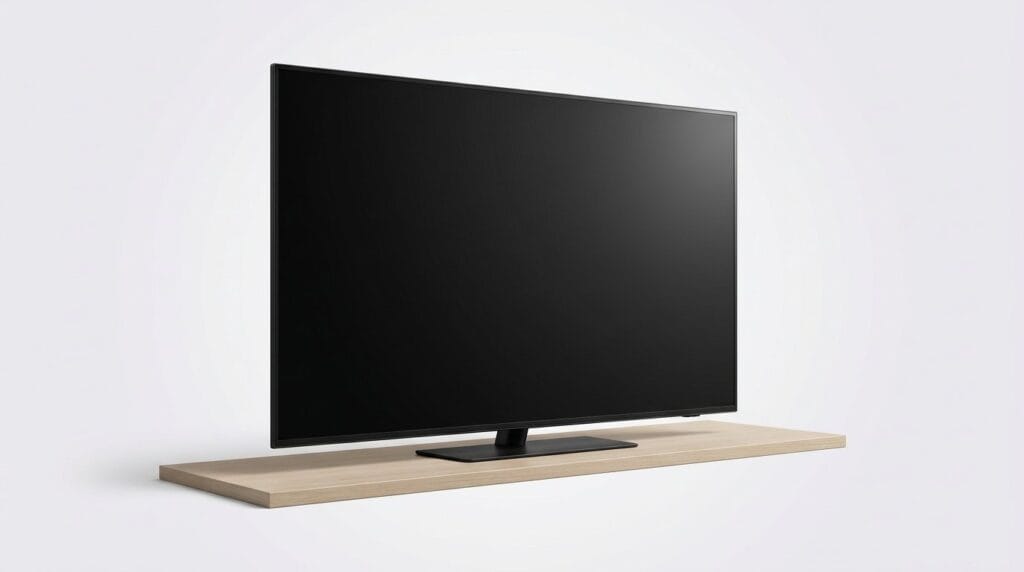
We look for a TV that feels intentional in the room. The C4 continues LG’s minimalist, almost bezel‑less look with a slim flat panel and a low-profile stand that keeps the picture front-and-center. It’s noticeably lighter than the Samsung, which matters if you’re wall-mounting. The S95C leans into Samsung’s Infinity One design — impossibly thin with the option to tidy cables via the Slim One Connect accessory — and feels more like a precision product you’d center on a feature wall.


Panel technologies — evo WOLED vs QD‑OLED
Under the skin, these are different beasts. LG’s WOLED panel on the C4 is tuned for sustained brightness and uniformity; its a9 Gen7 processor focuses on consistent highlights and accurate skin tones. Samsung’s S95C uses QD‑OLED: quantum dots over self‑emissive pixels to push color saturation and perceived brightness, especially in HDR highlights.


How that translates to real rooms
Year matters: the C4 is a 2024 refresh with Gen7 processing and a webOS Re:New update promise; the S95C is a mature 2023 design with firmware and performance quirks already well documented — both give different tradeoffs depending on your room and priorities.
Picture performance: color, contrast, HDR and motion
We dive into the core viewing experience. This section compares color accuracy, HDR tone mapping, peak highlights, black level handling, and how each TV renders skin tones and saturated content. We’ll discuss real‑world HDR performance (Dolby Vision/HDR10 variants), perceived brightness in mixed‑lighting rooms, and where each panel shines or struggles. Motion handling, de‑juddering, and upscaling are covered too: how each set processes 24p films, sports, and low‑bitrate streaming. Importantly, we explain not just which measurements are higher, but why those differences matter for everyday watching and for buyers deciding between cinematic accuracy and vividness.
Color, contrast and HDR tone‑mapping
Both sets deliver the OLED hallmarks: true blacks and near‑infinite contrast. The LG C4 (OLED evo + α9 Gen7) leans toward reference‑style color reproduction and careful tone mapping. With Dolby Vision support, it preserves highlight detail and film‑maker intent more often than not — you get subtler highlight roll‑off and fewer clipped faces in bright scenes.


The Samsung S95C’s QD‑OLED panel delivers punchier color and more perceived brightness. Quantum dots lift saturated hues and specular highlights, so HDR pops in living rooms with some ambient light. Samsung’s scene‑by‑scene tone mapping is aggressive — it makes HDR feel more immediate, but can sometimes look less “filmic” on content meant to be subtle.
Perceived brightness and skin tones
In mixed light, the S95C reads brighter; highlights look more luminous and colors feel more saturated from normal viewing angles. The C4 keeps skin tones and midtones more natural, especially in Dolby Vision content, which matters if you prefer director‑approved looks.
Motion, de‑juddering and upscaling
Both panels handle motion well. Samsung’s Motion Xcelerator Turbo Pro and Game Hub prioritize blur reduction for sports and gaming; its processor is excellent at aggressive frame interpolation. LG’s α9 Gen7 and 144Hz capability give smoother panning and cleaner 24p cadence handling with options to preserve film cadence (Filmmaker Mode). Upscaling: Samsung’s Neural Quantum is punchy on low‑bitrate streams; LG’s AI upscaling favors texture fidelity.
Why it matters
Sound, gaming and smart features: living‑room functionality
Audio: built‑in sound vs. object tracking
The S95C gives a rare OLED-with‑real‑audio experience: a 4.2.2 channel layout with Dolby Atmos and Object Tracking Sound+ that actually moves sound across the panel. Paired with a Samsung soundbar, Q‑Symphony stitches TV and bar into a convincing frontstage — so without a bar the S95C still feels more immersive than most OLEDs.


The LG C4 relies on a 2.2‑channel design and virtual surround processing (Dolby Atmos passthrough/processing supported). It creates decent spatial cues for dialogue and movies, but it doesn’t replace a dedicated soundbar if you want precise overhead effects or room‑filling dynamics. In short: both benefit from a bar; Samsung’s internal staging is the stronger of the two.
Gaming: latency, ports and ecosystem
Both TVs target gamers: low input lag in Game Mode, VRR, ALLM and modern HDMI bandwidth. Key differences that matter to us:
Gaming Hub is a convenience win — instant access to Stadia/GeForce Now-style services — while LG’s more stable HDMI handling and broader 144Hz PC support make it a better pick for serious racers and PC gamers.
Remotes, voice and daily UX
We prefer LG’s Magic Remote for quick pointer search and tactile control; Samsung’s SolarCell remote is minimal and eco‑friendly but less precise for cursor tasks. Both have built‑in Alexa and responsive mics.
webOS feels more customizable and consistent day‑to‑day; Tizen (One UI) is feature‑rich and includes Gaming Hub but can shift after firmware updates. For frequent users, LG’s five‑year webOS Re:New promise reduces future friction.
Ecosystem, updates and value: buying, living with, and maintaining these TVs
Smart‑home and device ties
We look at how these TVs fit into the rest of your gear. Samsung leans into One UI/Tizen and its Gaming Hub, plus tight integration with Samsung phones, SmartThings, and Q‑Symphony soundbars — that matters when you want a seamless multi‑device setup and an easy soundtrack upgrade. LG’s webOS is more platform‑agnostic, works smoothly with AirPlay and Chromecast‑like casting, and the Magic Remote makes searching less painful. For us, Samsung favors someone invested in the Samsung ecosystem; LG favors mixed‑brand households.
Software updates and support
Software stability matters more than splashy features. LG’s webOS Re:New promise (five years of feature updates) is a clear win — it reduces feature‑decay risk and prolongs usefulness. Samsung pushes frequent feature updates and platform improvements but has been more willing to change UX behavior between updates; that can be disruptive if you value consistency. Both manufacturers provide standard limited warranties (typically one year), and Amazon often simplifies returns and warranty claims.
Price, bundles and resale
On Amazon the S95C lists around $3,498; the C4 typically lands lower, positioning LG as the more value‑oriented premium option. Typical bundles:
Resale: S95C’s QD‑OLED brightness and audio features tend to retain buyer interest, but LG’s newer model year and long update promise help its resale appeal.
Living with and maintenance
OLEDs share care needs. Simple rules we follow
Ultimately, pick the ecosystem and update policy that best match how you’ll use the TV over the next several years.
Frequently asked questions
Which is better, LG C4 OLED or Samsung S95C OLED?
There is no universal winner: LG C4 OLED fits some buyers and Samsung S95C OLED fits others. We compare specs, daily use, and trade-offs in this guide so you can match the pick to your budget and workflow, not a single spec sheet.
What is the main difference between LG C4 OLED and Samsung S95C OLED?
LG C4 OLED and Samsung S95C OLED target overlapping but not identical use cases. The sections above break down design, performance, ecosystem, and value so you can see where each product pulls ahead and where it compromises.
Should I buy LG C4 OLED or Samsung S95C OLED first?
Buy the product that removes your biggest daily friction first. If LG C4 OLED solves your primary pain point, start there; if Samsung S95C OLED is the bottleneck in how you actually work or play, prioritize it. Many households add the other later.
Is LG C4 OLED worth it over Samsung S95C OLED?
LG C4 OLED is worth the premium over Samsung S95C OLED when you will use the features that justify the price—extra performance, build quality, or ecosystem lock-in. If those extras go unused, Samsung S95C OLED usually delivers better value.
Can LG C4 OLED replace Samsung S95C OLED?
For some users, yes; for others, no. LG C4 OLED can cover most tasks Samsung S95C OLED handles, but gaps in compatibility, accessories, or specialized workflows may still matter. Use our comparison table and verdict to see which gaps apply to you.
Who should choose LG C4 OLED vs Samsung S95C OLED?
Choose LG C4 OLED if its strengths match how you will use it every day; choose Samsung S95C OLED if you need its specific advantages or a lower entry price. When in doubt, favor the option that fixes your most frequent frustration—not the highest spec on paper.
Final verdict: which 77‑inch OLED we’d pick
We pick the Samsung S95C as our overall recommendation — its QD‑OLED color pop, punchy HDR, and cinematic presence give it an immediate, demo‑room wow that matters for movies and games. Samsung’s object‑tracking sound and motion handling keep the experience feeling modern and exciting — browse our product comparisons.
That said, choose the LG C4 if you value LG’s evo tuning, the 2024 refresh, tighter webOS integration, and potentially different brightness/wear tradeoffs; it’s the safer long‑term ecosystem play. Prioritize picture innovation (S95C) or ecosystem and platform continuity (C4). Which matters most for your living room? We’d favor the S95C for picture-first buyers; snag the C4 for platform reliability, too.

Princess Rioboca is the Lead Editorial Writer at Option Cutter, bringing over seven years of hands-on experience in consumer technology journalism. Specializing in home networking and smart home architecture, she transforms complex technical data into practical, real-world upgrades. Princess personally tests and audits every product she reviews—evaluating real-world Wi‑Fi throughput, cable management durability, and streaming ecosystem stability—to filter out spec-sheet noise. Her rigorous, field-tested insights are designed to give readers transparent, unbiased buying advice on what to purchase, what to skip, and exactly why.