Cinematic blacks and 144Hz gaming in one sleek, futureproof package — with a couple of real‑world compromises.
Choosing a large TV today often comes down to trade-offs: you can get blindingly bright mini‑LED panels for well-lit living rooms or OLED TVs for true blacks and cinematic color, but rarely both in one package. For households that want movies to look like the theater, but also need low-latency gaming and futureproof connectivity, those compromises are a real pain point — nobody wants to swap screens when the next console or streaming format arrives.
The LG 77‑inch OLED evo C4 tries to bridge that gap. With SELF‑LIT pixels, the α9 Gen7 processor’s Brightness Boost, and industry-leading gaming chops (up to 144Hz and ALL HDMI 2.1 inputs), it’s built to be a do‑everything living‑room screen. We’ll dig into how its ultra‑thin design, webOS 24 ecosystem, Magic Remote with Alexa, and LG’s five‑year Re:New update promise affect day‑to‑day use — and where it still concedes ground to brighter mini‑LED rivals or the occasional sluggish interface behavior.
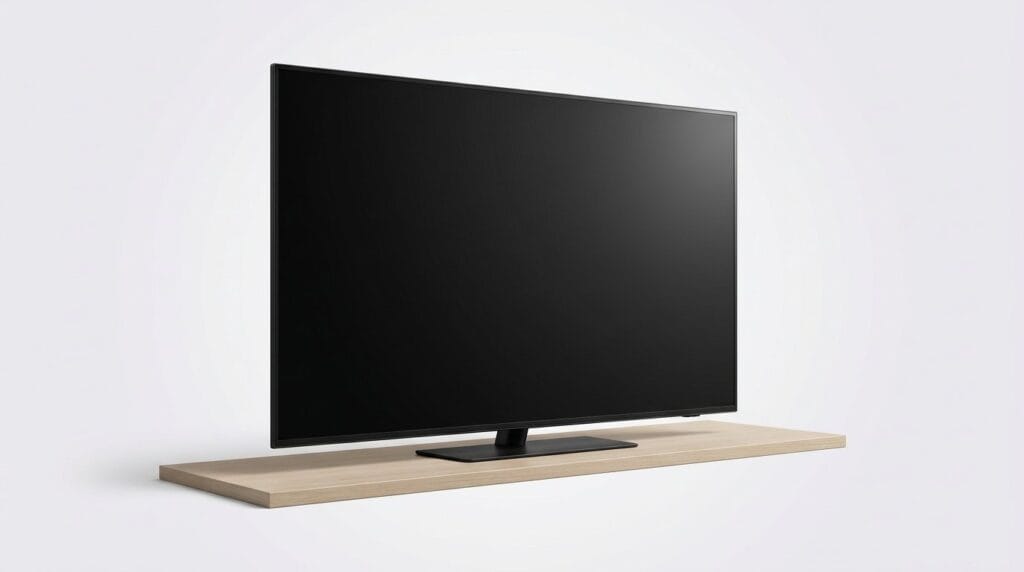
LG 77-Inch OLED evo C4 4K Smart TV

We think this TV strikes an excellent balance between cinematic picture and gaming performance — it’s one of the most versatile large-format OLEDs LG has shipped. For buyers who want low-latency gaming, deep blacks for movies, and futureproof HDMI 2.1 connectivity, it’s hard to beat.
LG OLED 77” C4 Evo — Stunning 4K Picture & Immersive HDR
Overview
We approach the LG 77‑inch OLED evo C4 the way we do most high‑end TVs: by asking how it performs as both a movie display and a living‑room hub for gaming and streaming. The C4 updates LG’s mainstream OLED lineup with the α9 Gen7 AI Processor, a Brightness Booster meant to address one of OLED’s long‑standing limitations, and a gaming spec set that reads like a checklist for competitive and console gamers alike. In short, this is a large OLED that wants to be both showpiece and daily driver.
Design and fit
The first impression is of restraint: an almost invisible bezel and a wafer‑thin panel that makes the screen feel like it’s floating off the wall. Build quality is solid for a TV in this class, with a low‑profile pedestal stand option and VESA compatibility for wall mounting. The TV is lightweight for its size, which helps during setup, but its thinness means you’ll want two people for wall mounting.


What’s under the hood: panel and processing
The C4 uses LG’s SELF‑LIT OLED pixels driven by the α9 Gen7 AI Processor. The processor performs scene analysis and AI super‑upscaling across SDR and HDR sources, optimizing sharpness, motion and tonal mapping. The practical result is consistently pleasing images with natural skin tones and very deep blacks.
Brightness, HDR and real-world picture
LG has steadily narrowed the perceived gap between OLED and brighter mini‑LED displays. The Brightness Booster on the C4 increases highlight performance so HDR speculars look more convincing, while preserving the infinite black floor that makes OLED special. Dolby Vision, FILMMAKER MODE, and Dolby Atmos are supported out of the box, so the TV behaves like a proper cinematic display straight the factory.
When we watched high‑contrast content, highlights retained color saturation without washing out midtones. That said, if you’re in a room with direct sunlight, some bright mini‑LED LCDs will still outperform this set in absolute peak luminance.
Gaming features and latency
Gaming is a primary use case for the C4 in our gaming TVs testing. LG has equipped it with features that matter to competitive and casual gamers alike.


In practice, input lag is impressively low in Game Mode, and variable refresh works smoothly with compatible GPUs and consoles. The inclusion of four HDMI 2.1 ports is a practical win — you won’t have to swap cables between systems.
Sound and connectivity
The C4 ships with a 2.2‑channel speaker setup that does a competent job for dialogue and ambient sound but won’t replace a dedicated soundbar or AV receiver for home‑theater fidelity. HDMI ARC/eARC is present for audio passthrough, though some users report intermittent ARC handshake issues with legacy receivers — a temporary power cycle usually resolves that.
Ports and connectivity at a glance:
| Port / Feature | Count / Notes |
|---|---|
| HDMI 2.1 | 4 full‑bandwidth ports |
| USB | 2 (media playback) |
| Ethernet | 1 |
| Wi‑Fi | Dual‑band |
| Bluetooth | Yes (remote, headphones) |
Smart TV experience and ecosystem integration
webOS 24 continues to be LG’s hub approach: a tile‑based launcher, universal search and app store. The Magic Remote remains a highlight for day‑to‑day navigation, and the built‑in Alexa offers voice control without a separate device. We like that LG’s webOS Re:New Program promises software refreshes for five years — that reduces the risk of early obsolescence.
That said, webOS can be occasionally slow to open heavier menus like full picture settings, and some advanced picture controls are locked depending on the selected picture mode, which can be frustrating for users who like deep calibration.
Setup and calibration notes
Out of the box, the C4 delivers a great looking image, but we recommend a quick calibration pass: turn off unnecessary motion processing, disable excessive color saturation presets, and use FILMMAKER MODE for movies if you prioritize director‑intent playback. For gaming, enable the Game Optimizer and VRR, then run a quick input‑lag test to confirm your cables and settings.
How it stacks up and who should buy it
Compared to the prior C‑series and some competitors, the C4 is an iteration focused on brighter highlights, stronger gaming credentials, and longer software support. If you want absolute peak brightness for a sunlit room, a mini‑LED LCD might be better; if you want perfect black levels, superior contrast and top‑tier gaming support in a single package, this is a compelling option.
We recommend the 77‑inch C4 our OLED TV lineup for living rooms and open‑plan spaces where screen size matters and where users will benefit the TV’s gaming and HDR strengths. It’s less compelling as a desktop monitor replacement unless you prioritize size over pixel density.
Accessories and practical tips
Final thoughts
The LG 77‑inch OLED evo C4 is a thoughtful, well‑rounded large OLED that leans into both gaming and cinematic use — see more product reviews, our OLED vs Mini‑LED guide, FCC digital television basics if you are still choosing panel type, and FCC HDTV and antenna guidance if you are upgrading an older set. Our testing found it to be one of the more versatile 2024 OLEDs: it keeps the perfect blacks and rich color we expect this technology, but also addresses brightness and connectivity in meaningful ways. Small software niggles and mode‑locked settings are the only things holding it back perfection.
FAQ
Is the C4 bright enough for a bright living room with windows?
We’d say the C4 is noticeably brighter than previous C‑series panels thanks to the Brightness Booster, and it handles HDR highlights much better than older OLEDs. However, if you have a sunlit wall opposite the screen or windows that hit the panel directly, a high‑end mini‑LED LCD will retain an edge in absolute peak brightness.
Can I use this TV as a PC monitor for gaming and productivity?
We’ve used the C4 as a large desktop display — it supports 4K@120Hz and up to 144Hz in some configurations, and input lag in Game Mode is low. That said, text legibility at native 4K on such a large screen can vary by OS scaling; some users prefer a smaller high‑pixel‑density monitor for close work.
How is the TV for console gaming with a PS5 or Xbox Series X?
We see the C4 as an excellent console partner in our gaming TV picks: full HDMI 2.1 bandwidth on four ports, VRR, and a native 120Hz refresh make it ideal for PS5 and Xbox Series X. Game Optimizer and low input lag enhance the experience, and the colors and blacks make modern games shine.
Do we need a soundbar with this TV?
If you want cinematic sound or deep bass, yes — we recommend a soundbar or AV receiver. The built‑in 2.2 speakers are good for dialogue and casual watching, but they can’t match the immersive effect of a dedicated audio setup.
How long will software updates and new features be supported?
LG’s webOS Re:New Program commits to feature refreshes for five years on the C4, which means we expect new UI features and enhancements for a multiyear period — a meaningful promise for buyers worried about smart TV obsolescence.
Is there any burn‑in risk with an OLED this size?
We’re mindful of OLED burn‑in history. Modern OLEDs, including the C4, include pixel-shift, logo luminance adjustments, and usage patterns that reduce practical risk. For typical mixed use — games, movies, streaming — we find burn‑in risk to be low, but we still recommend varying content and using built‑in screen care features if you leave static images onscreen for long periods.

Ayesha Aftab is Option Cutter's product review editor. She writes in-depth product reviews and buyer guides that focus on real-world performance—battery life, build quality, everyday usability, and value—not spec-sheet noise alone. Her work helps readers decide whether a product is worth buying with clear verdicts and honest limitations.