We weigh whether the featherlight notebooks that win our hearts and backpacks actually deliver the day‑to‑day performance, design polish, and ecosystem integration modern workflows demand—or whether raw horsepower still matters in a cloud‑first, fast‑moving market.
When we carry a laptop all day, every ounce and watt matters. We set out to compare a flagship thin-and-light, the Dell XPS 13 9345, and compact performance machine, the Razer Blade 14 (2025), to see which compromise matters most.
AI Mobility

Gaming Power

Dell XPS 13
- Exceptional all-day battery life and efficient Snapdragon platform
- Very thin and light chassis that favors mobility
- On-device NPU (45 TOPS) enables Copilot+ features for offline AI tasks
- Generous 32 GB LPDDR5X and 1 TB NVMe SSD for snappy multitasking and storage
- Integrated Adreno GPU limits heavy gaming and GPU‑bound workloads
- Port selection is USB‑C centric with no full-size HDMI or legacy ports
Razer Blade 14
- Desktop‑class GPU performance in a remarkably thin chassis
- 3K 120 Hz OLED display with professional color verification
- Strong thermal design and discrete RTX GPU for gaming and creative work
- Onboard NPU (up to 50 TOPS) and RTX AI features accelerate creative apps
- Battery life is modest for a thin laptop and drops under heavy load
- Windows/setup and software layer can feel heavy; mixed reports on stability
Legion 7 vs Zephyrus G16: The Best Thin Gaming Laptop — Asus ROG vs Lenovo
Feature Comparison
| AI Mobility Dell XPS 13 | VS | Gaming Power Razer Blade 14 |
|---|---|---|
9 / 10 | Portability |
8 / 10 |
8 / 10 | Performance |
9.5 / 10 |
9.5 / 10 | Battery Life |
6.5 / 10 |
8 / 10 | Display & Multimedia |
9 / 10 |
$1,349.99 | Current price |
$1,499.00 |
| Buy for $1,349.99 | Buy for $1,499.00 |
Design, Materials, and Portability: How thin translates to daily life
Chassis and build quality
We look first at how these machines feel in the hand. The XPS 13 leans hard into thin-and-light DNA: a compact footprint, refined edges, and a minimalist aesthetic that reads professional on a plane or in a meeting. That design prioritizes low weight and a slim profile over brute cooling capacity.


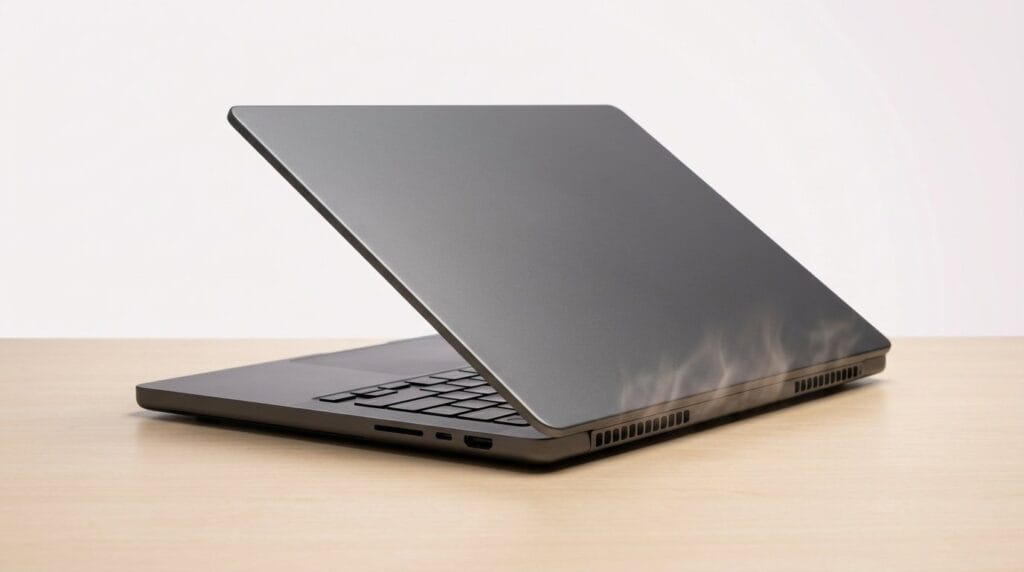
The Blade 14 shrinks a lot of gaming laptop hardware into a compact aluminum unibody. Razer trades a hair more thickness (and explicit thermal hardware like a vapor chamber) for a sturdier, more solid chassis that resists flex when you’re gaming or creating on your lap.


Weight, footprint, and hinge behavior
We care about how a laptop rides in a bag. The XPS’s compact footprint and long battery life tilt toward frequent flyers and commuters: you’ll notice the difference in shoulder comfort and security checks. The Blade 14 is still pocketable for a backpack but feels like a purposeful performance tool — slightly heavier to hold and usually balanced toward a rear-heavy thermal design.
Ports and everyday ergonomics
The XPS is USB-C centric, which keeps the chassis thin but means adapters for legacy ports. The Blade 14 provides a more gamer/creator-friendly IO layout and power delivery suited to external GPUs, docks, and high-watt chargers.
Why it matters day to day
Which matters depends on whether you prioritize featherweight mobility or sustained performance in a compact package.
Performance and Thermals: Sustained speed vs peak power
CPU and on-device AI: numbers vs practice
We compare two different philosophies. The XPS’s Snapdragon X Elite is a 12‑core Copilot+ platform (boosts up to ~4 GHz, NPU ~45 TOPS) tuned for extreme efficiency. In real work — email, browser-heavy multitasking, local Copilot+ features like Recall and Cocreate — the XPS feels instantly responsive and can run those AI tasks without draining the battery. That raw efficiency is the point: long runtimes and consistent responsiveness for everyday productivity.


GPU and creative/gaming workloads: discrete advantage
The Razer Blade 14 pairs AMD Ryzen AI 9 365 with an NVIDIA RTX 5060 (up to ~115 W TGP) and an NPU around 50 TOPS. That combo delivers much higher peak and sustained throughput for GPU‑bound tasks. Games, GPU rendering, and RTX‑accelerated creative apps (Premiere, DaVinci Resolve, Blender with CUDA/OptiX and DLSS 4) run faster and finish jobs sooner. If you rely on real-time ray tracing, DLSS 4 upscaling, or GPU‑accelerated export, the Blade is the clear winner.


Thermals, sustained clocks, and real‑world outcomes
Thinness constrains cooling. Razer invests in a vapor chamber and beefier cooling to keep the 5060 and Ryzen at higher sustained power; the result is higher sustained FPS and faster export times, at the cost of louder fans and shorter battery life under load. The XPS prioritizes low thermals and long battery life — it will hit lower peak GPU/CPU performance but remains cooler and quieter for long stretches.
Which matters more depends on your typical workload: sustained peak power for heavy GPU work, or efficient, always‑available performance for on‑the‑go productivity.
Display, Camera, and Input: The screens and controls you actually use
Display: resolution, refresh rate, and color
We look at two different emphases. The XPS 13 gives a 13.4″ FHD+ (1920×1200) 120Hz panel—sharp for text, conservative for color-critical work, and easy on battery. The Razer Blade 14 brings a 3K (2880×1800) 120Hz OLED with 0.2 ms response and Calman-verified DCI-P3/Adobe RGB profiles. For creators who need accurate hues and deep blacks, the Blade’s OLED and higher pixel count matter; for day-to-day productivity and long reading sessions, the XPS’s bright, anti‑reflective FHD+ hits the sweet spot.
Camera and privacy features
Dell includes an IR-capable FHD webcam tuned for clearer video calls and Windows Hello; the XPS’s hardware plus Copilot+ Studio Effects (auto-framing, background blur) make calling feel polished without cloud processing. The Blade supports similar Copilot+ features via its NPU, but the XPS prioritizes call clarity as part of its mobile-first design.


Keyboard and trackpad
Both systems offer backlit keyboards, but with different goals. The Blade favors a gaming‑centric layout with Chroma per‑key RGB and a slightly firmer, tactile feel for fast actuation and macros. The XPS leans compact and low‑profile—more comfortable for long typing sessions and travel. Both use large precision trackpads; we prefer the XPS pad for daily navigation and the Blade pad for mixed work/gaming on the go.
Audio and media immersion
Razer’s six‑speaker array with THX Spatial Audio delivers a wider soundstage and punch for games and movies. The XPS provides clear, call‑focused stereo that’s excellent for meetings and podcasts but less theatrical for immersive gaming.
Battery, Connectivity, and Ecosystem: Integration over isolated specs
Battery realism: headline numbers versus real use
We treat the XPS’s 27‑hour claim as a mobility promise, not a daily guarantee. That number assumes minimal load and power‑sipping FHD brightness; with real-world multitasking, video calls, or AI workloads on the 45 TOPS NPU, expect far lower runtimes. The Blade’s 72 Whr pack and ~11‑hour spec reflect a different tradeoff: the RTX 5060 and Ryzen AI push battery drain quickly under load, but Razer’s 200W charger and rapid‑charge (50% in ~30 minutes) get you back to work faster.
Wireless and connectivity that actually matter
Wi‑Fi 7 on both machines is future‑proofing that matters for low latency and high‑bandwidth cloud workflows. In practice, Wi‑Fi 7 only helps if your router and environment support it — it won’t extend battery or improve gaming if your network is the bottleneck.
Software ecosystems: Copilot+ vs NVIDIA/AMD platforms
We prefer thinking in workflows: Dell’s Copilot+ NPU (45 TOPS) emphasizes on‑device privacy and instant features like Recall, Cocreate, and Studio Effects without cloud roundtrips — valuable for portable productivity.
Ports, upgradeability, and service
Both are USB‑C/USB4 centric, favoring dongles or docks over legacy ports. Upgrade options are limited (LPDDR5X is soldered on both), so storage/serviceability are the main differentiators: Dell’s XPS line historically offers broader enterprise support options and predictable service paths; Razer targets gamers with firmware/driver updates, Chroma accessory integration, and optional RazerCare.
Frequently asked questions
Which is better, Thin Laptop or Performance Laptop?
There is no universal winner: Thin Laptop fits some buyers and Performance Laptop fits others. We compare specs, daily use, and trade-offs in this guide so you can match the pick to your budget and workflow, not a single spec sheet.
What is the main difference between Thin Laptop and Performance Laptop?
Thin Laptop and Performance Laptop target overlapping but not identical use cases. The sections above break down design, performance, ecosystem, and value so you can see where each product pulls ahead and where it compromises.
Should I buy Thin Laptop or Performance Laptop first?
Buy the product that removes your biggest daily friction first. If Thin Laptop solves your primary pain point, start there; if Performance Laptop is the bottleneck in how you actually work or play, prioritize it. Many households add the other later.
Is Thin Laptop worth it over Performance Laptop?
Thin Laptop is worth the premium over Performance Laptop when you will use the features that justify the price—extra performance, build quality, or ecosystem lock-in. If those extras go unused, Performance Laptop usually delivers better value.
Can Thin Laptop replace Performance Laptop?
For some users, yes; for others, no. Thin Laptop can cover most tasks Performance Laptop handles, but gaps in compatibility, accessories, or specialized workflows may still matter. Use our comparison table and verdict to see which gaps apply to you.
Who should choose Thin Laptop vs Performance Laptop?
Choose Thin Laptop if its strengths match how you will use it every day; choose Performance Laptop if you need its specific advantages or a lower entry price. When in doubt, favor the option that fixes your most frequent frustration—not the highest spec on paper.
Final Verdict: Which laptop to pick and why
Winner: Dell XPS 13 — we pick it for most users. Thin chassis, 27‑hour battery, Snapdragon AI, and tighter ecosystem make it the superior daily productivity machine. Razer Blade 14 wins only for sustained GPU-heavy gaming or creative work in our product comparisons hub.
Quick guide: choose XPS for commuters, remote workers, frequent travelers; choose Razer for gamers, GPU-heavy editors, and creative pros needing peak frame rates browsing laptops today.

Princess Rioboca is the Lead Editorial Writer at Option Cutter, bringing over seven years of hands-on experience in consumer technology journalism. Specializing in home networking and smart home architecture, she transforms complex technical data into practical, real-world upgrades. Princess personally tests and audits every product she reviews—evaluating real-world Wi‑Fi throughput, cable management durability, and streaming ecosystem stability—to filter out spec-sheet noise. Her rigorous, field-tested insights are designed to give readers transparent, unbiased buying advice on what to purchase, what to skip, and exactly why.