
High‑CRI, portable, and cheap—what it gives up for $36 (and why we don’t mind)
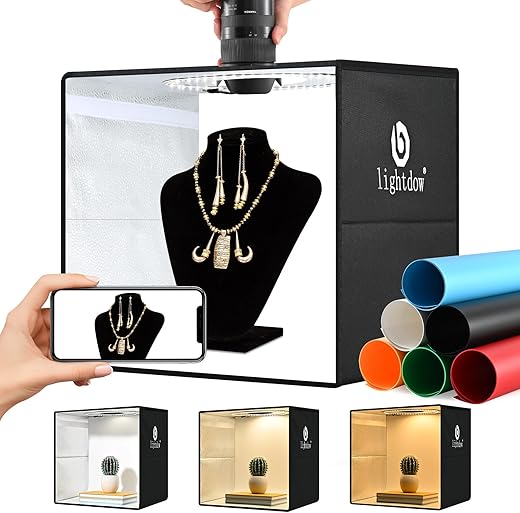
We’ve all been there: a late‑night product shoot with a phone, improvised lamps, and photos that look great on our screen but terrible on the listing. Good lighting is the difference between a click and a return, and most sellers don’t need a full studio — they need consistent, true‑to‑life shots fast. The Lightdow 16″x16″x12″ Photo Studio Light Box promises exactly that: a foldable, USB‑powered tent with 120 CRI>95 LEDs, dimmable controls, and six backdrops for under $40.
In hands‑on use the high‑CRI LED array and simple controller delivered repeatable color and quick setup that fit into our real workflows, from desktop product shots to pop‑up shoots. It’s not a professional rig — the silver lining can create specular highlights, the diffuser cuts usable vertical space, and front illumination can be weak — but for creators and small e‑commerce sellers who prioritize portability, consistency, and price‑to‑performance, the Lightdow is hard to beat. In a market full of cheap tents, its color accuracy and thoughtful accessories make the difference.
Lightdow 16x16x12 Portable LED Light Box
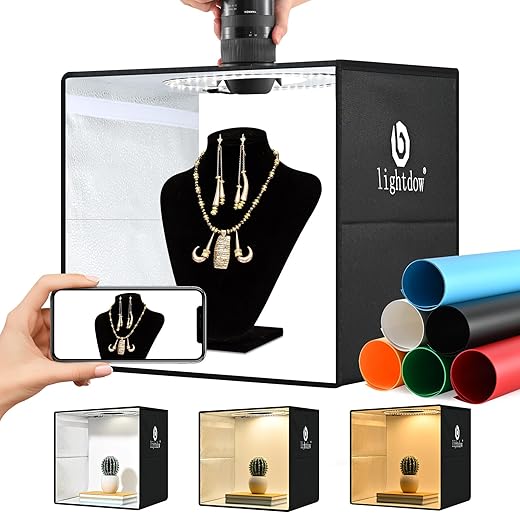
We found it an excellent, budget-friendly studio for jewelry, cosmetics, and other small products — delivering accurate color and consistent results with minimal setup. It isn’t a replacement for larger, pro rigs, but for online sellers and content creators who need portability and quick, repeatable shots it’s hard to beat.
Introduction
We approach gear reviews with practicality in mind: photographers and small-business owners want tools that reduce friction while improving output. The Lightdow 16″x16″x12″ photo light box is aimed squarely at that market — a compact, USB-powered shooting tent with a dense LED array, several premade backgrounds, and quick setup. Over the past weeks we used it to photograph jewelry, cosmetics, small electronics, and collectible figurines to understand how it behaves in different workflows.
Design and build: familiar, efficient, portable
At first glance the box follows the now-standard folding-tent pattern: a magnetic frame, snap/Velcro attachments, and a reflective interior that helps spread light. It collapses to a compact footprint and includes a lightweight carry solution that makes it feasible to work on location or tuck it into limited studio space.


What stands out is the balance between rigidity and portability — the structure is sturdier than the cheapest collapsible tents but still intended to be lightweight. Some parts feel plasticky if you press them, yet the fasteners hold up to repeated assembly and the diffusers attach with reasonable security.
Lighting system: CRI, control, and practical color accuracy
The unit’s 120 SMD LEDs and a reported CRI of >95 are the headline specs. In practice that high-CRI array means tones are more predictable straight out of camera; skin tones in cosmetic shots and metallic hues in watches or jewelry reproduce without the green/magenta bias you sometimes get from budget strips. The controller gives ten brightness steps and three color temperatures (cool/neutral/warm), which we used to quickly dial for product finishes and mood.
There are trade-offs: the LEDs are concentrated in the top rail and the silver reflective lining helps bounce that light around, but shiny backgrounds can produce specular highlights. For items with glossy finishes we sometimes needed a tiny fill reflector or a lower-angle exposure to tame the hotspots.
Key lighting takeaways:
Layout and shooting flexibility
The box includes both a top access flap for overhead shots and a front opening for straightforward product portraits. The top opening is one of the most useful features for flat-lay product images and detailed close-ups — it lets us place a camera directly above small items without rigging complex suspensions.
We also appreciated the hook-and-loop system for background swaps; the six PVC backdrops (white, black, red, blue, green, orange) are thick enough to resist creasing and wipe clean easily. That said, the PVC finish can be reflective under some angles — matte paper backgrounds in a larger setup still produce smoother gradations, but the included colors are great for quick catalog variations.
What’s in the box
Practical specs table
| Specification | Detail |
|---|---|
| Interior usable volume | Approximately 16 x 16 x 12 in (usable height ~10 in with diffuser) |
| LEDs | 120 SMD2835 array |
| Color rendering | CRI > 95 (manufacturer spec) |
| Dimming | 10 levels + 3 color temps |
| Power | USB (1.8 m cable); avoid >3A chargers |
| Weight | ~4.1 lbs |
Setup and workflow: how it changes our pace
Where this box earns its keep is in speed. Unpacking and securing the frame took us under two minutes after a couple of iterations. The controller is simple — power, temperature toggle, and dimming in one inline unit — so swapping temps between product sets is quick. The USB power model is handy: for on-the-go shoots we used a compact power bank to run a session without hunting for outlets.
For e-commerce use, consistency matters more than absolute perfection. We found that once we established a lighting preset for a product type, replicating shots across multiple items became fast and reliable. Combined with consistent background selection, this translates into fewer editing passes and faster listing updates.
Performance in real-world shooting
We tested across a handful of scenarios:
Limitations and how they matter in the market
This isn’t a pro studio substitute: the vertical space is effectively reduced by the diffuser and top light mounting, so anything taller than about 10 inches will be cramped or require different staging. The silver interior helps distribute light but can introduce glare on glossy backdrops — a white interior (as some higher-end boxes use) would smooth those reflections. Finally, front lighting is limited compared with systems that include side LED panels; if you need full 360 illumination without reflectors, consider a larger multi-panel kit.
Comparative context: who it competes with
Against similarly priced collapsible light tents, this model leans toward better color fidelity and more precise dimming. Compared with entry-level units that use fewer, lower-CRI LEDs, the visual payoff is obvious for small-product photographers who care about color. However, compared with modular light-table systems or softbox setups, it trades off absolute evenness and working space for portability and speed.
Final thoughts: who should buy this
We recommend it for online sellers, hobbyist photographers, and content creators who primarily shoot small items and need a quick, repeatable setup. It’s especially useful when color accuracy matters and you don’t have the space or budget for a permanent studio. If you routinely photograph larger items or require perfectly even, wraparound lighting, look at larger or multi-panel alternatives.


Bottom line
The Lightdow 16″x16″x12″ is a pragmatic tool: it noticeably improves the quality and consistency of product images while staying compact and affordable. It has a few characteristic quirks — specular reflections on shiny PVC backdrops and limited headroom — but in our experience those are manageable trade-offs for the speed and color fidelity it delivers. For small-item commerce photography, it’s a smart, low-friction upgrade to smartphone-only setups.
FAQ
Yes. The light box is USB powered and runs well from a power bank. We recommend using a reliable power bank rated for stable 5V output. Avoid using chargers that exceed 3A as the manufacturer warns against higher current.
The LEDs are rated CRI >95, which in our tests delivered much more faithful colors than typical low-CRI arrays. That reduces the time we spend correcting color shifts in post, especially for cosmetics and jewelry.
They will, but PVC can be a bit reflective under certain angles. For very glossy items we recommend using a small reflector to control highlights, or swapping to a matte paper background if you need perfectly smooth gradations.
It’s ideal for phone-sized items, jewelry, small electronics, cosmetics, and figurines. Taller items near the 12-inch shell height will be affected by the internal diffuser and can lose about 2″ of usable headroom, so measure carefully before committing.
Very easy. The backgrounds attach with hook-and-loop fasteners and store in a compact stack. We were able to change backgrounds between shots without interrupting lighting presets or camera settings.
Not necessarily for catalog-style images of small items; the built-in LEDs and the reflective interior handle a lot. For advanced product work—like glassware, high-end jewelry, or full 360-degree lighting—you may want secondary reflectors or side lights to tame reflections and create a wraparound effect.
The build strikes a practical middle ground. Fasteners and frame parts feel designed for repeated use, but the materials are lightweight. For daily professional use, it’s solid; for very heavy-duty handling, consider shipping a spare background set or treating the tent gently during transport.
Both. We used a DSLR and a smartphone mounted to the included small tripod adapter. The top access is especially convenient for DSLR overhead shots; just make sure your lens and mount clear the diffuser and you have enough working distance for focus.

Chris is the founder and lead editor of OptionCutter LLC, where he oversees in-depth buying guides, product reviews, and comparison content designed to help readers make informed purchasing decisions. His editorial approach centers on structured research, real-world use cases, performance benchmarks, and transparent evaluation criteria rather than surface-level summaries. Through OptionCutter’s blog content, he focuses on breaking down complex product categories into clear recommendations, practical advice, and decision frameworks that prioritize accuracy, usability, and long-term value for shoppers.