The best portable power station with fast solar input is one that matches your daily energy needs, supports an efficient MPPT solar controller, accepts enough solar wattage to recharge quickly, and uses a long-lasting LiFePO₄ battery. While battery capacity (Wh) often gets the most attention, solar charging speed determines how practical a power station is for camping, RV travel, overlanding, emergency preparedness, and off-grid living.
For most buyers, choosing a portable solar generator with compatible solar panels, a wide MPPT voltage range, high charge acceptance, and reliable thermal management will provide faster charging and better long-term value than simply buying the largest battery available.
Why Fast Solar Input Matters More Than Battery Capacity
When comparing the best portable power stations with fast solar input, many shoppers focus on battery capacity. While watt-hours (Wh) determine how much energy you can store, recharge speed often has a greater impact on everyday usability.
A large battery that takes an entire day to recharge limits your ability to stay off-grid. A smaller power station with efficient solar charging can often deliver more usable energy over multiple days because it replenishes quickly whenever sunlight is available.
This is why our editorial team prioritizes real-world solar charging performance over marketing claims. Rather than relying solely on manufacturer specifications, we evaluate:
- Maximum supported solar input (watts)
- MPPT controller efficiency
- Solar voltage compatibility (Voc and Vmp)
- Battery chemistry
- Charge acceptance rate
- Thermal management
- Real-world recharge times
- Warranty coverage
- Long-term reliability
These factors determine whether a portable power station can consistently recharge throughout the day without wasting available solar energy.
Our Testing Philosophy
At Option Cutter, we evaluate portable power stations using practical buying criteria instead of marketing specifications alone.
Our How to Guides editorial process focuses on helping readers understand how a power station performs during actual use, including:
- Camping trips
- RV travel
- Van life
- Home backup power
- Emergency preparedness
- Jobsite use
- Outdoor recreation
Instead of asking, “Which model has the biggest battery?” we ask:
- How quickly can it recharge from solar?
- Does it maintain charging during hot weather?
- Can it accept the full rated solar input?
- Is the battery designed for thousands of charging cycles?
- Will replacement accessories still be available several years from now?
These questions better reflect long-term ownership and overall value.
Editorial Note: Our recommendations are based on published technical specifications, manufacturer documentation, independent testing, and comparative product analysis. Whenever possible, we prioritize transparent performance data over advertised maximum ratings.

Before You Choose a Portable Power Station
Selecting the right portable power station starts with understanding how you plan to use it. Purchasing the largest model isn’t always the smartest investment.
Before comparing a solar battery generator, gather the following information:
Determine Your Daily Power Requirements
Create a list of every device you expect to power, including:
- Smartphones
- Tablets
- Laptops
- Portable refrigerators
- CPAP machines
- Cameras
- Drones
- Lighting
- Fans
- Power tools
Multiply each device’s wattage by the number of hours you’ll use it daily to estimate your energy consumption in watt-hours (Wh).
For example:
| Device | Power | Daily Use | Daily Consumption |
|---|---|---|---|
| Mini refrigerator | 60W | 24 hours | 1,440Wh |
| CPAP machine | 40W | 8 hours | 320Wh |
| Laptop | 65W | 4 hours | 260Wh |
Adding these values together provides a realistic estimate of your daily energy needs.
Understand Your Solar Panels
Solar compatibility is just as important as battery capacity.
Record your solar panel specifications, including:
- Rated wattage
- Open-circuit voltage (Voc)
- Maximum power voltage (Vmp)
- Connector type (typically MC4)
- Expected peak sunlight hours
Matching these specifications to a power station’s MPPT input range helps maximize charging efficiency and prevents compatibility issues.
Plan for Real-World Conditions
Manufacturer charging estimates assume ideal laboratory conditions.
Actual solar power station performance depends on:
- Cloud cover
- Seasonal sunlight
- Panel angle
- Tree cover
- Dust accumulation
- Cable losses
- Ambient temperature
Adding a 20–30% performance buffer provides a more realistic expectation of charging speed in everyday conditions.
Step 1: Calculate Your Power Needs Before Choosing a Portable Power Station
Before comparing portable power stations with fast solar input, calculate your daily energy consumption in watt-hours (Wh). This ensures you buy a model that can both power your devices and recharge efficiently from solar panels instead of paying for unused battery capacity.
Choosing the best portable power station with fast solar input starts long before comparing battery sizes or brand names. The most common buying mistake is selecting a power station based solely on advertised capacity without understanding how much electricity you actually use each day.
Our editorial team recommends defining your power requirements first. This creates a realistic benchmark for battery capacity, inverter size, and the amount of solar input required to replenish the battery during available sunlight.
According to the U.S. Department of Energy, properly sizing an energy storage system begins with accurately estimating electrical loads rather than selecting equipment based on maximum advertised specifications. This approach improves efficiency and reduces unnecessary costs. (https://www.energy.gov/cmei/systems/solar-photovoltaic-system-design-basics)
Create a Daily Power Inventory
Begin by listing every device you expect to power.
Typical examples include:
| Device | Average Power | Daily Runtime | Daily Energy |
|---|---|---|---|
| Smartphone | 15W | 2 hours | 30Wh |
| Laptop | 65W | 4 hours | 260Wh |
| Mini Refrigerator | 60W | 24 hours | 1,440Wh |
| CPAP Machine | 40W | 8 hours | 320Wh |
| LED Lights | 10W | 6 hours | 60Wh |
Adding the daily energy requirements together gives you your estimated daily consumption.
For example:
260Wh + 1,440Wh + 320Wh + 60Wh = 2,080Wh per day
This number becomes the foundation for selecting the appropriate portable power station.
Account for Real-World Power Losses
Manufacturer specifications assume ideal operating conditions. In practice, several factors reduce usable energy, including:
- Inverter conversion losses
- Battery charging efficiency
- Cable resistance
- Temperature
- Battery aging
- Standby power consumption
Adding a 20–30% safety margin provides a more realistic estimate of your actual energy needs.
For example:
2,080Wh × 1.25 = 2,600Wh recommended capacity
This reserve helps maintain reliable performance during cloudy weather, colder temperatures, or periods of heavier-than-expected usage.
The National Renewable Energy Laboratory (NREL) recommends considering system losses and environmental conditions when sizing battery storage systems to ensure dependable performance in real-world applications. (https://research-hub.nrel.gov/en/publications/battery-power-for-your-residential-solar-electric-system-better-b/)
Determine Your Required Solar Input
Once you’ve calculated daily energy usage, estimate how much solar power is needed to recharge the battery.
A simple calculation is:
Daily Energy Requirement ÷ Peak Sun Hours = Minimum Solar Input
Example:
- Daily usage: 2,500Wh
- Average sunlight: 5 peak sun hours
2,500Wh ÷ 5 = 500W minimum solar input
To compensate for weather, conversion losses, and battery charging efficiency, increase that figure by approximately 25%.
Recommended solar array: 625W
This provides more consistent charging performance throughout the year.
The U.S. Department of Energy notes that actual solar production varies based on geographic location, weather conditions, panel orientation, shading, and seasonal sunlight, making conservative system sizing an important design consideration. (https://www.energy.gov/cmei/systems/how-does-solar-work)
Match the Portable Solar Generator to Your Use Case
Not every user requires the largest battery available.
Choose a system based on how you plan to use it.
| Use Case | Recommended Capacity | Typical Solar Input |
|---|---|---|
| Weekend Camping | 300–700Wh | 100–200W |
| Car Camping | 700–1,200Wh | 200–400W |
| Van Life | 1,000–2,000Wh | 400–800W |
| RV Travel | 2,000Wh+ | 600–1,200W |
| Home Backup | 2,000–4,000Wh+ | 800–2,000W |
Matching battery capacity to expected energy consumption often delivers better value than purchasing the highest-capacity model available.
Expert Buying Tip
Focus on daily energy throughput instead of battery size alone.
A 1,000Wh portable power station that fully recharges every day from a 600W solar array can often provide more usable energy over a week than a 2,000Wh model limited to slow 200W solar charging.
Recharge speed—not just battery capacity—is what determines long-term off-grid usability.
Step 2: Understand Solar Input Specifications Before Comparing Portable Power Stations
The advertised solar wattage tells only part of the story. To maximize charging performance, compare a portable power station’s MPPT controller, supported voltage range (Vmp/Voc), maximum input current, and real-world charging efficiency. These specifications determine whether your solar panels can deliver their full output.
Many manufacturers prominently advertise 600W, 800W, or even 2,000W solar input, but these figures are only meaningful when the power station is compatible with your solar panels.
Understanding the specifications behind those marketing claims helps you avoid buying a system that cannot fully utilize your solar array.
According to the U.S. Department of Energy, properly matching photovoltaic modules to charge controllers and storage systems is essential for maximizing energy production and maintaining safe operation. (https://www.energy.gov/cmei/systems/solar-photovoltaic-system-design-basics)
Look Beyond Maximum Solar Input
Three specifications matter most:
- Maximum solar input (Watts)
- MPPT operating voltage range
- Maximum input current (Amps)
These values determine how efficiently the station converts sunlight into stored battery energy.
For example, two power stations may both advertise 800W solar input, yet one may only achieve that output using a very narrow voltage range, while another accepts a much wider variety of panel configurations.
The second system is usually easier to install and performs more consistently across different solar panel combinations.
Understand MPPT Technology
Most premium portable power stations use Maximum Power Point Tracking (MPPT) charge controllers.
Unlike older PWM controllers, MPPT technology continuously adjusts operating voltage and current to harvest the maximum available energy from connected solar panels as sunlight changes throughout the day.
This results in:
- Faster charging
- Better efficiency
- Improved cloudy-weather performance
- Greater compatibility with larger solar arrays
The U.S. Department of Energy recognizes MPPT as the preferred charging technology for modern photovoltaic systems because it optimizes power production under changing environmental conditions. (https://www.energy.gov/cmei/systems/solar-photovoltaic-technology-basics)
Verify Voltage Compatibility
Every solar panel lists two important specifications:
- Voc (Open Circuit Voltage)
- Vmp (Maximum Power Voltage)
These values must fall within the portable power station’s supported MPPT voltage range.
For example:
| Solar Panel | Vmp | Voc |
|---|---|---|
| 100W Panel | 18V | 22V |
| 200W Panel | 20V | 24V |
If your panel exceeds the maximum supported voltage, the power station may refuse to charge or risk triggering built-in protection circuits.
Conversely, panels operating below the minimum MPPT voltage may never reach their advertised charging speeds.
Consider Real-World Charging Performance
Laboratory specifications rarely reflect field conditions.
Solar charging performance can decrease because of:
- High battery temperatures
- Partial shading
- Cloud cover
- Dirty panels
- Cable losses
- Battery charge tapering near full capacity
This is why reputable manufacturers publish charging curves, while independent reviewers often measure actual solar input under controlled conditions.
When available, prioritize verified real-world charging data over theoretical maximum ratings.
Expert Buying Tip
When comparing two portable power stations with similar battery capacities, choose the model with:
- A wider MPPT voltage range
- Higher supported solar input
- Better thermal management
- Published charging performance data
- Comprehensive compatibility documentation
These characteristics generally have a greater impact on long-term usability than battery capacity alone and allow your solar panels to deliver more usable energy under real-world conditions.
Step 3: Choose the Right Battery Chemistry for Faster Solar Charging and Longer Lifespan
For most buyers, a LiFePO₄ (Lithium Iron Phosphate) portable power station is the best choice because it offers longer battery life, higher charge acceptance, improved thermal stability, and better long-term value than traditional lithium-ion (NMC) batteries. NMC batteries remain a good option when minimizing weight and size is the highest priority.
Battery chemistry is one of the most important factors affecting the performance of a portable power station with fast solar input. While many manufacturers advertise battery capacity and inverter output, the battery’s chemistry determines how efficiently it accepts solar energy, how long it lasts, and how well it performs after hundreds or thousands of charging cycles.
If you plan to camp frequently, live off-grid, travel in an RV, or prepare for emergencies, battery chemistry should weigh heavily in your purchasing decision.
LiFePO₄ vs NMC: What’s the Difference?
Today’s portable power stations primarily use one of two battery chemistries:
- LiFePO₄ (Lithium Iron Phosphate)
- NMC (Lithium Nickel Manganese Cobalt Oxide)
Each has strengths depending on your priorities.
| Feature | LiFePO₄ | NMC |
|---|---|---|
| Cycle Life | 3,000–6,000+ cycles | 500–1,000 cycles |
| Solar Charge Acceptance | Excellent | Good |
| Thermal Stability | Excellent | Good |
| Weight | Heavier | Lighter |
| Energy Density | Lower | Higher |
| Long-Term Value | Excellent | Moderate |
| Best For | Camping, RVs, Home Backup | Travel, Lightweight Applications |
The U.S. Department of Energy notes that different lithium-ion chemistries are designed to balance energy density, lifespan, cost, and safety, making battery selection dependent on the intended application rather than capacity alone.
Why LiFePO₄ Has Become the Industry Standard
Over the past several years, most premium manufacturers—including Jackery, EcoFlow, Anker, Bluetti, and Goal Zero—have transitioned many of their newest models to LiFePO₄ batteries.
There are several reasons why.
Longer Battery Life
One complete charge and discharge is called a cycle.
Many LiFePO₄ batteries are rated for over 3,000 cycles before their usable capacity drops to approximately 80%.
For comparison:
- Using a power station daily:
- 3,000 cycles = roughly 8 years
- 6,000 cycles = over 16 years
Many traditional NMC batteries reach 80% capacity after approximately 500–1,000 cycles, making them better suited for occasional use.
For frequent campers and RV owners, this difference can significantly reduce long-term ownership costs.
Better Solar Charge Acceptance
Fast solar charging depends on more than your solar panels.
The battery must also be capable of safely accepting large amounts of incoming energy.
LiFePO₄ batteries generally tolerate:
- higher continuous charging currents
- frequent charging
- repeated partial charging
- daily solar cycling
This allows the battery management system (BMS) to sustain higher charging rates for longer periods before tapering.
In practical use, that means more of your available solar energy reaches the battery instead of being limited by charging restrictions.
Improved Safety
Portable power stations often operate in:
- direct sunlight
- hot vehicles
- campsites
- garages
- emergency situations
LiFePO₄ chemistry is widely recognized for its excellent thermal stability compared with many other lithium-ion chemistries.
While no rechargeable battery is completely risk-free, LiFePO₄ batteries are generally less susceptible to thermal runaway under normal operating conditions.
The National Renewable Energy Laboratory (NREL) and battery manufacturers consistently identify thermal management and battery chemistry as critical components of modern energy storage safety.
Reference:
Understanding Charge Acceptance
One specification rarely discussed in marketing materials is charge acceptance.
Charge acceptance describes the maximum rate at which a battery can safely absorb incoming power.
For example:
| Battery Capacity | 1,000Wh |
| Solar input | 800W |
| Charge rate: | Approximately 0.8C |
A battery with poor charge acceptance cannot use the entire output from your solar array.
Instead, the battery management system reduces charging speed to protect the cells.
This means purchasing additional solar panels may not improve charging times if the battery itself is already charging as quickly as it safely can.
Battery Management System (BMS) Matters
Battery chemistry is only part of the equation.
Every quality portable power station should include an intelligent Battery Management System (BMS) that monitors:
- Cell voltage
- Charging current
- Temperature
- Battery balancing
- Short-circuit protection
- Over-current protection
- Over-voltage protection
- Under-voltage protection
A sophisticated BMS not only improves safety but also extends battery lifespan by preventing excessive heat and uneven cell wear.
When evaluating competing models, look for manufacturers that publish detailed BMS specifications rather than simply advertising “advanced battery protection.”
Don’t Ignore Thermal Management
Fast charging generates heat.
Without adequate cooling, many portable power stations automatically reduce charging speed to protect internal components.
This process—known as thermal throttling—can significantly increase recharge times during hot weather.
Look for designs featuring:
- Active cooling fans
- Intelligent fan control
- Large ventilation channels
- Internal temperature sensors
- Firmware-controlled thermal management
These features help maintain faster charging performance during extended solar sessions.
Expert Buying Tip
For most buyers, investing in a LiFePO₄ power station provides the best long-term value.
Even if the initial purchase price is slightly higher, the longer lifespan, superior solar charging performance, and improved durability typically result in a lower cost per charging cycle over the life of the product.
If your priority is ultralight travel where every pound matters, an NMC-based model may still be worth considering—but for camping, RV travel, home backup, and off-grid use, LiFePO₄ remains the preferred choice.
Step 4: Evaluate the Design, User Experience, and Ecosystem—Not Just the Specifications
A portable power station is more than its battery and inverter. The best models combine thoughtful hardware design, intuitive software, durable construction, reliable accessories, and long-term manufacturer support to create a better ownership experience.
Two portable power stations may have nearly identical specifications yet offer very different experiences in everyday use.
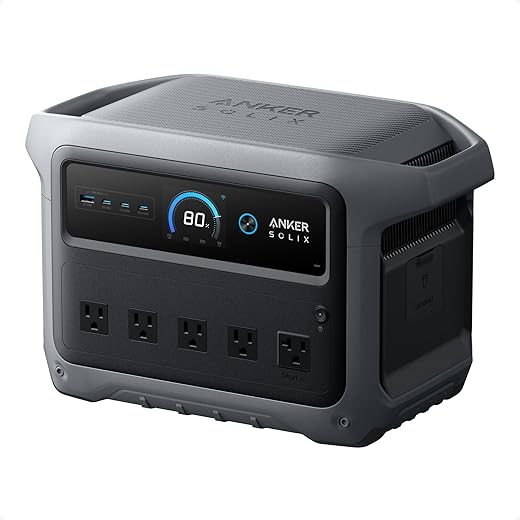
Features such as port placement, carrying comfort, app functionality, firmware updates, accessory availability, and customer support often determine whether a product remains useful years after purchase.
Evaluate the Port Selection
Your portable power station should support both your current devices and future upgrades.
Look for a balanced selection of outputs, including:
- AC outlets
- USB-C Power Delivery (100W–140W)
- USB-A ports
- 12V DC outputs
- Automotive socket
- Anderson or XT60 solar connectors (where applicable)
A wider variety of outputs reduces the need for adapters and improves flexibility in the field.
Consider Port Layout
Poorly positioned ports can become frustrating during everyday use.
High-quality designs typically:
- Separate AC and DC outputs
- Keep solar inputs away from USB ports
- Provide sufficient spacing for larger power adapters
- Include clear labels and illuminated displays
Thoughtful layouts improve cable management and make the station easier to operate in low-light conditions.
Assess Build Quality
Portable power stations are frequently transported between campsites, vehicles, and homes.
Look for features such as:
- Reinforced carrying handles
- Impact-resistant housing
- Rubber feet for stability
- Durable cooling vents
- Weather-resistant connector covers (where available)
A well-built enclosure helps protect the battery and electronics from everyday wear.
Evaluate the Mobile App
Many premium models now include companion apps that provide:
- Battery status
- Solar input monitoring
- Output power
- Charging schedules
- Firmware updates
- UPS settings
- Power-saving modes
Manufacturers that regularly update their software often improve performance, fix bugs, and add new functionality over time.
Reliable app support can significantly extend the useful life of a portable power station.
Examine the Accessory Ecosystem
A strong ecosystem makes it easier to expand your system in the future.
Consider whether the manufacturer offers:
- Compatible foldable solar panels
- MC4 adapters
- Extension cables
- Protective cases
- Vehicle charging cables
- Replacement charging bricks
- Spare parts
Companies that continue supporting products after launch generally provide a better ownership experience than brands that frequently discontinue accessories.
Verify Warranty and Customer Support
Before purchasing, review:
- Warranty duration
- Battery warranty terms
- Repair availability
- Firmware support
- Replacement parts
- Customer service responsiveness
A longer warranty backed by responsive technical support often indicates greater confidence in the product’s long-term reliability.
Independent review organizations consistently rank after-sales support as one of the strongest indicators of overall customer satisfaction.
Expert Buying Tip
The best portable power station isn’t always the one with the highest watt-hour rating.
Instead, prioritize a complete ownership experience that includes reliable hardware, intuitive software, readily available accessories, regular firmware updates, and responsive customer support. These factors often deliver greater long-term value than incremental increases in battery capacity alone.

Step 5: Compare Manufacturers, Warranties, and Real-World Performance Before You Buy
The best portable power station with fast solar input isn’t necessarily the one with the highest specifications—it’s the one backed by reliable customer support, a comprehensive warranty, regular firmware updates, transparent testing, and a proven track record of long-term performance.
Once you’ve narrowed your options by battery chemistry, solar input, and capacity, it’s time to evaluate something many buyers overlook: the company behind the product.
Portable power stations are long-term investments. A well-supported model can provide reliable service for years, while poor customer support or discontinued accessories can significantly reduce its value over time.
Our editorial team recommends comparing manufacturers just as carefully as you compare technical specifications.

Look Beyond Marketing Claims
Nearly every manufacturer advertises:
- Ultra-fast charging
- Industry-leading battery life
- Advanced battery management
- Smart app integration
- High-efficiency solar charging
While these features may be legitimate, not all companies provide independent testing or detailed documentation to support their claims.
Whenever possible, verify:
- Published charging curves
- Independent reviews
- Technical manuals
- User documentation
- Safety certifications
- Firmware release notes
Manufacturers that publish transparent technical information generally inspire greater confidence than brands relying solely on marketing language.
Verify Real-World Solar Charging Performance
Laboratory testing often occurs under Standard Test Conditions (STC), which include ideal sunlight intensity, panel temperature, and weather.
Real-world charging rarely matches these conditions.
Charging performance is influenced by:
- Ambient temperature
- Solar irradiance
- Cloud cover
- Panel orientation
- Cable length
- Battery temperature
- State of charge
- Internal thermal management
For example, a power station advertised with 800W maximum solar input may only sustain 600–700W under typical outdoor conditions if internal temperatures rise or battery charging begins to taper near full capacity.
This is why we recommend comparing independent testing alongside manufacturer specifications.
The U.S. Department of Energy explains that photovoltaic output varies significantly with environmental conditions, making real-world performance different from laboratory ratings.
Reference
https://www.energy.gov/eere/solar
Evaluate Firmware Support
Modern portable power stations are increasingly software-driven.
Firmware updates can improve:
- Charging efficiency
- Battery calibration
- UPS performance
- App stability
- Fan behavior
- Solar charging algorithms
- Error detection
Manufacturers that actively maintain their software often deliver a better ownership experience over several years.
Before purchasing, check:
- How frequently updates are released
- Whether updates are installed through Wi-Fi or Bluetooth
- Whether older products continue receiving support
Companies that abandon software updates shortly after release may offer fewer long-term improvements.
Compare Warranty Coverage Carefully
A warranty protects more than your investment—it also reflects the manufacturer’s confidence in its product.
When comparing warranties, consider:
Battery Warranty
Look for coverage that clearly specifies:
- Length of coverage
- Minimum retained battery capacity
- Cycle-life expectations
- Replacement conditions
Product Warrant
Verify coverage for:
- Internal electronics
- Display
- Inverter
- Charging ports
- AC outlets
- Cooling system
Some warranties exclude normal battery degradation or accidental damage, so reading the terms is important before purchasing.
Customer Support
Reliable customer service becomes especially valuable if you encounter:
- Firmware issues
- Charging problems
- Battery calibration questions
- Replacement part requests
- Warranty claims
Manufacturers with responsive technical support often resolve issues much faster than companies with limited service networks.
Check Safety Certifications
Portable power stations contain high-capacity lithium batteries and high-voltage electronics.
Look for recognized certifications such as:
- UL Safety Certification
- FCC Compliance
- CE Marking
- RoHS Compliance
- UN38.3 Transportation Certification
These certifications indicate that products have undergone testing for electrical safety, transportation requirements, and electromagnetic compatibility.
For battery transportation requirements, see the United Nations Manual of Tests and Criteria (UN38.3):
https://unece.org/transport/dangerous-goods
Compare Long-Term Cost Instead of Purchase Price
A lower purchase price doesn’t always mean better value.
Instead, compare:
- Cost per charging cycle
- Expected battery lifespan
- Warranty length
- Repairability
- Accessory availability
- Replacement battery options
- Software support
For example:
| Feature | Budget Model | Premium Model |
|---|---|---|
| Purchase Price | $499 | $899 |
| Battery Cycles | 800 | 4,000 |
| Warranty | 2 Years | 5 Years |
| Firmware Updates | Rare | Frequent |
| Cost per Cycle | Higher | Lower |
Although the premium model costs more initially, it often delivers substantially better long-term value.
Our Portable Power Station Buying Checklist
Before making your final decision, confirm that your preferred model meets the following criteria.
✓ Supports your required solar input
✓ Uses MPPT charging technology
✓ Compatible with your solar panel voltage
✓ LiFePO₄ battery (recommended for most buyers)
✓ Adequate inverter output
✓ Pure sine wave AC inverter
✓ Sufficient AC and USB-C ports
✓ Efficient thermal management
✓ Intelligent Battery Management System (BMS)
✓ Companion mobile app
✓ Regular firmware updates
✓ High-quality accessories available
✓ Strong customer support
✓ Comprehensive warranty
✓ Positive independent reviews
Completing this checklist helps ensure that the portable power station you choose delivers reliable performance for years, not just impressive portable power supply specifications on paper.
Final Verdict: Prioritize Solar Throughput, Not Just Battery Capacity
The best portable power station with fast solar input is the one that consistently converts available sunlight into usable energy while meeting your everyday power needs.
Throughout this guide, we’ve shown that battery capacity alone doesn’t determine performance. Instead, long-term usability depends on how efficiently the entire system works together.
When comparing models, prioritize:
- Accurate daily energy sizing
- High solar input capacity
- Wide MPPT voltage compatibility
- LiFePO₄ battery chemistry
- Intelligent Battery Management System
- Effective thermal management
- Reliable firmware support
- Strong accessory ecosystem
- Comprehensive warranty
- Transparent manufacturer documentation
By focusing on these factors rather than headline specifications, you’ll be better equipped to choose a portable power station that charges faster, lasts longer, and provides dependable power whether you’re camping, traveling in an RV, preparing for emergencies, or living off-grid.
At Option Cutter, our recommendations emphasize real-world performance, verified technical specifications, and long-term ownership value to help readers make confident buying decisions.
References
For additional information, consult these authoritative resources:
- U.S. Department of Energy – Solar Photovoltaic Technology Basics: https://www.energy.gov/eere/solar
- U.S. Department of Energy – Solar Photovoltaic System Design Basics: https://www.energy.gov
- National Renewable Energy Laboratory (NREL): https://www.nrel.gov
- Solar Energy Industries Association (SEIA): https://www.seia.org
- International Electrotechnical Commission (IEC): https://www.iec.ch
- U.S. Consumer Product Safety Commission (CPSC): https://www.cpsc.gov
- United Nations UN38.3 Battery Transport Testing: https://unece.org/transport/dangerous-goods
Why Trust Option Cutter?
Our editorial team researches hundreds of consumer electronics and outdoor power products each year using manufacturer documentation, independent testing, and technical specifications.
Related Posts
Frequently asked questions
Calculate your daily energy consumption in watt-hours (Wh) by multiplying each device’s power rating by the number of hours you expect to use it. Add approximately 20–30% to account for system losses and unexpected usage. This provides a realistic battery capacity target.
For most buyers, yes. LiFePO₄ batteries typically offer significantly longer cycle life, improved thermal stability, better solar charge acceptance, and lower long-term ownership costs. NMC batteries remain a good choice when minimizing weight is the primary goal.
The ideal solar input depends on your daily energy consumption and average peak sun hours. Divide your daily watt-hour usage by expected peak sunlight hours, then add approximately 25% to compensate for environmental and system losses.
No. Charging speed also depends on your solar panels, MPPT voltage compatibility, battery charge acceptance, battery state of charge, ambient temperature, and the station’s thermal management. A higher advertised input rating doesn’t guarantee faster real-world charging.
Yes. Unlike gasoline generators, battery-powered portable power stations produce no combustion emissions during operation, making them suitable for indoor use when operated according to the manufacturer’s instructions. Never block cooling vents or expose the unit to excessive heat or moisture.

Princess Rioboca is the Lead Editorial Writer at Option Cutter, bringing over seven years of hands-on experience in consumer technology journalism. Specializing in home networking and smart home architecture, she transforms complex technical data into practical, real-world upgrades. Princess personally tests and audits every product she reviews—evaluating real-world Wi‑Fi throughput, cable management durability, and streaming ecosystem stability—to filter out spec-sheet noise. Her rigorous, field-tested insights are designed to give readers transparent, unbiased buying advice on what to purchase, what to skip, and exactly why.