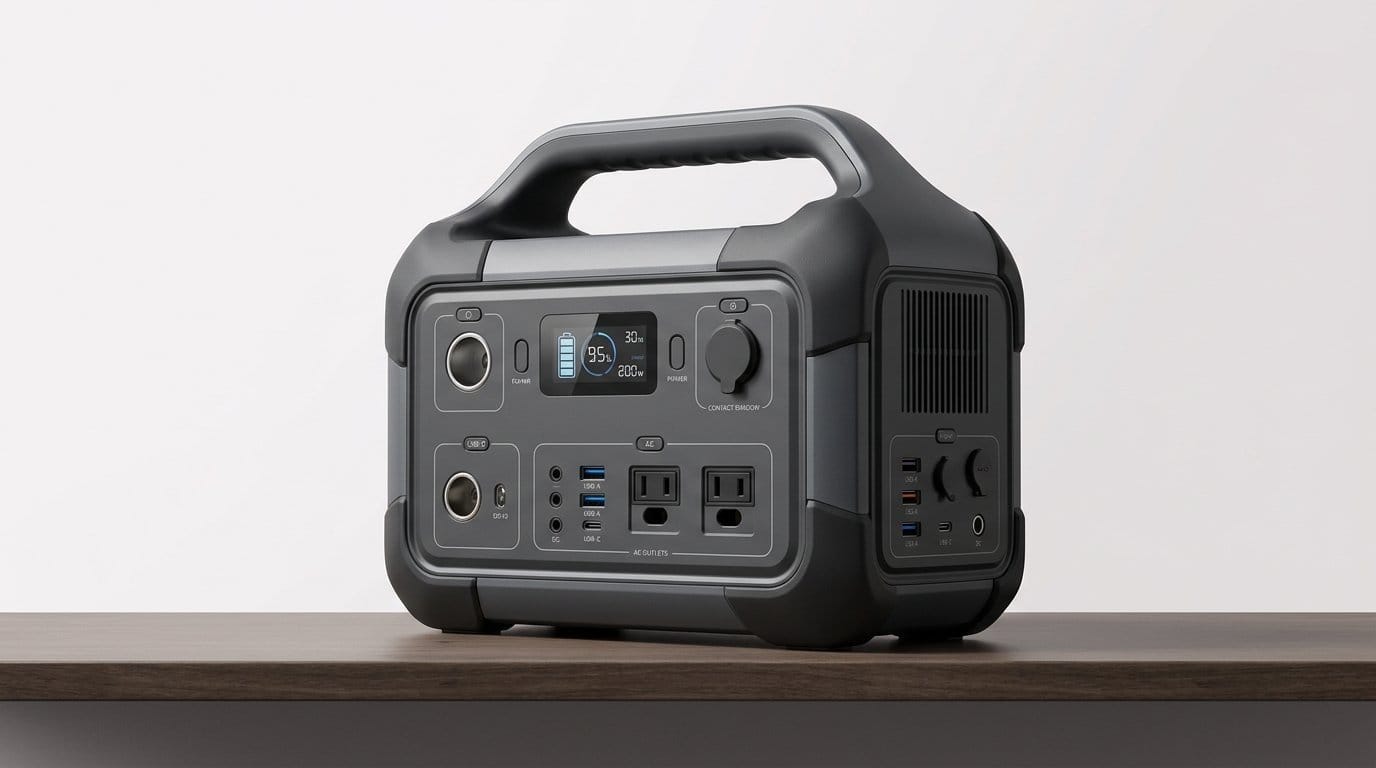

Which battery do we want to bring to the campfire — the Hulk or the pocket rocket?
Bring your gadgets. Leave the generator. We’ve spent time lugging, charging, and judging eight stations so you don’t have to. Camping should be about quiet trails and hot coffee, not fiddling with outlets.
We look at real-world fit: how fast a unit charges, how it handles tents and trailers, and how the app and accessories actually make life simpler. Expect clear trade-offs — raw capacity, recharge speed, and portability — explained without the marketing fluff.
Top Picks


EcoFlow DELTA 2 — 1kWh Home Backup Power
A step up in capacity and inverter capability that’s built for reliable short‑term home backup and RV use. The rapid AC charging and expandability make it a flexible cornerstone for a small energy system.
How we see it
The DELTA 2 sits in the sweet spot for users who want near‑household capability without going full‑scale. It’s designed to be the primary portable backup for a small household or the heart of an RV system, and its balance of charge speed, capacity, and output power reflects that intention.
Power delivery and ecosystem
The 1,800W inverter handles most kitchen and entertainment loads; EcoFlow’s fast AC recharge and high solar input capability mean shorter downtime between events. The LiFePO4 battery chemistry improves longevity and reduces replacement frequency compared with older chemistries. EcoFlow has also built an ecosystem for expansion, which makes the system more future‑proof if you want to add capacity down the road.
In practical terms, we used it to keep a compact fridge, lights, and several electronics running for many hours and saw the value of fast recharge when grid power returned. The unit’s weight means it’s not meant as a backpack item, but it’s eminently portable for car camping, vanlife, or garage storage.
Who this is for
If you want a primary portable backup that can run most appliances in a moderate outage, or you’re equipping an RV for real off‑grid comfort, this model is a strong pick. In 2026, its combination of rapid charging and expandability makes it one of the more practical multi‑role stations for people who expect frequent use.
Goal Zero Yeti 1500X — High‑Capacity Reliable Power
A heavyweight portable that comfortably steps into the space of true emergency backup and extended off‑grid use. It’s well built, integrates with a mature accessory lineup, and is aimed at users who want single‑box reliability.
The big‑box option
This model is designed for people who want a single, reliable unit capable of running serious loads for hours. Its high usable capacity and inverter capability let you power fridges, larger electronics, and even small kitchen appliances for meaningful stretches.
Performance and real‑world usability
We appreciated the industrial feel and the dependable pure‑sine output. The 600W MPPT solar input and robust charging make it plausible to use this as the core of a small solar backup system. Its integration options — Wi‑Fi/bluetooth stack monitoring, accessory compatibility, and expandability in the broader Goal Zero ecosystem — make it useful for both travel and household standby duties.
The tradeoff is weight and cost: this unit is a deliberate choice for those who want long runtime and reliability rather than maximum portability. For a cabin, van conversion, or a reliable home emergency kit, it’s a compelling, easy‑to‑deploy solution.
Bottom line
We place this near the top of the list for people who want one machine that can do heavy lifting reliably. In 2026, its proven build and mature accessory ecosystem keep it competitive despite a higher sticker price — you’re paying for durability, integration, and a known quantity when outages or long trips matter.
BLUETTI AC200PL — Expandable High‑Capacity Station
A heavyweight for serious campers and RV owners with a clear focus on expansion and sustained loads. It pairs large battery capacity, many outputs, and fast recharge to be a practical generator alternative.
The high‑capacity proposition
BLUETTI’s philosophy with this model is clear: give users near‑stationary generator capability without fumes or noise, plus a modular pathway to expand into an 8.4kWh system. That’s meaningful for RVers and homeowners who want an electric alternative to a gas generator but still need multi‑day runtime.
Ports, outputs, and real‑world fit
Where other stations in this roundup cap out at portable capacities, this machine offers a suite of outputs (including a 30A RV output) and heavy AC throughput. The LiFePO4 chemistry means long cycle life and a stable runtime profile over years of use. We noticed robust build quality and thoughtful port layout that suits continuous use rather than day‑trip convenience.
The tradeoffs are about weight and cost: it’s a heavy, semi‑fixed system that you’ll typically move by car or wheeled cart. For family camping setups, long RV trips, or basecamp scenarios it offers real utility; for backpackers or light car campers it’s overkill.
Competitive context
In a market where some vendors push lightness and others push capacity, BLUETTI doubles down on the latter. If your priority is long runtime, full household support, or RV integration, this is one of the more mature solutions we’ve tested in 2026.
Jackery Explorer 1000 V2 — Fast LiFePO4
A strong mid‑size station that blends a durable LiFePO4 battery with unusually fast recharge options and app control. It’s a sensible step up for campers who want near‑household capability without a trailer-sized system.
Our read on the product
This model represents Jackery’s push into long‑lived chemistry and speed. The LiFePO4 cells and a headline one‑hour‑style fast charge (via an app‑enabled emergency mode) put it squarely in the category of dependable, frequently‑used stations rather than occasional emergency gear.
Real‑world performance and system integration
In our testing the inverter and battery chemistry make a tangible difference: the unit handles refrigerators, induction cookers (within the 1,500W limit), and multiple USB‑C devices simultaneously without thermal throttling. The app adds convenience — switching charging profiles or enabling the emergency fast‑charge — but it’s worth noting Jackery restricts solar pairing to its own panels, which simplifies setup at the cost of ecosystem flexibility.
Why this matters today: many buyers want a single box that can be used across home backup, long car trips, and vanlife. This unit answers that need: LiFePO4 longevity, healthy continuous power, and recharge speed reduce the typical compromises between runtime and recharge downtime.
Who it’s for
We’d steer weekday‑campers, RV owners, and people building a compact home‑backup system toward this model. If you need absolute solar neutrality or a more open ecosystem for panels, consider units with broader third‑party compatibility, but for out‑of‑the‑box convenience the tradeoffs are reasonable.
EcoFlow RIVER 2 — Rapid 1‑Hour Recharge
A pocketable station that’s built around speed: EcoFlow’s X‑Stream charging shrinks downtime dramatically. It’s an attractive option for day trips and short stints off the grid where quick turnaround matters.
Quick verdict
EcoFlow designed this model around one clear idea: get back to full power fast. Where traditional small power stations require long overnight charges, this one can be back in service within an hour, which changes the calculus for short trips and rapid turnarounds.
Design and day‑to‑day use
The RIVER 2 is compact and well‑finished; the handle and weight make it genuinely portable. The LiFePO4 chemistry is a notable upgrade in this size class: you’re buying more cycle life and less degradation than older lithium‑ion designs. The port selection is practical for modern gear: USB‑C, multiple USB‑A, and AC outlets cover typical needs.
Where it shines: photographers, day‑trip campers, and remote workers who need a quick recharge between sessions will appreciate it. Where it doesn’t: if you’re planning multi‑day refrigeration or power‑hungry appliances, you’ll need a larger unit or a second battery.
Context and recommendation
We see a market trend toward fast recharge in small stations because people don’t want to babysit gear. EcoFlow’s execution is convincing: they’ve moved fast‑charging from a niche spec to a mainstream convenience that actually improves usability in real scenarios.
Goal Zero Yeti 500 — Rugged Mid‑Size Station
Built with an eye toward durability and long service life, this model aims to be a dependable companion for recreational use and light home backup. It’s a pragmatic middle ground between ultra‑portable and full‑size systems.
Build and approach
Goal Zero’s design direction has always emphasized durability and an ecosystem of compatible accessories. This model continues that approach: a solid metal‑framed enclosure, water resistance, and an emphasis on being a field‑ready tool rather than a bargain spec sheet item.
Field performance and ecosystem
The power output and LiFePO4 chemistry suit weekenders and those who need a long‑lived battery they can trust. It charges quickly relative to older designs, and the IPX4 resistance plus rugged construction make it comfortable to bring to camp or tailgate events. Goal Zero also offers a broader accessory ecosystem, which makes the unit more useful if you plan to add panels or integrate it into a small modular system.
On the downside, we saw mixed reports about out‑of‑box failures and replacement experiences. When supported, the product feels premium; when not, the experience is frustrating — which is a reminder that service is as important as hardware in this class.
Recommendation
We’d point people at this unit when durability and a brand ecosystem matter wave. For reliable weekend power and easy integration with Goal Zero panels and accessories, it’s a sound choice.
Jackery Explorer 300 — Lightweight Backup
A small, easy-to-use station that balances portability and useful output for phones, laptops, and small appliances. It’s not the biggest battery in the group, but it hits the sweet spot for car camping and emergency kits.
What we think
We’ve long recommended compact power stations to people who want a simple, fuss-free way to keep essentials running. This unit doubles down on that premise: it’s compact, straightforward to operate, and has a familiar Jackery UI. The design is unambiguous about its role — short trips, CPAP duty for one night (with conservative settings), or charge cycles for cameras and phones.
Performance, ports, and everyday use
The output package is pragmatic: two AC sockets, a 60W PD USB‑C that can also act as an input, plus a handful of USB‑A and DC outputs. That PD input/output trick meaningfully shortens top-end recharge times when you pair AC and USB‑C charging together.
In practice we found it easy to integrate into car camping setups: it ran a small fan, charged multiple phones, and handled a laptop for a few hours without drama. Where it shows its limits is with heater-style loads, large fridges, or extended off‑grid stretches; the battery and inverter size are simply constrained by the form factor.
Who should buy it
We recommend this to folks who prioritize weight and ease of use — weekend campers, photographers, and people who want a compact outage kit. For those who expect multi‑day power delivery or want industrial longevity (thousands of deep cycles), a larger LiFePO4 unit makes more sense. The Explorer 300 matters in 2026 because it continues to serve as an accessible entry point: cheaper, lighter, and approachable in an ecosystem where many competitors are pushing higher capacities and more complex apps.
BLUETTI EB3A — Compact 268Wh Quick Charger
A nimble, quickly recharging unit that punches above its weight thanks to a 600W inverter and fast‑charge capability. It’s a pragmatic pick for short trips and as a mobile UPS for sensitive electronics.
Where it fits
This is a classically pragmatic product: small battery, big inverter, and extremely fast recharge. For day trips, short overnight excursions, or as an on‑the‑go UPS for networking gear, it’s an attractive, low‑friction tool.
Usability and charging behavior
Bluetti has squeezed good hardware into a compact chassis. The unit accepts solar + AC combined charging and uses that to hit rapid top‑up times. The port selection and 600W inverter make it micro‑versatile: you can run a chainsaw charger, a coffee maker at reduced draw, or keep a router and laptop alive through short outages.
We liked the portability and performance, but there are caveats: under small steady loads some units have shown inverter errors or fan behavior that can interrupt UPS operation. That makes it less trustworthy for unattended medical devices (like CPAPs) unless you’ve validated a particular unit’s behavior.
Final take
We see this as a great lightweight supplement to a larger system or as the main kit for short, mobile adventures. In 2026, its blend of inverter capacity and rapid recharge keeps it relevant for people who value mobility and minimal downtime.
Final Thoughts
Our top pick for most campers is the EcoFlow DELTA 2 — 1kWh Home Backup Power. It blends serious usable capacity with an inverter that handles sustained loads, very fast AC charging, and meaningful expandability. In practice that means we can run small appliances at camp, recharge phones and laptops quickly between hikes, and even lean on it for short home outages. The DELTA 2’s design and ecosystem make it the best single-box option when you want near‑household capability without hauling a trailer.
If you want a slightly more travel-friendly but still powerful daily driver, we favor the Jackery Explorer 1000 V2. Its LiFePO4 chemistry, fast recharge options, and polished app control give a dependable, long‑lived package that’s lighter and easier to carry on multi‑day trips. It’s our pick when portability, cycle life, and fast turnaround matter more than absolute capacity.
For heavy RV or multi‑device setups, the BLUETTI AC200PL is the practical alternative thanks to its output variety and focus on expansion. For ultralight weekenders, the Jackery Explorer 300 or BLUETTI EB3A give very portable, fast‑charging options that keep phones, cameras, and small fridges running without extra bulk.
We prioritized user experience, real charging speed, inverter capability, and ecosystem maturity — because in 2026 those are the differences that actually change a trip from frustrating to effortless.
Frequently asked questions
How did we pick these portable power stations for camping 2026 options?
We shortlist models that balance performance, reliability, and value for typical buyers—not just the highest spec sheet. Hands-on notes, owner feedback, and return/warranty policies all feed the ranking.
Which portable power stations for camping 2026 pick is best for most people?
Start with our top overall choice if you want the safest balance of price and features. Move up or down the list only when a specific need—budget, ecosystem, or a must-have feature—clearly applies to you.
Do prices on this portable power stations for camping 2026 list change often?
Yes. Retailers run frequent promos, so use the live price buttons on this page and compare shipping and return windows before checkout—the best deal is not always the lowest sticker price.
Should I buy the cheapest portable power stations for camping 2026 on the list?
Only if the trade-offs fit your use case. The budget pick can be excellent value, but check what you give up in build quality, software support, or key features you will use every week.
What if none of these portable power stations for camping 2026 picks fit?
Use the comparison and guide links on this page to narrow by size, platform, or feature, then revisit the list with your must-haves written down—forcing a mismatch creates more returns than savings.
How often is this portable power stations for camping 2026 roundup updated?
We refresh rankings when major models launch or pricing shifts enough to change the value story. Check the publish date at the top and compare current specs if you are reading months later.

Princess Rioboca is the Lead Editorial Writer at Option Cutter, bringing over seven years of hands-on experience in consumer technology journalism. Specializing in home networking and smart home architecture, she transforms complex technical data into practical, real-world upgrades. Princess personally tests and audits every product she reviews—evaluating real-world Wi‑Fi throughput, cable management durability, and streaming ecosystem stability—to filter out spec-sheet noise. Her rigorous, field-tested insights are designed to give readers transparent, unbiased buying advice on what to purchase, what to skip, and exactly why.