

Why obstacle avoidance is the new baseline for sensible drone buying
We’ll show how to pick a drone whose obstacle avoidance actually improves flying, protects gear, and grows with our needs. We cut through specs to evaluate sensor design, real-world behavior, and ecosystem support so buying feels smarter, safer, and future-ready.
What we need before choosing

Set our mission profile first
Are we hikers collecting cinematic footage or commuters scanning rooftops? The use case changes everything.Define the contexts where we’ll actually fly before we look at sensors or specs. Map real use cases — congested hiking trails, urban rooftop runs, tight indoor inspections, cinematic wide shots, or high-speed racing — and write down what each demands from avoidance.
Identify key requirements quickly:
Estimate pilot skill, payload, and endurance. Choose stronger automatic modes if we’re beginners; pick customizable intervention if we’re experienced. Note payloads (camera size, LiDAR, thermal) because extra weight affects flight time and sensor occlusion. Check legal constraints (no-BVLOS rules, geofencing) that limit reliance on automation.
Prioritize mission needs over flashy single-sensor claims: in today’s market, consumer ease-of-use and prosumer modularity split products — know which side solves our primary problems.
Understand the sensor stack: what’s actually sensing obstacles
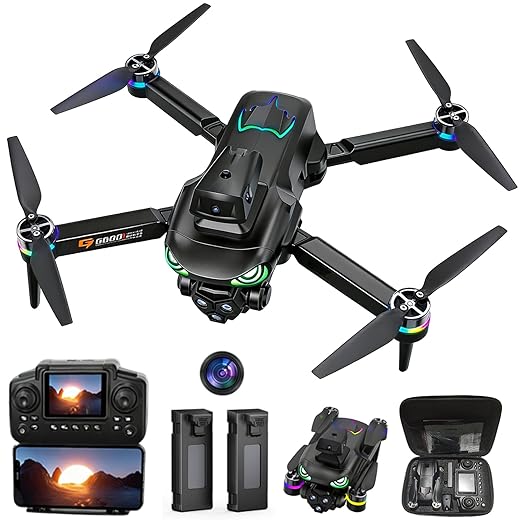
Lidar, stereo vision, ultrasonic — why some sensors are honest and some are marketing noise.Consider the sensor trade-offs before buying: vision, lidar/ToF, sonar, IR, and radar each behave differently in light, weather, and clutter.
Compare sensor types quickly:
Combine sensors thoughtfully.
Favor multi-sensor fusion: pair cameras for mapping with lidar/ToF for dependable ranges, and add radar for all-weather redundancy. Check how manufacturers integrate sensors: look for wide fields of view, staggered placements (front/side/down), and clear lines of sight that avoid gimbal or payload occlusion.
Test for real-world setups: fly a short indoor/low-light course and verify that the array hands off detection smoothly instead of ping-ponging between sensors.

Decode performance claims and test real-world behavior
Specs lie, flight logs don’t — how to separate marketing from dependable avoidance.Interpret manufacturer specs against the scenarios you actually fly. Claimed detection ranges, reaction times, and directionality only matter if they match the conditions the vendor used to measure them.
Perform these four basic checks and take notes on outcomes (gimbal/camera stability, jitter, abrupt corrections, and how the system signals intervention):
Run reproducible tests in representative environments: wooded trails for branches, parking garages for confined spaces, and dusk/dawn for vision systems. Repeat runs, vary speed, and note when avoidance triggers.
Inspect logs and telemetry for timestamps, event flags, false-positive/false-negative counts, and operator overrides. Expect firmware updates to change behavior; choose systems whose avoidance architecture adapts cleanly to improvements.
Prioritize software, integration, and the ecosystem
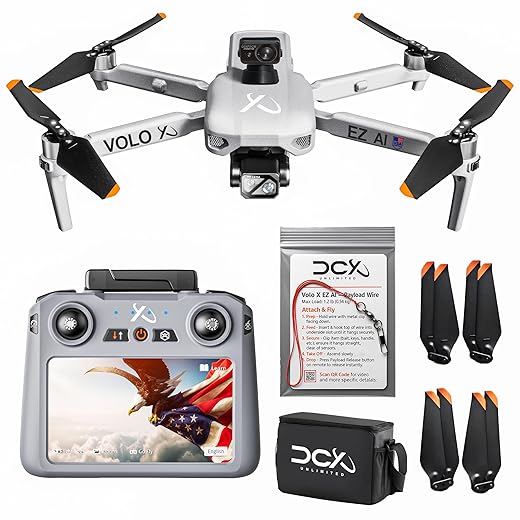
Buying a drone is buying into a platform — does the software and app ecosystem make obstacle avoidance useful or annoying?Prioritize the software that turns sensor data into flight decisions. We shift attention from cameras and Lidars to the apps, firmware, and services that make avoidance predictable and useful.
Inspect the companion app for transparent UI cues: clear icons when avoidance is active, a visible obstacle map, and easy toggles for intervention levels. Try a mission and watch whether the planner replans around dynamic obstacles or simply aborts — that difference matters for automated inspections or cinematography.
Test these practical points before buying:
Probe the developer community and documentation. A vibrant ecosystem extends avoidance with smarter algorithms; locked systems leave us stuck with whatever shipped.
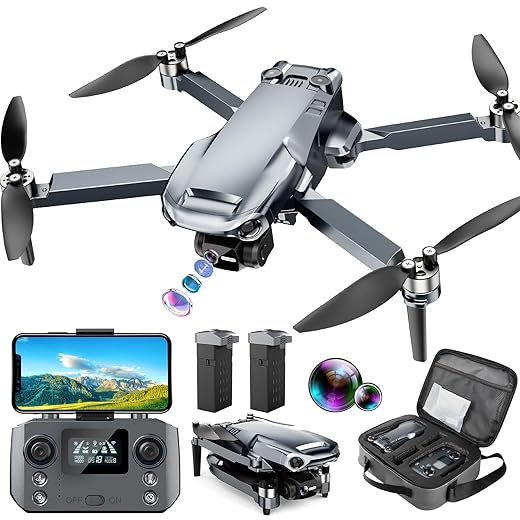
Make the purchase decision: balance budget, support, and safety
Spend where it counts — and always assume you'll need updates, spare parts, and sensible customer service.Synthesize the prior steps into a compact buying checklist and treat it like a pre-flight manifest.
Match the drone to our mission profile — pick a nimble consumer model for travel shots, a midrange hybrid for prosumer inspection, or an enterprise frame with LiDAR for survey work.
Verify the sensor-fusion approach — prefer systems that combine stereo vision, ultrasonic/IR fallback, and inertial data rather than a single camera.
Confirm documented real-world avoidance behavior by reading independent tests and watching footage of the drone handling moving people, branches, and glass.
Evaluate the software ecosystem: check SDKs, OTA update cadence, clear UX for avoidance states, and a supportive developer community.
Test the drone immediately after purchase: fly in a controlled site, trigger obstacle scenarios, verify overrides, and log behavior before trusting it on critical jobs.
Bottom line
We choose drones by mission-first criteria, vet sensor fusion and real-world avoidance, favor intuitive software and integrated ecosystems, weigh support and safety against cost; this balance defines usable, future-proof choices rather than specs-driven hype—are we buying for today or growth?

Chris is the founder and lead editor of OptionCutter LLC, where he oversees in-depth buying guides, product reviews, and comparison content designed to help readers make informed purchasing decisions. His editorial approach centers on structured research, real-world use cases, performance benchmarks, and transparent evaluation criteria rather than surface-level summaries. Through OptionCutter’s blog content, he focuses on breaking down complex product categories into clear recommendations, practical advice, and decision frameworks that prioritize accuracy, usability, and long-term value for shoppers.