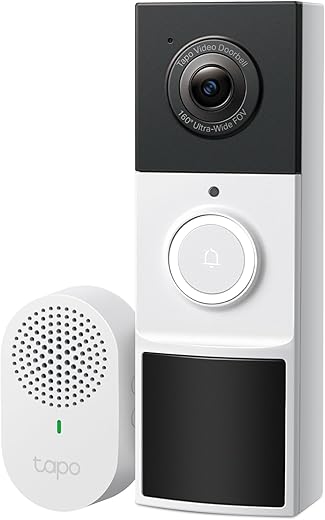

A pragmatic, subscription‑friendly doorbell with crisp 2K video — great for privacy‑minded users, with a few battery and Wi‑Fi trade‑offs.
Ever missed a delivery because your camera only caught a shoulder or a shoelace? We have — and that’s the exact problem the Tapo 2K Wireless Smart Video Doorbell D210 aims to fix with a wide 160° diagonal view and 2K daytime clarity that actually shows faces, not just posture.
We tested the D210 as a pragmatic, budget-conscious alternative to subscription-heavy doorbells: crisp daytime video, full‑color night view with an adjustable spotlight, a huge 6400mAh battery, and subscription‑free local storage via microSD. It plays well with Alexa and Google, and it’s a solid pick for renters or privacy‑minded users — but expect faster battery drain if you lean on motion recording, plus the usual 2.4 GHz Wi‑Fi and app quirks. In short: design and ecosystem integration matter here because this isn’t the fanciest option, but it is one of the most sensible ones in today’s market.
Tapo 2K Wireless Video Doorbell D210
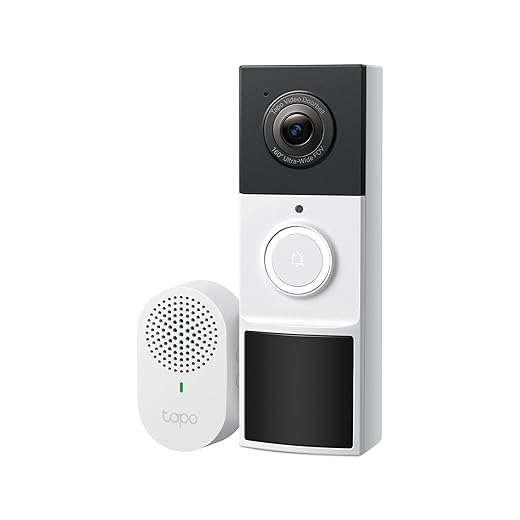
We found this model to be a pragmatic balance of image clarity, battery flexibility, and privacy-friendly storage options. It’s a smart choice for people who want strong daytime video, a long-lived battery in bell-only mode, and the option to skip cloud subscriptions.
Overview
We approach the Tapo D210 as a practical, budget-conscious entry in the battery-powered video doorbell category. The D210 leans into three clear priorities: image clarity, battery flexibility, and a low-friction, app-driven experience that integrates into broader smart-home setups. Unlike some competitors that push cloud subscriptions as the only viable storage option, the D210 makes local microSD storage a first-class option while keeping the software experience polished.
Design and physical setup
The D210 is compact and intentionally minimal: a matte white plastic housing, a tactile doorbell button, and a small built-in spotlight. The package is pragmatic for typical suburban installations — it includes a horizontal wedge, mounting screws, adhesives, and a plug-in chime for indoor notification. The build feels lightweight but robust enough for front-porch use, with an IP65 exterior rating for rain and splashes.
Image: field placement and size


What matters in real-world mounting is angle and distance. The included 15° wedge is useful when your doorframe layout would otherwise cut off a person’s feet or obscure packages on the step. We recommend spending a moment aligning the unit to get a centered subject at typical doorstep distance (3–8 ft).
Video, night visibility, and why 2K matters
Resolution on the D210 is marketed as 2K. In everyday use that translates to sharper facial detail and clearer text on parcels or visitor IDs compared with many 1080p battery doorbells. The 160° diagonal field of view reduces blind spots, but wide lenses still introduce slight edge distortion — common across this product class.
Two things elevate the night experience: the adjustable spotlight and a color night mode. When the spotlight engages on motion, the scene becomes more readable and useful for identification. It’s not theatrical lighting, but enough to turn a murky feed into something you can act on.
Motion intelligence, zones, and alerts
The D210’s motion engine offers person detection and configurable activity zones. In practice the person filter meaningfully reduces false positives from passing cars or tree branches, but it’s not perfect: tightly-packed scenes, pets, or bicycles can still trigger alerts. The app provides sensitivity sliders and zone drawing to tune the right balance of detection vs. battery life for your setup.
Power options and real-world battery life
Battery flexibility is one of the D210’s strongest selling points. The internal 6400mAh battery gives genuine freedom from wiring, and the unit can be charged via USB when removed. We found these patterns:
If you need round-the-clock recording, hardwiring to existing doorbell power or choosing a wired variant is a better long-term choice.
Storage and privacy trade-offs
Here the D210 is refreshingly flexible. Local recording to a microSD card (up to 512GB) is supported without requiring subscriptions. Tapo Care is available if you prefer cloud retention and the added convenience of remote history access, but the lack of mandatory subscription is a notable plus for privacy-minded buyers. TP-Link uses AES/TLS encryption for transport and storage — standard practice, but welcome.
Integration and the app experience
The Tapo app is straightforward and centers all device management in one place. Linking the doorbell to Alexa or Google Assistant is simple: once connected you can view the feed on compatible displays and trigger routines. The app also offers preset voice replies and quick response phrases for hands-free interaction.
A couple of operational quirks we noticed: the live-view latency is acceptable for conversation but not perfectly instantaneous, and some users report occasional UI layout issues that hide a portion of the vertical frame on certain phones. These are not dealbreakers, but worth noting for users who expect flawless app polish.
Table: Quick feature comparison (high-level)
| Feature | What we saw | Why it matters |
|---|---|---|
| Resolution | 2K daytime, 160° DFOV | Better detail than 1080p for faces/packages |
| Night vision | Color night with spotlight | Improves identification at low light |
| Power | 6400mAh battery, USB charging | Great for non-wired installs; variable life |
| Storage | microSD up to 512GB + optional cloud | No-subscription local option |
| Smart home | Alexa & Google integration | Works with common assistants |
Everyday usage notes
Durability and environment
The D210’s IP65 rating means it will handle rain and routine weather, though long-term exposure in harsh climates will stress any plastic housing. If you live in an area with frequent storms, consider placing it under a porch overhang or choosing a hardwired installation that avoids repeated battery removal.
Final thoughts and competitive position
We see the Tapo D210 as a thoughtful middle-ground product. It doesn’t chase every ultra-premium feature — there’s no always-on continuous recording unless you hardwire — but it offers enough video quality, bright night visibility, and local storage flexibility to satisfy most buyers who want an affordable, private-first doorbell. Against competitors that lock key functions behind subscriptions, the D210’s local-first approach stands out.
If your priorities are subscription-free storage, long battery life in ring-first mode, and a simple smart-home fit, the D210 is an excellent value. If you need always-on recording with minimal maintenance and unlimited clip history out of the box, you’ll want a wired model or a higher-tier product designed for mains power.


Who should buy it
Who should look elsewhere
Overall, the D210 hits the sweet spot for practical security with sensible trade-offs that favor battery flexibility and privacy-friendly storage.
FAQ
Battery life varies with usage patterns. In ring-only mode with occasional live views, many users report several weeks to a few months between charges. If you enable frequent motion recording, battery life falls dramatically and will require more regular charging. For continuous recording, we recommend hardwiring or a wired model.
No — the D210 supports local storage via microSD (up to 512GB) so you can keep recordings without a subscription. Tapo Care is optional if you want cloud backups, longer retention, or simpler remote history access.
No. The D210 connects over 2.4 GHz Wi‑Fi only. Make sure your router broadcasts a 2.4 GHz network or enable dual-band support so pairing and live footage remain stable at the installation location.
No. The spotlight activates based on motion or as configured in the app. You can adjust its brightness or disable it entirely if you prefer passive infrared night vision to preserve stealth or battery life.
Person detection does a good job reducing false positives compared with generic motion detection, but it’s not perfect. Tuning activity zones and sensitivity helps reduce triggers from pets, branches, and vehicles.
Yes. The Tapo D210 integrates with Alexa and Google Assistant so you can view the live feed on compatible smart displays and respond through them. Feature availability may vary by display model.
The D210 includes an anti-theft alarm setting you can enable in the app to sound an alarm if the unit is tampered with. Local microSD storage can help preserve clips, but a stolen unit may remove immediate physical access to recorded media unless clips were backed up to the cloud.
No. The design intentionally allows the unit to be removed and recharged via the USB cable included. It’s a practical option for renters or seasonal homes, though frequent removal is less convenient than a hardwired setup.

Chris is the founder and lead editor of OptionCutter LLC, where he oversees in-depth buying guides, product reviews, and comparison content designed to help readers make informed purchasing decisions. His editorial approach centers on structured research, real-world use cases, performance benchmarks, and transparent evaluation criteria rather than surface-level summaries. Through OptionCutter’s blog content, he focuses on breaking down complex product categories into clear recommendations, practical advice, and decision frameworks that prioritize accuracy, usability, and long-term value for shoppers.