A travel‑ready blend of class‑leading ANC and immersive spatial audio—worth the premium if you value comfort, ecosystem polish, and exceptional clarity.
We’ve all tried to work on a red‑eye or enjoy a podcast in a noisy café only to be reminded that silence is a luxury — the problem our noise-cancelling headphones tests keep returning to—especially when ANC turns everything into a dull, boxed‑in thump. What we want is real quiet that doesn’t feel like a tradeoff for comfort or soundstage is what we look for across wireless headphones, and that’s where most competitors still stumble.
The Bose QuietComfort Ultra aims to solve that exact problem. In our testing, these headphones deliver bone‑deep noise cancellation, a surprisingly spacious spatial audio experience thanks to CustomTune, and a lightweight fit that actually invites long listening sessions. The catch: the price, shorter battery life with Immersive Audio enabled (~18 hours), and a learning curve for touch controls—yet the tight integration with the Bose app, SimpleSync, and Fast Pair makes them a compelling option for travelers and listeners who value clarity, ecosystem polish, and real-world comfort over headline specs alone.
Bose QuietComfort Ultra Wireless Noise-Cancelling Headphones

We think these headphones strike an impressive balance between bone-deep noise cancellation, a spacious immersive soundstage, and day-long comfort. For frequent travelers and listeners who want more than classic ANC—plus tight ecosystem integration—the tradeoffs in price and some feature complexity are worthwhile.
Bose QC Ultra Headphones Review: Is This the New ANC King?
How we approached the QuietComfort Ultra
We spent extended listening sessions, commute tests, and phone-call trials to evaluate how Bose’s QuietComfort Ultra performs in real life. Our focus was on the things that matter day-to-day: how well the noise cancellation isolates you, whether the spatial audio actually adds something meaningful, and how the headphones behave in the broader device ecosystem (pairing, app control, and interaction with other Bose products).
Design and comfort: built to disappear
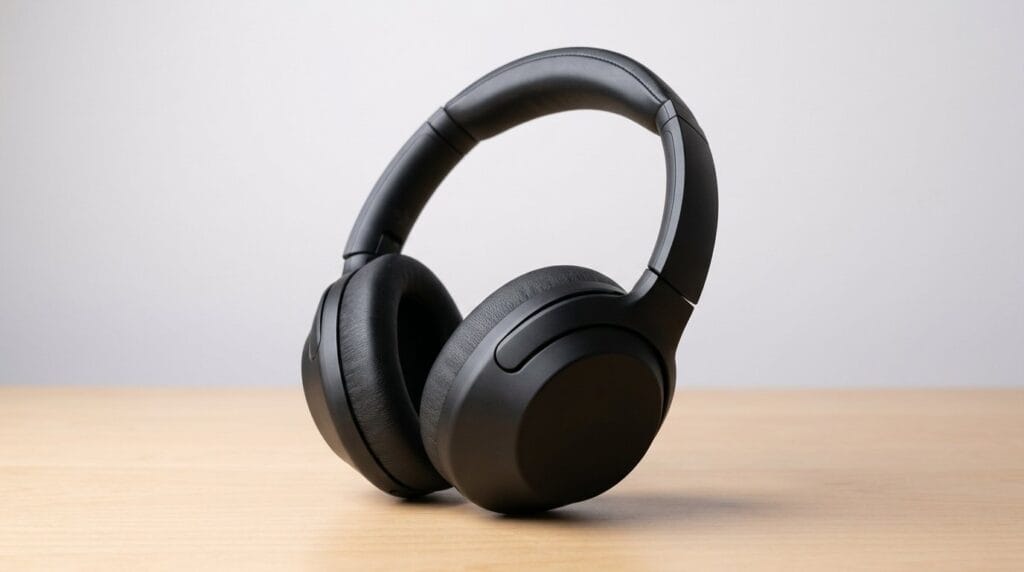
Bose has long favored understated, functional design, and the QC Ultra continues that thread while taking cues premium competitors in the wider headphones shop. The headband is slim but supported by a sturdy metal arm, and the earcups use soft, low-profile cushions that reduce clamping pressure compared with older models.
We found the fit lightweight and balanced: the headphones sit close to the head without feeling tight, which matters if you wear glasses or spend long flights in them. Materials feel upscale without being fragile—Bose mixes metal and high-grade plastics to keep weight down while maintaining durability.


Noise cancellation and the practicality of silence
The QuietComfort Ultra’s active noise cancellation (ANC) in the noise-cancelling headphones category is the headline: Bose tuned the system to reduce a wide spectrum of ambient noise, airplane rumble to office HVAC hum. Where it matters most—low-frequency droning—these headphones are exceptionally quiet. Bose provides three principal modes (Quiet, Aware, Immersion), and toggling between them changes both the depth of cancellation and the perceived closeness of the audio.
We appreciated that the ANC is reliable in real-world noises: trains, cafés, and wind are handled well. It’s not just a big numerical improvement over last-gen models—it’s a perceptible difference in how calm a cabin or office can feel. The main caveats are predictable: ANC can occasionally alter tonal balance at extreme settings, and some environmental high-frequency noises (sudden speech or sharp clicks) can leak through more than a heavy-weight studio-grade setup would.
Spatial audio and CustomTune: why it matters now
Bose’s Immersive Audio is the product’s most discussed feature. Unlike a gimmick surround effect, the implementation aims to move the music out in front of you, creating a sense of space and separation.
CustomTune is a personalization step that measures your ear’s acoustic response and adapts the playback. The result is a sound signature that feels more precise and centered for the individual listener.
our listening tests, spatial processing makes layered mixes more intelligible—vocals sit forward, reverb tails feel more natural—and CustomTune reduces the “one-size-fits-all” sheen that many headphones suffer. That said, the immersive stage is content dependent: well-mixed tracks and spatial-enabled services benefit most; compressed streams show less dramatic improvement.


Sound profile and tuning flexibility
Out of the box, the QC Ultra has a balanced, slightly warm presentation. Bass is present and controlled; mids are articulate; highs are detailed without sounding brittle. For listeners who want to tweak the sound, the Bose app offers a simple equalizer and presets that make a noticeable difference with minimal effort.
The headphones’ strengths are clarity and staging rather than hyper-aggressive bass. For studio-critical listening, they’re very competent—CustomTune helps keep tonal anomalies in check—but they’re still tuned for consumer enjoyment rather than reference flatness.
Connectivity, controls, and ecosystem
Bose equips the QC Ultra with Bluetooth 5.3, Snapdragon Sound certification for compatible Android devices, Google Fast Pair, and SimpleSync integration with Bose smart soundbars. In practice that means quick pairing, multi-device awareness, and the ability to simultaneously or quickly switch between a laptop and phone.
Controls are a mix of touch gestures and physical buttons: there’s convenience in tap-and-swipe interactions for media, but the densely packed control surface has a small learning curve. We value the app-driven updates and features—Bose pushes meaningful firmware updates—but users who prefer full hardware control may want more tactile separation.
Battery life and charging behavior
Bose rates the battery at up to 24 hours with ANC off and up to 18 hours when Immersive Audio is enabled. In real-world usage—mixing ANC and Immersive modes—we found daily multi-hour use comfortable and generally reliable for long trips, though heavy Immersive Audio use does shorten the interval between charges.
A quick-charge option provides useful top-ups (roughly 15 minutes for several hours of playback), and the USB-C charging implementation is sensible and fast enough for on-the-go needs.
A quick technical snapshot
| Item | Quick spec |
|---|---|
| ANC Modes | Quiet / Aware / Immersion |
| Battery | Up to 24h (18h with Immersive Audio) |
| Bluetooth | 5.3, Snapdragon Sound certified |
| Extra features | CustomTune, Spatial Audio, SimpleSync |
| Weight | Lightweight for over-ear class |
Where the QuietComfort Ultra fits in the market
We compare these to Sony’s top-line ANC offerings and Apple’s spatial efforts in our product comparisons. Bose’s strengths are its ANC pedigree, consistent call clarity, and the way spatial audio is delivered as a subtle, usable enhancement rather than an overt effect. Against Sony, Bose trades a little DSP flexibility for more natural midrange and a lighter fit. Against Apple, the ecosystem tie-ins aren’t as deep on iOS, but Bose’s cross-platform approach is friendlier for mixed-device households.
For the listener who wants dependable noise cancellation, a convincing immersive soundstage, and a comfortable package for travel, the QC Ultra is a very strong contender among over-ear headphones.
Final takeaways
We see the QuietComfort Ultra as a well-rounded upgrade in Bose’s lineup: it preserves the brand’s strengths—excellent ANC and comfortable ergonomics—while introducing spatial audio and personalization that matter in today’s streaming-first listening world. The price is high, but the real question is whether you value day-to-day quiet, better calls, and a wider soundstage enough to justify the For many frequent fliers and serious listeners who don’t want to fuss with complicated setups, the answer will be yes — follow FAA portable electronic device guidance for travel use and NIH safe headphone listening tips when comparing sale prices.
FAQ
Does the spatial audio work with all music apps?
Spatial audio and Immersive Audio effects are implemented on-device, so they improve the sense of space for many tracks regardless of the streaming app. However, the benefit is most noticeable with well-mixed or higher-quality streams; heavily compressed audio will show less of a difference.
How do these headphones perform on long flights?
We found them to be excellent for long-haul travel: the ANC removes most engine and cabin hum, the ear cushions remain comfortable for hours, and battery life is sufficient for multi-leg journeys—assuming you alternate Immersive features if you’re trying to maximize playtime.
Will I notice latency when gaming?
For competitive online gaming, any Bluetooth headphones can introduce delay compared with wired setups. The QC Ultra is fine for single-player and casual gaming, but for fast, multiplayer games we recommend a wired connection or a low-latency transmitter to avoid noticeable audio lag.
How does CustomTune personalize sound?
CustomTune runs a series of brief calibration tones and measures how your ears respond, then adjusts the headphone’s internal EQ to deliver a more neutral and accurate presentation tailored to you. We found the result subtle but beneficial—music sounds clearer without aggressive tonal shifts.
Are these headphones good for phone calls?
Yes. Bose uses a multi-microphone system that focuses on voice and suppresses background noise. In our call tests in busy environments, callers sounded clear and consistent—among the better performers in this category.
What should I pair them with for best quality?
To get the most out of features like Snapdragon Sound and high-res Bluetooth codecs, pair with a modern smartphone or laptop that supports those standards — and browse more product reviews if you are cross-shopping brands. For everyday convenience, the headphones work extremely well with any Bluetooth-capable device, and Bose’s Fast Pair makes switching painless.

Ayesha Aftab is Option Cutter's product review editor. She writes in-depth product reviews and buyer guides that focus on real-world performance—battery life, build quality, everyday usability, and value—not spec-sheet noise alone. Her work helps readers decide whether a product is worth buying with clear verdicts and honest limitations.