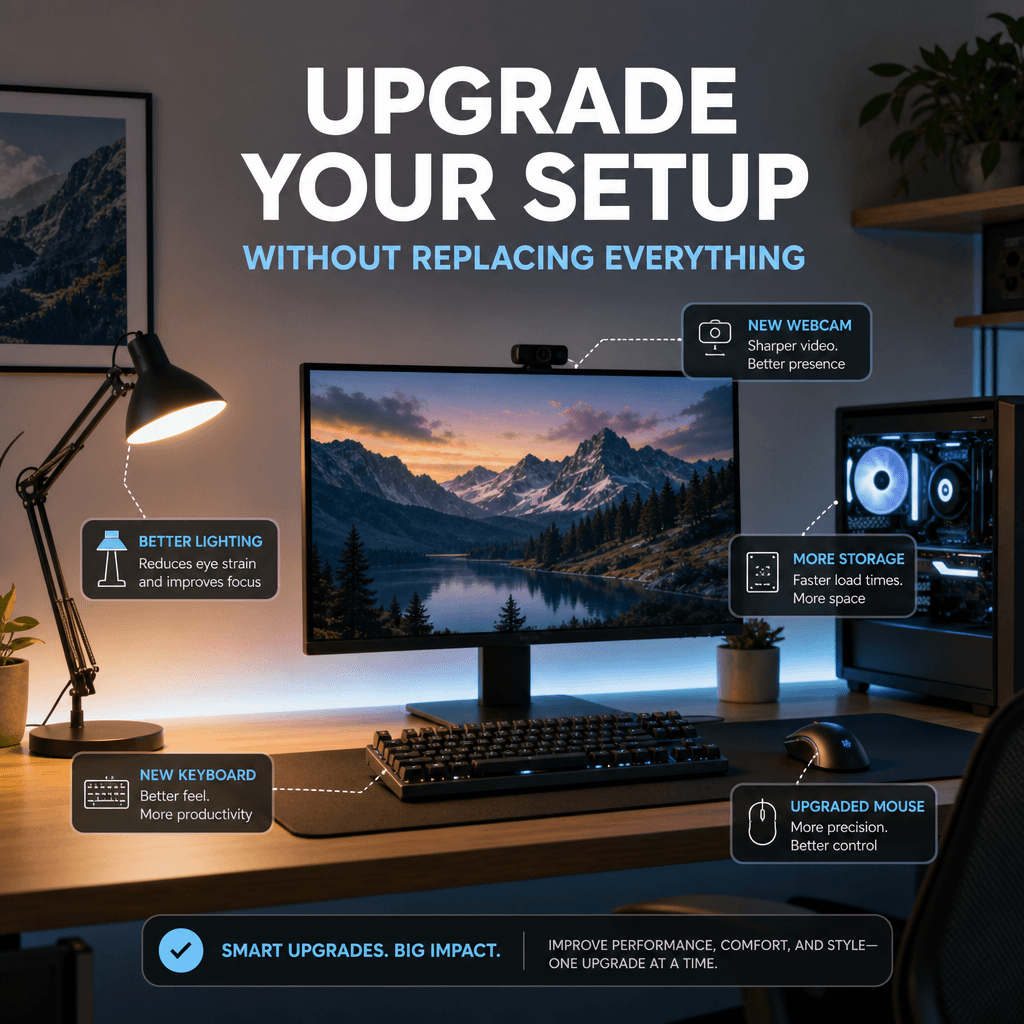
Cinematic OLED blacks and 240Hz speed — immersive for gaming, imperfect for productivity.
We spend a lot of time chasing displays that do one thing exceptionally well: either blistering speed for competitive play or cinematic contrast for single‑player immersion. The problem is, those strengths rarely coexist — and when they do, compromises pop up elsewhere: big 45-inch ultrawides can feel gloriously immersive but suffer low pixel density, and high‑refresh OLED options have been scarce and pricey.
The LG 45GX900A-B tries to bridge that gap: a 45″ 800R curved OLED that pairs 240Hz refresh and near‑instant 0.03ms response with deep blacks, wide DCI‑P3 coverage, and a modern port stack (HDMI 2.1, DP, USB‑C PD 65W). In practice we found it delivers one of the most convincing ultrawide OLED experiences for gamers who want speed and cinematic contrast in one package, but the WQHD resolution and premium price keep it being our top pick as a daily productivity monitor.
LG Ultragear 45GX900A-B 45" OLED 240Hz

We find this monitor delivers the most convincing ultrawide OLED experience for gamers who want speed and cinematic contrast in one package. It’s exceptional for fast competitive play and single-player immersion, but the resolution and price make it less ideal as a primary productivity display for text-heavy workflows.
Is the LG 45GX900A-B OLED Beast Worth $1700? Review
Introduction
We approached the LG 45GX900A-B expecting a specialist gaming monitor: a large, ultrawide OLED that promises both cinematic visuals and esports-ready responsiveness. What we got is a device that sits squarely between two worlds — it’s cinematic in image quality and surgical in speed. In this analysis we explain how those traits translate into daily use, how the monitor fits into current hardware ecosystems, and where it still forces compromise.
Design and First Impressions
The monitor arrives with a subdued, gamer-friendly aesthetic: thin bezels, a sculpted stand, and RGB backlighting that’s more mood-lighting than flashy. The 800R curvature is aggressive compared with many ultrawides; that curvature isn’t a gimmick here — it meaningfully extends your peripheral vision and makes single-screen immersion more believable without needing VR.
We like the mechanical feel of the stand: height adjustment, tilt, and a secure base that keeps the 45″ panel stable. If you need more freedom, the monitor supports VESA mounting, which we recommend for more flexible ergonomics.


Panel characteristics: what the OLED brings
At the core of this monitor is a WOLED panel that makes the most obvious difference: absolute blacks, punchy highlights, and a contrast behavior you won’t replicate with IPS or VA at this size. LG quotes near-complete DCI-P3 coverage (~98.5%) and an enormous native contrast ratio; in real-world use those specs translate to HDR scenes that feel layered and natural, not artificially dialed-up.
Where OLED shows its trade-offs here is pixel density. The 3440×1440 resolution on a 45″ canvas produces a lower DPI than 34″ ultrawides or 4K displays. That’s fine if your priority is gaming immersion and frame rate headroom, but for long-form text editing or design work that relies on pixel-level precision, characters will look softer than on denser panels.
Strengths
Limitations


Gaming performance: why it matters now
This monitor’s headline numbers are not marketing fluff: 240Hz refresh and a quoted 0.03ms GtG response time. In practice that combination produces one of the most responsive ultrawide gaming experiences we’ve used. Rapid target tracking in FPS titles feels instantaneous, and motion clarity in fast racers or action games is markedly improved versus 120Hz OLEDs.
Adaptive sync support (both NVIDIA G-SYNC compatibility and AMD FreeSync Premium Pro) removes tearing without adding perceptible input lag — important for players switching between PC and console. LG’s gaming features (Dynamic Action Sync, Black Stabilizer, crosshair overlays) are useful but largely optional; the real advantage is the underlying panel speed and sync reliability.
Key performance points (at a glance)
| Specification | This monitor |
|---|---|
| Size & Aspect | 45″ 21:9 ultrawide |
| Native Resolution | 3440 × 1440 |
| Max Refresh | 240 Hz |
| Response | 0.03 ms (GtG) |
| HDR | DisplayHDR True Black 400 |
| Color | ~98.5% DCI-P3 |
| Ports | HDMI 2.1, DisplayPort 1.4, USB-C (65W) |
Connectivity and ecosystem integration
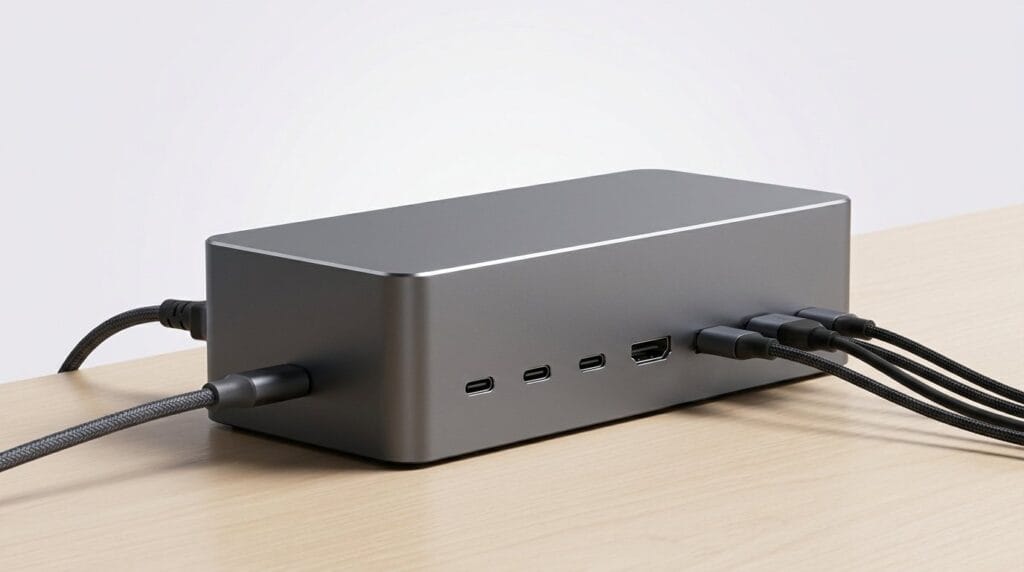
The 45GX900A-B is forward-looking in ports: HDMI 2.1 for consoles, DisplayPort 1.4 for PC, and a USB-C port with 65W power delivery for laptops. That USB-C port makes the monitor a practical desktop hub for modern laptops — one cable for display, peripherals, and modest charging.
There are a few real-world caveats worth calling out. To reach the full 240Hz on a PC you need DP 1.4 (or compatible HDMI 2.1) and a GPU that can drive the resolution at that refresh. On some laptops and lower-end GPUs, plug-and-play can be unpredictable — we recommend checking drivers, firmware, and trying a different cable or port if the monitor isn’t detected. These are solvable issues, but they’re part of the current ecosystem friction for high-bandwidth monitors.
Practical tips for connectivity


Software, warranty and panel care
LG bundles OLED Care features — pixel cleaning routines and screen savers designed to reduce burn-in risk — and offers a two-year limited OLED warranty that gives more reassurance than the typical one-year panel coverage we see on many competitors. OLED burn-in remains a real, but manageable, long-term risk: static HUDs, prolonged static desktop elements, or streaming channels with static brand logos are the primary culprits.
We recommend using the built-in pixel cleaning routines regularly, employing screen savers for lengthy idle periods, and avoiding static high-contrast elements at maximum brightness for extended sessions.
Who should buy this monitor?
Ideal buyers
Users who should consider alternatives
Final thoughts
We come away impressed: LG has packaged OLED contrast and color into an ultrawide form factor while pushing refresh-rates into the competitive bracket. The result is a screen that both looks cinematic and feels immediate under your hands. The compromises — chiefly pixel density and the premium price — are real but justifiable depending on how you prioritize immersion and speed. For a gaming-first ultrawide that also integrates smoothly into a modern laptop-centric desk, this monitor is one of the more convincing options on the market.
FAQ
Will my PS5 or Xbox Series X run games at 240Hz on this monitor?
Most consoles support up to 120Hz output for current-gen titles. HDMI 2.1 on this monitor ensures compatibility and low latency for console gaming, but 240Hz is primarily for high-frame-rate PC gaming. On consoles you should expect excellent HDR and 120Hz support where the game and console allow it.
Is OLED burn-in something to be worried about for gaming?
Burn-in is a long-term risk with OLED if static elements are displayed at high brightness for prolonged periods. We recommend using LG’s pixel cleaning tools, enabling screen savers during idle time, and limiting static HUD brightness. For typical gaming and varied content, the risk is low but not zero — browse our product reviews.
Can I use the USB-C port as a single-cable dock for my laptop?
Yes — the monitor’s USB-C port supplies up to 65W of power delivery while carrying display and USB data. It’s convenient for many modern laptops, but heavier-work laptops may require their own power bricks if they need more than 65W.
Is 3440×1440 on a 45″ display sharp enough for work?
It depends on your priorities. For long-form text editing and pixel-perfect design work, the lower DPI compared with 4K displays can make text and UI elements appear softer. If your day is split between gaming and general productivity, it’s acceptable; if your work is visually detail-critical, a higher-density panel would be better.
What do I need to get 240Hz a PC?
To reach 240Hz you need a GPU and cable/port combination that support the bandwidth — DisplayPort 1.4 or HDMI 2.1 are the usual routes. Ensure your GPU drivers are current and use a high-quality cable rated for the required bandwidth. Some laptops may not expose the needed bandwidth on their ports.
How do we compare this monitor to 49″ 5120×1440 ultrawides?
A 49″ 5120×1440 gives substantially more horizontal pixels, which benefits productivity and multitasking, and often a higher DPI than 45″ 3440×1440. The LG 45GX900A-B prioritizes OLED contrast and higher refresh rates; it’s more about cinematic color and speed than raw desktop pixel real-estate.

Ayesha Aftab is Option Cutter's product review editor. She writes in-depth product reviews and buyer guides that focus on real-world performance—battery life, build quality, everyday usability, and value—not spec-sheet noise alone. Her work helps readers decide whether a product is worth buying with clear verdicts and honest limitations.