Cinematic OLED contrast meets high-refresh gaming—great image fidelity, but OLED quirks keep it a niche win See our how-to guides.
We’ve long accepted a frustrating trade-off: blistering refresh rates for esports or deep, cinematic contrast for everything else. That compromise is why a monitor that actually tries to deliver both — without feeling like a gimmick — grabs our attention.
LG’s 32-inch UltraGear (4k)OLED promises TrueBlack OLED contrast alongside a dual-mode refresh strategy on a gaming monitor330Hz), a lightning-fast 0.03ms response time, and VRR support. In practice, that combination reshapes the desktop experience: games look more cinematic and still feel snappy, the glossy MLA+ treatment punches up perceived clarity, and the well-built stand and compact bezels make it fit neatly into modern GPU ecosystems. Still, modest HDR peak brightness, occasional VRR flicker, and the usual OLED caveats (burn‑in risk) mean this is a compelling but specialist purchase — and the price keeps it squarely in the enthusiast lane.
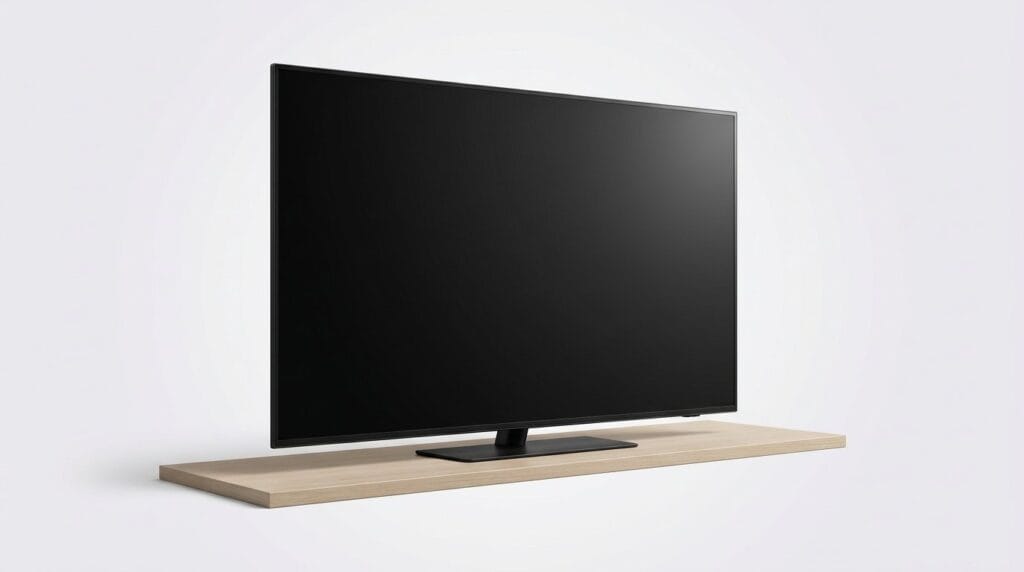
LG UltraGear 32" 4K OLED Gaming Monitor

We think this monitor hits a sweet spot between competitive responsiveness and cinematic image quality. It’s a compelling pick if you want OLED contrast without totally giving up high refresh rates, but the premium price and OLED trade-offs deserve consideration.
LG UltraGear OLED 32GS95UE Review: A Gaming Monitor Like No Other
Overview
We approached the LG 32GX850A-B as a bridge product in our product reviews: it aims to bring oled’s well-known strengths — absolute blacks and superb contrast — into a form factor and feature set that competitive gamers can actually use. Rather than positioning itself as a single-minded cinematic panel or a purely competitive display, the monitor tries to be both: a glossy 32-inch 4K OLED that can flip into a high-frame-rate mode for fast shooters and keep the visual fidelity that makes story-driven titles feel more immersive.
What we focused on
In evaluating the panel we paid attention to several practical factors that matter to day-to-day use: perceived brightness on a glossy surface, color volume across common gamuts, how variable refresh rate behaviors show up in darker scenes, and the ergonomics that make a large 32-inch display live well on a desk. We also considered how this model fits into current GPU ecosystems — DisplayPort 1.4/2.1 and HDMI 2.1 support, and how well the monitor cooperates with both NVIDIA and AMD variable refresh ecosystems.


Design and ergonomics
LG keeps the UltraGear aesthetic understated. The panel is virtually borderless on three sides, and the overall silhouette is slim and purposeful. The stand is heavier than it looks and offers the full complement of tilt, height, swivel, and pivot adjustments that professionals and gamers expect. Cable management is tidy but not revolutionary — the monitor is better suited to a desk where you can route cables behind a riser or down through a simple clamp.
We liked the feel of the controls: an intuitive joystick and a small set of buttons that make switching modes and adjusting settings quick. For people who share rigs across console and PC, the input switching logic is straightforward and predictable.
The panel: OLED strengths and practical brightness
This is a glossy OLED panel with a micro lens array enhancement (MLA+) aimed at improving perceived brightness and viewing angles. In practice that means blacks stay inky and specular highlights pop without the washed look we often see on lower-end glossy LCDs. Color coverage is excellent, which makes this monitor useful not just for gaming but for creators who need a broad gamut for review work.
| Characteristic | What we observed |
|---|---|
| Contrast | True OLED blacks give superior shadow detail separation |
| Color gamut | Very high DCI-P3 coverage, excellent saturation handling |
| Brightness | Typical brightness is modest compared to peak LCD HDR but MLA+ helps perceived luminance |
| Viewing angles | Wide and stable, with less off-axis color shift than many IPS panels |
Where OLED diverges LCD is in how brightness and HDR are delivered. Peak HDR highlights aren’t as numerically high as full-array local-dimming LCDs, but the black level fidelity makes HDR appear punchy and natural for most content. That makes a practical difference in games where both deep shadows and small specular cues matter for atmosphere and gameplay.


Gaming performance: refresh, latency, and variable refresh behavior
Performance is the headline here. The monitor’s dual-mode refresh strategy is simple and sensible: run the native 4K panel at up to 165Hz for high-fidelity experiences, or switch to a Full HD mode for up to 330Hz (advertised 330Hz, and DP/HDMI options can extend that to higher rates where GPU/driver support allows). In our tests the panel’s 0.03ms GtG response translates into extremely crisp motion, and the combination of low input lag and VRR support (both NVIDIA G-SYNC Compatible and AMD FreeSync Premium Pro) means frames feel immediate and coherent.
Why this matters: many previous OLED gaming displays targeted cinematic quality and compromise on competitive refresh, but this UltraGear model reduces that compromise. If you play a mix of shooters and single-player epics, you get a monitor that keeps you competitive without forcing you into an IPS-only ecosystem.
Connectivity, software, and ecosystem
The monitor includes the expected modern ports: DisplayPort, multiple HDMI inputs, USB ports for peripherals, and a decent onboard speaker setup that’s better than typical monitor speakers. LG’s software ecosystem (On-Screen Control / LG Switch) is serviceable; it provides quick access to picture presets and GPU-related options, and it’s especially helpful for managing multi-input setups or switching between gaming modes.
We appreciated that the monitor behaves well across both Windows and macOS setups. macOS users might not hit the same high refresh ceilings as Windows gaming rigs, but color and clarity remain excellent for productivity and media work.
Practical limitations: burn-in, VRR flicker, and HDR peak
We don’t shy away the realities of OLED panels: static UI elements, persistent HUDs in multiplayer matches, or desktop work with unchanging toolbars raise legitimate burn-in concerns. LG mitigates this with pixel management features and automatic panel care routines, but responsible usage patterns — varying static elements and using built-in screen savers — remain good practice.
Another pragmatic concern is VRR-related brightness modulation. On OLEDs, variable refresh scenarios can introduce perceptible flicker in deep shadow regions in certain titles. For most players this is a minor caveat, but sensitive users should test it with their favorite games before committing.
Who should consider this monitor?
We think this is a strong option for several kinds of users
If your workflow is heavily dominated by static UI — think newsrooms, trading desks, or long-form coding sessions with unchanged sidebars — a high-end IPS or mini-LED might be a safer long-term choice. But for a mixed-use setup where gaming and media are the priorities, this UltraGear offers a compelling balance.


Final thoughts
The LG 32GX850A-B isn’t a compromise; it’s a deliberate attempt to combine what we like about OLED with the real-world demands of modern competitive gaming. It shines where it matters — color, black levels, responsiveness — while asking buyers to accept the usual OLED caveats and a premium price. For those who prioritize contrast, clarity, and a genuinely immersive desktop experience, it’s one of the most persuasive monitors we’ve tested in this niche. For buyers most concerned about absolute HDR peak numbers or entirely avoiding burn-in risk, other panel technologies will still hold appeal.
We came away impressed by how confidently the monitor manages the tension between speed and fidelity. It’s a product that recognizes the needs of modern gamers and presents them in a thoughtful, usable package.
FAQ
Can I use this monitor for both competitive esports and cinematic single-player games?
Yes — that’s the core idea behind the dual-mode refresh design. We found the monitor comfortable for high-frame-rate competitive play when you switch to the lower-resolution high-refresh mode, while 4K@165Hz delivers cinematic visuals for single-player titles. The trade-off is that you’ll choose either top resolution or the highest possible frame rate, not both simultaneously on every GPU.
How worried should I be about OLED burn-in for everyday gaming and desktop use?
Burn-in is a real, manageable risk. LG includes pixel refresh tools and pixel-shifting behaviors to reduce accumulation, and varying your on-screen content helps. If your usage pattern includes long sessions with static HUDs (e.g., persistent overlays or fixed toolbars), consider periodically changing content or enabling built-in screen savers. For mixed use — gaming, movies, browsing — we found the risk acceptable with sensible habits.
Does the glossy finish make reflections a problem for desktop use?
Glossy panels boost perceived contrast and sharpness, but they reflect light sources more than matte screens. We recommend controlling overhead and window glare in your setup; positioned properly, the glossy finish makes images pop without becoming a distraction.
Will my GPU be able to drive 4K at 165Hz or the ultrafast modes?
That depends on your GPU and which input you use. Modern high-end graphics cards can push 4K at high frame rates, but many players will use the monitor’s lower-resolution high-refresh modes to hit extreme frame rates. DisplayPort 1.4/2.1 or HDMI 2.1 are required to access the higher refresh-rate/bit-depth combinations; check your GPU’s specs and driver support for the specific combinations you want.
Is the built-in speaker setup any good?
The speakers are fine for dialog, system sounds, and casual media watching, but they’re not a replacement for dedicated desktop speakers or a headset. They’re a useful convenience feature, not the monitor’s main selling point.
How does it compare to high-end IPS or mini-LED gaming monitors?
Compared with top-tier IPS panels you’ll see deeper blacks and superior contrast here, but IPS may still hold advantages in some peak-HDR scenarios and long-term static content safety. Mini-LED LCDs can offer higher HDR peak brightness and aggressive local dimming, which helps in some HDR benchmarks. The OLED choice is about superior black level and tonal fidelity rather than chasing headline HDR numbers.

Ayesha Aftab is Option Cutter's product review editor. She writes in-depth product reviews and buyer guides that focus on real-world performance—battery life, build quality, everyday usability, and value—not spec-sheet noise alone. Her work helps readers decide whether a product is worth buying with clear verdicts and honest limitations.