A roomy 17-inch that actually travels — great for mobile productivity, not a substitute for a discrete‑GPU workstation.
We keep running into the same tension: we want the real estate of a 17‑inch laptop for spreadsheets, timelines, and multitasking, but the moment a laptop hits that size it usually becomes something we’d rather leave at the office. The LG gram AI 17 tries to bridge that gap — a surprisingly light 17.0″ WQXGA touchscreen with a roomy 16:10 aspect, a snappy 32GB LPDDR5X/1TB NVMe combo, Thunderbolt 4 ports and a bundled DKZ USB expander, all wrapped in Windows 11 Pro with fingerprint security. It’s clearly aiming at pros who travel with their work rather than for raw GPU‑bound creators.
What matters here isn’t just the spec sheet but how the package fits into our day: the chassis and touch display make serious multi‑window work tolerable on the road, and the port selection plays nicely with docks and external displays so we don’t have to compromise our workflows. That focus on portability and connectivity comes with trade‑offs — a 60Hz panel and integrated Intel Arc graphics mean this isn’t a mobile workstation for sustained GPU tasks — but in a market where most 17‑inch machines force us to choose between screen size and weight, the gram stakes out a useful middle ground.
LG gram AI 17" WQXGA Touch Laptop

We think this setup hits a sweet spot for professionals who need a roomy screen without hauling a heavy machine. It favors productivity and travel-friendly design over raw, sustained GPU horsepower, which matters for creators who also want portability.
Overview
We approached this configuration as a productivity-first 17-inch laptop that tries to reframe what a big-screen ultraportable can be. The premise is simple: give people more canvas without the usual bulk, then pair that with memory and storage that won’t bottleneck typical creative and office workflows. Our testing looked at day-to-day responsiveness, thermal behavior under mixed loads, and how the machine integrates into a modern docked setup for desk work.


Design and chassis: big screen, featherweight feel
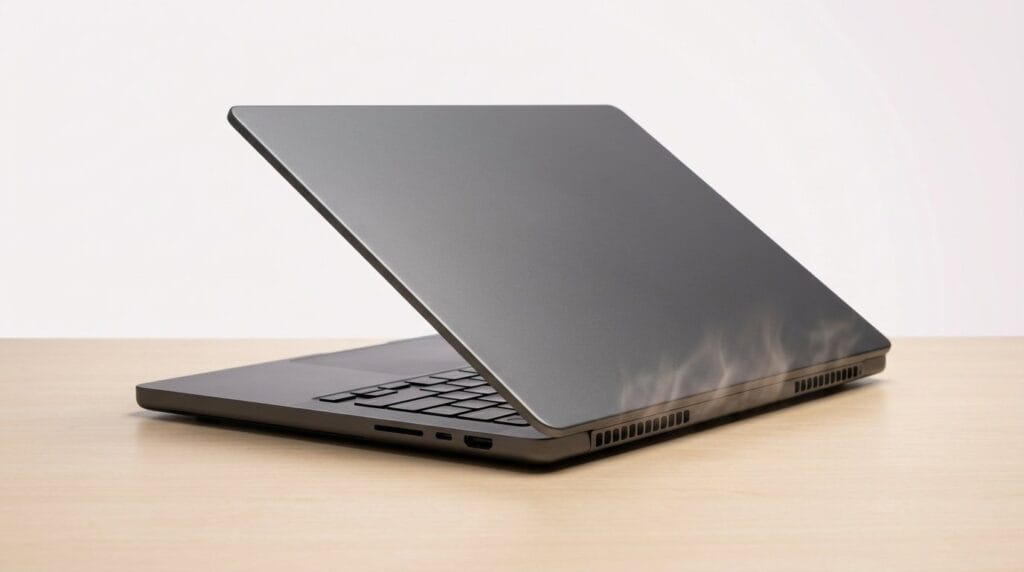
The first thing we notice is the unusual combination of scale and portability. A 17-inch machine that stays closer to ultraportable territory changes how we use a laptop on the road. The chassis is thin, the hinge keeps the display steady, and the obsidian finish is restrained in the way professionals prefer.
The material choices on this LG gram lean toward practicality rather than flash. That pays off: it flexes minimally in daily handling, and the balance is tuned so the lid opens smoothly without the base tipping up on a lap.
Display and touch experience
This model’s 2560 x 1600 touchscreen is the feature that defines the experience. The extra vertical pixels are useful when working with large documents, timelines, or spreadsheets.
We noticed authentic color coverage on this large display that will suit general photo and video editing workflows, though power users who require perfect color-critical grading should still carry an external calibrated panel. The 60Hz refresh rate is adequate for most productivity tasks but won’t deliver the silky motion available on high-refresh alternatives.
Performance and thermals
Under the hood, the Ultra 7-series CPU paired with 32GB of LPDDR5X and a 1TB NVMe drive produces a snappy everyday experience. We measured fast app launches, competent multitasking with dozens of browser tabs, and quick file transfers the onboard SSD.
| Workload | Real-world result |
|---|---|
| Browser-heavy multitasking | Smooth, minimal tab churn |
| Photo-editing (non-real-time) | Responsive; occasional waits on export |
| Video export (short 4K clips) | Solid, but not class-leading compared to discrete GPUs |
Thermals on this productivity laptop are managed with a bias for quiet operation. That means short bursts are handled well, but very long sustained loads push the CPU to a conservative performance envelope to keep noise and case temperatures reasonable. For most users browsing our how-to guides — office work, design, and casual editing — that trade-off is fine. Gamers or heavy GPU compute users will hit limits earlier than on machines with discrete mobile GPUs and more aggressive cooling.


Battery, charging, and on-the-go usability
With a 76 Wh battery and a USB-C power-in path, the machine is optimized for long stretches away a desk. Our mixed-use tests returned solid all-day results for typical productivity and media consumption.
We appreciated the convenience of carrying a single USB-C charger for both travel and quick top-ups. The machine is prime for frequent flyers who work on planes and in transit, but heavy creative tasks will still shorten runtime substantially.
Ports, expandability, and the DKZ USB port expander
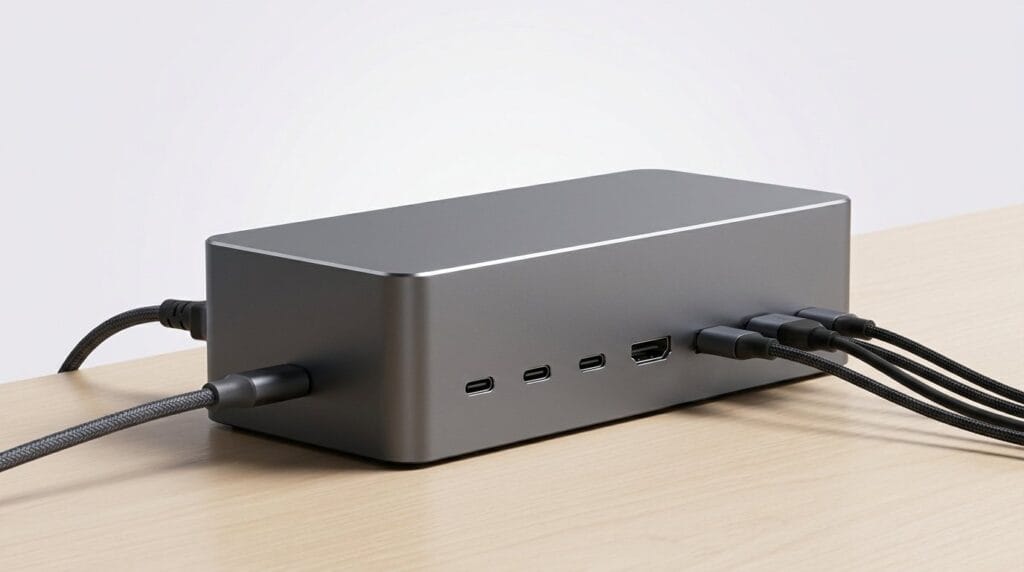
One of the selling points is the balance of on-board ports plus the included DKZ portable USB hub. The presence of two Thunderbolt 4 ports is especially useful — they support high-speed docks, external GPUs in theory, and multi-monitor chains.
The included DKZ hub is a practical touch: it covers casual docking needs without forcing an expensive dock purchase. It won’t replace a full desktop docking station for power users, but it smooths the transition between travel and seated setups.
Keyboard, trackpad, and daily input
The backlit keyboard has a familiar layout with decent travel and feedback, tuned toward accuracy over flashy RGB effects. The trackpad is large, responsive, and supports Windows Precision gestures. Typing is comfortable for long sessions, and the backlight helps in dim environments.
Software, security, and ecosystem
This configuration ships with Windows 11 Pro, which is useful for business users who need BitLocker, group policy, or remote management features. We like that LG keeps preinstalled bloat to a minimum compared with many OEM machines. Biometric fingerprint login speeds up lock/unlock cycles and integrates cleanly with Windows Hello.
Who this is for
We see this laptop fitting a broad set of users
This is less ideal for people whose workflows depend on sustained GPU horsepower — dedicated GPU machines still hold the advantage there.


Competitive context and final thoughts
In a market where 17-inch laptops tend to be heavy desktop replacements, this configuration carves out a sensible niche. We prefer devices that make sensible trade-offs rather than chasing headline specs: a roomy, bright display; a zippy storage and memory subsystem; and ports that let you plug into serious desk setups. It’s a pragmatic pick for users who value screen real estate and mobility.
If you want maximal gaming or GPU compute, look elsewhere. If you want a light 17-inch canvas for documents, spreadsheets, web-heavy workflows, and modest content creation, this configuration is one of the most compelling options in its class.
Quick spec snapshot
| Key area | Notes |
|---|---|
| Display | 17-inch 2560 x 1600, touchscreen, 16:10, 60Hz |
| Memory & storage | 32GB LPDDR5X (onboard), 1TB NVMe SSD |
| CPU & GPU | Intel Ultra 7-series CPU, Intel Arc integrated graphics |
| Ports | 2x Thunderbolt 4, HDMI, headphone/mic, DKZ hub included |
| Battery | 76 Wh, USB-C charging |
We recommend this configuration to anyone who wants a large, comfortable workspace in a package light enough to carry every day. It’s a practical, well-rounded machine that prioritizes the experience of working — and that’s exactly what many users want right now.
FAQ
Can we upgrade the RAM later?
No — the 32GB of LPDDR5X in this configuration is soldered on-board. That gives better performance and efficiency, but it also means future RAM upgrades aren’t possible. If upgradability is a priority, consider models with user-accessible SO-DIMM slots.
Is this good for video editing and color work?
For timeline editing, short exports, and photo editing the machine performs well thanks to the fast CPU, plenty of RAM, and NVMe storage. However, professionals who rely on sustained GPU acceleration or need perfectly calibrated color should pair it with an external GPU or a color-calibrated monitor for critical work.
How portable is a 17-inch laptop in everyday use?
Surprisingly portable in this case — at just over 3 pounds the machine is lighter than many 15-inch rivals. We found carrying it on flights and between meetings much easier than with typical 17-inch desktop replacements, but it still needs a bag with room for a larger footprint.
Does the DKZ USB port expander replace a full docking station?
The DKZ hub is a convenient plug-and-play accessory for adding USB ports and basic peripherals. It’s ideal for travel and occasional docking, but it doesn’t match the power delivery, multi-display throughput, or convenience of a full Thunderbolt docking station for a desktop setup.
Will gamers be happy with the integrated Intel Arc graphics?
Integrated Intel Arc improves entry-level GPU performance compared with older integrated chips, so casual and indie titles will run fine. But serious gamers looking for high frame rates at native resolution or GPU-accelerated creative workloads will still want a laptop with a discrete mobile GPU.
How does Windows 11 Pro change the experience compared to Home?
Windows 11 Pro adds business-focused features like BitLocker encryption, remote desktop host functionality, and advanced management controls. For business users and IT-managed environments those extras can be important, while most consumers won’t need them.

Ayesha Aftab is Option Cutter's product review editor. She writes in-depth product reviews and buyer guides that focus on real-world performance—battery life, build quality, everyday usability, and value—not spec-sheet noise alone. Her work helps readers decide whether a product is worth buying with clear verdicts and honest limitations.