

Why ’25W’ Alone Isn’t Enough
We treat ’25W’ as a starting point, but fast, reliable wireless charging requires the right adapter pairing, robust thermal management, precise magnetic alignment, and ecosystem-aware firmware. This guide cuts through specs and design trade-offs so we pick chargers that deliver.
What We Need to Test and Verify

Qi vs Qi2 vs MagSafe: The Ultimate Wireless Charging Showdown
Understand What 'Qi2 25W' Actually Means
Is '25W' a guarantee or a marketing sweetener? Spoiler: context matters.Decode the label. ‘Qi2 25W’ mixes charger capability, device negotiation, and power-source quality. A charger rated 25W doesn’t force every phone we own to accept 25W; the phone’s receiver, firmware, and the adapter’s USB‑PD handshake set the actual throughput.
Expect sustained 25W only when the device supports the Qi2 power profile, the charger implements it correctly, and the wall adapter supplies stable PD voltage and current. Thermal throttling, misaligned coils, protective cases, and poor cables all reduce real-world wattage.
Check:
Understand that we’re buying a system component, not a standalone promise; prioritize verified compatibility and real‑world tests over the headline number.
Verify Charger and Adapter Pairing
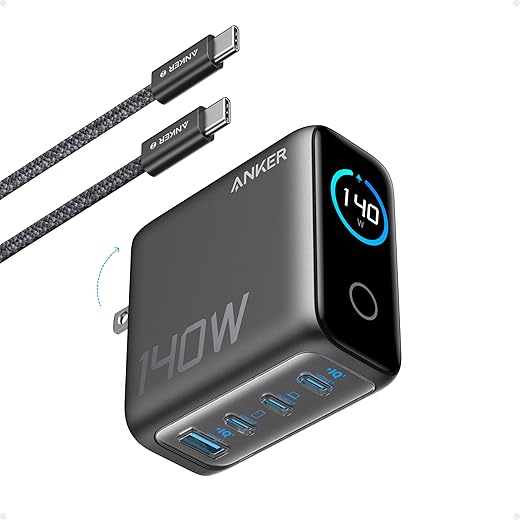
Why the wall brick matters as much as the puck — 25W needs the right partner.Pair the puck with the right wall brick. A Qi2 puck is only as fast as the USB‑C PD adapter feeding it; we recommend a 45–65W PD brick with PPS so voltage stays stable under load and the puck doesn’t throttle.
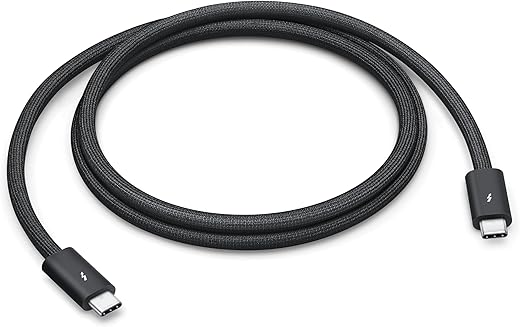
Use a high‑quality USB‑C cable rated for PD (e.g., 60–100W) to avoid resistance and voltage drop; cheap cables kill throughput even if the adapter is fine.
Choose and check these items before you buy:
Measure the adapter under real load; if a vendor omits the adapter, budget for one and factor firmware/update support into the decision.

Assess Thermal and Magnetic Design
Does it keep cool and hold the phone? Design choices determine actual sustained speed.Assess thermals and magnetics: they determine sustained charging far more than peak watts. Inspect puck thickness, metal versus plastic housings, and any visible vents or heat spreaders. Thick metal bases often shed heat; thin plastic pucks hide hotspots.
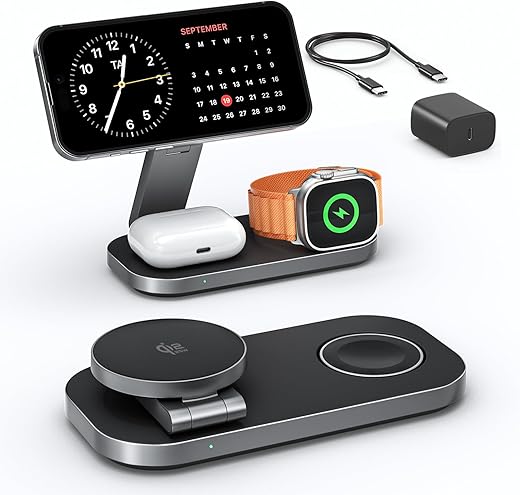
Check magnetic alignment: prefer MagSafe‑style rings or engineered alignment over loose magnets—better coupling means higher efficiency and fewer intermittent pauses. Think about orientation: choose a flat, single‑device top‑up for quick boosts or a vertical stand if you use the phone for video calls and need sustained power.
Look for explicit vendor data and user tests. Key checks:
Product images and teardown photos often reveal heat‑sinking strategies; we weigh those signals alongside published thermal throttling policies and real‑world temperature measurements and user feedback reports.

Check Compatibility and Ecosystem Integration
Will it work with cases, accessories, and the brands we already rely on? Spoiler: seamless fit beats raw wattage.Prioritize ecosystem fit: check vendor lists for phones explicitly certified to hit 25W Qi2. Download or screenshot any published compatibility matrix so you can verify model numbers before buying.
Test real-world case and accessory scenarios: try common case thicknesses (for example, 2–4 mm silicone or TPU) and typical accessories like camera mounts or wallet-snaps to see if alignment or power drops.
Watch charger behavior under multi‑port load: plug another high‑draw device into the adapter and observe whether the wireless pad holds voltage or throttles. A charger that hits 25W with one brand but only 15W with another is less useful.
Prefer vendors that publish compatibility matrices, offer firmware updates, or document cross‑brand testing—those manufacturers reduce risk and improve long‑term interoperability.
Read Reviews and Independent Benchmarks
Lab tests catch what marketing hides — we look for sustained wattage, not peak numbers.Prioritize independent measurements over marketing blurbs.
Look for tests that publish real-time wattage, temperature curves, and charge efficiency across phone models.
Check for these specific logs and findings:
Be wary of single-snapshot screenshots that show a momentary 25W spike.
Scan user forums to catch firmware regressions or device-specific quirks faster than vendor sites.
Synthesize third‑party lab data, long-form reviews, and community reports into a reliability score that reflects real-world, 10–30 minute sustained performance.
Test, Validate, and Make the Buy
How we validate 25W in the real world before committing our money — and what compromises we're willing to accept.Confirm vendor documentation and ask support about PD adapter recommendations and firmware update policies before paying. If possible, test the charger in‑store or buy from a retailer with a flexible return window.
Run pragmatic tests: log watts, voltage, current, and temperature during real tasks (navigation, streaming, camera use). Use a monitoring app or an inline USB‑C power meter to capture sustained throughput — we once found a pad that hit 25W for 30 seconds then throttled to 8W while navigating, so logging matters.
Evaluate daily ergonomics: placement tolerance, LED behavior, and whether charging pauses for notifications. Factor total cost including a good PD brick and accept trade‑offs — we prioritize sustained real‑world throughput and thermal stability over peak numbers.
When ordering online, preserve packaging, run wattage logs immediately, request firmware fixes for regressions, and confirm return window policy.
Buy for Real-World Performance, Not the Label
We won’t promise magic: real 25W Qi2 charging depends on hardware, firmware, and power delivery. By following these steps we separate marketing from performance, choosing chargers that fast charge reliably and fit our device ecosystem—are we ready to buy wisely?

Chris is the founder and lead editor of OptionCutter LLC, where he oversees in-depth buying guides, product reviews, and comparison content designed to help readers make informed purchasing decisions. His editorial approach centers on structured research, real-world use cases, performance benchmarks, and transparent evaluation criteria rather than surface-level summaries. Through OptionCutter’s blog content, he focuses on breaking down complex product categories into clear recommendations, practical advice, and decision frameworks that prioritize accuracy, usability, and long-term value for shoppers.