
Menu

How to Pick a Thunderbolt 6 Cable That Delivers Full Speed

Yogesh Kumar / Option Cutter
Picture of By Chris Powell
By Chris Powell

Cut Through the Cable Confusion

We cut through myths and vendor hype to show how to choose a Thunderbolt 6 cable that truly reaches full link speed, focusing on compatibility, passive vs active trade‑offs, certification, and real‑world testing so you avoid slow or flaky setups.

What You'll Need

A Thunderbolt‑capable host and device we can test.
A high‑bandwidth workload (large files or high‑res monitor).
Web access to verify certification.
Willingness to favor compatibility over cheapness.
Editor's Choice
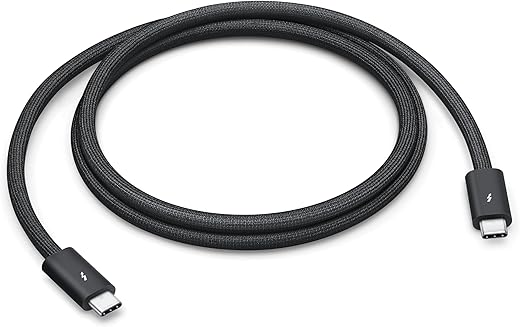
Apple Thunderbolt 5 Pro USB-C Cable 1m
Top choice for Mac connectivity and 240W charging
We found this braided 1m Thunderbolt 5 cable to be Apple’s most future‑proof option for Mac users, delivering up to 120Gb/s, DisplayPort 2.1 video, and 240W charging while staying tangle‑resistant and well‑finished. In a market crowded with generic USB‑C leads, it matters because the cable tightens integration across Apple displays, docks, and USB‑C iPhones/iPads with class‑leading reliability and ecosystem polish.
Amazon price updated April 4, 2026 12:58 pm
Prices and availability are accurate as of the last update but subject to change. I may earn a commission at no extra cost to you.

1

Understand What “Full Speed” Means Today

Why the headline bandwidth isn’t the whole story — and how that affects your setup.

Define “full speed” as the throughput negotiated between host and device after link training — not the cable’s peak number stamped on a box. We explain what actually matters and what you should check.

Link training & aggregated lanes: devices negotiate lane count and encoding; more lanes or newer encoding = higher usable bandwidth.
Cable electronics & firmware: active electronics, cable length, and host firmware can cap speed during negotiation.
Features carried: data, DisplayPort alt modes for external displays, and power delivery must all coexist without choking bandwidth.

For example, a dock and display may technically support TB6, but if your laptop’s controller or firmware limits lanes to USB4 40Gbps, the cable can’t increase throughput. Check both endpoints and their firmware to know the real-world ceiling.

Best Value
Anker 3.3ft USB4 240W High-Speed Cable
Best for fast charging and 8K displays
We like how this short Anker USB4 cable balances real‑world speed (40Gbps), 8K video capability, and a 240W charging ceiling in a compact, durable package that survived 5,000 bends in lab testing. It’s a practical bridge between phones, laptops, and docks—offering pro‑grade bandwidth without the premium price other branded cables charge.
Amazon price updated April 4, 2026 12:58 pm
Prices and availability are accurate as of the last update but subject to change. I may earn a commission at no extra cost to you.

2

Verify Host and Peripheral Compatibility First

Don’t blame the cable — have we checked whether our laptop or dock can actually deliver the bandwidth?

Verify the real capabilities of our devices before we pick a cable: check manufacturer specs, firmware/BIOS updates, and explicit Thunderbolt 6 support. Confirm whether the port’s controller can expose full PCIe lanes and DisplayPort alt mode — that’s what determines real throughput.

Check host controller generation (Device Manager, Thunderbolt Control Center, or macOS System Report)
Confirm full PCIe lane count and DP alt mode on the vendor’s spec page
Scan BIOS/firmware release notes for Thunderbolt updates or known caps
Search vendor support pages for single‑port bandwidth limits on ultrathin laptops

Analyze ecosystem tradeoffs: OEMs often share controllers or route ports through hubs to save space, which can throttle links despite TB6-capable cables and docks. We test these pages and notes because advertised cable speed means nothing if the host won’t negotiate it.

Best Seller
Amazon Basics USB-C 40Gbps 240W Cable 3.3ft
USB-IF certified, reliable charging and data transfer
We appreciate that this Amazon Basics cable is USB‑IF certified, which reduces the risk of flaky power or data behavior while offering 40Gbps speeds, 8K video support, and up to 240W when every component supports EPR. For buyers who prioritize safety and broad compatibility across laptops, phones, and displays, certification and a low price make this an easy everyday pick.
Prices and availability are accurate as of the last update but subject to change. I may earn a commission at no extra cost to you.

3

Choose Between Passive and Active Cables — and Pick the Right Length

Short and passive for reliability? Long and active for convenience? Spoiler: length matters more than brand styling.

Choose passive for short, latency‑sensitive links; choose active for longer runs where higher signaling needs retimers to preserve the link. Passive short cables give minimal latency and no extra power draw. Active cables contain repeaters/retimers to maintain throughput over meters but consume power, can require firmware updates, and represent a higher single‑point failure risk.

Use short passive cables at your desk (≤0.5–0.8 m) for docks, monitors, and eGPUs. Use active cables for docking stations or living‑room hubs beyond ~1 m. Test a dock with a short passive first; swap in active if bandwidth drops.

Trade‑offs: passive = simplicity and lower latency; active = longer reach and consistent link at cost of power/firmware complexity.
Build cues: look for strong strain relief, braided jacket, solid connector shells, and thermal‑friendly design.

We also cover build quality, connector strain relief, and thermal management — design choices that affect daily reliability and user experience.
Pro Pick
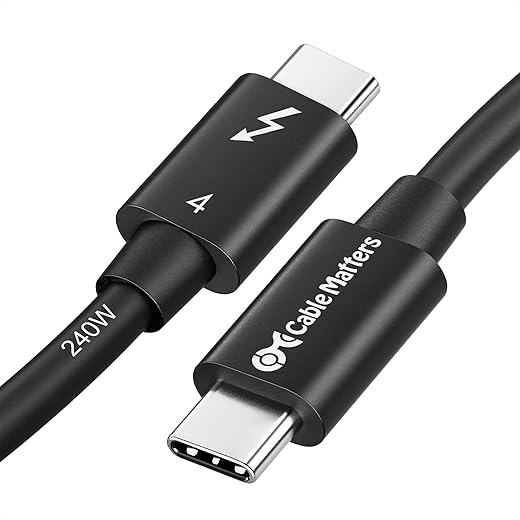
Cable Matters Intel-Certified Thunderbolt 4 Cable 1m
Certified Thunderbolt 4 with full USB4 support
We found Cable Matters’ Intel‑certified Thunderbolt 4 cable to be a sensible choice for professionals who need consistent 40Gbps performance, 240W PD, and support for single 8K or dual 4K displays. Certification and broad backward compatibility matter here because they guarantee predictable behavior across mixed Windows and Mac setups where reliability is non‑negotiable.
Amazon price updated April 4, 2026 12:58 pm
Prices and availability are accurate as of the last update but subject to change. I may earn a commission at no extra cost to you.

4

Look for Certification and Transparent Testing

Is that shiny logo real, or marketing gloss? We show how to verify it without a lab.

Check for official certification marks and vendor test logs before you buy. We trust Thunderbolt-certified logos (Intel’s program), USB‑IF/USB4 certification, and explicit USB Power Delivery and DisplayPort compliance statements.

Cross-check vendor reports by asking for test conditions: host model, peripheral, cable length, and test tools. Run simple verification tests yourself:

Large sequential transfer — copy a 20–50 GB file and watch sustained MB/s.
NVMe/eGPU benchmark — run CrystalDiskMark or Unigine with the external device attached.
High‑bitrate display test — hook an 8K@60 or 4K@120 monitor and confirm expected refresh/bitrate.

Consult independent reviews and community forums for long‑term reliability data. Prioritize vendors with clear test reports, generous return policies, and multi‑year warranties so we can swap cables if real‑world performance falls short.
Trusted Choice
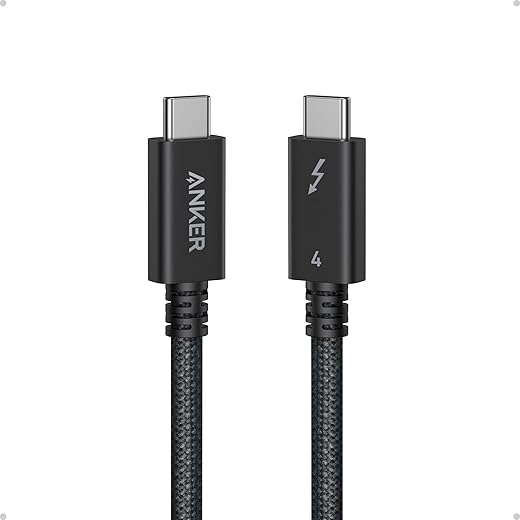
Anker Prime Thunderbolt 4 240W Cable 3.3ft
Thunderbolt 4-certified: fast charging and 8K display
We like the Anker Prime for combining Thunderbolt 4 certification with practical features—40Gbps transfers, single 8K or dual 4K displays, and a 240W charging profile—backed by Anker’s warranty and ecosystem support. In a market where speed and power specs are often overstated, the Prime stands out by pairing verified performance with real‑world convenience for mobile creators and power users.
Amazon price updated April 4, 2026 12:58 pm
Prices and availability are accurate as of the last update but subject to change. I may earn a commission at no extra cost to you.

5

Assess Power Delivery, Alternate Modes, and Everyday Use

A fast cable that won’t charge your laptop or drive your monitor isn’t helpful — here’s how to evaluate the full feature set.

Check the cable’s PD rating and e‑marking. Ask whether it supports USB‑PD EPR (for >100 W workflows) and whether the vendor documents negotiated power with your laptop model.

Confirm DisplayPort tunneling at your target resolution/refresh—test for 4K@60/120 or 5K@60 as needed. Verify the cable passes through the monitor’s color depth and HDR metadata without fallbacks.

Match cable attributes to your ecosystem: docks and hubs need stable USB and DP alt‑mode; eGPUs and NVMe enclosures need full PCIe tunneling and active cable designs.

Single‑cable docking: prefer e‑marked, high‑PD, and explicit DP alt‑mode support.
Multi‑device chains: choose cables validated for daisy‑chaining and bus power limits.
High‑power laptops or eGPU: pick active, EPR‑capable cables that vendors have tested with your hardware.

Remember: usability beats peak benchmarks—pick cables that work in your real setup, not just on paper.

Best Value
Amazon Basics Thunderbolt 4 Pro Docking Station
Dual Thunderbolt 4 ports with 96W PD
We see this compact Amazon Basics dock as a pragmatic, travel‑friendly way to add dual Thunderbolt 4 ports, HDMI 2.1, and a 2.5GbE port while delivering up to 96W dynamic PD—ideal for users who need a full desk setup on the go. It matters because it brings professional connectivity and decent power delivery at a price that undercuts many premium docks, though buyers should watch bandwidth sharing and M1/M2 Mac compatibility notes.
Amazon price updated April 4, 2026 12:58 pm
Prices and availability are accurate as of the last update but subject to change. I may earn a commission at no extra cost to you.

6

Buy Smart: Brands, Warranty, and a Practical Test Plan

Which vendors actually stand behind their cables — and how should we test one in the wild?

Prefer vendors that publish clear specs, compliance test reports, and sensible warranties. Note that OEM cables bundled with premium laptops are often tuned for that ecosystem — they may work great on a Dell but be flaky on an M‑series Mac.

Run this in‑home test plan to validate a new cable:

Check firmware and drivers on host and dock; update before testing.
Run a sustained file transfer (large NVMe copy) for 10–15 minutes and note throughput.
Play back video at your target resolution/refresh (4K@120, 5K@60) to check frames and HDR.
Monitor temperature at the connector and along the jacket under load.
Verify PD negotiation under load (laptop charging rate matches spec).

Return or exchange immediately if throughput falls short, video drops, power misnegotiates, or the cable overheats. Future‑proof purchases by favoring certified, well‑documented brands, moderate lengths, and multi‑year warranties.


Final Takeaway

We choose cables by judging the whole system — host limits, cable design and certification, and real‑world tests — prioritizing compatibility and transparent testing over low price so Thunderbolt 6 hits full speed; try steps, test yours, and share results.

Chris is the founder and lead editor of OptionCutter LLC, where he oversees in-depth buying guides, product reviews, and comparison content designed to help readers make informed purchasing decisions. His editorial approach centers on structured research, real-world use cases, performance benchmarks, and transparent evaluation criteria rather than surface-level summaries. Through OptionCutter’s blog content, he focuses on breaking down complex product categories into clear recommendations, practical advice, and decision frameworks that prioritize accuracy, usability, and long-term value for shoppers.


Newest Posts