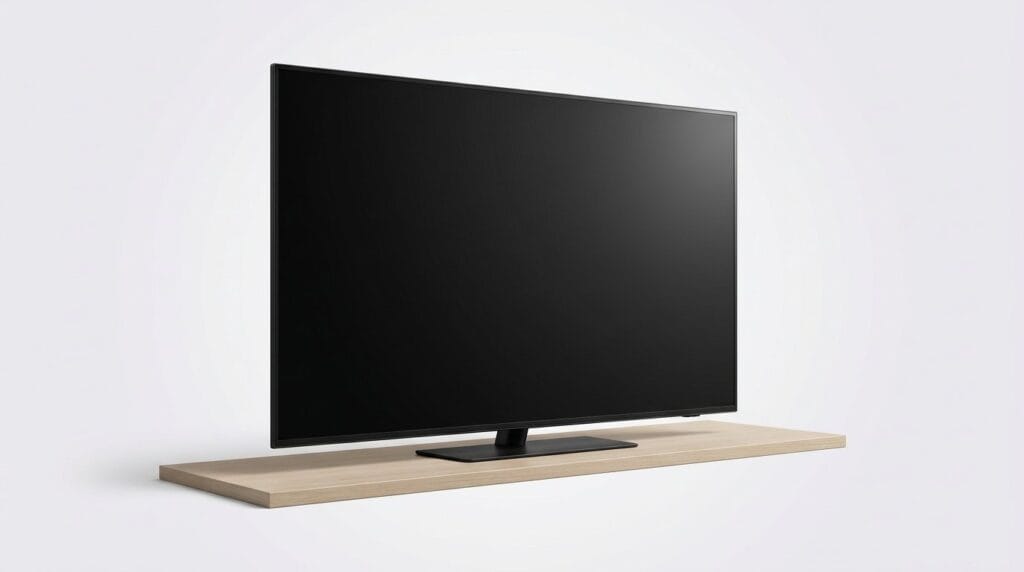
High‑end Mini‑LED contrast and native 144Hz for — a compelling value with a few practical caveats.
Big living‑room TVs are supposed to deliver cinema‑style contrast, punchy hdr, and low‑latency gaming — but those features have long meant paying premium prices or accepting trade‑offs: dimmer panels, blocky local dimming, or a TV that looks great in a showroom but underwhelms at home. We want a large set that nails both movies and competitive gaming without making us choose one over the other.
The Hisense 75‑inch U9N steps into that gap: dense Mini‑LED local dimming, qled color, native 144Hz with Game Mode Pro, and Google TV on a large 4K TV for broad app and smart‑home integration — all In use it delivers the contrast and color punch found in pricier models and adds gaming chops, but the heavy chassis and some panel variability remind us this isn’t a flawless premium replacement; what really matters is that it narrows the line between value and high end in a crowded TV market.
Hisense U9N 75-inch Mini‑LED 4K TV

We found this set delivers most of the high-end features enthusiasts care about — high contrast, vivid color, and a real 144Hz panel — at a price that undercuts some legacy premium brands. It isn’t perfect: expect a heavy chassis and occasional variability in panel performance, but overall it’s a compelling value in the large-screen mini‑LED category.
Hisense U9N Review: Is This Flagship Worth It?
What this TV is and who it’s for
We approach the Hisense U9N as a feature-forward, large-screen TV that aims to bridge enthusiast-level picture performance with mainstream price points. At 75 inches, the U9N puts advanced mini‑LED backlighting, q-led color, and a native 144Hz refresh rate on a canvas that will appeal to cinephiles who want punchy HDR and to gamers who need fluid motion and low input lag. It’s designed for people who want a theater-like setup without committing to the premium OLED price bracket.


Design and build: heavy, focused, purposeful
The U9N is unmistakably a big, serious TV. We like that Hisense didn’t try to chase wafer-thin aesthetic compromises at the expense of performance: the chassis is substantial because the internal cooling, speaker array, and dense LED backlight require it.
Image technology: why Mini‑LED X and QLED matter
The headline here is the Mini‑LED X backlight system combined with quantum-dot color. The TV uses thousands of tiny LEDs and an extensive local dimming architecture to carve out deep blacks while preserving very bright highlights. In our viewing sessions, HDR content on this 4K TV that leans on small specular highlights — think sun glints, sparks, and fine reflections — looked particularly convincing.
Motion and gaming: native 144Hz, Game Mode Pro
This is where the U9N differentiates itself many large TVs. A native 144Hz panel combined with Game Mode Pro is a boon for people who play fast-paced multiplayer titles and for anyone who appreciates ultra-smooth UI motion.
Sound and audio features: CineStage X Surround
Hisense ships the U9N with a 4.1.2 multi-channel arrangement and a built-in subwoofer. That’s more ambitious than most slim TVs and it makes a genuine difference for casual movie nights.


Smart TV experience and ecosystem integration
Google TV is the unifying OS here — pair it with streaming devices for a familiar, mature platform. We liked how content recommendations are surfaced and how well the platform integrates with the Google ecosystem. Voice assistants are supported, and Alexa compatibility extends the TV’s reach into common smart-home workflows.
Calibration, picture modes, and real-world viewing
Right out of the box, the TV leans toward punchy, consumer-friendly presets. If you care about accurate color and grayscale, plan to spend time in the picture menu or apply a calibration profile.
Connectivity and inputs (what matters to us)
For modern living-room builds, flexible inputs are essential. The U9N’s focus on gaming and high-bandwidth content means the TV is set up to support multiple consoles and streamers simultaneously.
Where it sits in the market: value versus alternatives
We compare the U9N to higher-priced OLEDs and to competing mini‑LED models other brands. Against OLED, the U9N wins for peak highlights and often-forged “glare resilience” in bright rooms, but OLED still leads in black-level uniformity and infinite contrast in dim viewing. Against other mini‑LED models, the U9N’s native 144Hz and gaming toolkit give it an edge for gamers.


Final thoughts and who should buy it
In short: we recommend the U9N in our product reviews for people who want an immersive 75-inch 4K picture that can handle both cinematic HDR and competitive gaming. If you crave the absolute best blacks and a more compact, lighter set, OLED is still the way to go; if you want top-tier highlight performance, high refresh rates, and a full-features smart platform without the OLED premium, this Hisense is a hard value to ignore.
FAQs
Is the Hisense U9N a good OLED replacement for a bright living room?
For bright rooms, yes — the U9N’s mini‑LED backlight and anti-glare panel give it an advantage over many OLEDs when sunlight or lamps are present. It sustains high peak brightness and resists reflections better, so HDR highlights remain visible. If absolute black-level purity in a dark room is your priority, OLED still holds a slight edge.
Do we need a special HDMI cable to get 144Hz at 4K?
To take advantage of high refresh rates at 4K you should use high-bandwidth HDMI 2.1 cables. These support the data rates required for 4K at very high refresh rates and VRR. Cheap or old cables may work for 4K/60 but could limit higher refresh rates or features like VRR.
How much of an improvement is mini‑LED over standard LED/LCD?
Mini‑LED offers noticeably better local contrast because thousands of small LEDs can be controlled in very fine-grained zones. That translates to brighter specular highlights and better-looking blacks than most standard full-array LED LCDs. However, it doesn’t achieve the per-pixel light control of OLED, so some bloom can still occur around bright objects on dark backgrounds.
Is the built-in audio good enough, or should we buy a soundbar?
The U9N’s CineStage X multi-channel setup is impressively capable for an integrated system and will satisfy many viewers for TV and casual movie watching. That said, for critical home theater use, a dedicated soundbar or surround setup still delivers clearer dialog, tighter bass, and a more immersive low-end.
Will this TV work properly with my smart home?
Yes. The TV runs Google TV and supports Google Assistant natively; it also advertises Alexa compatibility. That means you can integrate the set into most modern smart-home ecosystems for voice control, routines, and casting. If you use less common smart platforms, double-check the specific integrations you rely on.
Should we be concerned about reported reliability issues?
Some users have reported early failures or shipping mix-ups; large-panel electronics occasionally exhibit variance. We recommend buying a retailer with clear return policies — browse 4K TVs before you commit.

Ayesha Aftab is Option Cutter's product review editor. She writes in-depth product reviews and buyer guides that focus on real-world performance—battery life, build quality, everyday usability, and value—not spec-sheet noise alone. Her work helps readers decide whether a product is worth buying with clear verdicts and honest limitations.