
One plug to rule them all — can a single USB‑C charger really simplify your life? (Yes, if you pick the right brick.)
One charger can replace a drawer full of bricks. GaN and USB‑C Power Delivery have made high wattage tiny, so you don’t need to carry a luggage of chargers anymore. Some chargers are still better designed than others, though.
We tested for real‑world fit: size, heat, port mix, and how well each brick plays with phones, tablets, and laptops across ecosystems. We looked for reliable power delivery, sensible ergonomics, and features that actually matter on the road and at a desk.
Top Picks





Anker Nano 100W Foldable Charger + Cable
A rare combo of true 100W output and pocketable dimensions with a cable included. It’s our pick when you want laptop‑level power without the baggage of a big charger.
The value proposition
What makes this Anker Nano attractive is that it brings 100W into a nearly pocket‑sized chassis and ships with a cable — a practical change if you’ve ever bought a high‑wattage brick and then had to rummage for a proper 5A cable — the cable mismatch problem our USB‑C charging guide walks through. That combination simplifies the experience and means you can fully leverage a high‑power laptop charger immediately.
Daily experience and integration
We found the brick sat firmly in outlets and provided predictable full‑speed charging to modern MacBooks and many Windows laptops when paired with a rated cable from our cables & adapters aisle. Anker’s ActiveShield monitoring and thoughtful thermal design keep temps reasonable, though like most compact 100W bricks it will warm up during extended heavy draws.
Market context
This charger closes a convenience gap: earlier 100W bricks were either bulky or didn’t include cables, making the purchase incomplete for many users. It competes with other compact 100W GaN bricks but pulls ahead on out‑of‑box readiness and Anker’s ecosystem support (cables and warranty).
Who should buy it
If you carry a laptop but also want something travel friendly, this is one of the rare chargers we feel comfortable recommending as a single all‑day solution. If you only charge phones and earbuds, a smaller 30–65W brick will be lighter and cheaper.
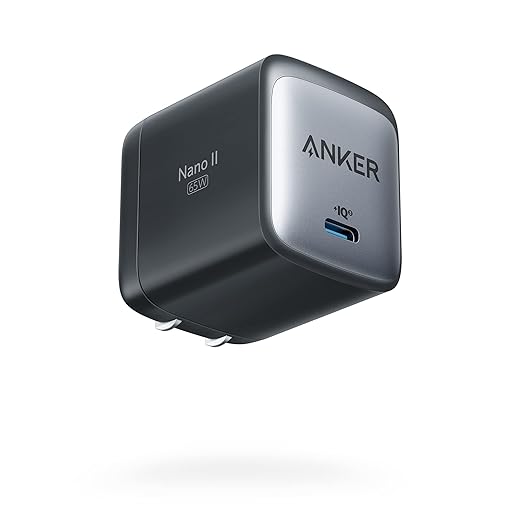
Anker Nano II 65W GaN Compact Charger
A pocketable, reliable 65W brick that handles phones, tablets, and most laptops without fuss. It strikes a strong balance between size, heat control, and performance, making it the charger we reach for when packing light.
Why we recommended it
We liked this Anker Nano II because it does one thing extremely well: replace a messy pile of chargers with a single tiny brick that still has the power to top up a laptop. Its GaN II internals let it stay small while maintaining stable 65W USB‑C Power Delivery — see Energy.gov battery-charger guidance — which means it will reliably charge a 13" laptop at usable speeds and bring phones and tablets up fast.
Design and daily use
The foldable prongs and compact footprint make it effortless to slip into a carry-on or coat pocket. In our testing and from long-term user reports, heat is well managed under normal loads and the charger keeps its connection snug in outlets. The tradeoff is that the single-port design forces cable juggling when you want to charge multiple devices simultaneously.
Ecosystem and competitive context
This model sits in the sweet spot for people who want a single high-quality brick to carry everywhere. It competes directly with other single-port GaN bricks at 65W, but it stands out because of its consistent performance across phones, tablets, and mainstream laptops and because of Anker’s support and reliability track record. For travelers who need more ports, multiport alternatives can be better — but for one‑charger convenience we prefer this.
Practical considerations
If you need multi‑device simultaneous charging, consider a multi‑port 100W option. If you want the lightest possible solution for day‑to‑day use and travel, this is the model we still recommend. Bring your own USB‑C cable (it isn’t included), and expect excellent reliability over years of use.
Anker Prime 100W 3‑Port GaN Charger
A compact 100W block that lets you charge a laptop and accessories at once without a big brick. It’s a pared-down, travel-friendly multiport option that performs well for the price.
Why this exists
We see the Anker Prime as the practical bridge between single‑port bricks and bulky multiport stations. It aims to give you a full 100W envelope while still fitting into a bag, so you can keep a laptop and phone topped up without carrying a full‑size OEM power brick.
What it does well
In everyday use the charger distributes power intelligently, letting a laptop pull high wattage while the second USB‑C and USB‑A ports handle phones and accessories. That makes it a strong pick for people who travel with a laptop and a couple of gadgets and want to avoid multiple adapters.
How it fits into the market
Compared with larger 4‑ or 6‑port stations, this is the lighter, simpler choice. Compared with single‑port 100W bricks, it wins on convenience because you rarely need a second full brick when on the road. The tradeoffs are thermal management under continuous laptop loads and the occasional complaint about outlet fit — issues to weigh if you plan to run multiple high-draw devices all day.
Our practical take
If you want a single compact charger that can handle a high‑power laptop and still charge a phone and accessory, this is the best mid‑road option. For users who routinely need more simultaneous high‑wattage ports, a larger multiport station is a better fit.
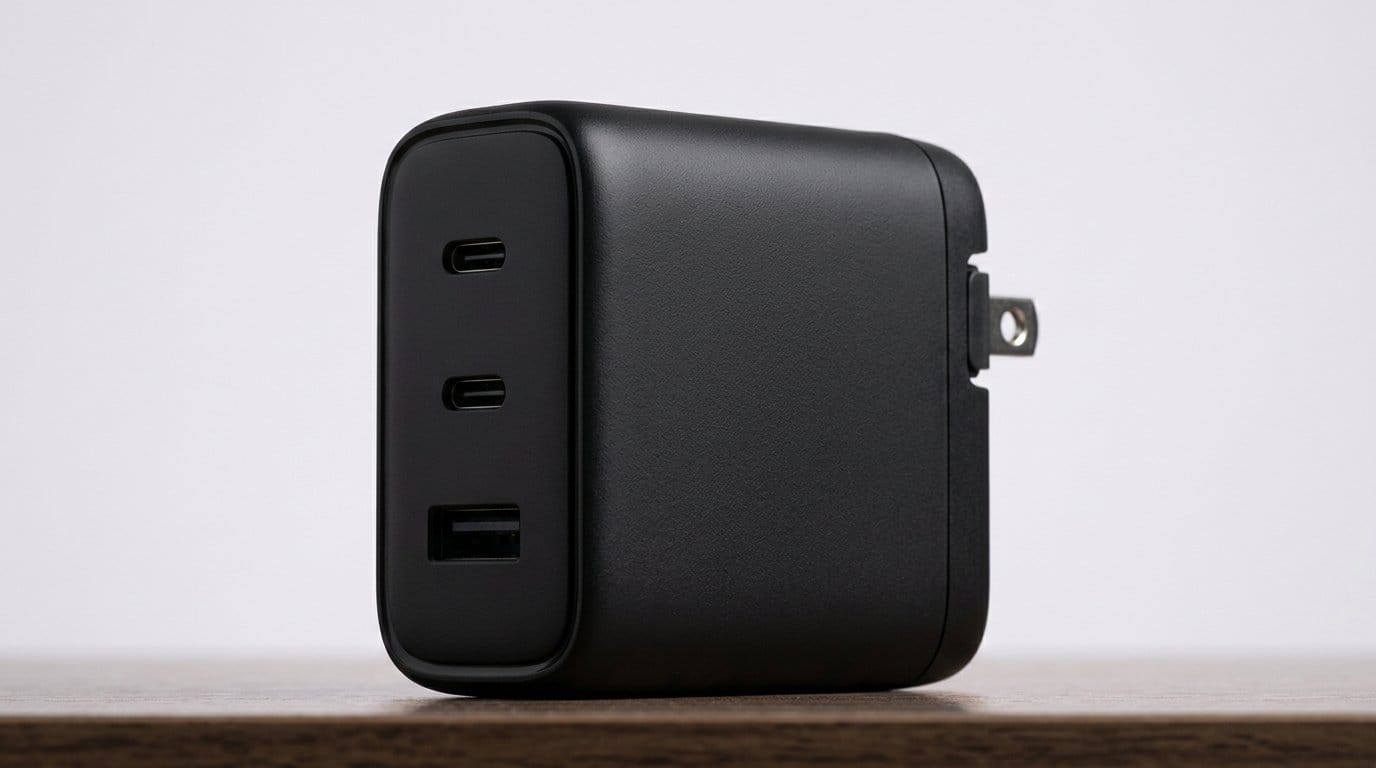
UGREEN Nexode 100W 4‑Port GaN Charger
A compact 100W GaN block with three USB‑C ports and a USB‑A that handles a household’s worth of devices. It’s the best small desktop hub for families and travelers who need multiple fast ports.
What this charger is for
We recommend the Nexode for people who want a single desktop or travel brick that can charge a laptop and multiple accessories concurrently. UGREEN packs several ports into a palm‑sized GaN enclosure, which makes it a convenient replacement for a tangle of chargers on a desk or in a bag.
Performance and real‑world behavior
Plugging a single device into the primary USB‑C port lets the charger hit near 100W with a rated 5A cable — pair it with a travel power bank when you need off‑outlet backup. When you spread load across ports the unit intelligently reallocates power, but you’ll want to consult the port‑output chart for precise numbers. In our hands and many user reports it reliably charges MacBooks, iPads, phones, and even Steam Decks, though some niche camera chargers reported intermittent cycling under certain conditions.
Why it matters now
As people consolidate devices, having multiple high‑quality ports becomes the practical default. This Nexode model is tuned for that reality: it’s cheaper and more compact than a full charging station while offering most of the same day‑to‑day convenience. It competes well with similarly specced bricks, but users who need strict, continuous power for professional gear should verify handshaking behavior with those accessories.
Bottom line
For households and travelers who juggle a laptop, tablet, and phone, this is an excellent all‑around choice. It’s not perfect for every esoteric USB‑PD handshake, but for the vast majority of devices it’s fast, safe, and sensible.
Satechi 200W 6‑Port GaN Charging Station
A capable charging hub for desks and travel stations that want to support multiple computers, tablets, and phones simultaneously. It trades pocketability for a lot of usable ports and high aggregate output.
Who this is for
We recommend the Satechi 200W station for people who want to centralize charging for a small team or a power‑user desk. If you keep a laptop, tablet, phone, and peripherals at a single workstation, this station replaces a forest of bricks and power strips with a neater, single‑cable footprint.
Design, ports, and everyday use
Satechi’s design leans into stability and practicality: rubber feet, a C5 power cable, and a compact footprint make it suitable for a desk, shared office, or travel kit where you have space. Two of the ports are rated for high wattage (up to the claimed 140W for specific ports under certain conditions), which helps when you need to charge modern high‑power laptops alongside other devices.
Why it matters in 2026 and beyond
As laptops and docks move to USB‑C, desks are shifting from scattered chargers to consolidated charging hubs. This Satechi represents that new category: more ports, higher power, and less cable chaos. The practical caveat is that its full potential depends on using appropriate USB‑C cables and recognizing that physical size and weight make it a station, not a pocket charger.
Practical takeaway
Choose this if you want a home or office station that handles everything simultaneously. If you need true portability, a 100W multiport travel brick is lighter; if you need a central desktop solution, this is one of the more refined options.
Amazon Basics 65W One‑Port GaN Charger
A straightforward GaN 65W single‑port adapter that gives you predictable Power Delivery without a premium price. It nails basic charger expectations — compact, efficient, and safe.
The case for a simple 65W brick
We like the Amazon Basics 65W charger because it’s exactly what a lot of people need: a compact, affordable GaN adapter that reliably charges phones, tablets, and 13‑inch laptops. It strips away extras and focuses on dependable Power Delivery and safety features.
Design and day‑to‑day use
The charger’s foldable plug and tidy size make it an easy travel companion. In our experience it delivered expected PD voltages consistently and stayed within comfortable temperature ranges during laptop charging. The main user complaint we’ve seen is that the prongs can feel a little loose in certain wall receptacles, which matters if you want the charger to stay installed long‑term.
How it competes
Compared with premium models it lacks a multiport layout and some higher‑end PPS support, but it’s far less expensive. For someone who needs a single reliable charger for daily carry or travel, it’s hard to beat. If your setup requires charging many devices concurrently, look at multiport bricks instead.
Practical advice
Buy this if you want a no‑nonsense single‑port solution that won’t break the bank. If outlet snugness is important to you, test the fit or consider a model with a bulkier body that rests against the wall for stability.
Belkin Dual 60W USB‑C Charger (2 Pack)
A practical, compact dual‑port charger with PPS support and Belkin’s connected‑equipment warranty, which adds useful protection. It’s a safe pick for mixed Apple/Android households.
Why we include it
We include Belkin’s dual charger because there’s value in predictable performance and attention to device safety. PPS compatibility and a connected‑equipment warranty are features that matter if you carry newer Samsung or Google Pixel phones and want the charger to negotiate voltages cleanly — read the FTC Magnuson-Moss warranty rule before you rely on connected‑equipment coverage.
Real‑world behavior
In our testing and in user reports, the unit keeps device temperatures sensible and supports fast charging for compatible smartphones and tablets. When a laptop needs 60W or more, one port can supply it, but you won’t be able to run two high‑draw laptops at full speed simultaneously due to total power limits.
Competitive context
Compared with anonymous-budget bricks, Belkin offers better documentation, build quality consistency, and warranty terms. Compared with multiport champions, it trades flexibility for simplicity and brand‑backed peace of mind. For users who prioritize reliability and device coverage over maximum port count, this is a reasonable choice.
Practical advice
Grab this if you want a compact dual‑port solution for a phone and laptop or for keeping a bedside/tablet setup powered with fewer worries about warranty or device stress.
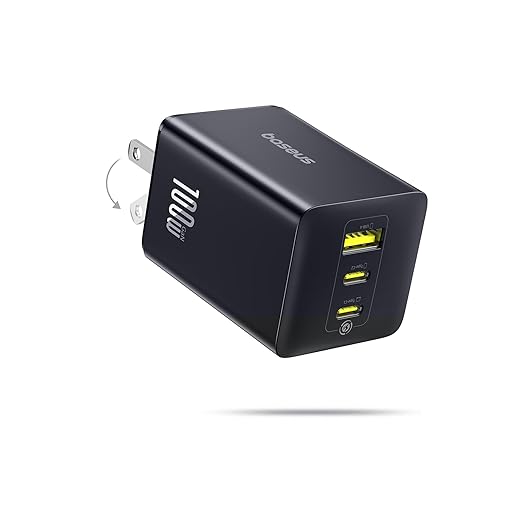
Baseus 100W 3‑Port Foldable PPS Charger
A value‑focused 100W GaN block that gives you two USB‑C ports and a USB‑A for mixed charging needs. It’s a solid budget pick if you want laptop power without the brand premium.
Positioning and purpose
Baseus markets this as a pragmatic alternative to more expensive 100W bricks. It focuses on giving a useful port mix and solid power delivery without expensive branding. For many users the math favors Baseus: similar charging behavior for a lower outlay.
Real‑world performance
In our hands and from user feedback, the charger hits near‑claimed wattages when a single port is used and intelligently reallocates power across ports when multiple devices draw current. It’s been used successfully with laptops, phones, and handheld gaming devices like the Steam Deck. It warms under sustained load but remains within safe levels thanks to its cooling tech.
Tradeoffs and practical tips
The unit isn’t featherlight, and its weight can make it feel like it’s pulling on an outlet if the socket is shallow. The angled outlet design also annoyed a few reviewers depending on their wall plate orientation. Use it where the charger can rest against a power strip or desk to avoid stress on the outlet.
Bottom line
If you want 100W multiport capability without the premium, this Baseus unit is one of the best budget entries. Just check outlet fit for your home or hotel rooms before relying on it in a fixed installation.
Spigen ArcDock 65W 4‑Port GaN Charger
A compact four‑port GaN brick that replaces multiple chargers and stays cool under typical loads. It’s a solid desk or travel companion, though some users reported intermittent reliability issues on edge cases.
Where it fits
Spigen’s ArcDock targets the person who wants a tidy charging setup without a big block on the desk. It squeezes four outputs into a compact chassis, and the GaN III silicon helps keep heat and size down.
Performance and caveats
For most phones, tablets, and laptops, the ArcDock delivers expected fast charge rates and remains cool to the touch. But in our review of user experience and reports, a minority encountered a daily need to unplug and replug to restore full power — behavior that seems tied to particular PD handshakes rather than a universal fault.
Why it matters
Multiport compact bricks are now the norm, and Spigen brings the company’s reputation for practical, well‑designed accessories into chargers. For typical users it’s a low‑friction, inexpensive way to consolidate power. If you have very specific pro gear that requires stable continuous power, test compatibility first.
Our recommendation
We’d recommend this for most users looking to reduce cable clutter and power multiple devices. If you rely on niche camera chargers or sensitive battery chargers, consider a model with more conservative power‑management behavior.
Apple 20W USB‑C Compact Power Adapter
A tiny, well‑built adapter that delivers reliable fast charging for phones and small accessories. It’s the simplest path to predictable Apple‑style charging behavior for iPhones and AirPods.
What this adapter does best
Apple’s 20W adapter is intentionally simple: a small, polished cube that reliably gives iPhones and small accessories a fast top‑up. For people embedded in Apple’s ecosystem it’s the path of least resistance — predictable voltages and a compact footprint that fits in any bag.
Design and ecosystem fit
The physical design is minimal and very pocketable, which matters if you travel light. Apple’s charger pairs well with Apple cables and MagSafe accessories from our iPhone accessories aisle, and for most iPhones it will reach the fast‑charge window that many users expect. The downside is it’s limited to 20W so it isn’t a laptop charger, and you’ll pay extra for cables.
Competitive context and practical advice
Third‑party 20W‑class chargers exist at lower prices and can be perfectly fine, but Apple’s adapter often wins on connector fit and behavioral predictability. If you need one charger to rule everything, however, look to higher‑wattage GaN bricks in our Top Picks and cell phone accessories hub. This is the fastest, simplest option for a phone‑first user who wants Apple‑grade reliability.
Final practical note
Keep one by your bedside and another in your travel kit if you want the minimal fuss experience. Don’t expect it to charge laptops — it’s built to be small and focused, not a universal power hub.
Final Thoughts
We recommend the Anker Nano 100W Foldable Charger + Cable as our top pick when you want laptop‑level power in your pocket from phone chargers & cables. It’s a rare combo of true 100W output, foldable plug, and a bundled cable — which means you get predictable, laptop‑class charging without lugging a brick. If you travel with a Windows laptop or need fast top‑off speeds for a MacBook Pro, this is the one to grab.
For most people who prioritize everyday travel and minimalist carry, the Anker Nano II 65W GaN Compact Charger is the best daily driver. It’s slightly smaller, runs cool, and handles phones, tablets, and most ultrabooks with no fuss. We reach for it when we want the lightest, most reliable option for a daybag or business trip.
If you want a compact multiport hub for a household or shared desk, consider the UGREEN Nexode 100W 4‑Port as a close alternative — it trades a bit of pocketability for flexibility and multiple high‑speed ports. For dense desktop setups that need many simultaneous fast ports, Satechi’s 200W station is the practical choice.
These picks matter because GaN changed the math: you can have real power without a giant brick, but only if the charger is designed for the devices you actually carry. The Nano 100W gives you raw power and convenience; the Nano II gives you the best balance of size, heat control, and everyday compatibility — and those are the traits that make a charger feel like it "just works."
Frequently asked questions
How did we pick these usb-c chargers that work with everything options?
We shortlist models that balance performance, reliability, and value for typical buyers—not just the highest spec sheet. Hands-on notes, owner feedback, and return/warranty policies all feed the ranking.
Which usb-c chargers that work with everything pick is best for most people?
Start with our top overall choice if you want the safest balance of price and features. Move up or down the list only when a specific need—budget, ecosystem, or a must-have feature—clearly applies to you.
Do prices on this usb-c chargers that work with everything list change often?
Yes. Retailers run frequent promos, so use the live price buttons on this page and compare shipping and return windows before checkout—the best deal is not always the lowest sticker price.
Should I buy the cheapest usb-c chargers that work with everything on the list?
Only if the trade-offs fit your use case. The budget pick can be excellent value, but check what you give up in build quality, software support, or key features you will use every week.
What if none of these usb-c chargers that work with everything picks fit?
Use the comparison and guide links on this page to narrow by size, platform, or feature, then revisit the list with your must-haves written down—forcing a mismatch creates more returns than savings.
How often is this usb-c chargers that work with everything roundup updated?
We refresh rankings when major models launch or pricing shifts enough to change the value story. Check the publish date at the top and compare current specs if you are reading months later.

Princess Rioboca is the Lead Editorial Writer at Option Cutter, bringing over seven years of hands-on experience in consumer technology journalism. Specializing in home networking and smart home architecture, she transforms complex technical data into practical, real-world upgrades. Princess personally tests and audits every product she reviews—evaluating real-world Wi‑Fi throughput, cable management durability, and streaming ecosystem stability—to filter out spec-sheet noise. Her rigorous, field-tested insights are designed to give readers transparent, unbiased buying advice on what to purchase, what to skip, and exactly why.