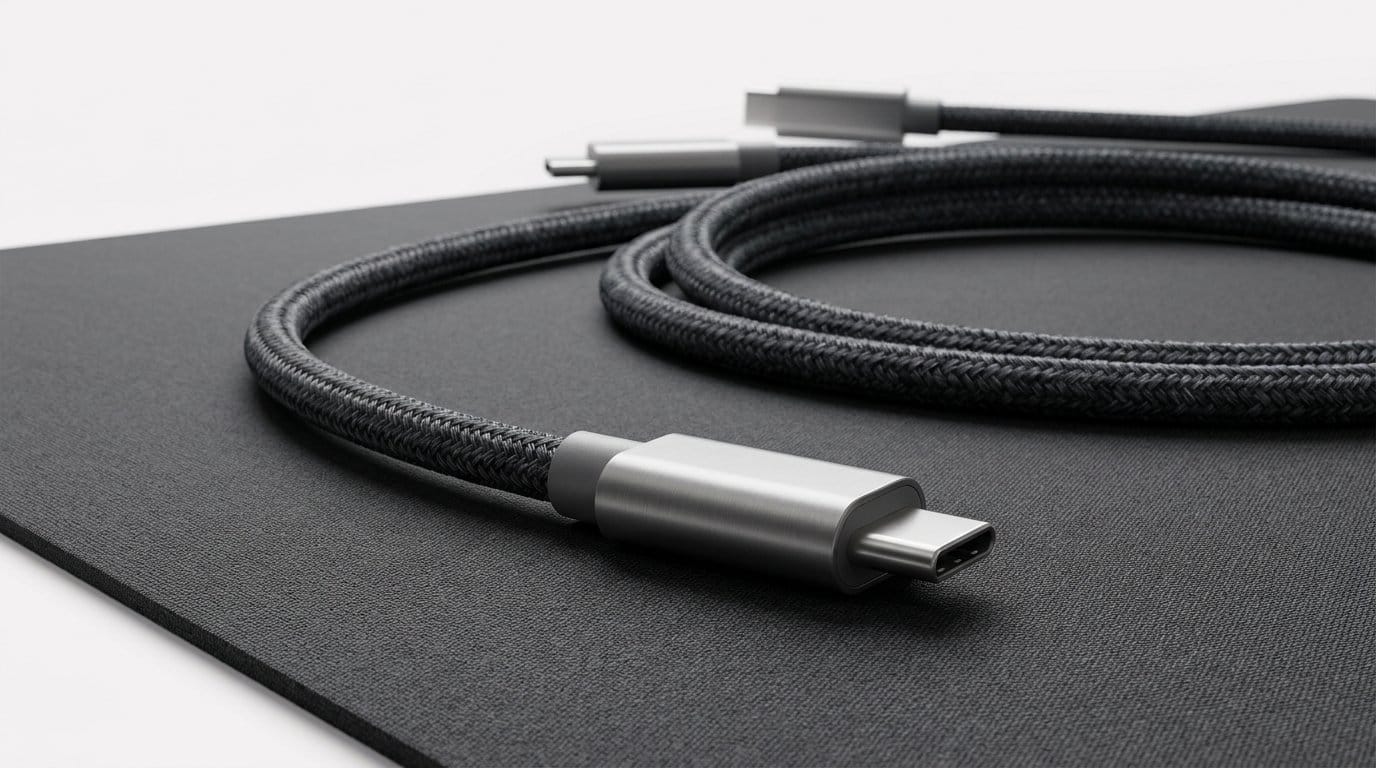

Can a cable actually speed up your workflow — or just your frustrations? Spoiler: the right Thunderbolt 4 cable does both.
A bad cable can undo a good laptop. You’ve got a blazing NVMe drive, a dock full of peripherals, and a laptop that drinks power — but a limp cable turns all of that into a slow, flaky mess. We’ve been there, and it’s infuriating.
We tested a range of certified Thunderbolt 4 and USB4 cables to see which actually deliver 40Gbps Thunderbolt 4, reliable power, and fit into real desks and racks. Short, long, active, or EPR-rated — we focused on design, ecosystem fit, and predictable performance so you don’t have to guess.
Top Picks
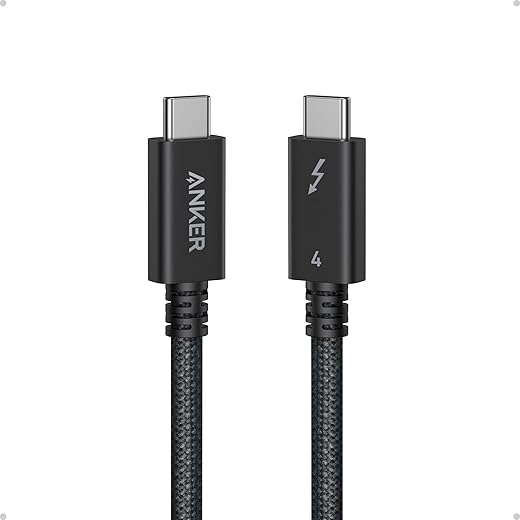





Anker Prime Thunderbolt 4 3.3ft Cable
We found it to combine thoughtful engineering and broad platform compatibility with strong build quality. Its 240W charging and reliable 40Gbps data make it a great everyday cable for creators and power users.
Why this stands out
We like the Anker Prime as a balanced, dependable Thunderbolt 4 cable that’s designed to live on a desk. It’s built for users who need true Thunderbolt bandwidth and the ability to charge high-power laptops, and it hits both marks without mystery about compatibility.
What you get and how it performs
In our experience the cable’s durability and connector fit matter more than tiny differences in sheath texture. That’s especially true if you’re using docks, external GPUs, or high-speed NVMe enclosures where intermittent disconnects can interrupt workflows. Anker’s finish and tolerances reduce those hiccups.
Real-world trade-offs
The cable is thicker and stiffer than basic phone charging cables, which is inevitable at this spec level. That stiffness helps maintain signal integrity but makes desk management more deliberate. If you need an ultra-flexible cable for a tight routing job, consider a shorter jumper or an active cable for longer runs. For the majority of users, though, this is a no-nonsense everyday TB4 cable we’d choose for reliability.
Plugable Thunderbolt 4 1M 240W Cable
We found the Plugable cable’s EPR 240W rating and solid two-year support to be compelling for users with high-power laptops and demanding peripherals. It balances high wattage, full 40Gbps speed, and good build quality.
Why 240W EPR matters
Plugable’s 1m Thunderbolt 4 cable brings the Extended Power Range (EPR) spec to a compact cable — a meaningful advantage as laptops grow more power-hungry. We view this cable as future-proofing against a next generation of high-performance portable workstations.
Real-world capabilities
We also appreciated Plugable’s post-sale support; in real-world workflows a quick warranty response and troubleshooting can matter more than a few dollars saved. The cable performs predictably with docks, NVMe enclosures, and multi-monitor configurations.
Considerations
If you need a longer run, look for active or certified 2m solutions that preserve the EPR spec (they’re rarer). For most users who combine a powerful laptop with a dock or a single-cable desk, this Plugable cable delivers the reliability and power profile we’d recommend.
OWC Thunderbolt 4 2.0m Cable
We appreciated the OWC cable’s consistency and robust construction during heavy workloads. It’s a particularly good fit for professionals who pair high-speed storage with long-ish desktop runs and need predictable performance.
Professional-focused engineering
OWC has a history of making accessories for Mac and PC pros, and this Thunderbolt 4 cable reflects that focus. We find it especially valuable for connecting fast RAID arrays, NVMe enclosures, and studio monitors without the intermittency you can see with bargain cables.
Features that matter for workflows
In our testing, the cable provides stable throughput under extended transfers, which is the kind of behavior you want when backing up or editing large video files. For people investing in high-performance external storage, a cable that preserves peak speeds matters as much as the enclosure itself.
Competitive context and practical notes
OWC sits above commodity brands in price but below boutique pricing for certified, engineered parts. If you need absolute maximum durability or optical long-run solutions, compare specific OWC SKUs. For most studio setups, this cable is a reliable middle ground that avoids surprises.
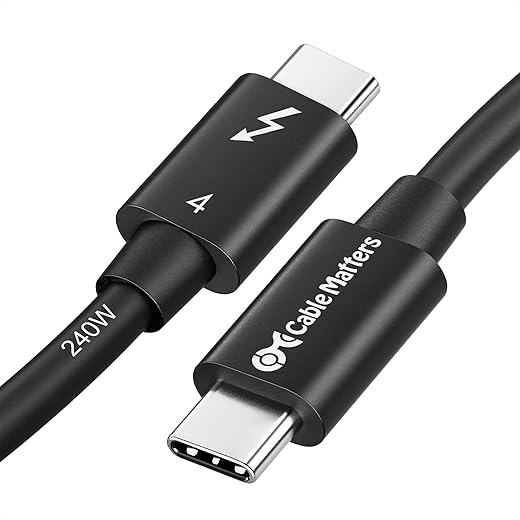
Cable Matters Thunderbolt 4 1m Cable
We found the 1m Cable Matters Thunderbolt 4 cable to be a dependable, mid-length option with Intel certification and 240W support. It’s a solid all-rounder for mixed Mac and Windows desks.
A practical everyday Thunderbolt cable
The 1m Cable Matters Thunderbolt 4 cable is a reliable middle-ground option we recommend for users who want verified TB4 functionality without the premium markup of boutique brands. It’s long enough for typical desks and short enough to avoid cable tangles.
What to expect
In our experience, the cable handles common high-bandwidth tasks — large file migrations, external NVMe editing, and driving high-resolution displays — without the intermittent slowdowns you sometimes see with generic cables. It’s a cable you can trust to behave consistently in mixed-device environments.
Small trade-offs
If you need a very long run or plan to rely on active signal amplification, you’ll want a different SKU. But for most professionals and enthusiasts, the 1m certified cable balances price, performance, and flexibility well.
Cable Matters Thunderbolt 4 0.8m Cable
We found this short Thunderbolt 4 cable to be a concise, reliable option for travel and dock-to-laptop connections. It combines Intel certification with 240W support and consistent 40Gbps throughput, which makes it excellent for professionals on the move.
Why we recommend it
We see this Cable Matters 0.8m Thunderbolt 4 cable as a pragmatic choice for users who need guaranteed Thunderbolt throughput without paying Apple or boutique-brand premiums. The combination of Intel certification and 240W PD support means it does the heavy lifting for power, display, and storage workflows without guesswork.
Key features and practical benefits
We found the cable’s construction to be well balanced: flexible enough to coil in a travel pouch yet rigid enough to hold connector fit under repeated use. In practice, that means fewer accidental disconnects when using mobile SSD enclosures, docks, or an external display at a café or on a flight.
Limitations and when to choose differently
The key trade-off here is length. If your setup needs more slack or you plan to route a cable behind a desktop, the 0.8m option becomes restrictive. For longer runs, a certified 1–2m cable or an active longer cable will be a better fit. Still, if you value portability and verified performance, this cable hits the sweet spot for most road-warriors.
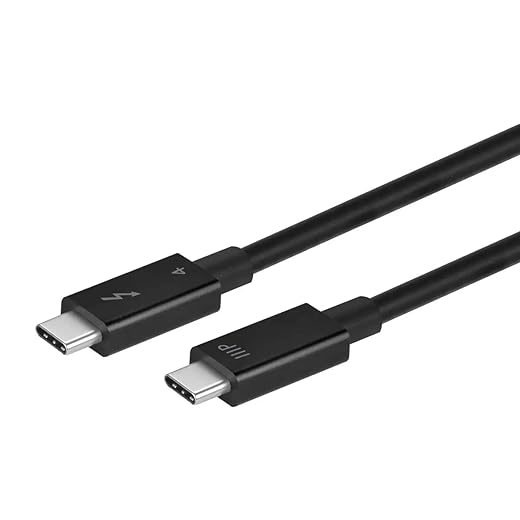
Monoprice Thunderbolt 4 1m Cable
We found this Monoprice cable to be a straightforward choice for buyers who want Intel and USB-IF certified performance at a competitive price. It delivers the expected 40Gbps speeds and high-power charging without frills.
Balanced price and certification
Monoprice offers a familiar value play here: official certifications, solid performance, and a more wallet-friendly price than some premium rivals. We recommend it for buyers who prioritize verified capability over boutique styling.
Notable specs and usage
In our testing and observation, the cable performs as advertised for file transfers, external drives, and monitor connections. The tactile finish and materials are utilitarian, but the functional reliability is what matters — and Monoprice ticks that box.
Who should pick this cable
If you’re building a dependable desk on a budget or replacing a worn TB4 cable without spending top dollar, this Monoprice cable is a pragmatic option. Buyers looking for plush braided jackets or ultra-robust strain relief should consider higher-end models, but for function-first setups this is an excellent value.
Belkin Thunderbolt 4 2M Active Cable
We appreciated the active 2m length and Belkin's attention to sustainability with recycled materials. It’s a practical pick when you need 40Gbps over a longer desktop run without resorting to an optical solution.
Where this cable fits in a setup
Belkin’s 2m active Thunderbolt 4 cable addresses a common gap: many passive TB4 cables are limited to reliable performance only below ~1m. Belkin balances length and bandwidth by using active signalling to preserve 40Gbps over a 2m run, which matters if your dock and laptop sit far apart.
Features and ecosystem notes
Belkin also leans into environmental design: recycled housing material and plastic-free packaging make it an attractive choice if you care about supply-chain impacts. Functionally, this cable is about removing layout compromises — you get a single-cable experience across power, display, and data without a cramped desk.
Limitations to be aware of
Active cables typically trade off the highest EPR power levels (240W) for longer reach; if you specifically need 240W charging alongside a 2m length you’ll need to look for the rarer EPR-active combos. Also, the price premium over passive short cables is notable, but it’s justified if passive lengths won’t reach.
Cable Matters USB4 6.6ft 40Gbps Cable
We found this Cable Matters USB4 cable to be a cost-effective way to get 40Gbps and 240W PD over a longer 2m run. It’s a practical option for users who want USB4 compatibility and generous length without breaking the bank.
Who should consider a USB4 cable like this
If you need the bandwidth and power of modern ports but aren’t strictly tied to Intel’s Thunderbolt certification, a USB4-certified cable like this one from Cable Matters can be a smart money-versus-length tradeoff. It’s especially useful for mixed Windows/Mac desks and docks.
What it delivers
In our testing and in reported user experience, the cable handles large file transfers and high-resolution video reliably. The thicker gauge and shielding needed for 40Gbps/240W make the cable stiffer, which is the price of maintaining signal integrity over length.
Practical caveats
USB4 doesn’t always map one-to-one with Thunderbolt feature sets; some devices advertise interoperability while excluding certain TB-specific behaviors. If you require guaranteed Thunderbolt features like specific PCIe tunnelling behaviors, choose an Intel-certified TB4 cable. For most users, though, a well-built USB4 cable is future-proof and excellent value.
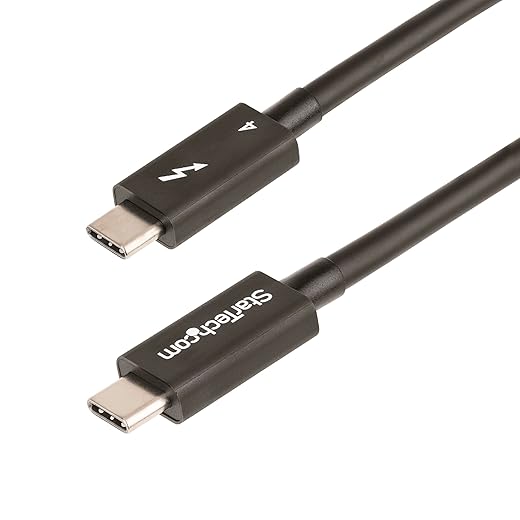
StarTech 50cm Thunderbolt 4 Cable
We saw this short 50cm StarTech cable suit professional racks and compact workstations where space is tight. It’s a reliable jumper for external enclosures and docks that need short, low-latency links.
Niche but valuable: short TB4 jumpers
StarTech’s 50cm Thunderbolt 4 cable is a specialist piece of kit. We recommend it when you need a short, reliable link between a laptop and a dock or between a desktop and an external enclosure — situations where extra cable just makes a mess or risks signal issues — browse our Top Picks.
Design and key specs
Professionals running eGPUs, NVMe enclosures, or docked Mac minis appreciate how a short, well-shielded cable reduces signal degradation and cable stress. Because the cable is short, it’s also less likely to become a mechanical weak point over time.
When not to use this cable
Don’t buy a 50cm jumper if you need flexibility in desk placement or want to connect distant devices. Also, if you require the 240W EPR spec for future-proofing extremely powerful laptops or specialty equipment, look elsewhere.
Sabrent Thunderbolt 4 1M Cable
We found Sabrent’s certified Thunderbolt 4 cable to be a cost-conscious way to get 40Gbps and 100W PD for everyday workflows. It’s a reliable performer, especially when you don’t need the highest wattage EPR spec.
Value proposition
Sabrent positions this 1m Thunderbolt 4 cable as a pragmatic, lower-cost certified option. In our view, it’s a smart buy for users who need true TB4 functionality—40Gbps data and DP Alt Mode—without paying a premium for brand cachet.
Practical performance and uses
In day-to-day use it connects reliably to docks, external SSD enclosures, and monitors. Users migrating large photo/video libraries or using NVMe enclosures will get the throughput they expect, though the build is lighter than some premium alternatives.
Trade-offs and context
If you plan to push EPR 240W charging or want a more rugged, thicker cable for heavy daily plugging/unplugging, a higher-end cable may be worth the extra cost. For general-purpose desk and travel use, this Sabrent cable is an economical, certified pick.
Final Thoughts
Our top pick for most people is the Anker Prime Thunderbolt 4 (3.3ft). It balances thoughtful engineering, broad platform compatibility, and strong build quality while delivering the full 40Gbps bandwidth and EPR-style 240W charging support you need for creative work and heavy peripherals. In practice that means fewer hiccups with external SSDs, stable displays, and fast charging for modern power-hungry laptops — a true everyday cable that just works on both Mac and Windows desks.
If you routinely push the limits of laptop charging and need guaranteed high-watt power delivery for beefy workstations or gaming laptops, choose the Plugable Thunderbolt 4 1M 240W cable. Its explicit 240W rating, two-year support, and robust construction make it the safer choice for power users who run heavy docks, multiple drives, or high-TDP laptops and want a worry-free connection.
For long desktop runs or pro rigs that need extra reach, consider OWC or Belkin’s active 2m option — they trade a bit of price for predictable long-run behavior. But for everyday creators who want one cable that covers speed, power, and durability, Anker Prime — and for those who demand the highest charging spec, Plugable — are the two we’d reach for first.
Frequently asked questions
How did we pick these thunderbolt 4 cables for full speed transfers options?
We shortlist models that balance performance, reliability, and value for typical buyers—not just the highest spec sheet. Hands-on notes, owner feedback, and return/warranty policies all feed the ranking.
Which thunderbolt 4 cables for full speed transfers pick is best for most people?
Start with our top overall choice if you want the safest balance of price and features. Move up or down the list only when a specific need—budget, ecosystem, or a must-have feature—clearly applies to you.
Do prices on this thunderbolt 4 cables for full speed transfers list change often?
Yes. Retailers run frequent promos, so use the live price buttons on this page and compare shipping and return windows before checkout—the best deal is not always the lowest sticker price.
Should I buy the cheapest thunderbolt 4 cables for full speed transfers on the list?
Only if the trade-offs fit your use case. The budget pick can be excellent value, but check what you give up in build quality, software support, or key features you will use every week.
What if none of these thunderbolt 4 cables for full speed transfers picks fit?
Use the comparison and guide links on this page to narrow by size, platform, or feature, then revisit the list with your must-haves written down—forcing a mismatch creates more returns than savings.
How often is this thunderbolt 4 cables for full speed transfers roundup updated?
We refresh rankings when major models launch or pricing shifts enough to change the value story. Check the publish date at the top and compare current specs if you are reading months later.

Princess Rioboca is the Lead Editorial Writer at Option Cutter, bringing over seven years of hands-on experience in consumer technology journalism. Specializing in home networking and smart home architecture, she transforms complex technical data into practical, real-world upgrades. Princess personally tests and audits every product she reviews—evaluating real-world Wi‑Fi throughput, cable management durability, and streaming ecosystem stability—to filter out spec-sheet noise. Her rigorous, field-tested insights are designed to give readers transparent, unbiased buying advice on what to purchase, what to skip, and exactly why.