
Because your TV’s ‘bass’ is mostly imagination — ready for real low end?
BASS SELLS MOVIES. Most flat‑panel TVs simply can’t reproduce the low frequencies that make explosions, orchestral rumble, and game soundtracks feel alive.
Top Picks
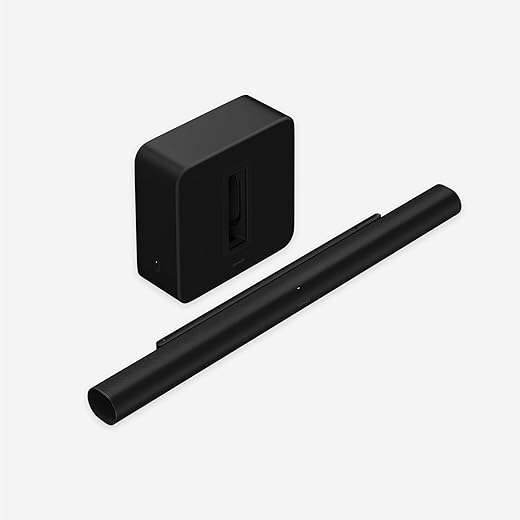





Sonos Arc Ultra + Sub 4 Package
We find this combination delivers class‑leading spatial audio, seamless multiroom integration, and a subwoofer that takes the low end from present to authoritative. It’s an ecosystem play that rewards users who want effortless setup, tuning, and expansion.
What we think
Sonos remains the benchmark for making sophisticated audio approachable, and the Arc Ultra paired with Sub 4 is the flagship manifestation of that philosophy. We like its combination of reference‑grade spatial rendering and the practical convenience of Sonos’s software ecosystem.
Why it stands out
For people who value both sonic performance and long‑term platform reliability, that combination is compelling.
Real‑world use and limitations
In our listening, Atmos soundtracks and spatialized music reveal more detail and a clearer separation between effects and vocals than most single‑bar alternatives. Setup is painless for iOS users with Trueplay, and the wireless Sub 4 placement flexibility is a practical convenience. The downside is cost: you pay a premium for the integration and tuning. Also, if you dislike walled garden ecosystems, the tight Sonos tie‑ins may feel restrictive.
Who should consider it
This is for buyers who prioritize ease, refinement, and future expandability—and are willing to pay for it. If you want the best out‑of‑the‑box Atmos experience with solid multiroom features, the Sonos flagships remain top contenders.
Polk Signa S4 Dolby Atmos Sound Bar
We rate this highly for its balance of affordable price, Dolby Atmos height cues, and clear center‑channel dialogue. It’s a well‑rounded package for people who want a convincing 3D effect without building out a big speaker system.
What we think
The Polk Signa S4 hits a sweet spot: it brings immersive Dolby Atmos cues, a dedicated center channel for dialogue, and practical tone controls at a price point that makes sense for many buyers. We found it particularly effective in living rooms where height reflections can be exploited without extra speakers.
Key features and why they matter
Those features together deliver a system that’s both cinematic and practical for everyday TV use.
Real‑world use and limitations
In our listening tests, the S4 translated soundtracks with engaging frontstage depth and clear vocals. The eARC/ARC single‑cable approach makes setup painless, and included cables cover the basics. The Atmos effect is real but room‑dependent; rooms with low ceilings or heavy absorption will reduce the perceived overhead image. The sub delivers enjoyable punch, but if you crave earthquake‑level rumble you’ll want a larger dedicated sub.
Who should consider it
This is our top pick for people who want the Atmos experience without committing to a rack of speakers. It’s also a particularly good match for TV‑centric households that value dialogue clarity and simple operation.
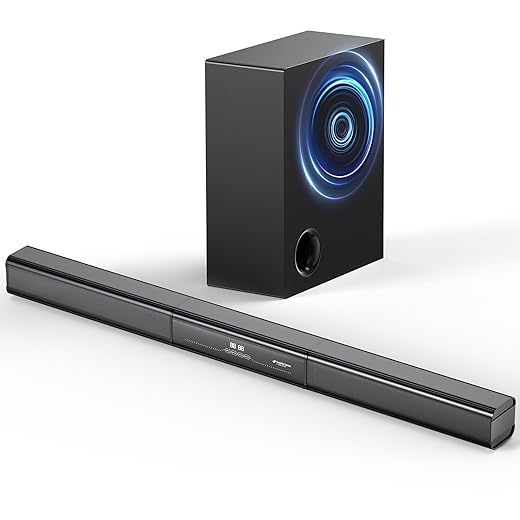
ULTIMEA Skywave X40 5.1.2 Dolby Atmos
We were impressed with the Skywave X40’s wireless rear speakers and subwoofer setup — it dramatically simplifies multi‑channel installs. The system delivers impactful bass and convincing atmospheric cues for its price point.
What we think
The Skywave X40 targets buyers who want a near‑complete surround system without cable runs. Dual 5GHz wireless links for surrounds and sub give you the flexibility of wireless placement while retaining the benefits of a multi‑driver front stage.
Notable features and performance
For buyers who prioritize a single integrated package with wireless convenience, these are meaningful advantages.
Real‑world use and limitations
We found the system excels in movies and action gaming, delivering immersive results without speaker wires stretching across your room. The app gives useful presets and EQ options, although the UI can occasionally lose Bluetooth connectivity. Also, like many manufacturers, Ultimea lists peak wattage that doesn’t directly translate to continuous listening power—assess by listening rather than by spec sheet alone.
Who should consider it
If you want a full surround experience with minimal cabling and a powerful sub for movies, the X40 is a strong consideration. Skeptical buyers should audition to ensure the wireless links and app behavior match their expectations.
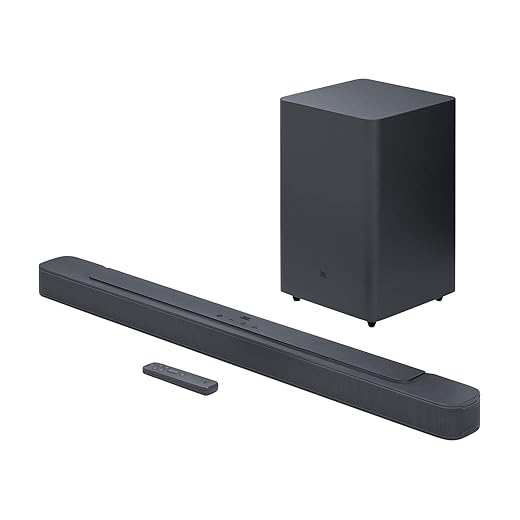
JBL Bar 2.1 Deep Bass MK2
We found this compact 2.1 system delivers disproportionately strong, room-filling bass for the price while keeping dialogue clear. It’s a straightforward, no-friction upgrade if you want cinematic heft without a complicated setup.
What we think
We see the JBL Bar 2.1 Deep Bass (MK2) as a pragmatic pick for people who want more movie‑style impact without a complex multi‑speaker system. It leans into the brand’s signature warm, fun sound and pairs a relatively compact bar with a tall 6.5" wireless subwoofer that actually moves air in most living rooms.
Key features and how they matter
These features matter because not everyone wants to fuss with calibration or extra hardware—JBL prioritizes plug‑and‑play impact.
Real-world use and limitations
We like that the MK2 focuses on simplicity: pairing the sub is automatic, the remote is pared down, and the three bass settings (Low/Mid/High) make it trivial to adjust. That said, enthusiasts will miss granular EQ and room‑calibration tools. Some users also reported occasional static that cleared with a reboot—an annoyance but not a dealbreaker for most.
Who should consider it
If you want a big improvement over TV speakers, a sub you can tuck out of sight, and minimal setup fuss, this is a solid, value‑oriented choice. If you want app‑based tuning, object‑based audio upgrade paths, or extensive ecosystem features, look at pricier alternatives.
Sony HT‑S400 2.1 Wireless Subwoofer
We think this Sony delivers solid, well‑balanced sound for bedrooms and secondary TVs where space and simplicity matter. It gives satisfying bass and easy TV integration with an uncomplicated feature set.
What we think
The Sony HT‑S400 is a practical, compact 2.1 system built for people who want a reliable, no‑friction improvement over TV speakers. It doesn’t chase the top wattage numbers; instead, it focuses on clarity, straightforward controls, and a subwoofer that makes a perceivable difference in everyday viewing.
Features and practical impact
These points matter because most buyers of this model want predictable, easy‑to‑use performance more than headline specs.
Real‑world use and limitations
In our use, the HT‑S400 improves dialogue and gives a satisfying bump to movie soundtracks and gaming. It’s particularly good in bedrooms and smaller living rooms. On the downside, the lack of eARC limits bit‑perfect passthrough for some high‑end sources, and a minority of users report occasional power cycling or firmware awkwardness—issues that can be frustrating but are not universal.
Who should consider it
This is a sensible pick for buyers upgrading a small TV or bedroom setup who value compactness, easy setup, and satisfying bass without the complexity of larger systems.
ULTIMEA Poseidon M60 5.1CH Dolby Atmos
We found this 5.1 Dolby Atmos setup delivers a wide, enveloping soundstage that belies its relatively compact bar. It’s a strong mid‑range contender for people who want immersive effects without adding separate rear speaker wiring.
What we think
The Poseidon M60 positions itself as a cost‑effective path to immersive 5.1 Atmos‑style sound without a forest of speakers. We appreciate its combination of multiple drivers, dedicated bass tech (BassMX), and an app that gives far more tuning options than you normally get in this price bracket.
Features that stand out
These points matter because they let a small system emulate surround cues and provide better low‑end control than similar budget 2.1 or 3.1 options.
Real‑world use and limitations
In practice, the M60 is compelling for medium‑sized rooms where you want surround immersion without running speaker wires around the room. The app’s 121 preset combinations and OTA updates are a plus, but we found the hardware’s marketed peak numbers somewhat optimistic—look at in‑room performance rather than claimed wattage. Also, the wired sub reduces layout flexibility versus wireless subs.
Who should consider it
This is a good pick for movie fans and gamers seeking surround immersion on a budget who are comfortable using an app for tuning and don’t need the freedom of a wireless sub.
LG S60T 3.1ch Soundbar with Subwoofer
We appreciate the S60T for the way it integrates with LG TVs—WOW Orchestra and a one‑remote experience smooth the everyday user experience. It’s a sensible 3.1 upgrade that prioritizes dialogue clarity and TV synergy over headline‑grabbing bass.
What we think
LG’s S60T sits in the crowded midrange as a TV‑centric 3.1 system that emphasizes convenience and voice clarity. We like it most when paired with an LG TV, where the WOW Orchestra and unified control actually change the day‑to‑day experience.
Key features and ecosystem advantages
These matter because most people care about an easy UX and predictable performance when they upgrade a TV’s sound.
Real‑world use and limitations
In our listening tests, the S60T’s center channel improves clarity markedly compared with stereo bars, and the subwoofer handles everyday effects well. Where it falls short is in low‑frequency authority for orchestral scores or deep sub‑bass in high‑impact films—if you want weight, opt for larger 6‑inch+ subwoofers.
Who should consider it
Choose this if you own an LG TV or value single‑remote convenience and accurate speech reproduction over extreme low‑end impact. It’s a practical, affordable step‑up without the complexity of full surround setups.
Dorby 2.1 Detachable TV Soundbar
We view this as an entry‑level option that punches above its price with a detachable three‑section bar and multiple input options. Expect basic but usable sound and a surprisingly flexible physical layout for small rooms or multi‑purpose setups.
What we think
We approached this Dorby (HIXICOPA SA‑531 style) unit expecting compromises and found a practical, low‑cost upgrade for people trading up from flat TV speakers. Its standout trick is the removable three‑section bar—useful when you need to widen the stereo stage or tuck pieces around objects.
Key features and why they matter
These matter because many budget buyers live in smaller rooms or want a single device to serve TV, PC, and streaming audio needs.
Real‑world use and limitations
In our listening, the Dorby produces clear midrange and intelligible dialogue, but the subwoofer’s lowest octaves and refinement are limited—so effects and orchestral music lack true weight. The remote and housing feel plasticky, and a minority of reviews call the tonal balance thin. For gaming or casual movies in compact rooms, though, it’s a convincing value play.
Who should consider it
If you need the most affordable sensible upgrade from TV speakers, portability in placement, or lots of inputs for mixed‑device setups, this unit is worth considering. Audiophiles and larger rooms should look toward higher‑tier 2.1 or 3.1 models.
Saiyin 2.1 Deep Bass 17‑inch Soundbar
We see this as a practical tiny‑room upgrade that beats TV speakers at movies and gaming. It’s inexpensive and wall‑mountable, but the small subwoofer limits low‑frequency extension for large rooms.
What we think
The Saiyin 17‑inch 2.1 system is aimed at users who need a compact, affordable way to get deeper bass and clearer dialogue in small spaces. It’s not trying to replace a full home theater; rather, it gives a meaningful bump to a PC, bedroom TV, or small living room.
Practical features and tradeoffs
The tradeoff is obvious: the subwoofer’s cabinet volume limits extension and authority, so you won’t feel the very lowest octave the way a 6.5" or larger sub will.
Real‑world use and limitations
In our listening sessions, the unit improved perceived loudness and clarity for streaming and gaming in a small room. The LED indicators and soft lights help with nighttime watching. However, if you want visceral deep bass for blockbuster films or bass‑heavy music, a larger sub or 2.1 system is a better fit.
Who should consider it
Buy this if you need a low‑cost, compact upgrade to TV or PC speakers and prioritize space savings and simplicity. Skip it if you want reference‑level low end or an expandable ecosystem.
Final Thoughts
We picked the Sonos Arc Ultra + Sub 4 package as our top recommendation when deep, authoritative bass matters most. The Arc Ultra pairs class‑leading spatial audio with a subwoofer that turns low end from “present” to truly authoritative. The payoff isn’t just louder lows — it’s a cleaner, more detailed soundstage, effortless room tuning, and seamless integration if you already use Sonos for multiroom audio. If you run a dedicated living‑room setup, stream Atmos content, or want a premium, future‑proof ecosystem, this is the best path to genuinely cinematic low end.
For people who want big, punchy bass without the premium price or ecosystem lock‑in, the JBL Bar 2.1 Deep Bass MK2 is our practical pick. It delivers disproportionate low‑frequency impact from a compact 2.1 layout, keeps dialogue clear, and installs in seconds. It’s the right choice for smaller to medium rooms, renters, or anyone who wants cinema‑style thump with minimal fuss.
If you need Dolby Atmos height cues on a budget, the Polk Signa S4 is a solid runner‑up; and if you want wireless multi‑channel simplicity, the ULTIMEA Skywave X40 gives surprisingly immersive bass for its price. But for the deepest, most refined low end we recommend Sonos Arc Ultra + Sub 4; for punchy, no‑nonsense bass value choose the JBL Bar 2.1 Deep Bass MK2.

Chris is the founder and lead editor of OptionCutter LLC, where he oversees in-depth buying guides, product reviews, and comparison content designed to help readers make informed purchasing decisions. His editorial approach centers on structured research, real-world use cases, performance benchmarks, and transparent evaluation criteria rather than surface-level summaries. Through OptionCutter’s blog content, he focuses on breaking down complex product categories into clear recommendations, practical advice, and decision frameworks that prioritize accuracy, usability, and long-term value for shoppers.