
Morning light for focus or neon for Netflix — which mood will you pick?
Lighting changes everything. We’ve all sat in a living room that feels flat — too harsh for reading, too dim for dinner, and awful for movie night. Smart bulbs let us flip that mood in seconds.
Top Picks




Philips Hue White Ambiance A19 Two‑Pack
A refined white‑ambiance bulb that spans a very wide CCT range and offers ultra‑low dimming, making it excellent for tasks, daytime focus, and evening wind‑down. It pairs with the Hue app and Bridge for the best overall experience.
Why it stands out
We consider this White Ambiance bulb one of the best options for living rooms when light quality and control over white tones matter. The extended CCT range allows anything from warm candlelight to blue‑rich daylight, which matters for productivity, mood, and how content appears on screens.
Practical strengths in daily life
Limitations to weigh
The hardware is excellent in our Top Picks, but to access the most polished automation features you’ll want a Hue Bridge, which adds to the upfront cost. For users who want simple app control or basic voice commands, the bulbs still work well without a Bridge.
How we’d deploy them in a living room
Use these in overhead cans or one or two key fixtures to set the overall room tone, then complement with color or accent bulbs if you want occasional colored scenes. For home offices or living spaces where you want subtle control over alertness and relaxation, these are among the most capable white‑ambiance bulbs available.
Philips Hue Essential A19 Color Bulb
A very polished entry-level color bulb that gives you seamless access to the Hue ecosystem and a wide palette of tunable whites and colors. It balances reliability, app polish, and expandability better than most consumer bulbs at this class.
What this bulb does
We see the Philips Hue Essential as a pragmatic on-ramp into a mature smart‑lighting ecosystem. It provides full color plus tunable white, reliable dimming down to very low levels, and the user experience benefits from Philips' long investment in software and integrations.
Key features and real‑world benefits
Tradeoffs and why they matter
We like how seamlessly the bulbs work once you're inside Hue's world, but that convenience comes with a price: many of the platform's headline features—multi‑device automation, advanced routines, and low‑latency content sync—are gated behind the Hue Bridge. If you want the cleanest experience and future expandability, that Bridge is worth it; if you're trying to avoid hubs, you can still use voice assistants directly but with fewer advanced options.
Practical takeaway
If you plan to scale a living‑room lighting setup over time and value polished apps and consistent updates, this is the most sensible entry point. For users who want the absolute lowest upfront cost or hub‑free simplicity, there are cheaper alternatives; but for ecosystem coherence and long‑term reliability, we favor this as an editor’s pick.
Nanoleaf Essentials 1000lm RGBTW Bulb 4‑Pack
A highly capable RGBW bulb with punchy colors, Matter support, and animation features that play well with music and scenes. It’s a creative option for users who value expressive lighting and advanced schedules, but Wi‑Fi versions occasionally face reliability constraints compared with Thread.
Tone and purpose
We see the Nanoleaf Essentials as a creative tool as much as a practical bulb. The focus here is on expressive color animations, well‑calibrated whites for circadian use, and advanced scheduling that makes the living room feel more dynamic across the day.
Features that matter in a living room
Where to be cautious
Our testing and user reports indicate that the matter wave over Thread experience is generally more stable than Matter over Wi‑Fi for Nanoleaf bulbs. If you plan to depend on a large number of bulbs across a home, opting for Thread or validating your Wi‑Fi environment helps avoid phantom disconnects.
How we’d use them in practice
These are the bulbs we choose for a living room when we want the space to double as a media and entertaining zone. Use animation presets for parties, tune whites for daytime productivity, and chain schedules to mimic natural light for evening wind‑down. If you hit connection troubles, switching protocol (Thread vs Wi‑Fi) or isolating firmware updates usually resolves them.
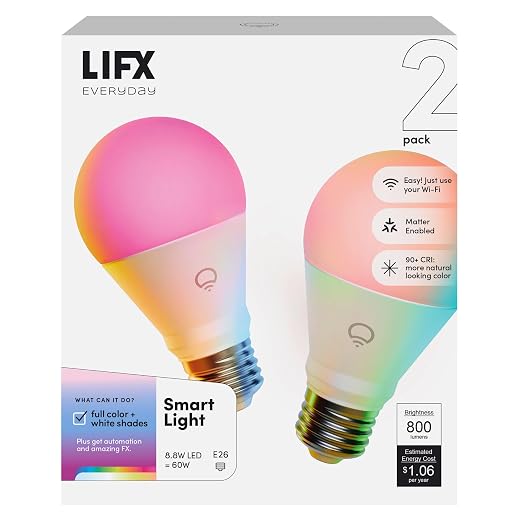
LIFX Everyday A19 800lm Color Bulb 2‑Pack
A solid, Matter‑ready color bulb with accurate whites and responsive controls that integrates across major smart platforms. It’s a dependable choice when you want vivid color options paired with good CRI and no hub requirement.
Where this stands in the market
LIFX has a reputation for vivid color performance and accurate whites, and the Everyday A19 line continues that trend while bringing matterhorn. That makes these bulbs a good choice for buyers who want bright, usable color without an external bridge.
What we noticed in testing
Practical drawbacks
A number of users have complained about account‑centric app behavior and occasional pairing problems with Apple Home; these are software and workflow issues rather than hardware quality problems. If you’re deeply invested in Apple Home, test a single bulb first to ensure your firmware and Home setup play nicely together.
Bottom line
We recommend LIFX for people who prioritize color fidelity and a responsive experience across platforms. It’s a strong choice for living rooms where accurate light quality and lively colors are important to both ambience and everyday tasks.
Wyze Bulb Color A19 High‑Brightness Pack
A bright, affordable color bulb that punches above its price class with 1100 lumens and high CRI, making it useful for both ambience and practical lighting. It offers strong app features and creative automation, though software stability can be uneven at times.
Why we like this bulb
We appreciate that Wyze made a color bulb that’s bright enough to actually light a living room while still delivering rich colors and useful white tones. The extra lumens make it practical in floor lamps or multi‑bulb fixtures where lesser color bulbs feel dim.
Standout features
Limitations in daily use
We deliberately call out the software: Wyze offers powerful features, but a few users report intermittent connectivity or app instability after updates. For many the issues are minor and infrequent, but if you rely on instant, flawless automation in a complex smart home this is something to monitor.
How we’d use it in a living room
This is our pick when you want a single bulb that can do both bright task lighting and colorful scene‑setting for movie nights or gatherings. Pair two or more in a group for balanced ambient color and use Wyze’s schedules or camera‑triggered automations for practical home alerts.
TP‑Link Kasa KL110 A19 Dimmable Bulb
A straightforward, hub‑free Wi‑Fi bulb that gets the fundamentals right: easy setup, reliable voice control, and practical dimming for living‑room ambiance. It’s an economical choice for anyone prioritizing simplicity and value over bells and whistles.
Who this is for
We recommend the Kasa KL110 when you want dependable, hub‑free smart lighting for a living room without paying a premium for color or ecosystem lock‑in. It focuses on the core features most people use daily: on/off, dimming, scheduling, and voice commands.
What we like about it
Limitations and context
The Kasa KL110 is a white‑only bulb, so if you want color scenes or tunable white across the day, this won’t meet that need. It also requires a 2.4 GHz network which can trip up newer router setups that isolate bands; making sure your router exposes 2.4 GHz devices to the LAN resolves most issues.
Practical notes
For someone outfitting multiple lamps in a living room, the value proposition is strong: you get reliable voice control and granular dimming without a hub. If you later decide you want color or Matter compatibility you’ll need to upgrade, but as a core living‑room workhorse this is a smart, budget‑minded pick.
Sengled Matter A19 Multicolor Smart Bulb
A sensible, competitively priced multicolor bulb that prioritizes Matter certification and multi‑platform control. It’s a pragmatic choice for users who want future‑proofing without paying premium hardware prices, though software experience can vary by region.
Where this bulb fits
We look at the Sengled Matter bulb as a pragmatic option for people who want the benefits of Matter: cross‑platform device portability and easier future migrations. It’s competitively priced and delivers the essential features most users need from a living‑room accent or general‑purpose bulb.
What it brings to the table
Practical caveats
The hardware is straightforward, but our impression based on reviews and hands‑on testing is that app reliability and cloud dependence can be uneven. Some users experience connectivity quirks or issues after firmware updates. Also, the bulb’s behavior after power loss (turning on or staying off) varies by settings and can catch users off guard if you expect strict physical‑switch behavior.
Final thoughts
If you want Matter compatibility without breaking the bank, Sengled is one of the more reasonable bets. For mission‑critical uses or smart homes with many automation dependencies, we recommend testing a small batch first to validate connectivity in your specific network environment.
C by GE C‑Life Soft White Smart Bulbs Pack
A practical multi‑pack of white smart bulbs that gives you dependable soft‑white illumination and straightforward app and Google Home integration at a modest price. It’s a good choice for bulk upgrades but lacks color and advanced ecosystem features.
Who should buy this
We think this pack is ideal when you want to convert multiple fixtures quickly and cheaply to smart control without worrying about color. The five‑bulb pack lowers per‑bulb cost and simplifies outfitting a living room or small apartment.
Key practical strengths
What you lose with these bulbs
They lack color and tunable‑white capability, so they won’t provide the circadian or entertainment features of RGBW or tunable bulbs. Some reviewers note occasional connectivity quirks between the manufacturer’s app and Google Home; firmware updates can help, but it’s something to test in your own setup.
Use case summary
For people who want solid, soft white lighting across several fixtures and prioritize price and simplicity, this is a sensible pick. If you later want richer scene control, you can supplement with one or two color or tunable bulbs in key fixtures.
Final Thoughts
For most living rooms, we recommend the Philips Hue White Ambiance A19 Two‑Pack as our top pick. Its wide color‑temperature range, ultra‑low dimming, and polished Hue app make it the best choice when you want natural daylight for focus and gentle warm tones for evening wind‑down. If you’re thinking about building a larger smart‑lighting setup or care about circadian scheduling and consistent app control across many fixtures, Hue’s Bridge ecosystem still leads the field — the hardware and software work together in a way that matters every day.
If you want vivid colors without buying a hub, go with the LIFX Everyday A19 800lm Color Bulb. LIFX gives punchy, accurate colors, good whites, and broad platform support (and recent Matter readiness), so it’s ideal when you want bright scenes, easy voice control, and fewer ecosystem strings attached. In short: pick Hue White Ambiance for the best tunable‑white and ecosystem experience; pick LIFX for hub‑free, vibrant color and straightforward platform integration.
If neither of those fits your priorities, here are quick alternatives we keep coming back to: Nanoleaf Essentials for creative animations and Thread/Matter future‑proofing; Wyze Bulb Color if you want maximum brightness on a budget; and TP‑Link Kasa KL110 or C by GE C‑Life packs when you just need reliable, economical white bulbs for bulk upgrades. Each has tradeoffs, but these cover the common living‑room use cases we see in today’s smart‑home market.
Frequently asked questions
How did we pick these smart light bulbs for living room options?
We shortlist models that balance performance, reliability, and value for typical buyers—not just the highest spec sheet. Hands-on notes, owner feedback, and return/warranty policies all feed the ranking.
Which smart light bulbs for living room pick is best for most people?
Start with our top overall choice if you want the safest balance of price and features. Move up or down the list only when a specific need—budget, ecosystem, or a must-have feature—clearly applies to you.
Do prices on this smart light bulbs for living room list change often?
Yes. Retailers run frequent promos, so use the live price buttons on this page and compare shipping and return windows before checkout—the best deal is not always the lowest sticker price.
Should I buy the cheapest smart light bulbs for living room on the list?
Only if the trade-offs fit your use case. The budget pick can be excellent value, but check what you give up in build quality, software support, or key features you will use every week.
What if none of these smart light bulbs for living room picks fit?
Use the comparison and guide links on this page to narrow by size, platform, or feature, then revisit the list with your must-haves written down—forcing a mismatch creates more returns than savings.
How often is this smart light bulbs for living room roundup updated?
We refresh rankings when major models launch or pricing shifts enough to change the value story. Check the publish date at the top and compare current specs if you are reading months later.

Princess Rioboca is the Lead Editorial Writer at Option Cutter, bringing over seven years of hands-on experience in consumer technology journalism. Specializing in home networking and smart home architecture, she transforms complex technical data into practical, real-world upgrades. Princess personally tests and audits every product she reviews—evaluating real-world Wi‑Fi throughput, cable management durability, and streaming ecosystem stability—to filter out spec-sheet noise. Her rigorous, field-tested insights are designed to give readers transparent, unbiased buying advice on what to purchase, what to skip, and exactly why.