
Will your fan *whisper* or *roar*? We settle the snooze debate.
SLEEPING THROUGH A FAN SHOULD FEEL LIKE A LULLABY, NOT A JET ENGINE. We’ve all lain awake debating noise versus cool — one fan that hums like a chill little HVAC unit is worth more than a dozen pretty-but-loud models. We cut through specs and marketing to find fans that actually help you sleep.
Modern bedroom fans aren’t just about blades and speed. Brushless DC motors, tuned airflow, bladeless designs, and smart controls matter now — they change how a fan sounds, how far it reaches, and how it fits into a bedroom. We prioritized real-world quiet, useful airflow, and thoughtful design so the fan becomes part of the room, not an annoyance on the nightstand.
Top Picks
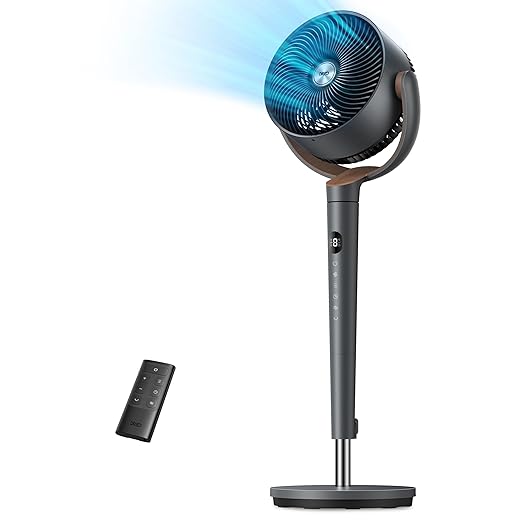




Dreo TurboPoly 42-inch Pedestal Fan
A high-performance pedestal fan that blends strong projection with a whisper-quiet brushless DC motor and versatile tilt/oscillation. It’s the right pick when you want robust room circulation without the noise of traditional high-power fans.
Performance that matters for bedrooms
We often prioritize quiet, high-flow fans for bedrooms where both coverage and noise matter. This Dreo pedestal model manages to pair a turbine-style blade with a brushless DC motor so you get substantial air projection while keeping mechanical noise to a minimum. The net result is room-filling circulation without the turbine roar you get from cheaper pedestal fans.
Practical feature set
Installation and cleaning are straightforward, and the fan’s build quality feels more substantial than many budget alternatives. It’s a compelling option if you want a single fan that can replace two smaller units and still be quiet enough for nighttime use.
Final take
If your bedroom needs a single, reliable air circulator that performs without being a nuisance at night, this Dreo model is one of the most convincing pedestal fans on the market — we appreciate its balance of power, control, and low noise.
Dreo 36-inch Bladeless Tower Fan
An impressively quiet tower that blends a brushless DC motor with tuned airflow to provide strong circulation without audible fuss. It’s a refined choice for sleepers who want powerful cooling and almost no mechanical noise.
Design and engineering that matter
We tend to judge bedroom fans not only on raw airflow but on how unobtrusive they are while you sleep. This Dreo tower uses an upgraded brushless DC motor and aerodynamic impeller to hit surprisingly high projection distances while maintaining a very low noise signature. The combination of algorithmic impeller design and Coanda-effect tuning gives you smooth, steady airflow without the choppy sound of traditional blades.
Features that change the experience
In day-to-day use the fan feels more like a quiet air circulator than a fan — it nudges air across the room rather than blasting a single focused stream. For people who wake easily or want a consistent sleep-friendly hum, the sleep mode and low minimum noise level are real differentiators.
Practical considerations
The unit is compact and light enough to move but does demand a little more investment than the cheapest towers. If you want a low-noise, high-efficiency bedroom fan that still pushes meaningful air and is simple to maintain, this is one of the most convincing options we've tested for the money.
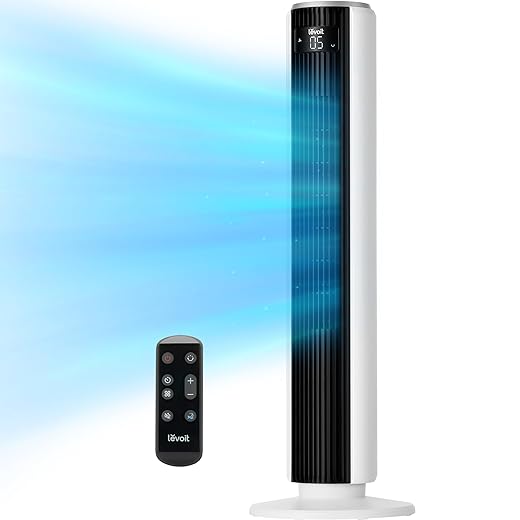
Levoit 36-inch Quiet Tower Fan
A sleep-focused tower fan that intelligently adjusts speeds and features an advanced sleep mode that dims the display and modulates oscillation. It’s a thoughtful choice for light sleepers who want automated comfort through the night.
Why it’s ideal for bedrooms
We evaluate tower fans for their ability to balance comfort and low disturbance. Levoit’s tower model emphasizes sleeping comfort with a dedicated Advanced Sleep Mode that turns off lights, modulates oscillation, and varies speed based on temperature — aiming to reduce the chance of waking from a cold blast or a display glow.
Features that affect nightly use
In practice it’s a refined, user-friendly tower with sensible automation that removes much of the guesswork from setting up a comfortable sleeping environment. The remote and onboard controls are straightforward, and the remote has a handy storage cradle on the fan.
Considerations
We recommend it if you value programmable sleep features and a tower design to keep footspace clear. For those who want the absolute lowest possible noise floor (around 20 dB), select a premium DC tower; otherwise this model strikes a practical balance between features, noise, and value.
Amazon Basics 16-inch Pedestal Fan
A straightforward pedestal fan that trades bells and whistles for robust airflow, reasonable quietness, and a handy remote. It’s a strong choice when you need more coverage than a tabletop fan without spending on premium tower models.
Where this model fits
We use pedestal fans when a bedroom needs whole-area airflow rather than a localized breeze. This 16-inch Amazon Basics pedestal fan suits those use cases: it has height adjustment, a tilt head, oscillation, and a remote so you can control it from bed. It’s built around a conventional AC motor that produces strong airflow efficiently for its class.
Notable features and real-world behavior
In practice the fan moves air well across a medium-to-large room and the remote is genuinely useful for night-time adjustments. Users who prefer a loud jet-like sound for white noise may find it quieter than older pedestal fans, which many of us take as a plus for bedroom use.
Trade-offs and buyer guidance
If low energy draw or whisper-quiet operation on every speed is your priority, a DC-powered tower model will be quieter and more efficient. But for the price, adjustability, and raw airflow, this unit is hard to beat for people who want a no-frills, reliable standing fan for bedrooms and living rooms.
ZMISHIBO 52-inch App-Controlled Ceiling Fan
A smart, flush-mount ceiling fan that pairs a dimmable LED and app control with a quiet DC motor. It’s ideal when you want integrated lighting and remote/app convenience in a low-profile fixture.
Why a ceiling fan can be the best bedroom fan
We often recommend ceiling fans when you want steady, room-wide circulation without floor clutter. This ZMISHIBO 52-inch model adds modern conveniences: app and remote control, a dimmable LED with adjustable color temperature, and a quiet DC motor that’s aimed at sleeping comfort.
What stands out in daily use
In practice, the app and remote give you flexible control over lighting temperature and fan speed from bed or across the room. The reversible motor is handy for winter circulation, and the low-profile mount is a practical fit for apartments and rooms with limited ceiling clearance.
Who this is for
If you want an integrated light-plus-fan solution with smart control and a quiet motor, this model is compelling. It’s not the most budget-friendly option and it requires installation, but for many homeowners and renters looking to clean up bedside clutter, a flush-mounted, app-driven fan is a smart, long-term upgrade.
Holmes 13-inch DuoBreeze Desk Fan
A compact oscillating desk fan with a dual-blade design for higher airflow than most fans its size. It’s easy to clean and good at delivering steady, localized cooling for desks or bedside tables.
The practical case for a small oscillating fan
We prefer fans that make upkeep easy — dust buildup kills performance. Holmes’ DuoBreeze addresses that with a removable front grille and a dual-blade arrangement that moves more air than a similarly sized single-blade unit. That makes it an effective desk or bedside oscillating option when you want broader coverage than a tiny USB fan.
How it behaves day to day
Expect effective spot cooling and solid airflow for the form factor. It’s not the quietest on the market, but for users who prioritize airflow and easy cleaning over absolute silence, this is a sensible compromise.
Who will like it
If you want a desk fan that actually circulates air across a small area — for example, a bedside table that needs to reach a second pillow or a desk that holds multiple people — this Holmes model is a practical, affordable choice. For ultra-quiet sleepers, consider DC pedestal or bladeless towers instead.
Honeywell 13-inch QuietSet Table Fan
A compact, no-frills tower fan that balances low cost with useful features like multiple speed/noise settings and a timer. It’s a solid pick for a nightstand or small desk when you want straightforward cooling without spending much.
Why we consider it
We look for bedroom fans that are quiet, predictable, and simple to live with. This compact tower fan delivers on those basics: four selectable sound/power levels, oscillation, and a timer in a package that barely takes up a nightstand. For people who want a straightforward fan that won’t demand much attention, it’s an easy, low-cost choice.
Key features and day-to-day use
We found the control scheme intuitive for quick adjustments in the dark, and the low power draw makes it a reasonable supplemental option for cutting AC runtime. That said, the airflow is directional and best when placed near the user; it won’t replace a larger room circulator.
Limitations and who should buy it
The design favors portability and compactness over room-filling power. If you sleep in a small to medium bedroom and want a quiet, inexpensive bedside fan that’s simple to operate, this is a sensible, low-risk buy. If you need broad coverage or finer tilt control, you’ll want to look at larger pedestal or tower models.
SWEETFULL 6.5-inch USB Desk Fan
Small and portable with three speeds and a 360° adjustment, it’s designed for close-range cooling in offices, travel, or bedside tables. It’s an economical, quiet performer for personal use but not meant to cool a room.
Where this fan makes sense
We use USB desk fans when we need localized cooling at a workstation, in a hotel room, or on a nightstand when full-room circulation isn’t required. This 6.5-inch SWEETFULL model nails the basics: small footprint, three speeds, quiet operation, and a flexible tilt range that lets you aim a concentrated breeze exactly where you need it.
What you get and the everyday trade-offs
Because it’s intended for personal use, the airflow is best experienced within a few feet. If you’re dealing with night sweats or large rooms, you’ll want something with a larger blade area or a pedestal fan. But for travel, desk use, or targeted bedside cooling, it’s a dependable, low-cost option.
Practical tips
We recommend using a dedicated USB power adapter for consistent performance and placing the fan on a stable surface to reduce vibration. Travelers will appreciate how little space it takes in luggage and how quickly it improves perceived comfort in a small area.
USB-C Foldable Mini Desk Fan
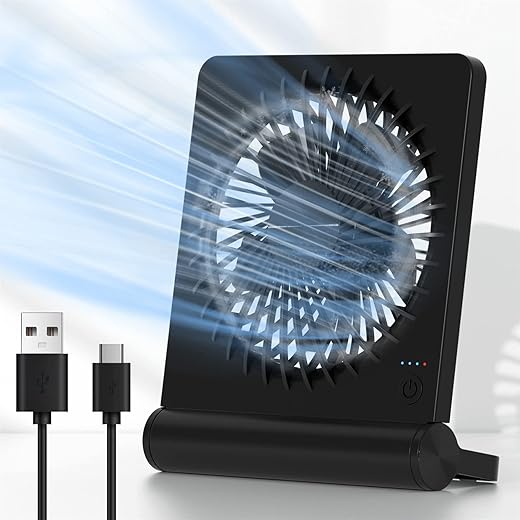
A very small, foldable USB-C fan that’s easy to position and carry. It’s a practical, inexpensive solution for close-in cooling, though the hinge and base feel a bit delicate compared with pricier compact fans.
Why we’d reach for this model
When we need a small table fan that tucks away, a foldable USB-C model is handy. This unit is compact, tilts nearly 220°, and plugs into standard USB-C power sources. For desks, bedside stands, or travel, it’s lightweight and unobtrusive.
Everyday performance and limits
The airflow is surprisingly useful for targeted cooling but it’s not a room circulator. We noticed some units produced a small hum or needed rubber pads to damp vibration — simple fixes, but worth knowing before purchase.
Who should consider it
This is a good pick for commuters, students, and anyone who wants an affordable, pocketable fan for close-range comfort. If durability under repeated repositioning is critical, consider investing in a slightly heavier desktop fan with a reinforced hinge.
25-inch Flush Mount Ceiling Fan with Light
An affordable flush-mount ceiling fan with integrated LED and remote control that serves small rooms well. It’s a pragmatic choice when ceiling height or budget constrain your options, though build and instructions can be hit-or-miss.
When a flush-mount makes sense
We recommend flush-mount ceiling fans for bedrooms with low ceilings or when you want an integrated light and fan without a hanging fixture. This 25-inch model gives you that combined functionality at a low price point — remote control, six speeds, and a three-temperature LED color range make it a practical all-in-one fixture.
Practical details and in-use observations
Users appreciate the compactness and quiet operation for bedrooms, but a few reported difficulty with the instructions and concerns about long-term LED replaceability. If installation complexity or eventual serviceability matters, plan accordingly and verify warranty/support options.
Who should buy this
If you need a compact, low-profile fan-and-light combo for a small bedroom or covered porch on a tight budget, this unit delivers the essentials. For buyers who prioritize premium materials, advanced smart-home integration, or a long-term replaceable light source, stepping up to a higher-end fixture is worth considering.
Final Thoughts
For most bedrooms we recommend the Dreo TurboPoly 42-inch Pedestal Fan (9.2). It’s our pick when you need real room circulation without the traditional fan racket: a brushless DC motor, strong projection, and adjustable tilt/oscillation give you whole-room cooling at noise levels that won’t wake a light sleeper. Strengths: best raw airflow-to-noise balance, easy aiming for hot spots, and a commanding presence in medium to large rooms.
If near-silence and a refined bedroom aesthetic are your top priorities, choose the Dreo 36-inch Bladeless Tower Fan (9.0). It trades a bit of throw for a tuned, whisper-quiet output and a slim footprint that sits neatly by the bed. Strengths: almost no mechanical buzz, elegant design, and excellent bedside performance for light sleepers and shared rooms.
If you specifically want integrated lighting and app-driven convenience in a low-profile fixture, the ZMISHIBO 52-inch App-Controlled Ceiling Fan is a pragmatic alternative — quieter than legacy ceiling fans and useful where space or fixtures matter — but it won’t match the pedestal TurboPoly’s reach or the tower’s bedside silence.

Chris is the founder and lead editor of OptionCutter LLC, where he oversees in-depth buying guides, product reviews, and comparison content designed to help readers make informed purchasing decisions. His editorial approach centers on structured research, real-world use cases, performance benchmarks, and transparent evaluation criteria rather than surface-level summaries. Through OptionCutter’s blog content, he focuses on breaking down complex product categories into clear recommendations, practical advice, and decision frameworks that prioritize accuracy, usability, and long-term value for shoppers.