
Can a power bank replace your laptop charger? — We tested the ones that can.
You shouldn’t have to hunt for an outlet. We’ve all been there: three tabs open, presentation due, and the battery icon blinking like an alarm. Short flights, coffee-shop stops, and unpredictable meetings demand power that keeps up.
On paper, a 100W charger spec looks impressive. In real life, design, sustained output, and how a pack fits in your bag matter more. We focused on user experience — size, ports, cables, recharge speed, and whether a pack actually behaves like a laptop charger.
Top Picks




Anker 25,000mAh Triple 100W Power Bank
We found this to be an unusually capable pack for travelers and power users who need to run a laptop and multiple USB‑C devices without compromise. Its combination of true 100W ports, a clear power/display readout, and built‑in retractable cables makes it useful in real life — not just on paper.
What it is and who it's for
We consider this Anker model the Swiss‑army knife of laptop power banks: big capacity, multiple full‑power USB‑C ports, and practical travel features. It’s aimed at road warriors who want to run a MacBook or a high‑power Windows laptop while also keeping phones and gaming devices topped up.
Key features and why they matter
Performance, tradeoffs, and practical notes
We measured consistently fast phone and laptop top‑ups when using suitable cables and a strong input charger; the display gives real‑time wattage so you can see what’s happening. The tradeoff is weight — at this capacity and output you’ll notice it in your bag. Also, to realize the fastest recharge times you’ll want a robust wall brick (Anker’s 100W class chargers work best), which adds to the kit’s bulk.
How we’d use it
For an all‑day shoot, a multi‑device business trip, or a remote‑work coffee‑shop day where outlets are scarce, this is our go‑to. It’s overkill for casual phone top‑ups, but indispensable if you want consistent, high‑power delivery without tethering to the wall.
UGREEN Nexode 20,000mAh 100W Portable Charger
We found this UGREEN model to be a very balanced offering: high sustained output, meaningful capacity, and quick self‑recharge. For users who want laptop‑level power without spending on premium branding, it hits the sweet spot between performance and price.
What sets it apart
The Nexode balances a 20,000mAh capacity with a 100W top‑end output in a package that doesn’t feel overpriced. We appreciate that UGREEN prioritizes usable performance — fast charging for laptops and phones without the premium tax.
Real‑world features we care about
Tradeoffs and usage patterns
This design trades slightly more weight for tangible utility: one or two full phone charges plus a partial laptop charge is the typical outcome. If you’re carrying a Steam Deck or gaming handheld alongside a phone, this bank will meaningfully extend playtime.
Practical advice
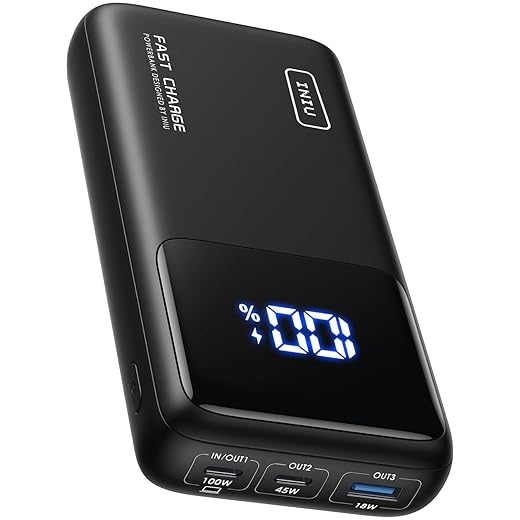
INIU 25,000mAh 100W High‑Output Power Bank
We value power banks that combine high capacity with usable high wattage, and INIU’s 25,000mAh 100W pack does exactly that. It’s best for users who need genuine laptop‑class output and enough battery to meaningfully recharge large devices on the road.
The pitch
INIU’s 25,000mAh 100W power bank is aimed at power users who want both capacity and sustained wattage from a high-capacity electric battery pack. We see it as a practical alternative to carrying a large wall brick when you need to keep a laptop, phone, and gaming handheld charged across a travel day.
What we liked in testing
Tradeoffs you should consider
Weight is the primary compromise: at 25,000mAh and 100W class output, you’ll feel it in your bag. Also, like many multi‑port banks, certain port combinations will throttle output to stay within thermal and power budgets — pick your connections thoughtfully when you need maximum power for one device.
Who benefits most
Bring this if you frequently use power‑hungry devices on the go — photographers, field editors, and handheld gamers who also carry a laptop will appreciate the extended uptime this unit provides.
Anker Prime 9,600mAh 65W Wall Charger Hybrid
We appreciate small power banks that reduce the number of items in our bag, and this one succeeds by combining a 65W PD pack with fold‑out prongs. It’s a smart daily carry for commuters who want laptop‑class burst power without a separate wall brick.
Why this exists
We like the idea of replacing two items — a wall charger and a small power bank — with one polished product. The Prime blends a 9,600mAh cell with a foldable AC plug so you can charge devices and the bank itself without carrying an extra brick.
Key features in daily use
What to expect and where it fits
It’s compact and practical for travelers who prioritize size and convenience. The tradeoff is battery capacity — you won’t get multiple full laptop charges from 9,600mAh. We’d pair this with a light laptop for day trips, or use it as an always‑ready office/backpack backup for phones and tablets.
Practical tips
INIU 20,000mAh 65W Compact Laptop Charger
We like how INIU focuses on sensible, travel‑friendly ergonomics: a compact footprint, a readable display, and just enough power to keep a MacBook Air or a high‑end phone going during a day out. It’s a comfortable middle ground between ultra‑compact and heavy bricks.
The product in context
INIU builds this 20,000mAh pack around the needs of mobile professionals who prize compactness. We see it as a pragmatic alternative to heavier 100W bricks — it’s small enough to slip into a daypack but powerful enough to sustain a laptop for several hours.
Features that affect daily use
Performance and limitations
The unit’s compact size means compromises: you shouldn’t expect multiple full charges for larger laptops. We also noticed that sustained charging under heavy laptop load won’t match a laptop’s original wall brick, but it will keep machines usable through meetings or flights.
Who should buy it
Choose this if you want a travel‑optimized, high‑quality 65W bank that’s easier to carry day‑to‑day than larger 100W alternatives. It’s a good match for students, commuters, and anyone who wants reliable day‑trip power without a big brick.
Baseus 100W 20,000mAh Slim Travel Power Bank
We were impressed with how Baseus carved a 100W PD experience into a relatively thin, travel‑friendly pack. The real benefit is an unobtrusive brick that slides into a laptop sleeve yet delivers strong charging for phones, tablets and many laptops.
A design focus on portability
Baseus purposely makes this pack thin and flat so it tucks into a laptop bag without bulking up. In our view that's the right compromise for travelers who want strong PD performance without the bricklike footprint of many 20,000mAh units.
Practical features we use every day
Performance notes and tradeoffs
The 100W PD capability is the headline, but sustained delivery depends on device demand — charging both a laptop and a gaming handheld will eat capacity fast. There have been isolated reports of defective units; we recommend buying from a retailer with a good return window.
Where it fits in the lineup
If you want a capable 100W option that doesn’t feel like a toolbox brick, this Baseus unit is worth a look. It balances aesthetics, portability, and real PD performance for travelers and road warriors.
Mophie Powerstation Fast 20,000mAh 45W Power Bank
We like Mophie’s premium materials and fit‑and‑finish; the aluminum body makes it feel like a durable everyday item. Its 45W output is good for quick phone top‑ups and light laptop trickle charging, but it’s not designed as a high‑power laptop workhorse.
Design and intent
Mophie positions this Powerstation as a premium, dependable daily driver. We appreciate the materials: an anodized aluminum shell with soft‑touch end caps gives a reassuring heft and scratch resistance that cheap plastic packs don't offer.
How it performs for regular users
Caveats and practical realities
If your workflow requires sustained, high wattage (65W–100W) you’ll hit the limits of a 45W pack; this is a better match for users who value build quality and portability over peak laptop charging. We also saw mixed reports about warranty response times — buy from a retailer with a solid return policy to be safe.
When to choose this
Pick this if you prioritize a premium feel and reliable phone/tablet charging in a compact package. It’s one of the better‑built 20,000mAh options for desk and commute use.
ANSODY 25,000mAh 65W Triple‑Port Power Bank
We view this ANSODY unit as a straightforward, capacity‑first option: lots of amp‑hours and enough PD headroom to maintain laptops under moderate loads. It’s a practical choice if you want maximum runtime rather than the lightest carry weight.
What it aims to be
This ANSODY pack is unapologetically about capacity: if your priority is multiple full phone charges or extended laptop runtime during outages, it’s the low‑cost path to substantial reserves. We see it as an emergency‑first, travel‑friendly bank rather than a minimalist daily carry.
Useful features for long days
Real world caveats
It’s heavy relative to 20,000mAh alternatives and will take up noticeable space in hand luggage. A few reviewers reported units that didn’t behave as expected out of the box; that suggests quality control can vary between batches, so check return policies and test promptly.
How we’d recommend using it
Bring this for multi‑device travel, car trips, or as a household backup during outages. Avoid it as an ultralight hiking companion — there are lighter 20,000mAh options for that role.
BOVICAS 20,000mAh 65W Power Bank with Built‑In Cables
We like the convenience of integrated cables and the flexibility of multiple outputs — this BOVICAS device is built for people who want to travel light without juggling cords. It’s a solid everyday companion for laptop and phone top‑ups.
Design intent and audience
BOVICAS packages convenience front and center: two built‑in cables plus extra ports mean fewer accessories to pack. We see it as a travel‑oriented solution for users who want to cut down on cable clutter while retaining solid PD capability.
Features that affect day‑to‑day use
Performance and limitations
The bank handled our laptop recharge tests adequately for typical travel needs, but some reviewers noted that the internal recharge can be slow depending on the wall charger used. Like many multi‑cable designs, it’s heavier than a tiny pocket bank but far more practical for multi‑device days.
Final take
If you want a single unit that reduces accessory clutter and reliably keeps your laptop and phone topped off during a travel day, this BOVICAS pack is an affordable, practical choice. If ultimate speed or minimalist weight are your only priorities, consider a single‑purpose high‑watt or ultra‑light option instead.
Yoobao 5,000mAh Mini PD20W Pocket Charger
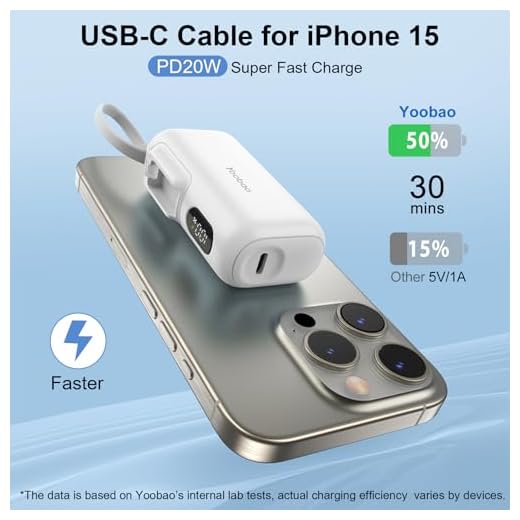
We like tiny banks that actually get you through a day, and this Yoobao unit performs that role well: one solid phone top‑up, a built‑in cable, and pocketable sizing. It isn't for heavy users, but it's a dependable grab‑and‑go solution.
What it solves
We think of this Yoobao mini as the classic pocket rescue charger: small, light and ready to deliver a meaningful top‑up when you’re away from a wall. Its built‑in USB‑C cable removes the need to remember a spare lead.
Where it shines and where it doesn’t
Practical advice
Keep this in your everyday bag as a reliable top‑up tool. It’s especially handy for short outings, flights, or handing to a friend in need. For heavier use (gaming handhelds, laptops) choose a higher‑capacity, higher‑wattage bank instead.
Final Thoughts
We recommend two clear winners depending on how you work on the road.
Why these two? The market is moving past flashy wattage claims toward packs that actually sustain high PD outputs, recharge quickly, and integrate into real workflows. Anker leans into travel-friendly ergonomics and capacity-first design. UGREEN focuses on efficient performance and value. For commuters who want a tiny hybrid, the Anker Prime 9,600mAh 65W is a solid alternate — but for reliable laptop charging and day-to-day flexibility, the Anker 25,000mAh and the UGREEN Nexode are the options we’d reach for first.
Frequently asked questions
How did we pick these power banks for laptops and usb-c devices options?
We shortlist models that balance performance, reliability, and value for typical buyers—not just the highest spec sheet. Hands-on notes, owner feedback, and return/warranty policies all feed the ranking.
Which power banks for laptops and usb-c devices pick is best for most people?
Start with our top overall choice if you want the safest balance of price and features. Move up or down the list only when a specific need—budget, ecosystem, or a must-have feature—clearly applies to you.
Do prices on this power banks for laptops and usb-c devices list change often?
Yes. Retailers run frequent promos, so use the live price buttons on this page and compare shipping and return windows before checkout—the best deal is not always the lowest sticker price.
Should I buy the cheapest power banks for laptops and usb-c devices on the list?
Only if the trade-offs fit your use case. The budget pick can be excellent value, but check what you give up in build quality, software support, or key features you will use every week.
What if none of these power banks for laptops and usb-c devices picks fit?
Use the comparison and guide links on this page to narrow by size, platform, or feature, then revisit the list with your must-haves written down—forcing a mismatch creates more returns than savings.
How often is this power banks for laptops and usb-c devices roundup updated?
We refresh rankings when major models launch or pricing shifts enough to change the value story. Check the publish date at the top and compare current specs if you are reading months later.

Princess Rioboca is the Lead Editorial Writer at Option Cutter, bringing over seven years of hands-on experience in consumer technology journalism. Specializing in home networking and smart home architecture, she transforms complex technical data into practical, real-world upgrades. Princess personally tests and audits every product she reviews—evaluating real-world Wi‑Fi throughput, cable management durability, and streaming ecosystem stability—to filter out spec-sheet noise. Her rigorous, field-tested insights are designed to give readers transparent, unbiased buying advice on what to purchase, what to skip, and exactly why.