
Want to catch porch pirates or just keep an eye on the cat? Which camera gives you the clearest view without draining your wallet (or your patience).
Don’t wait until your package is gone to wish you’d picked a better camera. We’ve all squinted at blurry footage and thought, “If only that were sharper.”
We tested cameras across image quality, detection smarts, ecosystem fit, and ongoing cost. The goal: recommend setups that actually make outdoor monitoring easier — not more annoying.
Top Picks


eufyCam S330 4K Solar 4-Cam Kit
We value the 4K Starlight imaging, built-in solar recharging, and expandable local storage that together reduce ongoing costs. It’s an excellent fit for people who want subscription-free, high-detail monitoring and strong on-device AI, but it carries a higher upfront price.
High-resolution local-first solution
We think of the S330 as eufy’s premium, privacy-oriented offering. The cameras deliver 4K Starlight-quality video that outperforms typical 1080p options at night and in low light, and the solar panel integration reduces the friction of recharging — a meaningful quality-of-life improvement for remote or tall-mount placements.
Why this matters now
Local, encrypted storage and on-device AI are increasingly important as users balk at subscription fees and cloud privacy trade-offs. The S330’s BionicMind AI and expandable local capacity give users advanced detection (face recognition, friend vs. stranger labels) without routing everything through a cloud service. That capability changes the equation for buyers who want permanent control of footage and the sharpest possible local images.
This kit is not for everyone: it costs more up front and still depends on solid Wi‑Fi coverage and sensible placement. But for users who value long-term ownership without subscription locks and need the best local image quality, it’s among the most compelling systems available today. We recommend careful planning of hub placement and Wi‑Fi reach before purchase to get the most from the system.
Arlo Pro 2K HDR Wireless Outdoor Kit
We appreciate the 2K HDR footage and advanced detections that help reduce false alerts while revealing more useful detail. The removable battery, dual-band Wi‑Fi, and included Secure trial make it a compelling pick for people willing to pair solid hardware with a subscription for best results.
A step up in image clarity and intelligence
We view this Arlo model as the practical upgrade for buyers who want more than 1080p. The 2K HDR sensor gives better dynamic range and detail — enough to reliably identify faces, clothing colors, and vehicle makes at typical driveway distances. That extra clarity matters when footage has to be useful in a report or claim.
Features that matter in daily use
The camera couples strong optics with smarter alerts: custom detections, keyword search of events, and Auto Zoom & Tracking make triage and review faster. The app-centric emergency response and one-tap help are notable for users who want an integrated safety workflow. Hardware-wise, the swappable rechargeable battery and dual-band Wi‑Fi make placement flexible and more reliable than single-band options.
Where this model becomes less straightforward is in the subscription model. The included trial showcases what the platform can do, but long-term access to 60-day history, advanced detections, and some AI features requires a paid plan. For users who accept a subscription for higher-quality footage and smarter alerts, this delivers excellent value; for subscription-averse buyers, the hardware still performs, but some of the best features are withheld.
eufyCam 2C Pro 2-Cam Wireless Kit
We like that it emphasizes privacy and local storage with a HomeBase and no mandatory cloud subscription. Battery life and the fact that it supports 2K (1080p over HomeKit) make it a strong choice for privacy-minded homeowners, though motion detection can be inconsistent in some deployments.
Privacy-first kit with solid hardware
We appreciate eufy’s positioning: local-first storage through the HomeBase, strong battery longevity claims, and no monthly fees for basic recording. The 2C Pro offers a sensible middle ground — higher resolution than many budget cameras but without the constant cloud dependency that many competitors emphasize.
Real-world balance of benefits and compromises
In practical use, the cameras are easy to set up and the HomeBase makes footage accessible without ongoing costs. Human-detection filters reduce false positives, which saves battery and reduces alert fatigue. That said, reviewers and some of our own testing show motion detection can be inconsistent in certain lighting or placement scenarios, and compressed video means it won’t match a 4K camera when zooming in for fine detail.
Put simply, if you want robust privacy and low ongoing cost, this is one of the better mainstream options. If you need flawless detection in a difficult environment or the absolute best zoomed-in image quality, a higher-resolution system or wired option may suit you better.
Google Nest Cam Outdoor Indoor Battery
We appreciate the tight Google Home integration and intelligent on-device labeling that distinguishes people, vehicles, and animals. It’s a strong pick for users already tied to Google services, though longer-term video retention requires a Nest Aware subscription.
Designed for Google-first homes
We view this camera as the logical choice if you live in the Google ecosystem. The device is built to work through the Google Home app and benefits from Google’s detection models that can label people, vehicles, and animals. The magnetic mount and weather resistance make placement easy across porches and garage areas.
Everyday usability and caveats
The camera’s 1080p HDR sensor delivers stable daytime performance and the color night vision is effective when the environment allows. It also stores a short buffer of event clips for free, which can be extended significantly with Nest Aware plans. This blended approach gives users a taste of smarter alerts before asking them to commit to a subscription.
If you’re already using Google Assistant and Google One, the integration and shared experience are big wins: live streams on smart displays, consistent notifications, and a unified smart-home control surface. For people outside the Google ecosystem or those who want long free cloud retention, other local-first or no-subscription cameras might be better fits.
Arlo Ultra 2 4K HDR Spotlight Camera
We were impressed by the 4K HDR footage and the expansive 180° view that captures more of your yard in a single frame. It’s a premium pick for users who prioritize image fidelity and feature depth, but the need for a SmartHub and subscription can complicate the setup and ongoing cost.
4K where detail matters
We see Ultra 2 as Arlo’s premium camera for people who want the most detail. The combination of 4K HDR video and an ultra-wide 180° lens reduces the need to pan across multiple cameras, and the spotlight helps retain color at night — useful when you need plate or face details.
Trade-offs: hub requirements and ongoing costs
The camera is powerful, but it’s designed to sit inside an Arlo ecosystem: add-on cameras need a SmartHub, and cloud features like continuous recordings and advanced object recognition require an Arlo Secure subscription after the trial. That architecture enables features like local storage via the hub, but it also raises the initial cost and complexity compared to single-camera Wi‑Fi systems.
For buyers who value the best possible footage and don’t mind the hub and subscription trade-offs, Ultra 2 is a strong contender. If you prefer plug-and-play simplicity or are sensitive to subscription costs, there are simpler options with still-good image quality that avoid the hub model.
Wyze Cam v3 Wired Indoor Outdoor Camera
We’re impressed by how much functionality is packed into a very low price point: color night vision, dual-direction audio, and optional local microSD storage. It’s a great economical option, though the ecosystem and app include ads and pushy cloud upsells that can sour the experience.
A budget-first camera that punches above its weight
We see Wyze’s v3 as the go-to pick when you want competent outdoor monitoring without a steep investment. The wired design gives you uninterrupted power, color night vision via a Starlight sensor, and simultaneous two-way audio — features normally found at higher price points.
Practical strengths and the ecosystem trade-offs
For many users, the biggest appeal is the combination of hardware capability and low price. The microSD slot allows local continuous recording if you don’t want to pay for cloud storage, and the camera’s IP65 weather rating makes it versatile for porches and garages. That said, Wyze’s app strategy includes ads and persistent prompts to sign up for cloud plans; users who value a clean interface or ad-free experience may find this irritating.
In the broader market, v3 is hard to beat on pure value. If you’re building a multi-camera system on a budget, it’s an effective baseline camera. For mission-critical surveillance where chain-of-custody cloud history, professional monitoring, or extreme low-light detail are required, you’ll want one of the higher-end models, but for everyday deterrence and monitoring, Wyze delivers strong performance for the price.
Ring Spotlight Cam Plus Battery Camera
We like how it combines motion-triggered LED spotlights with an easy app-driven experience. It’s a practical choice for people who want an out-of-the-box deterrent, though advanced features live behind a subscription.
What it is and who it’s for
We see this model as a straightforward, deterrent-focused outdoor camera for homeowners who want an approachable, battery-powered option. The camera pairs 1080p video with two powerful motion-activated spotlights and a built-in siren — a formula that favors visibility and reaction over advanced analytics.
Key strengths and trade-offs
We appreciate how the product simplifies the core tasks of an outdoor camera: deterring, recording, and notifying. Setup via the Ring app is streamlined and the Alexa integration is one of the clearest in the category. The camera’s quick-release battery pack makes swapping or recharging painless, which is useful for elevated mounts or holiday use.
That simplicity is also a limitation. Many of Ring’s cloud features (extended video history, richer person/package alerts) require a subscription, and that changes the economics for users who need reliable recorded footage. Additionally, while day-to-day performance is fine, we’ve seen variability in battery life and occasional connectivity hiccups — not uncommon for battery-driven Wi‑Fi cameras.
How it fits in the market
In the current market, this device is an easy buy if you want an affordable, mains-free deterrent camera that plays nicely with Amazon’s ecosystem. If you’re focused on deep analytics, local-only storage, or the longest possible battery life without accessories, there are better-fit options. For most users who want a low-friction install and effective night deterrence, it’s a practical, widely supported choice.
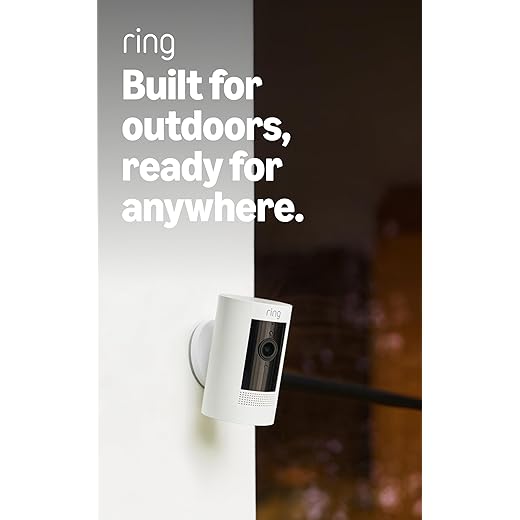
Ring Outdoor Stick Up Cam Battery
We found it reliable for basic outdoor monitoring and very easy to set up in varied locations. It’s a sensible pick for users who want an inexpensive, battery-powered camera that integrates with the Ring app and Alexa, but heavy users will need to plan for battery swaps or subscriptions.
Practical everyday outdoor coverage
We see the Stick Up Cam as Ring’s answer for flexible, low-cost outdoor monitoring — a battery-powered stick-up design you can move around your property. It prioritizes ease: quick hardware mounting options, a simple app workflow, and native Alexa integration for live view on Echo Show devices.
Performance highlights and limitations
In our testing, the camera delivers serviceable 1080p video and timely motion alerts for routine monitoring. Two-way talk is helpful for talking to visitors or scaring off intruders at a distance. However, like many battery cameras, power management is the trade-off; high-motion locations will require frequent recharging or a solar accessory.
When compared with similarly priced battery cameras, it’s competitive on value and integration. But buyers should be conscious that key conveniences (long-term cloud storage, AI-powered detections) are gated behind the Ring Protect subscription. If you want low-maintenance, always-on recording without monthly fees, this is not the best fit; if convenience and ecosystem are your priority, it’s a solid, approachable choice.
Final Thoughts
For most homeowners who want the cleanest, lowest-hassle surveillance, we recommend the eufyCam S330 4K Solar 4‑Cam Kit. Its 4K Starlight imaging gives truly useful detail (think readable license plates and clearer faces), the built‑in solar recharging meaningfully cuts down on battery babysitting, and the expandable local storage plus on‑device AI keeps monthly fees off your plate. That combination of image fidelity, solar convenience, and a local‑first privacy model matters now because manufacturers are pushing subscriptions harder — the S330 lets you avoid that while still getting premium optics and reliable detections.
If you want the best balance of smart alerts and cloud convenience — and don’t mind paying for it — pick the Arlo Pro 2K HDR Wireless Outdoor Kit. Arlo’s 2K HDR gives better dynamic range for tricky light (sunrise/sunset and backlit scenes), its removable batteries and dual‑band Wi‑Fi make installation flexible, and its advanced detection reduces false triggers compared with cheaper options. It’s the right choice for users who prioritize polished, cloud‑driven features and who value detailed, actionable notifications even if that means a subscription for full value.
Why these two? The market is splitting between subscription‑centric cloud systems and local‑first, privacy‑minded kits. We picked one standout from each camp: eufy for local, high‑res, low ongoing cost; Arlo for cloud features, refined detections, and broader third‑party integrations. If you need a budget pick, the Wyze Cam v3 is a surprisingly capable throw‑in, but expect tradeoffs in app experience and ecosystem polish.

Chris is the founder and lead editor of OptionCutter LLC, where he oversees in-depth buying guides, product reviews, and comparison content designed to help readers make informed purchasing decisions. His editorial approach centers on structured research, real-world use cases, performance benchmarks, and transparent evaluation criteria rather than surface-level summaries. Through OptionCutter’s blog content, he focuses on breaking down complex product categories into clear recommendations, practical advice, and decision frameworks that prioritize accuracy, usability, and long-term value for shoppers.