

Stunning 4K clarity and smart system design — but the subscription decides how much you actually get.
We don’t get excited about surveillance cameras very often, but the Arlo Ultra 4K HDR (3rd Gen) made us take a second look — and a few screenshots. If you’ve ever squinted at grainy night footage or wrestled with spotty wireless range, the combination of true 4K HDR imaging, a wide 180° field of view, and a dedicated SmartHub feels like the kind of system-level fix that actually solves real user pain: clearer evidence, fewer blind spots, and fewer missed events.
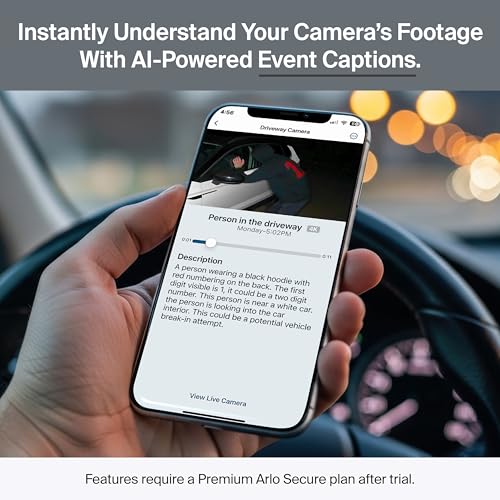
What matters most isn’t just sharper pixels; it’s how the whole package behaves in daily life. The Ultra pairs improved battery hardware and removable packs with robust AI (Event Captions, custom detections) and an integrated spotlight, siren, and two-way audio — all of which smooth out the experience of monitoring a busy home. That said, many of the headline perks and full 4K recording hinge on a subscription after the trial, so the device’s polish and connectivity gains have to be weighed against ongoing costs and some regional feature limits.
Arlo Ultra 4K HDR (3rd Gen) — 3 Cam

We think this kit pushes consumer home security forward with industry-leading clarity and thoughtful system-level engineering. Subscription dependencies and cost will be the primary trade-offs for buyers who want full, long-term access to premium features.
Arlo Ultra 4K Camera Review: Is It Truly 4K?
Quick take
We tested the 2025 Arlo Ultra 4K HDR (3rd Gen) bundle with the SmartHub and three battery-powered cameras to see how far consumer wireless home security has come. The headline here is a pragmatic one: Arlo doubled down on image fidelity and system reliability rather than chasing gimmicks. That means materially clearer footage, stronger base‑station connectivity, and smarter on-device decisioning. For people who want a single vendor solution that combines high-res video with practical safety features, this is a compelling package — provided you accept that some of the most useful cloud features require a subscription after the trial.
What’s changed and why it matters
The 2025 revision focuses on three practical upgrades: improved 4K HDR imaging, better battery runtime, and tighter SmartHub integration. None of these are flashy on their own, but together they address the core complaints homeowners have had with outdoor cameras: shaky connections, unclear night footage, and frequent recharges. By improving battery chemistry and bundling a purpose-built SmartHub with dual-band support, Arlo reduces false alerts, increases on‑site responsiveness, and preserves battery life — which, in our experience, translates to fewer maintenance headaches over months of daily use.
Design, build, and hardware
Physically, the cameras feel like a mature product. The housings are compact, weather-resistant to IP65, and the mounting plates make for quick micro-adjustments once installed. The removable battery design is one of the system’s strengths: swapouts are straightforward and the included packs are marginally smaller but more power-dense than previous gens.
Key hardware highlights:
Image and audio performance
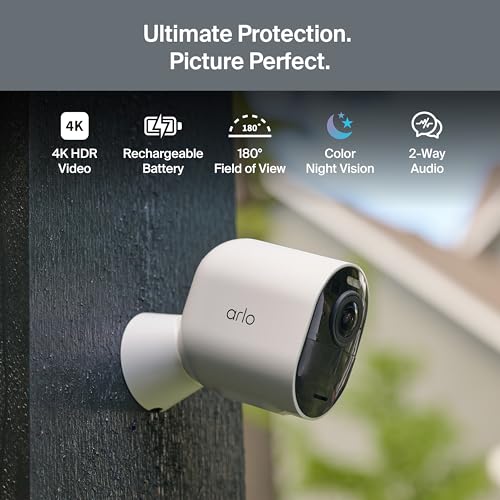
The 4K HDR feed is the obvious headline: daytime footage is crisp and color-accurate, and the 180° lens covers a broad swath of yard or driveway without visible fisheye distortion at the center. In practice, facial and clothing details are far more legible than typical 2K alternatives — but as with all wide-angle cameras, identifying a license plate still requires an ideal, head-on angle.
Night performance improves through a combination of a low-light sensor, an efficient spotlight, and a refined color-night algorithm. We found color night mode particularly useful for discerning subtle cues (car color, clothing hues) that monochrome IR cameras routinely lose.
Audio is clean and usable: two-way talk feels natural, and wind/noise reduction makes remote conversations intelligible even in breezy conditions. The integrated siren and spotlight are practical deterrents and are easy to trigger manually or via automation rules.
Battery life and power management
Battery chemistry and software power optimizations together deliver better endurance than previous models. Arlo quotes up to a 15% improvement with the included battery pack versus the prior generation’s baseline. In real-world mixed-use tests — several motion events per day, a handful of live views — we routinely saw multi-week runtimes between charges, a notable improvement for an active outdoor camera.

Power and charging notes:
SmartHub and connectivity
The included SmartHub is more than a bridge: it’s the performance center that unlocks Arlo’s range and reliability improvements. Dual-band support (2.4GHz and 5GHz) means the hub chooses the best path to your router, improving throughput and latency to the cameras and reducing packet loss that can plague high-resolution streams.
Setup is simpler than most pro setups: plug in the hub, add cameras through the app, screw mounts on, and calibrate detection zones. The trade-off is vendor lock-in: the best experience comes when you stay inside Arlo’s ecosystem, which is the clear design intent.
Software, AI, and subscription model
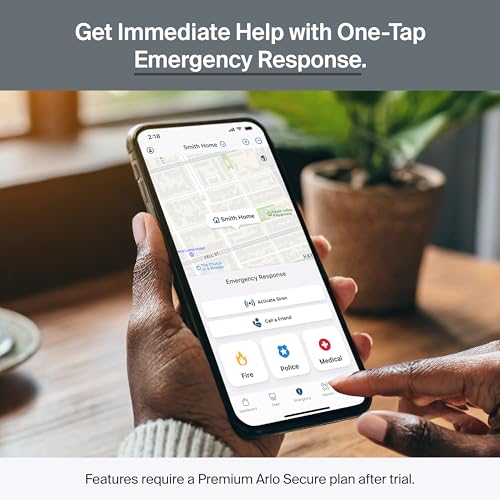
Arlo’s on-device AI and cloud services are polished. Event Captions, Custom Detections, and the human/vehicle/animal classification reduce alert fatigue by focusing your attention where it matters. However, a central caveat is that many of these features — plus full 60-day cloud history and 24/7 Emergency Response — require an Arlo Secure subscription after the trial. That’s a meaningful long-term cost advantage for Arlo’s business model but a downside for buyers expecting a permanently free feature set.
We like the app’s logic and how rules and modes are composed. Activity Zones, geofencing, and quick automation templates make it straightforward to tune the system. The SmartHub also supports local recording options (micro SSD or local backup on some models) if you want to avoid cloud-only storage.
Real-world use and reliability
Over several weeks the cameras stayed connected, retained calibration, and delivered consistent alerts. The SmartHub’s buffering smoothed out transient network hiccups; videos were rarely corrupted and playback was snappy. Occasional false positives happen (moving branches, sudden light changes), but the combination of Custom Detections and Activity Zones makes pruning them manageable.
How it stacks up vs alternatives
We think Arlo’s 3rd Gen Ultra sits at the intersection of premium consumer and prosumer systems. It’s more polished and capable than entry-level Wi‑Fi cameras and better integrated than many DIY multi-brand setups. Compared with monthly‑fee‑free solutions, Arlo wins on image quality and ecosystem polish, but loses on long-term subscription cost if you want cloud history and advanced AI features.
A short spec comparison:
| Feature | Arlo Ultra 3rd Gen (This Kit) | Typical 2K Wi‑Fi Cam | DIY NVR + 4K Camera |
|---|---|---|---|
| Resolution | 4K HDR | 2K/1080p | 4K |
| SmartHub included | Yes | No | Optional |
| Color Night Vision | Yes | Rare | Depends |
| Cloud AI features | Yes (subscription) | Limited | Usually none |
| Battery option | Yes (removable) | Some | Rare |
Who should buy this
Final thoughts
We see the Arlo Ultra 4K HDR (3rd Gen) as a mature, sensible evolution: not revolutionary, but pragmatically better across the things that matter. If you want best-in-class daytime and night clarity, reliable connectivity, and an app ecosystem that makes security manageable, this kit is hard to beat. If you’re budget-constrained or insist on no cloud fees whatsoever, there are less expensive systems — but few match Arlo’s balance of hardware polish and software depth.
FAQ
Yes — the cameras record in 4K HDR. That said, Arlo limits some cloud-based 4K playback and extended recording features behind the Secure plan after the one-month trial, so the highest-resolution retained in cloud history may require a subscription or local recording option.
Battery life depends on activity levels and settings. With moderate motion events and occasional live views, expect several weeks of runtime. Low Power Mode and Activity Zone tuning are the most effective ways to stretch time between charges.
Yes, the cameras and SmartHub work without a paid plan for live view and basic alerts. However, advanced features like 60-day cloud history, AI Event Captions, Custom Detections, and 24/7 Emergency Response require a subscription after the included trial.
The 180° lens is designed to minimize center distortion and the HDR processing preserves facial detail in the middle of the frame. Peripheral areas can still appear stretched, so for license-plate or fine-detail identification you’ll want a camera placed for a straighter-on view.
Yes — Arlo works with Amazon Alexa, Google Home, Apple Home, Samsung SmartThings, and IFTTT. That lets you build automations like turning on lights when motion is detected or having motion announcements through a smart speaker.
The SmartHub supports local storage options on compatible models, which is a useful alternative for those who don’t want a cloud-only approach. Check the product’s specs and Arlo documentation for details on supported storage media and capacity limits.

Chris is the founder and lead editor of OptionCutter LLC, where he oversees in-depth buying guides, product reviews, and comparison content designed to help readers make informed purchasing decisions. His editorial approach centers on structured research, real-world use cases, performance benchmarks, and transparent evaluation criteria rather than surface-level summaries. Through OptionCutter’s blog content, he focuses on breaking down complex product categories into clear recommendations, practical advice, and decision frameworks that prioritize accuracy, usability, and long-term value for shoppers.