We found a pro‑grade, tech‑forward recovery hub — powerful and programmable, but pricey.
Recovering hard training or persistent knots often means juggling foam rollers, lacrosse balls, and a handheld massager that never quite hits the right spot. We want repeatable, targeted deep‑tissue work that fits into tight schedules and scales post‑run soreness to clinical‑level recovery, without turning our routine into a juggling act.
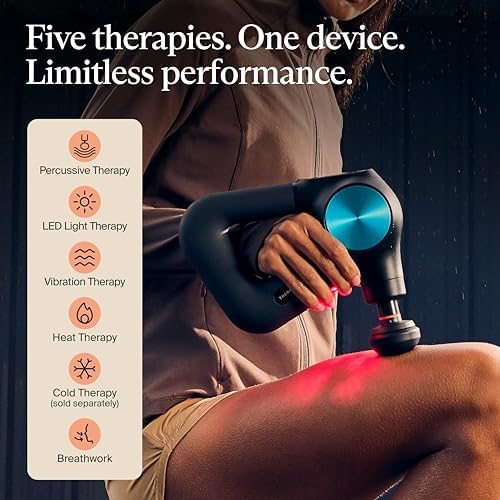
The Therabody Theragun PRO Plus tries to solve that by bundling percussive amplitude, vibration, heat, and even guided breathwork into a single, app‑connected device with a triangular handle for multiple grips. In practice it delivers the kind of power and customization athletes and clinicians expect, and its accessory ecosystem and programmable routines matter in a market increasingly focused on integrated, tech‑forward recovery tools in our product reviews — though the price and heavier build temper who it’s really for.
Therabody Theragun PRO Plus 6-in-1 Massage Gun

We find it to be a high-performing tool for people who need serious, repeatable muscle work and a flexible therapy suite. It’s most compelling for athletes, clinicians, and recovery-focused users who value power and programmable routines.
Quick take
We approached this device expecting a top-tier percussive massager — and the Therabody Theragun PRO Plus largely delivers on that promise. Rather than a single-purpose gadget, it’s positioned as a recovery ecosystem: a heavy-duty percussion engine augmented with vibration, heat, and guided breathwork. That breadth of capability is what sets it apart in a crowded market of lookalike massage guns.
Design and ergonomics: purposeful, not pretty
When we hold the PRO Plus, the first thing we notice is how deliberately industrial it feels. The triangular handle is the defining design decision: it gives us three natural grips and lets us reach upper back and hamstrings without twisting the wrist awkwardly. That handle shape changes how you interact with the tool — you don’t fight the angle, you pivot around it.
Key design observations
Power and real-world performance
This is where the Theragun justifies itself. The motor delivers a long stroke and felt impact that penetrates deeper than most consumer models we’ve tried. In practice, that means faster breakdown of muscle knots and a sensation closer to a professional hand massage than a gentle vibration.
We tested it on common trouble spots — calves, glutes, upper traps on a recovery tool and plantar fascia — and the PRO Plus was able to produce measurable relief in shorter sessions than low-amplitude competitors. Because it’s capable of stronger contact, we recommend a cautious ramp-up for anyone new to percussive therapy.
Performance notes
The 6-in-1 therapy approach: why it matters
What differentiates this model in practice is the multi-therapy approach. The head attachments and software don’t just swap massage heads; they shift how the device delivers therapy. The inclusion of heat and vibration heads expands the range of tissue effects we can provoke, and the biometric breathwork feature nudges recovery toward a whole-body method rather than a purely mechanical one.
We found that combining short percussive work with a warmed attachment or a brief vibration cycle provides a noticeably different sensation and can help transition an area into longer mobility work.
Attachments and included accessories
The PRO Plus ships with a wide set of attachments intended for different tissues and goals. Rather than a one-size-fits-all approach, Therabody gives clinicians and experienced users choices.
Battery life, charging and portability
You can expect respectable battery life for a powerful motor, though real-world runtime depends on intensity and whether you’re using heat or vibration modes. The design favors swappable or robust batteries so you can swap in a fresh pack in clinical settings or long recovery days — a useful feature for power users — but the added capacity increases weight.
We observed
App integration and guided programs
The smartphone app is more than a remote — it’s a guided coach. The bluetooth stack-linked companion walks users through programs tailored to workouts and body areas, offers intensity ramping, and stores preferences. For users who like structure, that turns a powerful tool into a predictable protocol.
App highlights
Durability and warranty context
Build quality is premium: machined plastics and metal accents give a solid impression. That said, user reports we reviewed show mixed experiences with long-term reliability and manufacturer support. We recommend registering the device immediately and keeping receipts in case you need warranty service.
How it compares in the market
Compared with economy models, the PRO Plus wins on power, accessory breadth, and software integration. Against other premium names, the differences come down to nuanced things: the feel of the stroke, the ergonomics of the handle, and the quality of the guided routines. If you want clinical-grade impact with smart features, it’s among the top contenders.
Who should buy it (and who shouldn’t)
We think it’s a great fit for
We would hesitate to recommend it for
Quick spec-style summary
| Category | Notes |
|---|---|
| Therapy modes | Percussion, Vibration, Heat, Breathwork (cold sold separately) |
| Handle | Triangular, multi-grip |
| Charging | USB-C cable included; power block not included |
| Portability | Bulky but kit-friendly |



Final thoughts
We view the Theragun PRO Plus as a statement: recovery need not be passive and single-mode. It’s a flexible, powerful device that leans into clinical-level percussion while adding adjunctive therapies that can be mixed and matched. The trade-offs are weight, and the expectation of active learning: to get the most out of it, you’ll want to use the app and experiment with multiple heads and settings. For those willing to invest the time and money, it rewards with serious, repeatable relief and a versatile recovery toolkit.
FAQs
How is percussive therapy different vibration or heat, and why does it matter?
Percussive therapy delivers short, targeted pulses that penetrate deep tissue to break up knots and stimulate blood flow. Vibration tends to be gentler and can soothe joints or warm up an area without the blunt force of percussion. Heat increases local circulation and can help tissues relax before deeper work. Combining these lets us tailor a session: warm an area, use percussion to work the knot, then finish with vibration to calm the tissue.
Can beginners use a powerful device like this safely?
Yes — but we recommend starting on the lowest intensity, avoiding bones and acute injuries, and keeping sessions short (1–2 minutes) on a single spot. Let your body adapt and use the app or guided routines to progress. If you have specific health conditions, check with a clinician first.
Does the heat attachment actually make a difference?
In our testing, the heated head helps tissues relax faster and makes the subsequent percussive work feel more comfortable and effective. It’s not a miracle cure, but it’s a meaningful addition for chronically tight areas like the low back or hamstrings.
How often should we use a massage gun for recovery?
Frequency depends on intensity and goals. For light maintenance, 5–10 minutes every other day is typical. For post-exercise recovery, short 2–5 minute sessions per targeted muscle group can help. We avoid prolonged heavy sessions on the same spot multiple times per day to reduce the risk of irritation.
What attachments should we try first?
Start with a broad, soft head for large muscles (quads, glutes) and a smaller precision head for trigger points. The heated attachment is a good second step once you’ve acclimated. Use the vibration head for lower-intensity joint areas like knees.
Is it worth paying for a high-end model versus cheaper alternatives?
If you need deep, repeatable tissue work and appreciate guided programs, the premium model’s motor quality, attachment range, and app features are worth it. If your needs are light or occasional relaxation, a budget model might be sufficient. Consider ergonomics, amplitude, and long-term reliability when deciding.
Can we use the device on injured tissue or post-surgery?
We advise caution. Percussive therapy can aggravate acute injuries or surgical sites. Always consult your surgeon or physical therapist before using a massage gun near healing tissue, and follow their recommended timing and intensity guidelines.
How do we maintain and clean the device and attachments?
Wipe heads with a damp cloth and mild soap after use, and let them air dry. Avoid submerging any part of the device or getting electronics wet. Store attachments in the provided case to protect seals and surfaces.

Ayesha Aftab is Option Cutter's product review editor. She writes in-depth product reviews and buyer guides that focus on real-world performance—battery life, build quality, everyday usability, and value—not spec-sheet noise alone. Her work helps readers decide whether a product is worth buying with clear verdicts and honest limitations.