

Why HEPA plus Carbon Matters Now
We cut through marketing noise to show why HEPA + activated carbon matters now: they remove particles and smells, fit homes and smart ecosystems, and solve modern challenges like wildfire smoke, VOCs, and everyday odors.
What you'll need
We’ll need:
Step 1: Define the room and your real needs
How big is the battlefield? Small mistakes cost you performance—measure first.Measure the space we’ll ask the purifier to protect. Take room length, width and ceiling height and calculate volume. Convert that to a required CADR and a target ACH — CADR (cfm) = room volume (ft³) × target ACH ÷ 60. For example, a 12×14 ft room with an 8 ft ceiling (1,344 ft³) at 4 ACH needs ~90 cfm.
Calculate, then use those numbers to narrow models; manufacturers often bury or overstate coverage claims.
Assess the layout and sources. Open-plan living areas behave like bigger rooms; bedrooms are easier to seal. Multiple small units often outperform one oversized unit for distributed sources — put one in the kitchen for cooking smells and another in the living room for pets, rather than one central unit in a hallway.
Identify primary pollutants. HEPA filters tackle particles (dust, pollen, smoke); activated carbon targets odors and VOCs (cooking fumes, cleaners, off-gassing). Pick a model that addresses the dominant problem in each space.
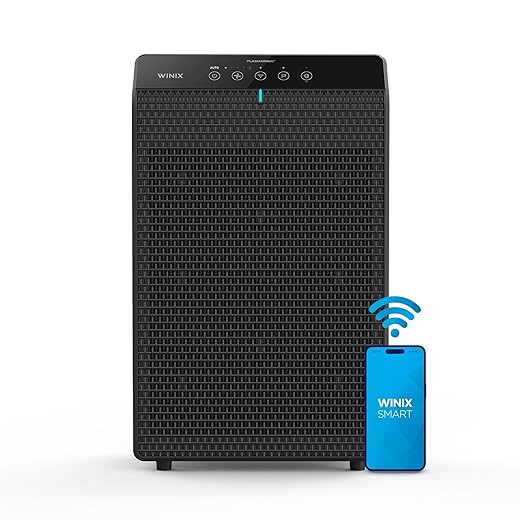
Check user-experience details. Consider placement options, cord length, whether the unit blocks walkways or sightlines, and how it integrates with our smart home. Measuring first keeps us from buying a pretty unit that can’t actually handle our real rooms.

Step 2: Understand HEPA vs “HEPA-like” and carbon filter quality
Not all HEPA claims are equal—what manufacturers won’t tell you.Understand filter science: labels hide important differences. Demand true HEPA ratings — look for H13 or H14 specification showing capture efficiency at 0.3 microns — because many consumer units use “HEPA-type” or “HEPA-like” marketing without that guarantee.
Inspect carbon design: prefer loose granular activated carbon or thick pellet beds over thin carbon-coated foam. Check for impregnated carbon if you need specific VOC removal (e.g., formaldehyde, paint fumes). Remember: surface area, bed depth and how air flows through the media determine real-world performance more than buzzwords.
Ask practical questions and verify claims:
Use these checks to avoid a cheap initial price that becomes an expensive ecosystem tax.

Step 3: Prioritize noise, design, and everyday use
We’ll bet you’ll regret a loud unit—comfort beats specs on paper.Focus on real-world noise, not peak CADR numbers. We’ll only run a purifier continuously if it’s quiet at the speeds that give meaningful air changes; many models hit advertised CADR only at fan speeds that are too loud for living rooms or bedrooms.
Check the user interface and controls. We want simple onboard buttons, clear status LEDs, and an app that actually connects—avoid flaky Wi‑Fi, confusing menus, or features that require constant babysitting.
Consider maintenance and physical design. Look for these practical wins:
Choose models that pair good UX with solid specs. In a crowded market, brands that nail UX, consistent app performance, and sensible maintenance become easier to live with, not just better on paper.

Step 4: Compare performance metrics and real-world tests
Specs lie—CADR, ACH, and independent tests tell the real story.Evaluate objective numbers, then verify them with independent tests. Use CADR to compare how fast a unit removes smoke, pollen, and dust; convert CADR to ACH for your room so we know how often the air cycles. Use this quick math: ACH ≈ (CADR × 60) / room volume (ft³).
Look for authoritative third‑party validation: AHAM, independent lab reports, or consumer particle‑count tests that show particle counts over time in everyday settings. Demand VOC data or formal testing for carbon performance — vague “reduces odors” claims aren’t enough.
Check sensor and auto‑mode accuracy. Test cheap sensors can oscillate and create a noisy feedback loop; verify with independent logs or a handheld particle counter if possible.
Compute long‑term cost per clean‑air delivered: include initial price, filter replacement costs, and typical electricity at the fan speeds we’ll actually use. Prefer models that publish granular test data and let third parties verify claims—those are easier to trust in a crowded market.

Step 5: Buy smart and set it up for success
Buy with an ecosystem in mind—smart hubs, replacement filters, and long-term costs.Compare costs and ecosystem fit before checkout. Prefer brands that offer transparent filter subscriptions or easy third‑party replacements and publish replacement intervals and prices. Factor in warranty terms and whether customer support responds quickly — check recent reviews for service experiences.
Choose smart features that actually work. Prioritize units that integrate reliably with Alexa, Google, or HomeKit and whose apps give meaningful control (scheduling, true-time air readings, filter life) rather than gimmicky lighting or opaque “modes.”
Follow a simple placement and startup routine. Place the purifier where air circulation is constrained (near the center of the living area or by the usual seating), avoid tight corners, and keep intake/exhaust clear by at least 12–18 inches. Run at high for several hours after setup, then switch to auto guided by accurate sensors.
Track real performance. Use an independent particle or VOC monitor (for example, a PurpleAir-style particle sensor or a handheld VOC meter) for a week to validate placement and mode. In a market flooded with glossy new entrants, these pragmatic steps protect us from post‑purchase regret.
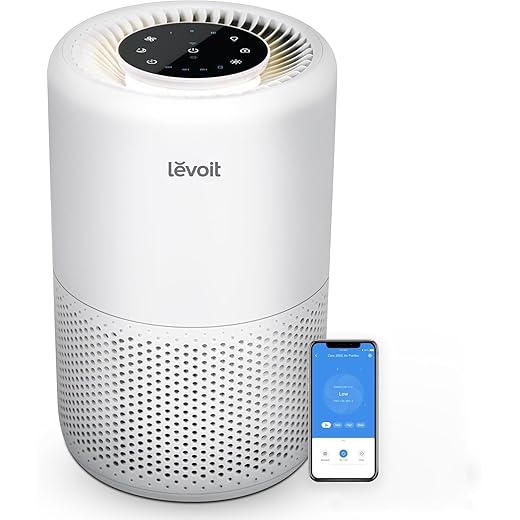
Bring it all together
We’ve measured rooms, decoded filter claims, weighed usability and performance so we can pick purifiers that balance verified HEPA/carbon filtration, quiet everyday use, and supportive ecosystems — because design and integration now determine real-world clean air. Ready to choose today?

Chris is the founder and lead editor of OptionCutter LLC, where he oversees in-depth buying guides, product reviews, and comparison content designed to help readers make informed purchasing decisions. His editorial approach centers on structured research, real-world use cases, performance benchmarks, and transparent evaluation criteria rather than surface-level summaries. Through OptionCutter’s blog content, he focuses on breaking down complex product categories into clear recommendations, practical advice, and decision frameworks that prioritize accuracy, usability, and long-term value for shoppers.