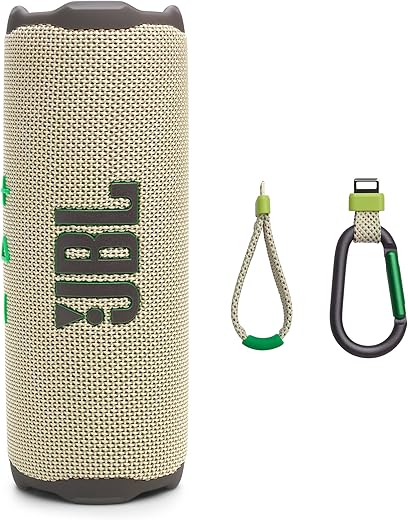

A rugged, travel-ready speaker that pairs punchy JBL sound with real-world durability — with a few app-driven caveats.
We’ve all carted a “portable” speaker to the park only to have it sound thin or nearly drown when the weather turns — which makes the promise of rugged, full-bodied sound feel like a unicorn. The Flip 7 doesn’t reinvent the wheel, but it aims squarely at that pain point: delivering punchy JBL Pro sound and improved bass through AI Sound Boost, while surviving rain, dust, and the occasional drop.
On first use the Flip 7 feels purpose-built for real life — grippy fabric, thoughtful ports, and a PushLock system that turns straps and carabiners into actual conveniences rather than afterthoughts. In practice that means solid battery life, Auracast and stereo-pairing for flexible setups, and a toughness most rivals don’t match; the trade-offs are clear too (no onboard mic for calls, and some of the more advanced tuning lives in the app). Compared with the usual outdoor-speaker suspects, the Flip 7 smartly balances sound, durability, and ecosystem features in a way that matters if you actually plan to take your speaker places.
JBL Flip 7 Portable Waterproof Speaker
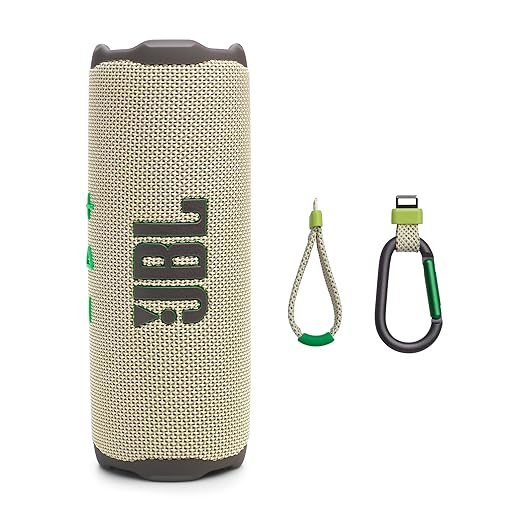
We found a well-balanced mix of punchy performance and practical toughness that suits outdoor life. It’s an easy pick when you want full-bodied sound from a compact, weatherproof package without fuss.
JBL Flip 7 Review: What You Need to Know Before You Buy
Overview
We approached the Flip 7 expecting another incremental update in JBL’s long-running portable lineup — what we found is a speaker that leans hard into three practical priorities: louder, cleaner sound; ruggedness you can rely on; and modularity for how people actually carry speakers today. The Flip 7 keeps the cylindrical, grab-and-go silhouette but upgrades the acoustics with a new tweeter dome design and AI Sound Boost. That combination makes it feel like a step change when you’re standing next to it or trying to fill a small backyard with music.


Sound and performance: what actually changed, and why it matters
We judge portable speakers primarily on how they perform in the real places we use them — on patios, by pools, in kitchens, and sometimes on a hike. The Flip 7’s new tweeter dome and tuned drivers give noticeably clearer highs and a tighter low end compared with earlier Flip models. AI Sound Boost works in the background, analyzing the audio to reduce distortion when volumes climb; in practice, that means the Flip 7 can go loud without sounding harsh.
Key listening impressions:
Build quality, portability, and IP68 ruggedness
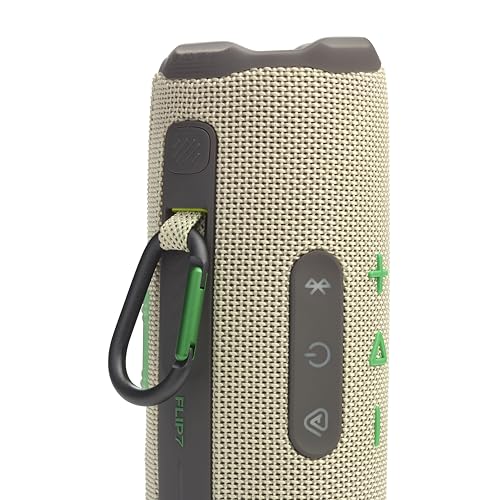
JBL has doubled down on durability here. The Flip 7 carries an IP68 rating, which covers full immersion, dust, and typical outdoor hazards. It also incorporates a drop-proof design target (drops from about a meter onto hard surfaces) that makes it forgiving for everyday use. The PushLock accessory system changes how the Flip feels to carry — the included wrist strap and carabiner click into place easily, which makes the speaker feel more like a personal item and less like fragile electronics.
What we appreciate in daily use:
Battery life, charging, and connectivity
Battery life is pragmatic rather than headline-grabbing. JBL quotes up to 16 hours with Playtime Boost — which lines up with what we get in mixed-volume real-world listening. Charging is fairly quick (the spec lists ~2.5 hours), and the Flip 7 uses USB-C for modern convenience. Bluetooth pairing is straightforward, and the addition of Auracast stereo pairing and multi-speaker support makes it easier to scale sound for parties.
Highlights in this area:
PushLock system and accessories: small detail, big UX improvement
The PushLock system is an underrated part of the Flip 7 story. Instead of improvising a rope or strap, JBL offers an integrated accessory mount with a tactile release. That matters because how people carry and hang portable speakers has become part of product utility: we clipped the carabiner to backpacks, hung one from a pergola beam, and used the wrist strap while walking the dog. The included accessories remove the need to hunt for third-party mounts and keep the speaker secure without extra weight.
Included in the box:
Software, app experience, and ecosystem integration
JBL’s app gives you firmware updates, EQ tweaks, and access to stereo and Auracast pairing. We’re fans of practical app features — auto firmware fixes and pairing tools matter more than fancy visualizers — but we also note that deeper functionality is app-dependent. If you want full control over AI Sound Boost behavior, Auracast multi-speaker grouping, or firmware improvements, you’ll need to install the app and occasionally update.
A quick table of the Flip 7’s core specs (for reference):
| Spec | Flip 7 (Sand) |
|---|---|
| Drivers | 3″ woofer + 0.6″ tweeter dome |
| Battery | Up to 16 hours (Playtime Boost) |
| Charging | USB-C, ~2.5 hours |
| Water/Dust Rating | IP68 (waterproof, dustproof) |
| Weight | ~1.23 lb |
| Special | AI Sound Boost, PushLock accessories, Auracast |
How it sits in the market
There are many portable speakers at this price and size range, but only a few that combine true all-weather toughness, a confident sound signature, and an easy way to carry the speaker. Where some competitors trade off audio fidelity for battery or vice versa, the Flip 7 feels like a balanced middle ground. That balance makes it particularly relevant for people who want one speaker to do many jobs: backyard DJ, beach companion, travel buddy.
Who should consider the Flip 7?
Who might want something else?
Final thoughts
We came away impressed by how the Flip 7 redefines expectations for a small, cylindrical Bluetooth speaker. The improvements to the tweeter and the addition of AI Sound Boost make a measurable difference when you’re standing in front of it or trying to push volume outdoors, and the IP68 rating plus PushLock system turn it into a genuinely go-anywhere device. It’s not perfect — it doesn’t replace bigger, more specialized speakers when you need sustained high output or hands-free voice features — but for most everyday and outdoor scenarios, it’s a considerable upgrade in JBL’s portable lineup.

FAQ
Yes. The Flip 7 carries an IP68 rating, which means it’s designed to resist dust and can handle immersion in water. We’d still treat it with common sense — rinse off saltwater after a beach day to protect seals and ports — but for everyday outdoor use it’s built to last.
AI Sound Boost analyzes audio in real time to reduce distortion and optimize clarity at different volumes. In our tests it helped the Flip 7 keep highs from getting harsh at high volumes and tightened up the low end, so music sounds fuller without cranking into unpleasant distortion.
Very straightforward. The Flip 7 supports Auracast-enabled pairing and simple stereo pairing between two Flip 7 units. Once you’ve paired the speaker to your phone, the JBL app walks you through grouping multiple compatible JBL speakers for synchronized playback.
The Flip 7 is primarily a Bluetooth wireless speaker and uses USB-C for charging. It doesn’t include a 3.5mm auxiliary input, so wired playback isn’t a main use case here — Bluetooth is the intended path.
Yes. The PushLock system is designed for quick attachment and secure carrying. The included wrist strap and carabiner latch on solidly and feel durable in everyday use. We saw no looseness or wobble even when swinging the speaker while walking, and swapping accessories takes seconds.
JBL quotes up to 16 hours with Playtime Boost; in our mixed-volume real-world listening we approach that figure on moderate settings. Higher volumes and sustained loud playback reduce runtime, as you’d expect, but for day trips and parties you should get a full evening of music without scrambling for a charger.

Chris is the founder and lead editor of OptionCutter LLC, where he oversees in-depth buying guides, product reviews, and comparison content designed to help readers make informed purchasing decisions. His editorial approach centers on structured research, real-world use cases, performance benchmarks, and transparent evaluation criteria rather than surface-level summaries. Through OptionCutter’s blog content, he focuses on breaking down complex product categories into clear recommendations, practical advice, and decision frameworks that prioritize accuracy, usability, and long-term value for shoppers.