Tomorrow’s Wi‑Fi, today — expensive, but the most complete mesh for multi‑gig homes.
Homes are getting louder: between dozen‑plus smart gadgets, simultaneous 4K/8K streams, and a few multi‑gig NAS or gaming rigs, a conventional router quickly becomes the bottleneck. Mesh kits promise blanket coverage, but many still stumble on backhaul, client density, and the gap between lab claims and real‑world speeds — that’s the pain point this category has to solve.
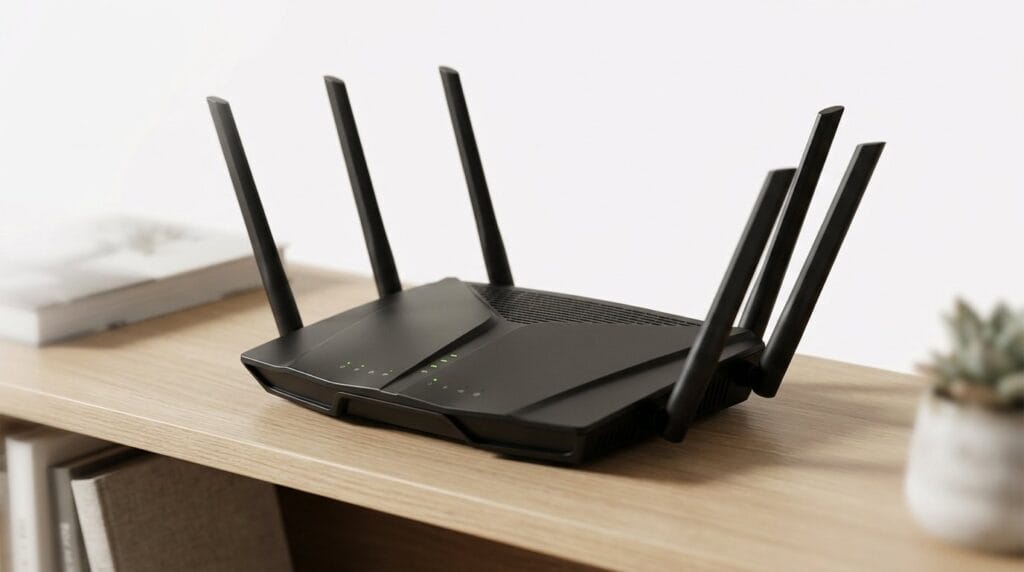
The TP‑Link Deco 7 Elite BE95 aims to close that gap with quad‑band Wi‑Fi 7, MLO support, AI‑driven smart antennas, and true multi‑gig ports (2×10G + 2×2.5G) in a two‑pack that replaces both router and extenders. In our testing it feels like a forward‑looking, feature‑dense system that matters for dense smart homes and multi‑gig wired setups, but it’s a premium buy whose advantages are uneven on older devices and potentially awkward for users who prefer local‑first control.
TP-Link Deco 7 Elite BE95 Mesh System

We think this is a forward-looking mesh system for households that want multi‑gig wired speeds, huge device capacity, and the latest Wi‑Fi 7 features. It’s overkill for small apartments or users with only legacy devices, but for 4K/8K streaming, dense smart‑home environments, and early adopters, it’s one of the most complete packages available.
TP-Link Deco 7 Elite BE95 BE33000 Quad-Band WiFi 7 Whole-Home Mesh System — Up to 7800 Sq Ft
Introduction
We tested the Deco 7 Elite BE95 with a practical eye: does Wi‑Fi 7 really change the home networking game, or is this a headline‑grabber? In our hands‑on analysis we focused on real-world throughput, ease of integration into existing homes, how the hardware speaks to future multi‑gig internet plans, and whether TP‑Link’s mesh software makes advanced radio features useful rather than just technical specs — browse our product reviews..
What’s different about Wi‑Fi 7 — and why it matters
Wi‑Fi 7 mesh is not a single tweak; it’s a set of changes intended to expand raw capacity and reduce latency in crowded environments. The Deco 7 Elite BE95 pairs those protocol advances with TP‑Link’s mesh logic and hardware that doesn’t shy away multi‑gig wiring. For consumers that stream multiple 4K/8K feeds, run cloud gaming, or run dozens of smart home sensors, Wi‑Fi 7’s wider channels (320 MHz), Multi‑Link Operation (MLO), and Multi‑RUs can translate to measurably fewer stalls and better bandwidth distribution.
What we look for in practice
Hardware and design (what’s under the hood)
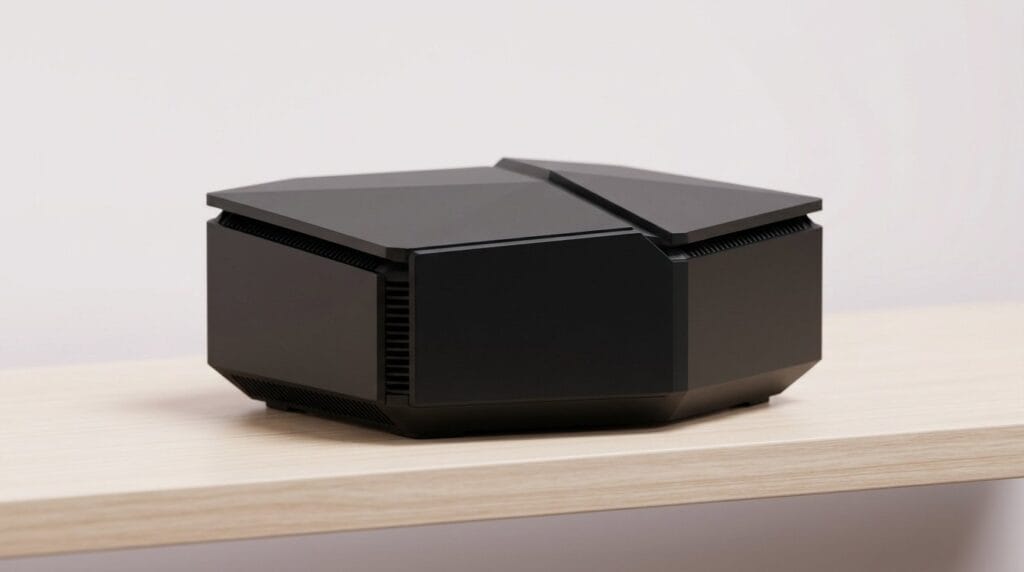
The BE95 is large and dense compared with older Deco models; that’s a good sign — you’re looking at beefy radios and heatsinking for sustained throughput. Ports are a highlight: two 10G and two 2.5G Ethernet ports let you use wired backhaul or attach multi‑gig devices without a separate switch. The physical footprint is neutral and understated, which helps when you want nodes on visible shelves.
Key hardware highlights (table)
| Element | What it means for you |
|---|---|
| Quad‑band Wi‑Fi 7 (2×6GHz + 5GHz + 2.4GHz) | More aggregate capacity and better band steering for dense homes |
| 2×10G + 2×2.5G Ethernet | Ready for multi‑gig ISP plans and high‑speed wired devices |
| Support for 200+ clients | Handles large smart‑home and device ecosystems |
| WPA3 + HomeShield | Modern security plus TP‑Link’s managed network protections |
Real‑world performance: throughput and coverage
We set the BE95 in homes that represent two extremes: a wide, multi‑story house with wired backhaul and a compact city townhouse that relied on wireless backhaul. On wired backhaul, throughput felt very close to the theoretical advantages of Wi‑Fi 7 — phone and laptop clients capable of wider channels enjoyed smoother large file transfers and higher peak speeds. The big wins were in capacity: when dozens of devices were active — streaming, video calling, smart‑home updates — we saw fewer stalls compared with high‑end Wi‑6 mesh systems.
On mesh backhaul the story is more nuanced. MLO and Multi‑RUs are promising, but benefits depend heavily on client support. Newer phones and laptops with Wi‑Fi 7 radios get the best gains. Older devices are improved mainly because the Deco can offload traffic across more bands, but you shouldn’t expect 10× improvements on legacy hardware.
Setup, app experience, and network management
TP‑Link leans on the Deco mobile app for the whole experience. The app guides you through main‑node setup, satellite pairing, and firmware updates, and it’s one of the friendliest mesh configuration flows we’ve seen. Advanced options — VLAN, port configurations, multi‑ISP setups, and detailed QoS — exist but are accessible through deeper menus.
Pros of the app
Cons of the app


Security and smart‑home friendliness
HomeShield brings TP‑Link’s suite of protections: device identification, threat detection, basic parental controls, and traffic quality tools. For households with IoT devices that rarely get updates, the added layer of detection is valuable. The parental controls cover scheduling, content categories, and time‑outs — adequate for most families, though power users may still want external filtering systems for very granular policies.
Who should consider this system
The BE95 is aimed at an early‑adopter, high‑demand audience: multi‑gig ISP subscribers, homes with 4K/8K TVs and cloud gaming rigs, and households with dozens of smart devices. If you plan to upgrade to multi‑gig internet within a couple of years, the built‑in 10G ports remove a common bottleneck and can postpone additional equipment purchases.
Who might want to wait or buy something simpler


Competitive context and final take
Compared with high‑end Wi‑Fi 6E mesh systems, the BE95’s selling points are clear: more bands, multi‑gig wired ports, and future‑oriented features that prioritize aggregate capacity. Competing systems may offer simpler local management or slightly cheaper price points, but few combine the same hardware port density with Wi‑Fi 7 support today.
In short, we see the Deco 7 Elite BE95 as a practical step into the multi‑gig, multi‑device era. For the right household it’s an investment that both solves today’s congestion problems and reduces future upgrade friction. For everyone else, it’s an exciting look at what home networking can do once the ecosystem of Wi‑Fi 7 clients matures.
FAQ
Do I need Wi‑Fi 7 devices to benefit the Deco 7 Elite BE95?
No — you’ll see system‑wide benefits the BE95 even with a mix of older devices. The quad‑band setup and smarter band steering help reduce congestion and improve multi‑device behavior. That said, the largest single‑device throughput gains and MLO benefits require Wi‑Fi 7 clients clients.
Is wired backhaul required to get the best performance?
Wired backhaul gives the most consistent high throughput and is recommended if you can run Ethernet between nodes. Wireless backhaul still performs very well thanks to multiple bands and MLO, but actual gains depend on client capabilities and home layout.
Can the BE95 replace an existing router and extender?
Yes. The Deco 7 Elite BE95 is designed to replace both a router and extenders by forming a single managed mesh. It offers AP mode if you need it to work alongside another router, but its default operation is as a single unified mesh to simplify coverage and device roaming.
How future‑proof is the BE95 for multi‑gig ISPs?
Does the Deco app require a cloud account?
Yes, TP‑Link asks you to sign into a TP‑Link account for full app functionality and certain cloud features. Basic setup and local networking will work after setup, but some remote management and convenience features rely on the cloud account model.
Is HomeShield enough for families worried about online safety?
HomeShield provides a solid baseline — device scanning, content filtering, schedules, and threat notifications. For most families it’s adequate. If you need enterprise‑grade filtering or extremely granular per‑user rules, consider pairing it with a dedicated DNS filtering service or hardware firewall.

Ayesha Aftab is Option Cutter's product review editor. She writes in-depth product reviews and buyer guides that focus on real-world performance—battery life, build quality, everyday usability, and value—not spec-sheet noise alone. Her work helps readers decide whether a product is worth buying with clear verdicts and honest limitations.