

We found a rare balance of 33MP stills and pro‑grade 4K video — practical and close to perfect, with a few real‑world trade‑offs.
Few things make us more nervous on a shoot than choosing between the perfect stills camera and the perfect video camera — leaving one behind always felt like a compromise. Sony’s Alpha 7 IV arrives as an answer to that tug‑of‑war: a 33MP full‑frame hybrid that wants to handle both high‑resolution photography and pro‑level video without forcing us to carry two bodies.
On paper that’s a checklist — 33MP sensor, 759‑point hybrid AF with class‑leading real‑time Eye AF, internal 4K60p 10‑bit 4:2:2 and body stabilization — but the real story is in the user experience. Improved ergonomics, a fully articulating touchscreen, cleaner menus, and dual CFexpress/SD slots make advanced video workflows and high‑res stills feel approachable in the field. There are trade‑offs — the bundled 28–70mm lens is convenient but relatively slow, the body can warm during long, high‑bitrate shoots, and the lens ecosystem can inflate the total cost — yet for creators who need one versatile tool, the A7 IV’s balance of image quality, autofocus, and thoughtful design matters more than ever in today’s hybrid market.
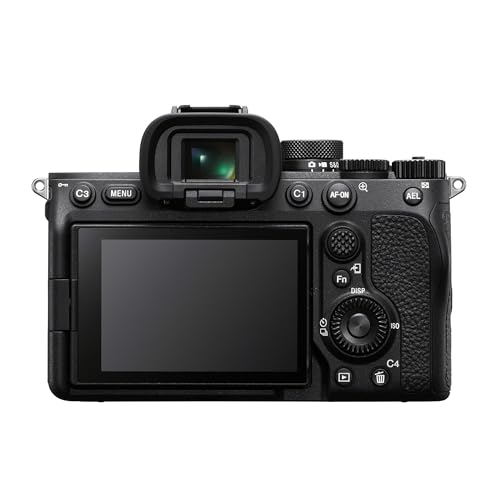
Sony Alpha 7 IV with 28-70mm Kit

We find this camera to be a rare balance of high-resolution stills and pro-level video in one body, aimed squarely at content creators who need versatility. It improves on ergonomics and user experience while bringing video features that are genuinely useful in real-world shoots.
Sony FE 28-70mm: Are Kit Lenses Worth It? Visual Review with Sony A7IV
Overview: where this camera fits
We approached this model as a deliberate midway point in Sony’s Alpha line — not the ultra-specialized low-light A7S series or the mega-resolution A7R line, but a camera designed to do very good stills and pro-level video without forcing you into external recorders or heavy workflows. The package with the 28–70mm kit lens aims to be a ready-to-go creator kit: light enough for travel, capable enough for commissions.
What matters in 2026
Sensor resolution and codec choices are only part of the story now. We evaluate how a camera behaves in real shoots: autofocus confidence, heat management, codec ergonomics, live-streaming support, and lens roadmap. In daily use the camera feels like Sony prioritized usable improvements — not headline specs — and that’s what matters to working shooters.


Image performance: detail plus real-world usability
The 33MP back-illuminated sensor gives us a sweet spot for high-resolution detail without the storage headaches of 60–70MP bodies. We consistently saw rich tonal gradation and highlight rolloff that’s forgiving for raw processing. The 14-bit raw output gives latitude for recovery in skies and shadow detail.
The camera’s color science — especially with S-Cinetone for video — makes out-of-camera JPEGs look modern and usable, while raw retains the flexibility photographers expect. For studio portrait work we appreciated the crispness and separation; for landscape, the dynamic range held up well against bright skies and foreground shadow.
Autofocus and subject tracking: fast, reliable, and confident
The hybrid AF system with hundreds of focus points continues to be Sony’s strongest suit. Real-time Eye AF works for people and animals, and it’s noticeably reliable in mixed lighting. Continuous AF during burst shooting is stable and tends to prioritize the right subject in multi-person scenes.
We tested in both static and run-and-gun scenarios. The AF rarely hunted in sensible light, and when it did, switching to DMF or AF-S provided quick manual rescue. Overall, AF behavior is tuned for practical shooting, not just lab numbers.
Video capabilities: meaningful upgrades for creators
This model brings 4K60p 10-bit 4:2:2 internally with full-pixel readout in most modes, plus options like All-Intra and Long GOP to balance quality and file size. The 7K oversampled 4K30p mode produces particularly clean 4K with less moiré and stronger detail retention.
Compression and file types are handled thoughtfully: you get choices for in-camera color depth and chroma subsampling that fit different post workflows. There’s also fast USB streaming and HDMI output that work well in a live-production chain.
Handling, buttons, and the UI: incremental but important
Sony improved the grip and control layout so extended handheld sessions are less fatiguing. The fully articulating touchscreen opens up vlogging and low-angle shooting much better than a tilting-only display. Menus remain deep, but the reworked menu structure and programmable buttons let us customize the camera to a variety of workflows.
Lenses and the kit lens: expectations vs. reality
The included 28–70mm kit lens is a versatile starter, but it’s an entry-level optic by design: variable aperture and modest resolving power compared with G-Master lenses. For most run-and-gun work it’s adequate, but to extract the sensor’s full potential we recommend pairing the body with one or two prime or GM zoom lenses when budget permits.
Stabilization, battery life, and thermals
In-body sensor-shift stabilization helps handheld stills and video more than you’d expect, especially when combined with optical stabilization on some lenses. Battery life is reasonable for a modern full-frame mirrorless, but we’d plan for spare batteries on long days. The body can run warm during sustained high-bitrate 4K 10-bit recording; for long continuous takes, consider external recorders or staggered takes.
Connectivity and workflow integration
Dual card slots (including CFexpress Type A) let us separate proxies and masters or create instant backups. Native 10-bit output and USB-C streaming streamline hybrid studio/live setups, and Wi‑Fi/Bluetooth integration makes quick transfers for social uploads straightforward. The camera fits neatly into a small production kit without forcing separate capture hardware.
| Quick spec highlights | Why it matters |
|---|---|
| 33MP full-frame sensor | High-res stills that remain practical for video workflows |
| 4K60p 10-bit 4:2:2 | Cinematic footage without external recorders for many creators |
| IBIS + lens stabilization | Fewer trips on the gimbal for run-and-gun shooting |
| Dual slots (CFexpress A + SD) | Speed when you need it & redundancy for pro jobs |
Who should buy this kit
Who might not be best served
Final take: how we’d use it day-to-day
We’d keep this camera on a single versatile zoom for travel and switch to a fast prime for portraits and low-light gigs. For short-run interviews and streaming, the internal codecs and USB streaming remove friction from production. For multi-hour cinema-style shoots, we’d either stagger takes or pair the camera with external recording and cooling strategies.

In short, this model is a practical hybrid: it doesn’t chase one metric at the expense of real-world usability. Instead, it brings balanced improvements where they matter — autofocus reliability, usable video codecs, and ergonomics that make working creatives more efficient.
FAQ
The kit lens is a versatile walk-around optic that covers common focal lengths well and is fine for client work in good light. For maximum detail, lower light, or very shallow depth of field, we recommend upgrading to a G-Master or a fast prime as your budget allows.
For typical event or run-and-gun shoots it handles 4K60p fine, but sustained high-bitrate 10-bit internal recording can push temperatures up. For marathon sessions we suggest using external recorders, cooling breaks, or shorter takes to avoid thermal warnings.
Use CFexpress Type A cards in Slot 1 for highest-bitrate 4K and fast burst RAW shooting, and high-speed UHS-II SD cards in Slot 2 for overflow or simultaneous backup. Match card speed to your codec and burst needs.
The real-time Eye AF and subject-tracking algorithms are among the best in the class — they’re reliable for walking and lightly running subjects and surprisingly effective on animals. For full sprinting subjects, expect occasional focus shifts, as with any AF system.
Yes. The camera supports clean HDMI output and USB-C streaming, and integrates well with capture devices. Combined with its color profiles and internal 10-bit recording options, it’s a solid choice for small-scale live production and high-quality streaming.
The body-plus-kit-lens package is reasonably compact for a full-frame system, but once you add higher-end lenses and accessories the weight increases. For travel we’d optimize the kit: one versatile zoom and a light prime to keep weight down.
It strikes a good balance between features and practicality. While camera tech evolves, the mix of high-resolution stills, strong AF, and 10-bit internal video makes it relevant for several years of professional work.

Chris is the founder and lead editor of OptionCutter LLC, where he oversees in-depth buying guides, product reviews, and comparison content designed to help readers make informed purchasing decisions. His editorial approach centers on structured research, real-world use cases, performance benchmarks, and transparent evaluation criteria rather than surface-level summaries. Through OptionCutter’s blog content, he focuses on breaking down complex product categories into clear recommendations, practical advice, and decision frameworks that prioritize accuracy, usability, and long-term value for shoppers.