
Why we keep buying more routers than we need
We keep buying routers even as wireless tech improves and coverage claims get bolder. It’s a strange puzzle: better chips, clearer marketing, and cheaper hardware haven’t stopped repeat purchases, expensive mesh upgrades, or redundant ISP boxes.
Part of this is psychology. Marketing and specs create a scarcity mindset. ISPs bundle modems and routers, so redundancy feels like insurance. Mesh systems promise perfection but introduce placement and design trade-offs. Feature lists and ecosystems nudge us toward subscription locks.
We want to cut through the noise. This how-to guide looks at real user needs, design compromises, and true costs. We’ll give a practical checklist so you can decide when another router actually improves your life — and when it doesn’t. We value clarity when you shop modems and routers with a plan, not a pile of boxes.

DIY Budget Hacks: Save More Without Overspending
How marketing and specs create a scarcity mindset
The jargon bank that sounds urgent
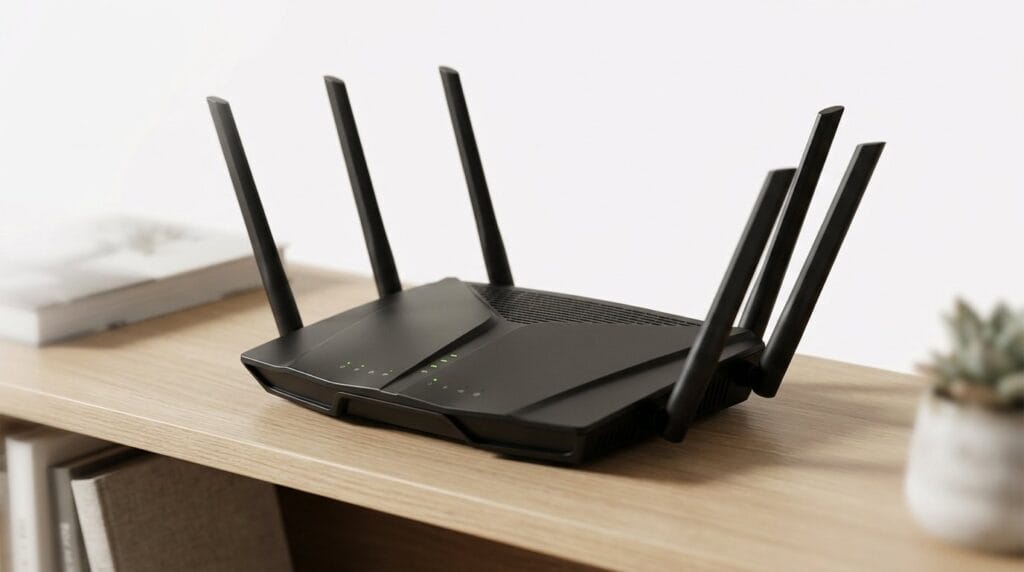
Manufacturers weaponize shorthand: “AX6000,” “tri-band,” “MU‑MIMO,” “OFDMA,” or “3×3” make boxes look future‑proof. Those terms have meaning, but not the one our instincts assign. MU‑MIMO and OFDMA — multi-user MIMO basics — improve multi‑device behavior only when client devices support them; a tri‑band radio can be a dedicated wireless backhaul or just another crowded channel; an “AX6000” number is an aggregate theoretical throughput that never lands on a single phone or laptop.
We see a new model with a higher headline number and feel behind — even if our everyday experience (Netflix, Zoom, cloud backups) was fine yesterday.

Why numbers rarely translate to the living room
Real homes introduce walls, interference, and devices with older radios. A router’s top speed assumes ideal lab conditions: perfect line‑of‑sight, single test client, and zero congestion. In practice:
We’ve seen readers buy a monster router for 2,500 sq ft homes only to find the kitchen still drops to one bar because placement and wall materials were never considered.
Launch cycles, reviews, and engineered FOMO
Vendors time refreshes to make last year’s model look obsolete. Review cycles amplify that: headline comparisons focus on speed tables rather than latency, reliability, or firmware updates. The result: we chase incremental gains and trade a stable setup for perceived novelty.
Quick, practical checks before buying
We’ll next look at when ISP boxes and bundled deals feed this scarcity story and why redundancy often feels like the safe choice.
ISP equipment, bundling, and the illusion of redundancy
The modem‑router mismatch
ISPs often ship a single box that pretends to be two devices: a cable modem that speaks to the network and a router that creates our home Wi‑Fi. Those gateway boxes are convenient, but they also create confusion. Some of us buy a separate router to get better range or features and then keep the ISP gateway turned on “just in case.” That literal duplication — two DHCP servers, two Wi‑Fi networks, two firmware update paths — is the seed of redundancy.

Why we hoard hardware
There’s an emotional logic here. We’ve all been through a sudden outage, frantic tech support calls, and the relief of swapping in an old router that “works.” Throw in ISP upgrade cycles and moving between providers, and you end up with boxes everywhere:
We keep extras as insurance: the time it takes to reconfigure a new device and the fear of being on the phone with support pushes us to retain backups rather than simplify.
Support, troubleshooting, and incentive misalignment
ISPs and manufacturers don’t always make consolidation easy. Support scripts often default to “use our gateway” because it’s predictable for the provider. Third‑party router vendors assume you can put the gateway in bridge mode — which some ISPs resist or don’t document clearly. The result is mixed advice, double NAT headaches, and more swapping of hardware to determine the culprit.
Real-world example: when Wi‑Fi stutters, support tells us to disconnect all extra equipment. But when you do that, your smart‑home hub or VoIP device may stop working, so we reconnect things and end up with a permanent pile of partly configured routers.
Practical steps to cut the clutter
These are small policy and behavior shifts that stop device accumulation before it begins.
Mesh hype, placement problems, and the design trade-offs
Why mesh sounds irresistible
Mesh promises the thing we all want: plug‑and‑play setup, seamless roaming, and the mythic “no dead spots” house. Vendors like Google (Nest Wifi), Amazon (eero), Netgear (Orbi RBK852), and TP‑Link (Deco X60) sell an experience as much as hardware — compare setups in our mesh Wi‑Fi and routers shops before you add nodes. The apps make setup feel effortless, and the marketing shows perfect coverage maps. We buy into the idea that more nodes = fewer problems — and that’s the business model.
Where the promise runs into physics
The snag is simple physics and real houses. A mesh node has to talk to clients and to other nodes. If the link between nodes (the mesh backhaul) is weak, every additional hop halves throughput or worse — a Wi‑Fi extender on wired backhaul often beats another wireless hop. That’s why we see three predictable mistakes:
How product design nudges us to buy more
App‑first UX and proprietary ecosystems make it easier to buy nodes than to rewire. The onboarding flow asks “How many rooms?” more readily than “Can you run Ethernet?” Many manufacturers hide advanced options: wired backhaul, channel selection, or per‑band assignment live behind advanced menus or don’t exist at all. Proprietary protocols (Eero’s, Orbi’s, Deco’s) lock us into buying the same brand to “fix” coverage, not optimizing placement.
Practical steps we can take today
We’ve seen homes cured by one well‑placed wired node while three wireless satellites sat underpowered. The market sells simplicity; our job is to trade a little effort now for far less hardware later.
Feature bloat, subscriptions, and the hidden cost of ecosystems
The move from hardware to an ongoing service
We used to buy a router and forget about it until it died. Now vendors are selling security suites, parental controls, cloud management, and “pro” firmware tiers — often as subscriptions. Netgear’s Armor (Bitdefender), eero Secure, and TP‑Link HomeShield are explicit examples on today’s routers; others tuck premium features behind “Pro” labels or app paywalls. That changes the decision from “which router” to “which ecosystem do we sign up for?” and it’s a powerful motivator to replace otherwise perfectly good hardware.
Why that drives churn
Two things are happening together. First, marketing frames features like AI threat detection and app‑based parental controls as indispensable — even when basic firewall rules and DNS filtering would do the job. Second, vendors limit advanced tools to newer models or paid tiers, so users who want the latest protections or integrations feel compelled to buy new boxes rather than tweak configurations. Add in promises of automatic updates and “lifetime” protections, and we buy the illusion of future safety at the cost of vendor lock‑in.
The firmware support gamble
Firmware promises — “regular updates” or “lifetime security” — are thinly regulated. Some brands (Ubiquiti’s UniFi line aside) have spotty long‑term support; others encourage cloud‑dependent management that becomes useless if the company changes terms or sunsets a product. That fear — of being left on an unsupported, insecure router — nudges people toward early replacement.
Practical tips to avoid the churn
We can stop treating routers like disposable appliances and start treating them like the platforms they are. Next, we’ll translate those choices into what actually matters for everyday users — and a checklist to help us buy less, but buy smarter.
What actually matters for real-world users (and our decision checklist)
We’ve walked through the hype; now let’s get practical. The right router decision starts with real usage, not specs. Below are the concrete things we should measure and the low-friction options that usually save money and frustration.
Coverage mapping first
Before shopping, map your home’s coverage. Walk the space with a phone and Speedtest or a Wi‑Fi analyzer app and note where speeds drop or calls pixelate. That single five‑minute map tells us whether we need more power, better placement, or just one extra access point.
Count devices and prioritize use cases
Make a simple list: how many concurrent video calls, streamers, and gamers? A house with two 4K streams and a gamer needs a different approach than a household of casual browsers. Prioritize:
Wired vs wireless distribution
Run Ethernet where it matters. A single wired access point or mesh node on a wired backhaul fixes most problems with far less expense than replacing the whole system. If wiring isn’t practical, consider powerline adapters or a single high‑quality mesh satellite with ethernet backhaul.
Upgrade triggers to watch for
Don’t upgrade for a logo. Reasonable triggers are
Decision checklist (do this before buying)
Low‑friction alternatives
If we follow these steps, buying fewer routers becomes not just economical but a better experience. Next up: the final takeaways on how to buy less, but buy smarter.
Buy less, buy smarter
We’ve shown how marketing, specs wars, and bundled ISP gear push us toward excess; that matters because unnecessary routers add cost, complexity, and friction across a home ecosystem. We argue for a user-centered approach: measure signal and throughput where you use Wi‑Fi, prioritize placement and simple fixes (wired backhaul, extenders, channel planning), and treat redundancy as a purposeful design choice rather than checklist insurance. Feature lists and subscriptions often mask diminishing returns.
Before you upgrade, map your home, run a few measurements, and test a single device or mesh node in situ. Buying is an ecosystem decision — browse Wi‑Fi & Networking with your coverage map in hand—align choices to real needs, not marketing noise, and you’ll save money and live with fewer devices and avoid headaches.
Frequently asked questions
What is the main point of “Why Most People Buy Too Many Routers”?
This piece explains where why most people buy too many routers matters in real buying decisions—not just headline specs. We focus on trade-offs, who benefits most, and what to verify before you spend.
Who should read this why most people buy too many routers guide?
Read it if you are actively shopping, upgrading, or trying to separate marketing claims from day-to-day use. Skip it if you already own the gear and are not planning a change this season.
What changed recently around why most people buy too many routers?
Prices, firmware, and feature tiers shift quickly in this category. We call out what is new enough to affect your decision and what is incremental hype you can safely ignore.
How should I use this editorial when buying?
Treat it as context before you compare models: note the risks and priorities here, then cross-check specs and current pricing on the picks that match how you actually use the product.
What is easy to get wrong about why most people buy too many routers?
Buyers often overweight one spec—brightness, speed, or brand—and underweight fit for their room, ecosystem, or warranty support. We flag the mismatch we see most often in reader questions.
Where should I go next after reading?
Use the related comparisons and top picks linked near the end of this article for model-level shortlists, then confirm return policies and compatibility with the devices you already own.

Iqra Jumar is Option Cutter's editorial writer. She writes practical editorials and buyer guides that focus on real-world upgrades—better Wi‑Fi, cleaner cable setups, smarter streaming, and everyday fixes—not spec-sheet noise alone. Her work helps readers decide what to change now, what to skip, and why.