
Why the Living Room Should Be the Center of Our Home Audio
We spend more time watching and listening in one room than ever: streaming has made the living room the hub for movies, playlists, and group calls — see our streaming devices picks. Yet we tolerate muffled dialogue, boomy bass, and half-baked multiroom setups because sound feels like a secondary concern. That should change.
Now is the moment to rethink priorities. Networked speakers, smarter room-aware DSP, and simpler app ecosystems mean better sound is achievable and approachable. We care about clarity in dialogue, believable staging in music, and bass that’s controlled—not just louder.
This how-to guide focuses on real-life improvements: practical placement, design that fits the room, and systems that actually work for everyone in house.



Room Acoustics: Simple, Affordable Fixes for Great Home Audio
Making the Case: Why Better Living Room Audio Changes How We Use a Room
Everyday behaviors that actually shift
When sound improves, behavior follows. We don’t just crank the volume—we change what we do in the room. More consistent movie nights, more background music while cooking, fewer “turn it up!” complaints during family calls. Better audio turns passive TV time into an activity people plan around, and that’s a measurable lifestyle upgrade.
Real user benefits (not marketing fluff)
Upgrading audio delivers concrete, repeatable wins
These are usability improvements: fewer interruptions, clearer group listening, and more time actually spent enjoying subscriptions and devices we already pay for.
Hosting, conversation, and shared spaces
A living room that sounds good becomes a social engine. When dialogue is clear throughout the seating area, conversation flows after a movie. When music has defined midrange and controlled bass, it creates an enjoyable background that doesn’t drown out small talk—ideal for dinners and casual gatherings. In short: better audio makes the room more flexible and more frequently used.
Opportunity cost: what we lose by settling
Thin TV speakers or a mismatched bookshelf setup quietly erode value from every other investment: a gorgeous OLED, a top-tier streaming plan, even well-produced podcasts. They force everyone to compensate—turn up volume, lean in, or leave the room. That friction reduces overall satisfaction and the perceived value of what we already own.
Quick, practical steps you can take now
Next, we’ll define what “good” actually sounds like—how clarity, staging, and manageable bass combine into a living-room-ready listening experience.
What Good Living Room Sound Actually Sounds Like: Clarity, Staging, and Manageable Bass
Clarity: the midrange that makes words and vocals real
What separates “good” from “usable” is the midrange. Dialogue and vocals live here; when it’s clear we stop cranking volume and start listening. In practice that means speakers that render consonants and breath without sibilance or boxy coloration. Look for systems with a distinct center channel (for home theater) or a pair of well-tuned bookshelves positioned at ear height for music and calls. Simple tweaks—angling speakers toward seating, moving a rug or curtains—often improve clarity far more than chasing higher wattage.
Staging: believable placement of instruments and effects
A convincing soundstage on well-placed speakers makes an acoustic guitar sit left of center and a violin feel distant, which transforms movies and records into scenes. Good staging isn’t about loudness; it’s about imaging and separation. Try a pan-test (a mono instrument moved across stereo field) or listen to an orchestral piece: instruments should occupy distinct space, not blur together. Soundbars can be excellent for compact spaces, but if we want width and precise placement, separate left/right speakers or small surrounds still lead the pack.
Manageable bass: impact without boom
Bass should add weight and rhythm, not dominate the room. Rather than judging systems by wattage or advertised decibel claims, pay attention to control: fast, tight low end that decays quickly versus lingering boom caused by room modes. If you add a subwoofer, set the crossover and level so that bass blends with the mains—start around 80–120Hz and adjust by ear. Positioning the sub a few feet off the corner can tame peaks.
How to test your setup (quick checklist)
These practical checks lead naturally into design choices—how speakers and aesthetics fit the room—our next topic.
Design and Integration: How Audio Should Fit Your Living Space
We’ve tested rooms where beautiful sound was ruined by bad placement and others where modest gear disappeared into the décor and sounded spectacular. Design is more than aesthetics; it’s how an audio solution disappears into daily life while delivering the sonic promise.
Form factors and sightlines
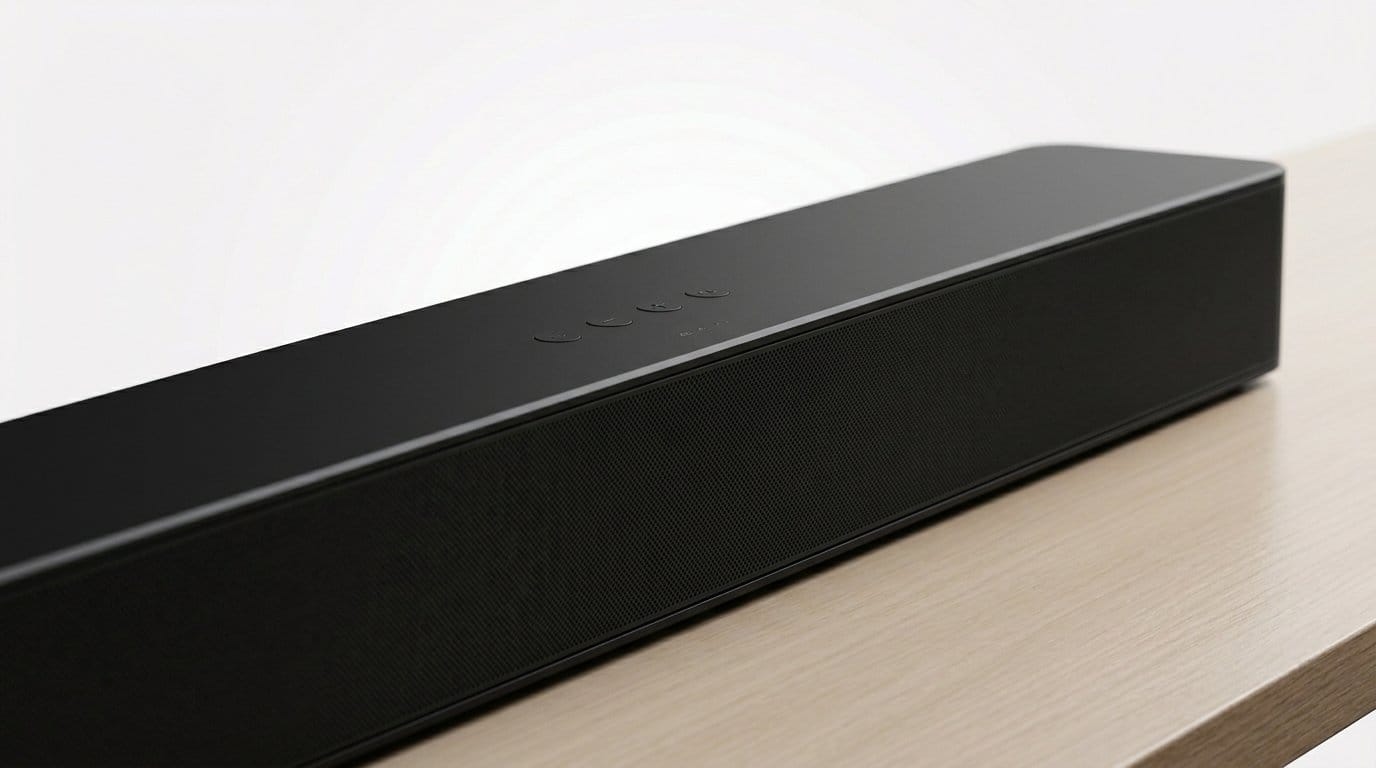
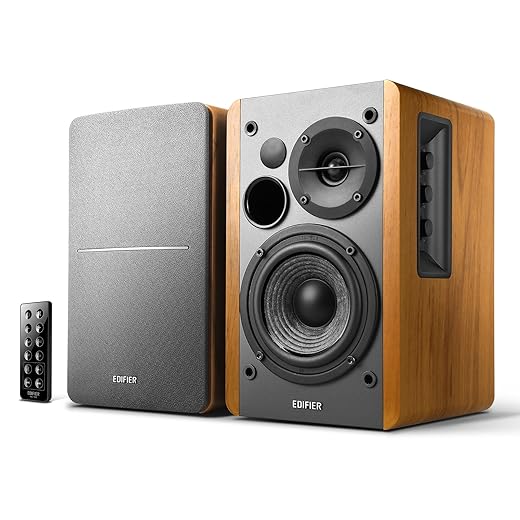
Choose a form factor that suits the room’s focal point. Soundbars (Sonos Arc, Samsung HW-Q series) are forgiving for TV-first rooms and keep sightlines clean. Compact powered speakers (KEF LSX II, Edifier R1700) work when you want stereo imaging without a receiver. Full separates—an integrated amp plus bookshelf or tower speakers—still win on dynamics and staging but demand more space and deliberate placement.
Materials, finishes, and perceived quality
Build quality matters because audio is tactile: solid cabinets reduce vibration, metal grilles feel premium, and fabric-wrapped fronts age better than glossy plastic. Match finishes to your furniture—wood veneer or matte black—so the system reads as intentional. A bookshelf speaker with a walnut finish feels different in the room than a black plastic box; people interact with what looks like craftsmanship.
Hidden vs. visible hardware: the trade-offs
In-wall and in-ceiling speakers preserve sightlines and are great for minimalist interiors, but they usually sacrifice bass and imaging unless paired with a subwoofer and well-planned placement. Visible speakers give better cabinet volume and driver alignment for superior soundstage. We pick based on whether sightline purity or acoustic performance is top priority.
Practical integration tips
Design choices now are about ergonomics and ecosystem compatibility as much as looks—next, we’ll examine how those systems talk to each other.
Ecosystem and Connectivity: Why We Care About Networked Audio
Why ecosystems change how often we use audio
A speaker that plays music only when we remember to plug in a phone becomes shelf decoration. Devices that speak the same language — AirPlay 2, Chromecast, Spotify Connect, or a brand’s own multiroom mesh — lower friction. When streaming, casting, or grouping speakers is one tap away, we play music more often and in more parts of the house. We want that simplicity.
Compatibility and the streaming trade-offs
Not all standards are equal. AirPlay 2 and Chromecast are widely supported and make multi-device streaming painless; proprietary platforms like Sonos or Bose can be smoother within a brand but risk lock‑in. Streaming quality also matters: convenience often wins (Spotify, Cast) even when lossless options exist (Apple Music, Tidal, ALAC). Our advice: pick the ecosystem that supports the services you actually use, and prefer systems that offer both convenience and a path to higher-resolution playback.

Software, updates, and reliability
The software layer is the product now. Firmware and app updates add features but can also change UX or drop legacy compatibility. Look for vendors with transparent update notes, generous support windows, and a history of stable apps. A great speaker with a flaky app becomes frustrating; a reliable app keeps the system living room‑friendly.
Voice, latency, and privacy
Voice control is powerful but imperfect. Cloud‑based wake words and processing introduce latency and potential privacy surface area. We recommend:
Quick decision recipe
Next, we’ll translate these ecosystem choices into practical everyday controls and multiroom behavior that actually work for families.
Everyday Usability: Setup, Control, and Multiroom Behavior That Actually Works
Onboarding: make the first hour feel effortless
Technical performance is moot if the system is a pain to set up. We want a setup flow that gets speakers online in ten minutes, not ten emails to support. Good signs: onboarding that auto-detects nearby devices, clear prompts to join the correct Wi‑Fi band, optional Ethernet fallback, and one-tap account linking for streaming services. Practical steps we recommend:

Control: physical, app, voice — and which we actually use
We need at least two reliable control paths: a responsive app and a predictable physical control. Apps should offer quick presets, a simple grouping UI, and one‑tap source switching (TV, phone, streaming). Physical buttons or dials for play/pause and quick volume are essential for guests. Voice is a convenience, not the primary control—so insist on robust fallback (app + buttons) when the voice assistant is unavailable.
Multiroom: sync that doesn’t frustrate
Perfectly synced music across rooms is addictive; 100–200 ms drift is not. Look for systems with native multiroom protocols (AirPlay 2, Chromecast, or vendor mesh) and explicit group controls. Usability features we value:
Maintenance & sensible defaults
Automatic firmware updates are okay if they’re transparent and schedulable after hours. Calibration should be optional, quick, and reversible—Trueplay‑style tuning is great but shouldn’t be mandatory. Defaults we expect: auto‑standby after inactivity, seamless source switching from TV to phone, and simple bass/treble presets accessible from hardware or app. Small conveniences add up: a preset button for “party” or “movie” often changes whether people keep using the system.
Value in a Crowded Market: How to Choose What’s Right for Your Living Room
A quick framework: match priorities to trade-offs
We find the easiest buying decisions come from answering four questions: What will you mostly listen to? How big is the room? Do you want a one‑box solution or something you can grow? How important is integration with your existing smart home? Use those answers to prioritize simplicity, expandability, or absolute fidelity.
The classes we recommend (and who they fit)
Soundbar with powered subwoofer — best for TV-forward rooms that need clean dialog and big movie bass without speaker wiring. Think Sonos Arc + sub for neat setup and spacious Dolby Atmos effects.

Two‑channel hi‑fi systems — for listeners who value musical detail and future component upgrades. A pair of KEF or Bowers & Wilkins monitors with a modest integrated amp gives superior imaging; expect more setup but much better stereo depth.
Powered bookshelf setups — the middle ground: compact, punchy, and scalable. Active speakers like the ELAC Debut or Q Acoustics powered models remove separate amps and are easy to expand into surround setups.
Smart compact speakers — convenience-first. Devices such as Sonos One or Amazon Echo Studio are great for multiroom background music and voice control but won’t match a dedicated pair for stereo fidelity.
Practical buying tips
Red flags to avoid
Buying is trade-offs, not trophies. With those trade-offs and warning signs in hand, we’ll turn to what a modest investment can actually change in how we live with sound.
A Small Investment That Transforms How We Live in Our Rooms
We’ve argued that better living‑room audio reshapes how we use a space: clearer dialogue, believable staging, and controlled bass make movies, music, and small talk more satisfying. Design and integration keep systems from feeling like gadgets, while modern ecosystems let audio follow our routines. In today’s crowded market, practical choices win over headline specs and budgets.
We recommend incremental upgrades—speaker placement, a better receiver, or a networked speaker—and listening in your own room before you buy. Small investments deliver outsized daily returns — browse sound bars when you are ready.
Frequently asked questions
What is the main point of “Why Your Living Room Audio Deserves More Attention”?
This piece explains where why your living room audio deserves more attention matters in real buying decisions—not just headline specs. We focus on trade-offs, who benefits most, and what to verify before you spend.
Who should read this why your living room audio deserves more attention guide?
Read it if you are actively shopping, upgrading, or trying to separate marketing claims from day-to-day use. Skip it if you already own the gear and are not planning a change this season.
What changed recently around why your living room audio deserves more attention?
Prices, firmware, and feature tiers shift quickly in this category. We call out what is new enough to affect your decision and what is incremental hype you can safely ignore.
How should I use this editorial when buying?
Treat it as context before you compare models: note the risks and priorities here, then cross-check specs and current pricing on the picks that match how you actually use the product.
What is easy to get wrong about why your living room audio deserves more attention?
Buyers often overweight one spec—brightness, speed, or brand—and underweight fit for their room, ecosystem, or warranty support. We flag the mismatch we see most often in reader questions.
Where should I go next after reading?
Use the related comparisons and top picks linked near the end of this article for model-level shortlists, then confirm return policies and compatibility with the devices you already own.

Iqra Jumar is Option Cutter's editorial writer. She writes practical editorials and buyer guides that focus on real-world upgrades—better Wi‑Fi, cleaner cable setups, smarter streaming, and everyday fixes—not spec-sheet noise alone. Her work helps readers decide what to change now, what to skip, and why.