We cut through the jargon in this product comparison to show why Thunderbolt 4 isn’t just a faster USB‑C — it’s a design- and ecosystem-first platform that can radically simplify docking, displays, and pro workflows, but is it worth the premium for everyday users?
Docks decide our desks—literally. We pit Anker’s 8-in-1 USB-C hub against Amazon Basics’ Thunderbolt 4 Pro dock to unpack design, throughput, and ecosystem support and show how those differences shape daily workflow and why they matter.
Affordable Expansion

Pro Docking

Anker PowerExpand Hub
- Wide mix of ports (dual HDMI, SD card, Ethernet, USB-A)
- Solid 85W pass-through Power Delivery for most laptops
- Compact, travel-friendly design that supports USB4 and TB compatibility
- Good value for users who need multi-port expansion without TB4 price
- Dual 4K performance limited (4K@30Hz dual or single 4K@60Hz)
- No charger or high-quality cable included; requires compatible PD charger
- Not officially supported on Linux and has macOS mirroring limits
Amazon TB4 Dock
- Full Thunderbolt 4 / USB4 ports with strong bandwidth for docks and drives
- Supports dual 4K@60Hz displays and HDMI2.1 for higher-res single display use
- Up to 96W dynamic Power Delivery and robust included power brick
- Includes a Thunderbolt 4 cable and solid build quality for the price
- Some OS and chipset caveats (M1/M2 Mac dual-display limits and no Linux support)
- When fully loaded, thermal buildup and bandwidth sharing can reduce speeds
Feature Comparison
| Affordable Expansion Anker PowerExpand 8-in-1 USB-C Hub for Laptops | VS | Pro Docking Amazon Basics Thunderbolt4 USB4 Pro Docking Station |
|---|---|---|
USB-C (USB4 / Thunderbolt-compatible) | Interface Type |
Thunderbolt 4 / USB4 |
Dual 4K@30Hz or Single 4K@60Hz | Max Display Support |
Dual 4K@60Hz via TB4 ports; HDMI2.1 supports up to 8K@30Hz |
4K@60Hz | Max Single Display Resolution |
8K@30Hz (HDMI2.1) or 4K@60Hz via TB4 |
Yes | Dual Display Support |
Yes |
85W pass-through (charger not included) | Max Power Delivery |
Dynamic PD up to 96W |
None (USB-C cable and PD charger required separately) | Included Cable |
Thunderbolt 4 cable included |
1 Gbps | Ethernet Speed |
Up to 2.5 Gbps |
2 USB-A ports | Number of USB-A Ports |
3 USB-A ports |
microSD + SD card reader | Card Reader |
None (no SD slot) |
Windows 10/11, ChromeOS, macOS (with some external-display limitations); not Linux | OS Compatibility |
Windows 10+ and macOS 11+ (some limitations with M1/M2 Macs); not Linux/Chrome OS |
4.65 x 2.01 x 0.69 inches | Dimensions |
7.86 x 2.95 x 1.23 inches |
3.2 ounces | Weight |
2.15 pounds |
$$ | Price |
$$$ |
$39.99 | Current price |
$119.70 |
| Buy for $39.99 | Buy for $119.70 |
USB-C vs Thunderbolt 4: Key Differences Explained in Under 5 Minutes
Design and Everyday User Experience
First impressions and build
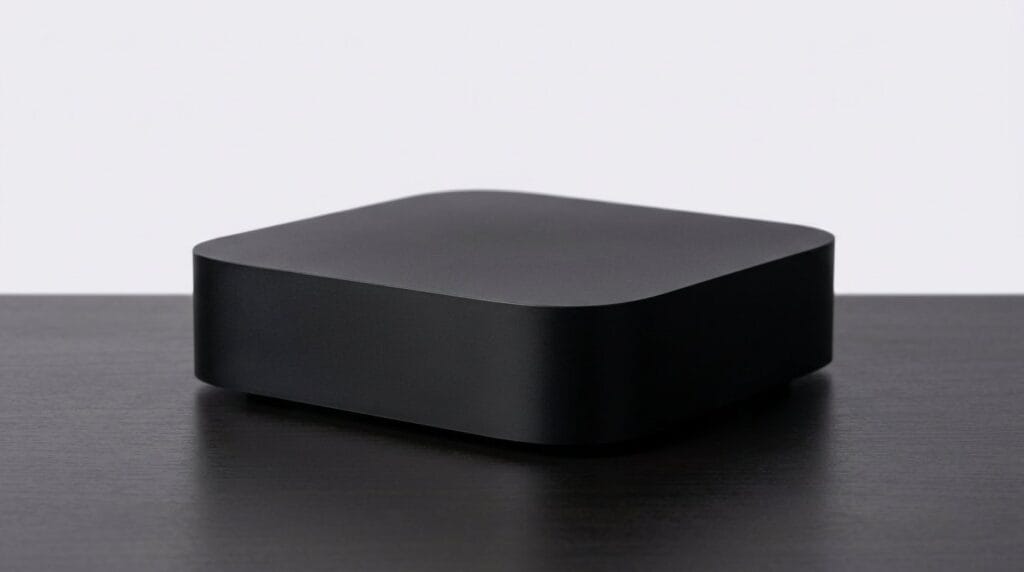
We want a dock to disappear into our workflow — not demand babysitting. The Anker PowerExpand is a tiny, travel‑friendly puck: light (3.2 oz) and shallow, so it tucks into a laptop bag or sits unobtrusively on a cluttered desk. Its plastic shell feels solid for the price, and the built‑in SD/microSD reader is a photographer’s convenience you don’t always get on small hubs.


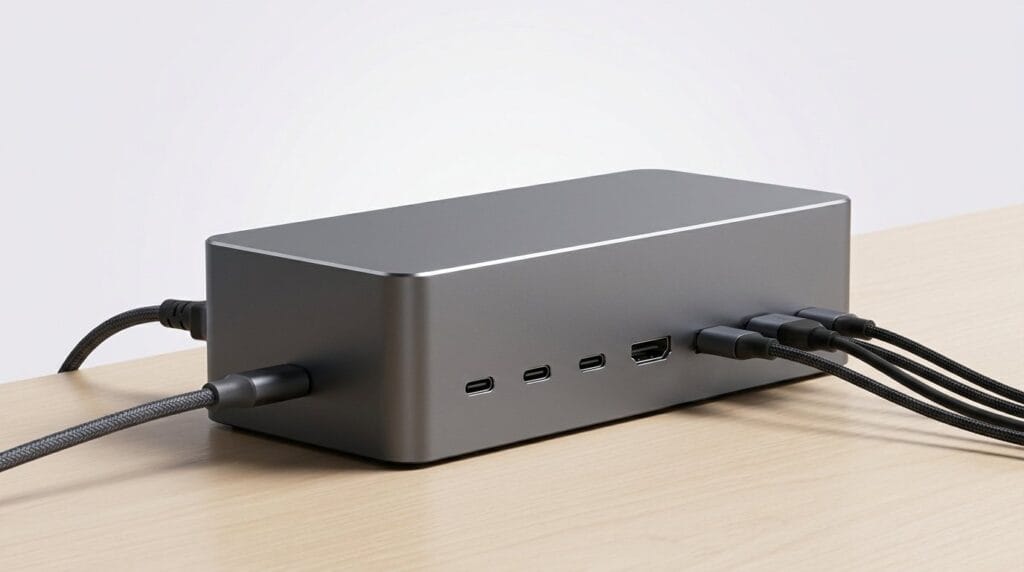
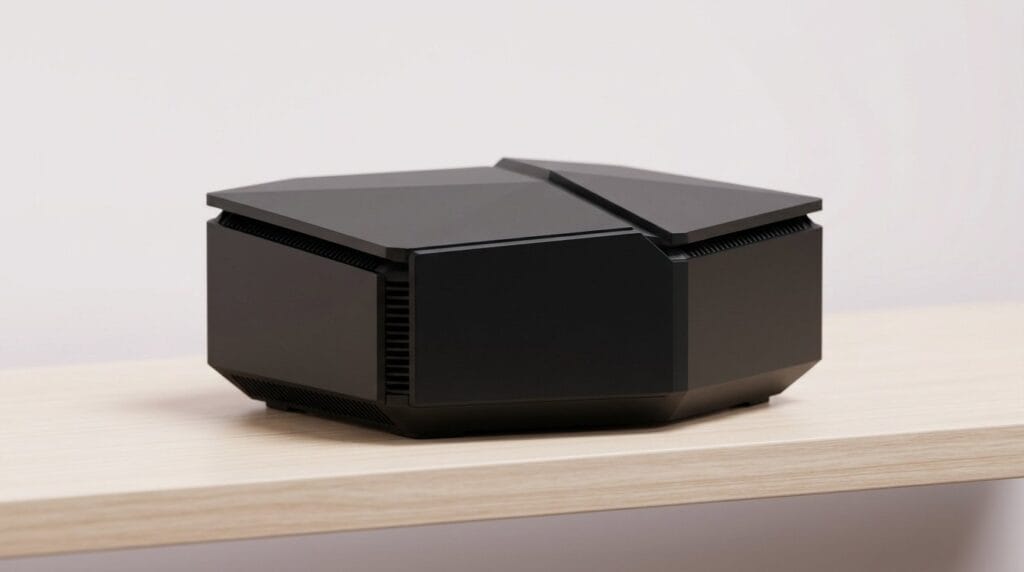
The Amazon Basics Thunderbolt 4 Pro dock is the opposite profile: a denser, heavier block (2.15 lb) designed to be a semi‑permanent desk appliance. The metalized chassis and included power brick/cable give it a more professional, reassuring presence — it’s meant to be the nerve center of a workstation rather than a travel accessory.
Setup and cable management
Plug‑and‑play is the baseline. The Anker uses a single USB‑C connection and minimal cables, which keeps our desk neater when we only need monitors, SD cards, and Ethernet. Its 85W pass‑through is ample for most laptops, but you must supply your own PD charger.
The Amazon dock ships with a Thunderbolt 4 cable and power adapter and exposes two full TB4 ports for daisy‑chaining high‑speed drives and external docks. That makes cable routing slightly busier but far more flexible for pro peripherals.


Heat and day‑to‑day reliability
In everyday use the Anker stays relatively cool and silent; it’s built for light to moderate loads. The Amazon dock warns of higher thermal output (up to ~50°C under heavy load), which is normal for TB4 hubs that consolidate more power and bandwidth — keep it ventilated. In short: Anker is unobtrusive for mobile users; Amazon Basics becomes invisible only once it’s committed to a desk setup and paired with TB4‑ready gear.
Bandwidth, Displays, and Real‑World Performance
Raw bandwidth and the technical gap
We start with the hard numbers: Thunderbolt 4 gives us a 40 Gbps bi‑directional link and PCIe tunneling for high‑speed peripherals — not just a faster USB‑C cable (think NVMe enclosures and eGPU-style use cases). A true TB4 dock like the Amazon Basics can expose those PCIe lanes and keep drive and display traffic moving with far less compromise than a basic USB‑C hub.
By contrast, the Anker PowerExpand is a USB‑C hub that relies on DP Alt Mode and the host’s USB link for video and data. That works well for everyday multitasking, but it’s constrained — the hub itself caps dual external displays (two 4k. If you need snappy, pro‑grade external drive or GPU performance, you’ll notice the difference quickly.


How the limits show up for displays
Practically, TB4’s extra headroom lets the Amazon dock push dual 4K@60Hz signals (assuming your laptop’s TB4 port supports it), and even offers an HDMI 2.1 output for higher‑res single displays. The Anker’s dual‑monitor mode drops to 30 Hz per panel — fine for email, docs, and many photo edits, but not ideal for motion work, gaming, or smooth 4K video scrubbing.


Shared bandwidth and day‑to‑day performance
Bandwidth is finite and gets parceled out: video, file transfers, and PD all compete. In practice
That matters because creators and power users juggle big files and high‑refresh previews. If you offload renders to an external NVMe, use multiple 4kids entertainment panels, or expect consistent external‑drive throughput, a TB4 dock meaningfully reduces workflow friction.
Ports, Compatibility, and Ecosystem Integration
What the ports actually buy you
We map the physical connectors to real‑world use cases so you can pick the dock that fits your laptop and peripherals.
Which laptops get the best experience
If your laptop has a native Thunderbolt 4/USB4 port (modern Windows ultrabooks, Intel Thunderbolt MacBooks, many USB4 machines), the Amazon Basics dock will deliver the least‑compromised experience: true dual 4K@60Hz, faster LAN, and robust passthrough for NVMe enclosures and high‑speed peripherals. If your machine only has a USB‑C port with DP Alt Mode (many Chromebooks, older Windows laptops, some USB4 builds), the Anker hub gives straightforward multi‑display and SD‑card workflows without the TB price.
Platform caveats and driver/friction points
We watch for two friction points
How this fits vendor ecosystems
Price, Value, and Who Should Buy Which Dock
How to think about price vs. future‑proofing
We weigh upfront cost against how long the dock will meet your needs. The Anker hub is the cheaper, travel‑friendly choice for people who need straightforward ports and SD access today. The Amazon Basics Thunderbolt 4 Pro asks for a premium (about $135) but gives more sustained throughput, higher PD, and real expandability — which matters if you plan to add NVMe enclosures, multiple 4K displays, or high‑speed docks down the line.
Hidden costs and total cost of ownership
Be explicit about extras: the Anker does not include a charger or high‑quality cable, so factor in a 100W PD brick and a USB‑C cable if you want full 85W passthrough. The Amazon dock includes a Thunderbolt 4 cable and power adapter, so its higher sticker price often offsets those add‑ons and reduces friction at setup. Also consider longevity: Thunderbolt 4’s headroom means fewer replacement purchases as your peripherals get faster.
Who should buy which dock
We recommend matching your purchase to the way you’ll actually use the dock over the next 2–4 years, not just the lowest price today.
Frequently asked questions
Which is better, USB-C or Thunderbolt 4?
There is no universal winner: USB-C fits some buyers and Thunderbolt 4 fits others. We compare specs, daily use, and trade-offs in this guide so you can match the pick to your budget and workflow, not a single spec sheet.
What is the main difference between USB-C and Thunderbolt 4?
USB-C and Thunderbolt 4 target overlapping but not identical use cases. The sections above break down design, performance, ecosystem, and value so you can see where each product pulls ahead and where it compromises.
Should I buy USB-C or Thunderbolt 4 first?
Buy the product that removes your biggest daily friction first. If USB-C solves your primary pain point, start there; if Thunderbolt 4 is the bottleneck in how you actually work or play, prioritize it. Many households add the other later.
Is USB-C worth it over Thunderbolt 4?
USB-C is worth the premium over Thunderbolt 4 when you will use the features that justify the price—extra performance, build quality, or ecosystem lock-in. If those extras go unused, Thunderbolt 4 usually delivers better value.
Can USB-C replace Thunderbolt 4?
For some users, yes; for others, no. USB-C can cover most tasks Thunderbolt 4 handles, but gaps in compatibility, accessories, or specialized workflows may still matter. Use our comparison table and verdict to see which gaps apply to you.
Who should choose USB-C vs Thunderbolt 4?
Choose USB-C if its strengths match how you will use it every day; choose Thunderbolt 4 if you need its specific advantages or a lower entry price. When in doubt, favor the option that fixes your most frequent frustration—not the highest spec on paper.
Final Verdict
We pick the Amazon Basics Thunderbolt4 Pro dock as the clear winner for professionals who need maximum throughput, daisy‑chaining, and future‑proofing.
Choose the Anker USB‑C hub for affordable, travel‑friendly, everyday, casual dual‑monitor productivity — see our product comparisons.

Princess Rioboca is the Lead Editorial Writer at Option Cutter, bringing over seven years of hands-on experience in consumer technology journalism. Specializing in home networking and smart home architecture, she transforms complex technical data into practical, real-world upgrades. Princess personally tests and audits every product she reviews—evaluating real-world Wi‑Fi throughput, cable management durability, and streaming ecosystem stability—to filter out spec-sheet noise. Her rigorous, field-tested insights are designed to give readers transparent, unbiased buying advice on what to purchase, what to skip, and exactly why.