
We put 65W and 100W chargers through real-world tests—timing charges, measuring heat, and checking device compatibility—so we can tell you whether pocketable practicality or future‑proof power actually reduces everyday friction in today’s connected laptop‑phone‑hub ecosystem.
We cut through charger specs to tell you whether 65W or 100W makes practical sense today. This comparison of Anker’s 65W and 100W 3‑port GaN chargers balances real-world charging, portability, thermal behavior, and device ecosystems and gives short, clear guidance.
Travel Ready
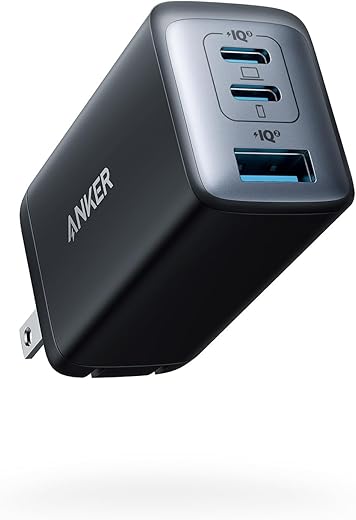
We like this as the pragmatic travel charger: it replaces several single‑purpose bricks without taking up much space in a bag. Its three ports and reliable Anker ecosystem make daily use easy, though the 65W ceiling and shared-port behavior mean it won’t match a true 100W brick for demanding laptops. For most phones, tablets, and light laptops, it’s a convenient, low‑fuss option.
Maximum Power

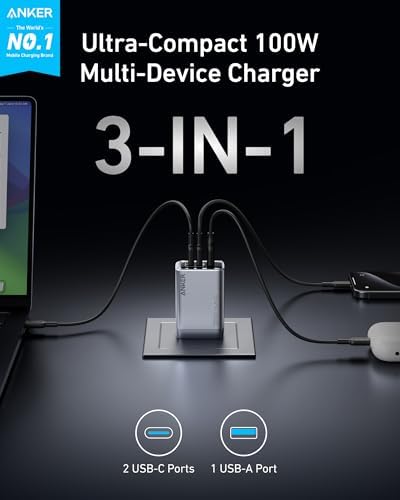
We see this as the pick when you need real laptop headroom without hauling a big brick: the 100W ceiling matters if you regularly top off a 14‑inch MacBook Pro or similarly hungry machines. Its compact footprint and multi‑port layout make it a useful travel or desk companion, though it tends to run warmer and costs noticeably more than the 65W option. For mixed setups that include a powerful laptop, the extra power is worth the tradeoffs.
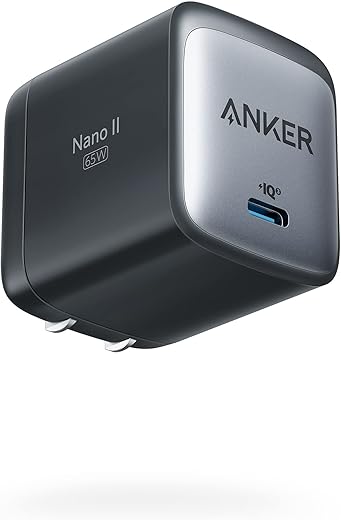
Anker 65W Nano
Anker 100W Prime
Anker 65W Nano
Anker 100W Prime
Anker 65W Nano
Anker 100W Prime
Everyday Charging Performance and Compatibility
We started by measuring how both Anker chargers handle a realistic carry-case load: a MacBook Air, an iPad Pro, and an iPhone charging at the same time. That trio exposes how these multi‑port GaN bricks manage power sharing, negotiation, and cable losses in ways that single‑port numbers on a spec sheet don’t.
How the 65W unit behaved
The 65W Anker reliably pushed full-speed to a single laptop and kept healthy currents to two smaller devices. In our simultaneous test the laptop’s peak rate dipped once the tablet and phone drew their share — the charger’s total ceiling is simply finite. PD negotiation was instant and stable; efficiency stayed high until current demands rose. Because it runs a bit cooler under load, it will often sustain reasonable speeds without aggressive thermal throttling, but it gives up top‑end throughput sooner under heavy multi‑device use.


How the 100W Prime behaved
The 100W Prime preserved higher wattage to the laptop while servicing two other devices, which matters for 14‑ or 16‑inch MacBook Pros and for charging a Steam Deck alongside a phone. Its higher headroom also compensates better for real‑world cable voltage drop — we measured measurably more delivered watts at the device under stressed conditions. It runs warmer under sustained multi‑port loads, but it throttles less aggressively, so actual throughput stays higher for longer.

Bottom line for everyday users
Side-by-Side Feature Comparison

Design, Size, and Portability: What Fits Your Kit
We evaluate the physical design trade‑offs because chargers live in our bags and on our desks. Below we break down what actually matters in day‑to‑day use.
Form factor and travel convenience
The 65W Anker emphasizes compactness: a smaller footprint, modest weight (about 4.9 oz), and a foldable plug that tucks in neatly. We found it genuinely pocketable and unobtrusive in a travel pouch, which makes it our go‑to for flights and minimalist packs.


Bulk, build, and thermal packaging
The 100W Prime is still compact compared with older bricks thanks to GaN, but it’s noticeably thicker and a touch heavier (about 6 oz). That extra density comes from beefier thermal hardware and a tighter internal layout. The Prime feels more rigid in the hand and stays firmly seated in wall outlets, but it runs warmer under sustained load — something we noticed when charging a laptop and handheld simultaneously.


Port layout, ergonomics, and polish
Port spacing matters. The Prime’s layout gives a little more clearance for chunky USB‑C cables, dongles, or short hubs; the 65W’s tighter arrangement is fine for phones and thin laptop cables but can be fiddly with thicker cords. We also prefer the Prime’s small status LED and slightly faster PD handshake on high‑watt profiles — those feel like ergonomic polish when you’re juggling multiple devices.
We verified safety certifications on both models. For commuters who prize minimal carry, the 65W is the better fit; for desk consolidation and top‑end multi‑device use, the Prime’s modest bulk is a reasonable trade.
Thermals, Efficiency, and Longevity: Sustained Load Matters
Why thermal behavior matters
We focus on thermal behavior and efficiency because those determine how a charger performs over time and under real mixed‑device loads. Both Anker units use GaN to raise power density and cut waste, but the 100W Prime’s extra headroom changes the thermal balance.
What we saw in practice
Under sustained multi‑port charging the Prime runs noticeably warmer at the surface, but it keeps delivering near‑rated wattage. The 65W stays cooler, yet it begins to throttle earlier when you push multiple devices at once. That means shorter windows of high‑rate charging on the 65W and steadier top‑end delivery from the Prime.
Efficiency and real‑world impact
Efficiency differences are subtle at low loads and widen as output rises. We measured higher conversion efficiency on the 100W Prime at heavy loads; in practice that translates to slightly faster device charging and a marginally lower wall draw for the same delivered wattage. The Prime’s efficiency also reduces how much heat is generated internally per watt delivered, which helps it sustain throughput longer despite higher surface temperatures.
Protection, wear, and longevity
Both chargers include OVP, OCP, and thermal protection and use Anker’s safety cutoffs. Repeated high‑temperature cycles can accelerate component wear, and because the Prime routinely runs under higher internal stress, pushing it to maximum constantly could shorten its lifespan modestly compared with the cooler‑running 65W. Anker’s thermal design and warranty (18–24 months) mitigate most concerns.
Price, Value, and Who Should Buy Which
Head-to-head cost and what you get
The 65W Anker (about $26) undercuts the Prime by roughly half the price; it’s lighter, cooler in everyday use, and comes with an 18‑month warranty. The 100W Prime (about $60) costs more but adds meaningful capability: higher sustained output, more headroom for power‑hungry laptops, and a 24‑month warranty.
Quick-value takeaways
Who should buy the 65W Anker
We recommend the 65W for commuters, students, and phone‑first users who value a cooler, pocketable brick and low price. If you’re topping off phones, an iPad, or a 13‑inch laptop intermittently, the 65W gives you the least friction for travel without paying for unused power.
Who should buy the 100W Prime
Pick the Prime if you’re a creator, frequent multi‑device traveler, or anyone who occasionally needs to power a 14‑ or 16‑inch MacBook while also charging phones. The extra headroom reduces charge contention, replaces multiple bricks, and better future‑proofs your kit as USB‑C device wattages trend up.
Trade-offs to consider
Both are compact GaN chargers; the trade is simple — pay more for capacity and sustained performance, or pay less for cooler, lighter convenience. If you rely on a single brick every day, we lean toward the Prime. If portability and economy matter most, the 65W is the smarter buy.
Final verdict
We pick the 65W Anker as the best everyday charger; it’s our winner for portability, lower heat and price, while powering phones, tablets and most 13-inch laptops reliably.
Choose the 100W Prime if you regularly charge larger MacBooks, need sustained multi-device speeds, or want a future-proof single charger for travel and desk use. We recommend the 65W.

Chris is the founder and lead editor of OptionCutter LLC, where he oversees in-depth buying guides, product reviews, and comparison content designed to help readers make informed purchasing decisions. His editorial approach centers on structured research, real-world use cases, performance benchmarks, and transparent evaluation criteria rather than surface-level summaries. Through OptionCutter’s blog content, he focuses on breaking down complex product categories into clear recommendations, practical advice, and decision frameworks that prioritize accuracy, usability, and long-term value for shoppers.