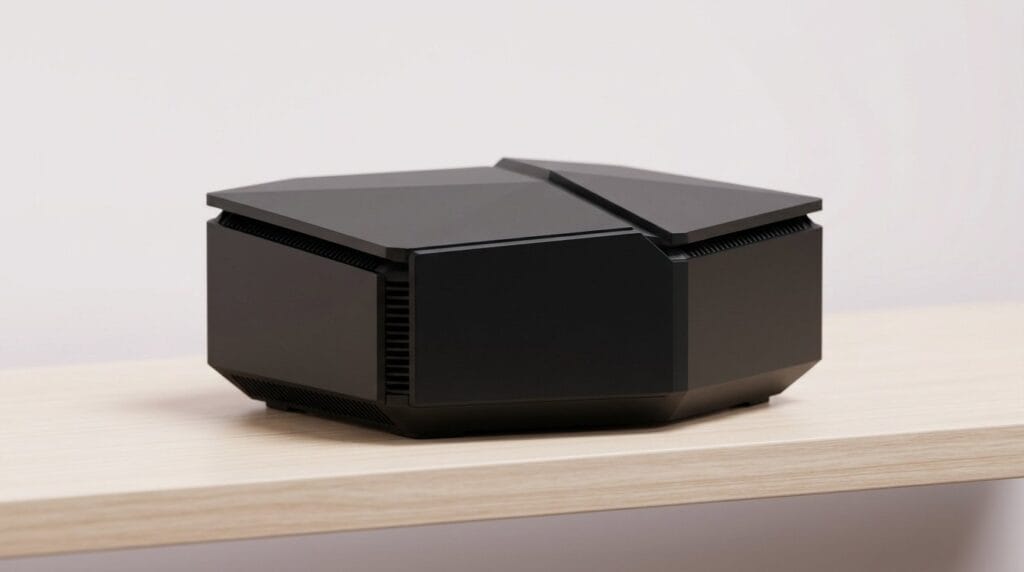
We put Thunderbolt and USB‑C docks through real‑world tests — and discovered the gap isn’t just raw speed but design trade‑offs, ecosystem fit, and whether you’re buying futureproof performance or smarter value for your desktop workflow.
Docks: boring gadgets, huge impact. We break down CalDigit’s Thunderbolt 4 TS4 and Anker’s 13‑in‑1 USB‑C dock to help you decide which fits your workflow, whether you prioritize bandwidth, displays, or straightforward multiport convenience. We focus on daily use in this comparison, ports and bandwidth, power, and ecosystem trade‑offs. If you want quick recommendations, start with our top picks.
Pro Workstation

Everyday Productivity

CalDigit TS4 Dock
- Extremely wide port selection and high throughput (3× TB4, multiple 10Gb/s USB ports)
- Robust display support — handles single 8K or dual 6K/4K workflows depending on host
- 2.5GbE and UHS-II card readers add pro-grade connectivity
- Strong cross-platform compatibility (Thunderbolt 4/USB4/USB-C hosts)
- Price is high compared with USB‑C alternatives
- Larger, warmer-running unit that’s not very portable
Anker USB‑C Dock
- Good everyday connectivity with triple‑display capability for common office setups
- Includes 85W laptop charging plus a separate 18W PD port for peripherals
- Solid build and generally reliable plug‑and‑play behavior across Windows and ChromeOS
- Not a true Thunderbolt dock — limited raw bandwidth for high‑end peripherals
- macOS display behavior is constrained (mirrored displays/SST) and Linux support is limited
Feature Comparison
| Pro Workstation CalDigit TS4 Dock | VS | Everyday Productivity Anker USB‑C Dock |
|---|---|---|
9.5 / 10 | Performance & Bandwidth |
7 / 10 |
9 / 10 | Display Support |
6.5 / 10 |
9 / 10 | Port Variety & Flexibility |
7.5 / 10 |
9 / 10 | Power Delivery |
8 / 10 |
$379.99 | Current price |
$139.99 |
| Buy for $379.99 | Buy for $139.99 |
Thunderbolt Dock for Mac: Hub vs Docking Station — What’s Right For You?
Design and daily‑use experience: what life with each dock is actually like
We look beyond specs to how each product feels in daily use: footprint, build quality, cable management, LED/status cues, and how painless setup is on Mac, Windows, and Chrome OS.
CalDigit TS4 — permanence, density, and pro‑grade ergonomics
The TS4 telegraphs “set it and forget it.” Its solid metal chassis and weight make it a desk fixture, not a travel companion. The supplied 0.8 m certified Thunderbolt cable is short by design — it keeps the dock close to your laptop and minimizes cable clutter, but means you’ll position the TS4 on your desk rather than tuck it behind a monitor stand.


Anker 13‑in‑1 — compact, accessible, consumer‑friendly
Anker’s dock feels like a USB‑C hub that grew into a desktop dock: compact plastic housing, a 1 m cable in the box, and front‑facing SD and USB ports for frequent swaps. The integrated 2×HDMI + DP outputs are handy for common office setups — you can plug monitors without adapters and keep thumb drives and cards front and center.


Setup, noise, and quirks
We found both docks largely silent and fanless in normal use. The TS4’s Thunderbolt security pairing step is the only extra tap you’ll see on first connection; it rewards you with far higher bandwidth and full 8K/dual‑6K headroom on a laptop if your host supports it. The Anker is more plug‑and‑play, but its display behavior on Macs and Linux limitations are things to confirm before you buy.
Ports, bandwidth, and display support: raw capability and why it matters
Raw ports and bandwidth
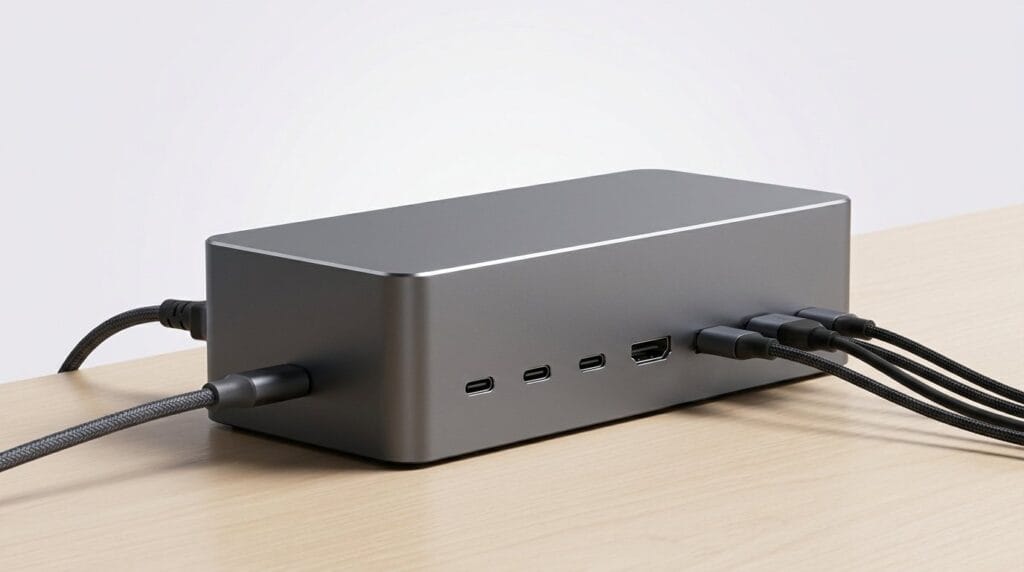
This is where the product differences bite. The CalDigit TS4 exposes three Thunderbolt 4 ports (40Gb/s each) plus multiple 10Gb/s USB‑C/A ports, UHS‑II card readers, and a 2.5GbE jack — essentially a high‑capacity hub for pro peripherals. The Anker trades Thunderbolt lanes for an affordable mix of two HDMI and one DisplayPort outputs, an 85W PD port, a 10Gb/s USB‑C data port and 5Gb/s USB‑A ports — enough throughput for office devices but not for high‑res, multi‑stream video workflows.
Display support: MST, DSC, and host limits
More screens doesn’t mean more pixels. The TS4 has true headroom: a single 8K@30Hz or dual 6K@60Hz option when the host GPU and OS permit, and Display Stream Compression (and MST/USB4 routing) helps push high‑res panels. That makes it future‑proof for Mac Pros and Windows workstations. By contrast, the Anker is optimized for triple‑monitor productivity at 1080p@60Hz (its spec), and macOS/iPadOS will often mirror rather than extend (SST), so you won’t get independent high‑res displays on all platforms.
Storage, Ethernet, and real‑world transfers
Raw numbers matter wave for creative work: UHS‑II SD on the TS4 and multiple 10Gb/s ports let us offload large photo and video files quickly. The onboard 2.5GbE also outpaces standard gigabit for fast NAS workflows. The Anker covers everyday needs — SD slot, gigabit Ethernet, and one fast USB‑C — but photographers and video editors will hit bottlenecks sooner.
Power delivery, thermal behavior, and laptop compatibility
What the numbers mean in real life
We tested how each dock handles a real laptop-first workflow. The CalDigit TS4’s 98W passthrough gives us clear headroom for 15–16‑inch workstations under sustained CPU/GPU load: charging continues without the battery climbing and falling during long renders or large-file transfers. The Anker’s 85W PD is solid for most 13–14‑inch ultrabooks and many 15‑inch models, but we’ve seen heavier 15‑inch gaming or workstation laptops reduce charge rate under load.
Passthrough behavior and negotiation quirks
Thunderbolt docks like the TS4 tend to negotiate power more predictably at boot — the host sees a Thunderbolt device and PD is established quickly. USB‑C docks (Anker) are usually plug‑and‑play, but power negotiation can lag on some OEMs, causing short battery discharge spikes at startup or when waking from sleep.
Peripheral draw and practical limits
Thermal design and sustained performance
The TS4 is physically larger and runs warmer but sustains throughput and charging longer before any performance shift. The Anker stays compact and reasonably cool for typical office loads, but under simultaneous triple‑display, fast storage, and full PD it’s more likely to reduce charging or show higher surface temps.
Compatibility notes
We found Thunderbolt docks offer tighter multi‑display support on Macs and verified behaviors with M‑series chips. USB‑C docks like Anker prioritize broad compatibility with Windows/ChromeOS and simpler driver stacks — better for mixed fleets but less future‑proof for pro Mac workflows.
Ecosystem, value, and who should buy which dock
Market position — capability vs pragmatism
We see the TS4 as a pro-grade hub: Thunderbolt 4 bandwidth, 2.5GbE, UHS‑II readers, and multiple 10Gb/s ports are built for high‑throughput workflows and multi‑year relevance. The Anker is a practical, lower‑cost USB‑C dock that gives widespread compatibility, triple‑display support for common office setups, and convenient extras (SD, aux, second PD) without Thunderbolt complexity.
Total cost of ownership and compatibility
Thunderbolt buys headroom but not always without added cost. The TS4 includes a certified 0.8 m TB4 cable, but if you need longer runs you must buy Intel/USB4/Thunderbolt‑certified cables and possibly firmware updates — those are real expenses. CalDigit occasionally issues firmware/driver updates for feature parity (especially on Macs), so expect occasional maintenance. The Anker ships with a 135W adapter and a cable, works driverlessly across most Windows and ChromeOS machines, and generally has lower incidental costs — but it’s limited by DP Alt Mode bandwidth and macOS display quirks (mirroring/SST) and has poor Linux support.
Upgrade paths and longevity
If you plan to keep one dock across multiple laptop generations, Thunderbolt’s higher upfront price often pays off: more bandwidth, higher display ceilings, and better pro peripheral support. If you swap cheap ultrabooks or need a simple triple‑monitor office setup, a USB‑C dock gives more immediate, affordable value.
Who should buy which — practical scenarios
Frequently asked questions
Which is better, Thunderbolt Dock or USB-C Dock?
There is no universal winner: Thunderbolt Dock fits some buyers and USB-C Dock fits others. We compare specs, daily use, and trade-offs in this guide so you can match the pick to your budget and workflow, not a single spec sheet.
What is the main difference between Thunderbolt Dock and USB-C Dock?
Thunderbolt Dock and USB-C Dock target overlapping but not identical use cases. The sections above break down design, performance, ecosystem, and value so you can see where each product pulls ahead and where it compromises.
Should I buy Thunderbolt Dock or USB-C Dock first?
Buy the product that removes your biggest daily friction first. If Thunderbolt Dock solves your primary pain point, start there; if USB-C Dock is the bottleneck in how you actually work or play, prioritize it. Many households add the other later.
Is Thunderbolt Dock worth it over USB-C Dock?
Thunderbolt Dock is worth the premium over USB-C Dock when you will use the features that justify the price—extra performance, build quality, or ecosystem lock-in. If those extras go unused, USB-C Dock usually delivers better value.
Can Thunderbolt Dock replace USB-C Dock?
For some users, yes; for others, no. Thunderbolt Dock can cover most tasks USB-C Dock handles, but gaps in compatibility, accessories, or specialized workflows may still matter. Use our comparison table and verdict to see which gaps apply to you.
Who should choose Thunderbolt Dock vs USB-C Dock?
Choose Thunderbolt Dock if its strengths match how you will use it every day; choose USB-C Dock if you need its specific advantages or a lower entry price. When in doubt, favor the option that fixes your most frequent frustration—not the highest spec on paper.
Final verdict: choose based on workflow, not brand buzz
We pick the CalDigit TS4 for creators and power users needing high‑res displays, 2.5GbE, and future bandwidth — it’s a premium, workflow‑tight dock. For everyday office setups, the Anker USB‑C dock wins for affordable multi‑monitor support and front‑facing convenience. Choose with purpose.

Princess Rioboca is the Lead Editorial Writer at Option Cutter, bringing over seven years of hands-on experience in consumer technology journalism. Specializing in home networking and smart home architecture, she transforms complex technical data into practical, real-world upgrades. Princess personally tests and audits every product she reviews—evaluating real-world Wi‑Fi throughput, cable management durability, and streaming ecosystem stability—to filter out spec-sheet noise. Her rigorous, field-tested insights are designed to give readers transparent, unbiased buying advice on what to purchase, what to skip, and exactly why.