We break down how smart locks stack up against deadbolts — from design and daily convenience to firmware updates, app ecosystems, and real‑world attack vectors — so you can decide which fits your home and why it matters now.
Picture arriving home with arms full of groceries—your lock should be the least of our worries. We compare the August Home Matte Black Wi‑Fi Smart Lock (AUG‑SL05‑KY1‑G05) with the Schlage B60 deadbolt to judge real‑world security, everyday use, and ecosystem tradeoffs in this comparison—because the safest choice depends on how you live today.
Smart Entry

Physical Security

August Wi‑Fi Lock
- Built‑in Wi‑Fi and included keypad for immediate remote control and guest access
- Retrofits over an existing deadbolt so the exterior look and key access remain unchanged
- Wide smart‑home compatibility (Alexa, Google Assistant, HomeKit, SmartThings)
- Easy DIY installation and compact inside profile that preserves door aesthetics
- Battery powered — Wi‑Fi connectivity increases power draw and may need more frequent changes
- App region and occasional sync quirks reported by some users can complicate setup or long‑term reliability
Schlage B60 Deadbolt
- BHMA Grade 1 mechanical security with hardened steel components and anti‑drill protections
- Dependable, long‑lasting mechanical operation with a limited lifetime mechanical and finish warranty
- Straightforward installation and easy re‑keying to match other house locks
- No built‑in smart features — no remote access, activity logs, or app control
- Lacks the convenience of keypad codes or temporary guest access without adding a separate smart module
Feature Comparison
| Smart Entry August Wi‑Fi Smart Lock with Keypad Bundle | VS | Physical Security Schlage B60N619 Satin Nickel Single-sided Deadbolt |
|---|---|---|
Retrofit smart lock with keypad | Lock Type |
Single‑sided keyed mechanical deadbolt |
Motorized adapter that turns existing deadbolt thumbturn | Mechanism |
1‑inch deadbolt with hardened steel spinning pin |
Built‑in Wi‑Fi + Bluetooth (no hub required) | Connectivity |
None — fully mechanical |
2 x CR123A batteries (included) | Power Source |
No batteries required |
Amazon Alexa, Google Assistant, Apple HomeKit, Samsung SmartThings | Smart Home Compatibility |
None built‑in; requires separate smart adapter for integrations |
About 10 minutes; straightforward DIY retrofit | Installation Time |
About 20–40 minutes; typical screwdriver install |
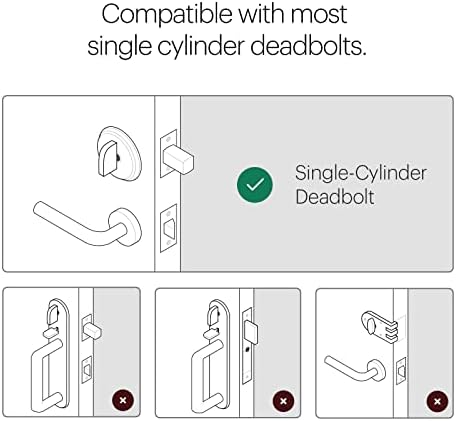
Yes — installs on the inside over your current thumbturn | Fits Existing Deadbolt? |
Replaces standard deadbolt; compatible with typical 2‑hole bore doors |
No BHMA Grade 1 certification listed | Security Certification |
BHMA Grade 1 / AAA certified |
Standard tamper/spoof mitigations; not a heavy-duty mechanical reinforcer | Anti-drill / Anti-pick Features |
Anti‑drill plate, anti‑pick pins, integrated strike reinforcer with long screws |
Yes | Remote Access |
No |
1 year manufacturer warranty | Warranty |
Limited lifetime mechanical and finish warranty |
$$$ | Price |
$ |
$199.90 | Current price |
$35.25 |
| Buy for $199.90 | Buy for $35.25 |
Security Fundamentals: How Each Lock Actually Protects Your Home
How the August Wi‑Fi Smart Lock defends the door
The August retrofit converts your interior thumbturn into an electronically controlled actuator layered on top of your existing deadbolt. Its security model combines:
That gives us remote lock/unlock, guest codes, and activity logs — useful for rentals and deliveries — but expands attack surface to account takeover, weak passwords, or Wi‑Fi relay/exploit paths. The August also includes DoorSense tamper/status sensing and still lets the original exterior key work if electronics fail.


How the Schlage B60 deadbolt defends the door
The Schlage B60 is a classic, Grade 1/BHMA‑rated mechanical deadbolt built to resist force, drilling, bumping, and picking. Its protections are entirely physical:
Because it’s purely mechanical, the B60 has a much smaller attack surface on the network side — an advantage when physical forcible entry is the primary threat.


Common attack surfaces and why specs matter
Fallbacks and day‑to‑day resilience
Daily Use & Installation: From Setup to Everyday Access
Unboxing and install: minutes vs. one‑time labor
We found the August bundle is built for retrofit simplicity: swap the interior thumbturn, attach the compact module, and you’re mostly done in 10–20 minutes. Wi‑Fi is built in, so provisioning is app‑guided — scan QR, enter credentials, and the keypad pairs. The August leaves your exterior key intact, which matters if batteries die.


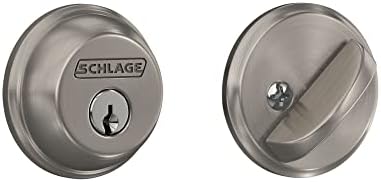
The Schlage B60 is the familiar mechanical ritual: align, screw, and seat the bolt. It’s a one‑time mechanical install that any competent DIYer can finish with a screwdriver in 15–30 minutes. No network steps, no accounts, no firmware.

Day‑to‑day: convenience vs. predictability
With August we appreciated remote lock/unlock, scheduled guest codes, and activity logs — features that remove friction for renters, dog walkers, and deliveries. Guest codes and keypad entry mean phone‑free access. But account setup, occasional app sync quirks, and Wi‑Fi outages add operational overhead.
With the Schlage we get tactile consistency: the key always works, the bolt throws with confident feedback, and there’s no software to patch. That predictability reduces anxiety for users who prefer “set it and forget it.”
Edge cases & maintenance
How this shapes confidence
We trust August when access flexibility matters (rentals, frequent guests). We prefer Schlage when long‑term, low‑maintenance reliability and minimal surface area for failure are the priority.
Ecosystem & Privacy: Integration, Updates, and Who You Trust
August’s cloud‑first tradeoffs
August’s Wi‑Fi model gives you remote access, activity logs, and easy guest codes without a separate bridge — features that matter. Those conveniences come with cloud dependencies: the August app talks to vendor servers to authenticate users, push events, and mediate voice‑assistant commands.

What the cloud typically sees
We like that these data flows enable useful features, but they also create attack surfaces: account compromise, supplier access to logs, or third‑party integrations inheriting privileges.
Schlage’s privacy simplicity
The Schlage B60 is purely mechanical. There’s no telemetry, no vendor account, and no remote telemetry to worry about. That absence of connectivity means no surprise data sharing — and no remote conveniences.
Updates, vendor track record, and vendor lock‑in
We value that August can push OTA fixes and add integrations (Alexa, Google, HomeKit, SmartThings). That agility matters when platforms change. But it also means you’re dependent on August’s business decisions and account security practices; migrating devices or retaining cloud features if a service shuts down can be painful.
Schlage’s pathway is steadier: no firmware support package. In an industry where platforms shift fast, choose August if remote control and logs are essential — choose Schlage if you prefer minimal trust, fewer attack vectors, and long‑term predictability.
Cost, Reliability, and Long‑Term Ownership
Upfront and ongoing costs
We compare the obvious numbers first. The August Wi‑Fi bundle runs around $200 and includes the smart keypad and built‑in Wi‑Fi (no bridge). The Schlage B60 is roughly $35. Beyond price:
Durability and failure modes
Mechanicals fail on worn tumblers or physical attack; electronics fail from firmware bugs, battery depletion, or Wi‑Fi outages. We prefer Schlage’s simplicity for long‑term uptime: a Grade‑1 bolt with hardened components has far fewer single points of failure. August adds convenience but brings software, app, and power dependencies — any one of those can interrupt access and usually requires vendor support or a full unit swap.
Warranties and repair ecosystem
Schlage offers a limited lifetime mechanical/finish warranty and widespread locksmith support — you can fix or rekey it almost anywhere. August’s one‑year manufacturer warranty and cloud‑centric support mean fixes often go through the vendor; out‑of‑warranty repairs usually mean replacing the module.
Resale, future compatibility, and buyer fit
Who gets the most value
Frequently asked questions
Which is better, Smart Lock or Traditional Lock?
There is no universal winner: Smart Lock fits some buyers and Traditional Lock fits others. We compare specs, daily use, and trade-offs in this guide so you can match the pick to your budget and workflow, not a single spec sheet.
What is the main difference between Smart Lock and Traditional Lock?
Smart Lock and Traditional Lock target overlapping but not identical use cases. The sections above break down design, performance, ecosystem, and value so you can see where each product pulls ahead and where it compromises.
Should I buy Smart Lock or Traditional Lock first?
Buy the product that removes your biggest daily friction first. If Smart Lock solves your primary pain point, start there; if Traditional Lock is the bottleneck in how you actually work or play, prioritize it. Many households add the other later.
Is Smart Lock worth it over Traditional Lock?
Smart Lock is worth the premium over Traditional Lock when you will use the features that justify the price—extra performance, build quality, or ecosystem lock-in. If those extras go unused, Traditional Lock usually delivers better value.
Can Smart Lock replace Traditional Lock?
For some users, yes; for others, no. Smart Lock can cover most tasks Traditional Lock handles, but gaps in compatibility, accessories, or specialized workflows may still matter. Use our comparison table and verdict to see which gaps apply to you.
Who should choose Smart Lock vs Traditional Lock?
Choose Smart Lock if its strengths match how you will use it every day; choose Traditional Lock if you need its specific advantages or a lower entry price. When in doubt, favor the option that fixes your most frequent frustration—not the highest spec on paper.
Final Verdict: Which Lock We Recommend
We name the Schlage B60 the winner for pure security: mechanical simplicity, proven ANSI ratings, and minimal upkeep.
Choose August Home when remote access, guest management, and smart integrations improve life; otherwise pair a trusted deadbolt with smart retrofit to balance convenience and security.

Princess Rioboca is the Lead Editorial Writer at Option Cutter, bringing over seven years of hands-on experience in consumer technology journalism. Specializing in home networking and smart home architecture, she transforms complex technical data into practical, real-world upgrades. Princess personally tests and audits every product she reviews—evaluating real-world Wi‑Fi throughput, cable management durability, and streaming ecosystem stability—to filter out spec-sheet noise. Her rigorous, field-tested insights are designed to give readers transparent, unbiased buying advice on what to purchase, what to skip, and exactly why.