

We weigh whether a go-anywhere rugged watch or an all-knowing smartwatch actually improves our day-to-day—because battery life, tactile controls, and app ecosystems now decide whether your next watch saves adventures or just notifies them.
We pit the Casio G‑Shock DW5600UE‑1V against a renewed Apple Watch Series 9 to settle one question: RUGGED simplicity or CONNECTED sophistication? We examine design, daily experience, durability, ecosystem fit, and real‑world value to help you choose the best fit.
Rugged Utility
We appreciate the DW5600UE as a purposeful, back-to-basics watch: it does almost nothing beyond timekeeping and timers, but it does those things with a level of durability and longevity few devices can match. In a market chasing sensors and touchscreens, this one reminds us why a simple, indestructible tool still matters—especially if you want something that survives real wear and tear without daily charging or software fuss.
Connected Companion
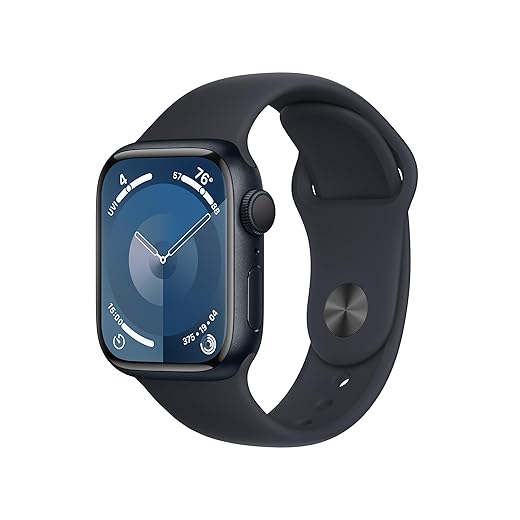
We see the Series 9 as a feature-rich daily companion that elevates health tracking and convenience through tight iPhone integration and a mature app ecosystem. For anyone embedded in Apple’s ecosystem who values real-time health feedback, notifications, and apps, the trade-offs in ruggedness and battery life are worth it; for those who need a no-fuss, ultrarugged timepiece, it’s overkill.
G-Shock DW5600
Apple Series9 41mm
G-Shock DW5600
Apple Series9 41mm
G-Shock DW5600
Apple Series9 41mm
Which Garmin Watch is Right for You: Find Your Perfect Fit
Design and Build: Rugged Simplicity vs. Sleek Sophistication
Casio G‑Shock DW5600UE‑1V — purposeful, utilitarian engineering
We see the DW5600UE‑1V as design stripped to function. Its black resin case and strap are lightweight, inexpensive to replace, and non‑glossy so scratches aren’t obvious. The classic rectangular chassis uses recessed pushers and crumple‑zone geometry to disperse impacts — the physical language is “survive a slapshot.” That simplicity also yields reliability: a quartz movement and simple LCD mean years of use without software updates or battery-draining features.
Apple Watch Series 9 41mm — thin, display‑first modernism
By contrast, the Series 9 is about polish and interaction. The aluminum case and glossy, high‑brightness OLED push a premium look that pairs with business‑casual and athleisure alike. The narrow bezel, curved glass, and interchangeable bands make it feel like jewelry as much as a tool. More important than appearances: the whole UI assumes you’ll tap, swipe, and read dense information on the screen — that display and sensor array shape daily behavior in a way the G‑Shock never could.

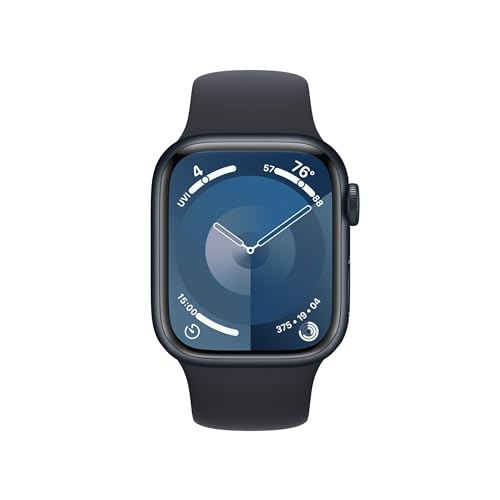
Why it matters: choose the G‑Shock if you want invisible, maintenance‑free durability that survives rough gear and uniforms. Choose the Series 9 if you want a thin, tactile device that prioritizes glanceable information and wardrobe versatility — at the cost of greater fragility and daily charging.
Core Features and Performance: Timekeeping, Sensors, and Everyday Use
Casio G‑Shock DW5600UE‑1V — simple, dependable timekeeping
We expect this G‑Shock to do a few things and do them without fuss. It nails basic timekeeping and layered mechanical redundancy: a quartz module with ±15 seconds/month accuracy, an auto calendar pre‑set through 2039, a multi‑function alarm, hourly chime, 1/100‑second stopwatch (useful for short events), and a 24‑hour countdown timer. The Afterglow backlight and recessed buttons mean the watch is usable in low light and under impact without accidental mode changes.
Apple Watch Series 9 41mm — sensors, context, and continuous feedback
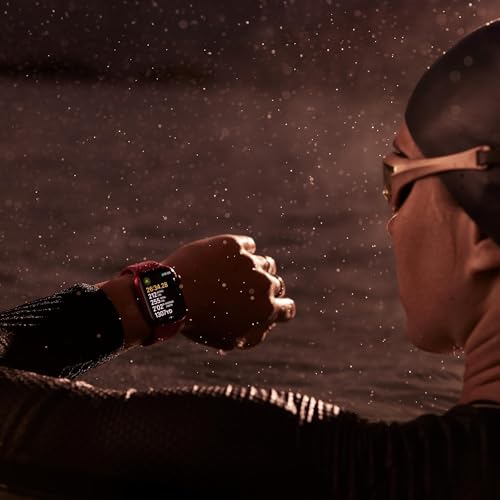
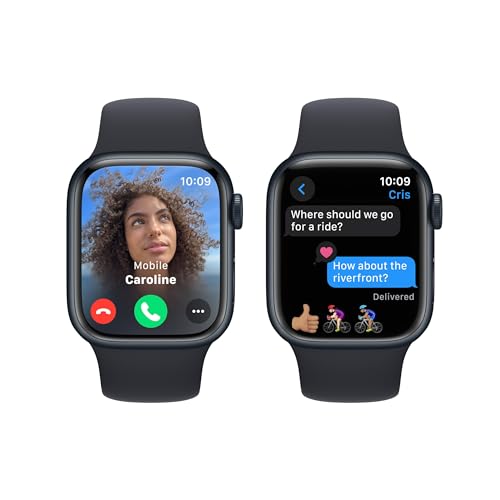
The Series 9 is a small computer on your wrist. It brings GPS for accurate, phone‑independent run tracking; optical and electrical heart sensors plus SpO2 for continuous health data; sleep staging and temperature sensing; ECG capability; and Crash/Fall Detection for emergencies. Haptics and notifications create a second screen for your phone, while on‑device Siri and touchless interactions (S9 chip) let us act quickly without digging out a phone.
How these differences affect workflows
Feature Comparison Chart

Battery Life, Durability, and Real-World Reliability
Battery life: set‑and‑forget vs. daily management
We find the G‑Shock wins outright for longevity. The DW5600UE uses a simple quartz module and a user‑replaceable battery that typically lasts around two years under normal use — no nightly charging, no software updates to worry about. The Series 9 is the reverse: Apple advertises up to ~36 hours in optimized scenarios, but in our experience daily charging is the norm for active users. watchOS power management and Low Power Mode stretch runtime, but that also disables or limits sensors and background updates.
Impact, scratch resistance, and materials
For blunt-force durability, the DW5600UE is purpose‑built: resin case, recessed buttons, and shock‑resistant internals mean it can take drops and hard knocks that would wreck most smartwatches. Its display is a mineral crystal — tough against impacts, but can still scratch. The Apple Watch Series 9 aluminum uses Ion‑X strengthened glass (aluminum models); it resists impacts poorly compared with purpose‑built field watches and is more prone to scratches than sapphire‑glass variants.
Water resistance and wet‑use expectations
G‑Shock: 200 m rating — safe for swimming, snorkeling, and recreational scuba. Series 9: 50 m water resistance — fine for showering and laps, not for deeper diving. Real‑world: G‑Shock tolerates repetitive submersion and pressure changes better.
Off‑grid reliability and renewed hardware caveats
Off‑grid, we trust the G‑Shock: it keeps time, the alarms work, and the battery doesn’t hinge on charging infrastructure. A renewed Series 9 can be an excellent value, but inspect seller notes: used Apple Watches may have reduced battery capacity or cosmetic wear, and many features depend on a charged device and (often) a paired iPhone. If you need absolute, maintenance‑free reliability in harsh environments, the G‑Shock is the safer bet.
Ecosystem, Connectivity, and Value: Which Fits Your Life?
What “ecosystem” actually means for you
We look beyond features and ask: will this watch become part of a platform you’ll rely on? The DW5600UE is a standalone instrument — time, stopwatch, timer, alarm — with no smartphone tether. That means no app lock‑in, virtually no ongoing costs, and predictable behavior for years. The Series 9 is an extension of the iPhone: it gains power from iOS, iCloud, watchOS apps, and Apple services — and loses a lot of usefulness if you leave the iPhone behind.
App availability and phone dependence
The difference is binary. The G‑Shock has no apps; what you see is what you get. The Series 9 gives you thousands of watchOS apps, advanced health metrics, notifications, and third‑party integrations — but requires an iPhone for setup and is far more useful when paired and online. Renewed hardware can be a bargain, but expect possible reduced battery capacity and check seller returns/warranty.
Long‑term cost of ownership
We quantify real value, not sticker price. The Casio (~$65) has minimal total cost: a two‑year battery swap you can do yourself and decades of serviceable use. The Series 9 (~$215 renewed) has higher upfront value and stronger resale, but ongoing costs: daily charging, eventual out‑of‑warranty battery replacements, and potential subscriptions (Apple Fitness+, premium health apps) that can add hundreds over years.
Who benefits most
Final Verdict: Pick Based on Priorities
We find a clear winner for mainstream buyers: the renewed Apple Watch Series 9. Its modern sensors, haptic notifications, deep iPhone integration, and ongoing software updates make it the best choice for health tracking, productivity, and a future-proofed wearable experience. In the current market where services and data matter more than raw toughness, Series 9 delivers the most value per dollar for everyday tech users.
Choose the Casio G-Shock DW5600UE-1V when durability, multi‑year battery life, and minimal upkeep trump sensors and apps. It’s the best low‑maintenance buy. Cost tips: opt for the renewed Series 9 to save on premium features, or buy the G‑Shock new for the longest, cheapest ownership. Ready to decide now?

Chris is the founder and lead editor of OptionCutter LLC, where he oversees in-depth buying guides, product reviews, and comparison content designed to help readers make informed purchasing decisions. His editorial approach centers on structured research, real-world use cases, performance benchmarks, and transparent evaluation criteria rather than surface-level summaries. Through OptionCutter’s blog content, he focuses on breaking down complex product categories into clear recommendations, practical advice, and decision frameworks that prioritize accuracy, usability, and long-term value for shoppers.