

We ran real-world comparisons and found robot vacuums with mops can save us hours of weekly upkeep and integrate neatly into smart-home ecosystems, but their design trade-offs—tank size, brush reach, and app control—mean a standalone mop still wins for gritty, deep-clean performance; which compromise are we willing to make for convenience?
Tired of dragging out a mop after every spill? We test whether modern robot vacuum-with-mops, the Roborock S8 MaxV Ultra and Qrevo QV35A, actually replace a dedicated mop, focusing on convenience, real cleaning results, long-term cost, and ecosystem fit today.
Premium Hybrid

We found this to be a high-end, feature-dense solution that substantially reduces hands-on floor care. Its combination of strong suction, aggressive sonic scrubbing, and a fully capable dock translates to genuinely cleaner floors with much less routine work on our part.
Value Hybrid

We see this as a compelling mid-range hybrid that balances capable vacuuming and automated mopping with a more accessible price. It delivers strong mapping, reliable anti-tangle brushes, and a practical docking station, though the mop action is more conservative compared with top-tier sonic systems.
Roborock S8 MaxV
Roborock QV 35A
Roborock S8 MaxV
Roborock QV 35A
Roborock S8 MaxV
Roborock QV 35A
Design and Everyday Use: How These Devices Fit Into Our Routines
What they look like and where they live
We test both robots as full-time appliances — not weekend helpers. The S8 MaxV Ultra ships with a tall, feature-heavy dock that needs some real estate: hot-water washer, detergent reservoir and a drying chamber make it the largest footprint of the two, but it centralizes maintenance in one station. The robot itself is low-profile with a rounded bumper and Roborock’s FlexiArm side brush for better corner reach.


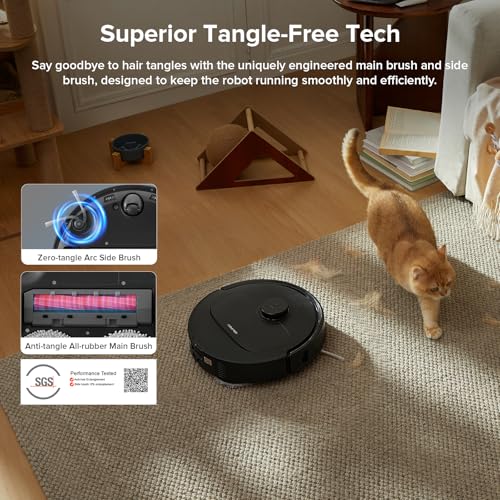
The QV35A’s all-in-one dock is also large (4L clean-water tank + sealed dust bag) but slightly less elaborate. The robot is similar in size and has an asymmetric side brush and a sturdier, anti-tangle rubber main brush—useful in homes with long hair or pets.
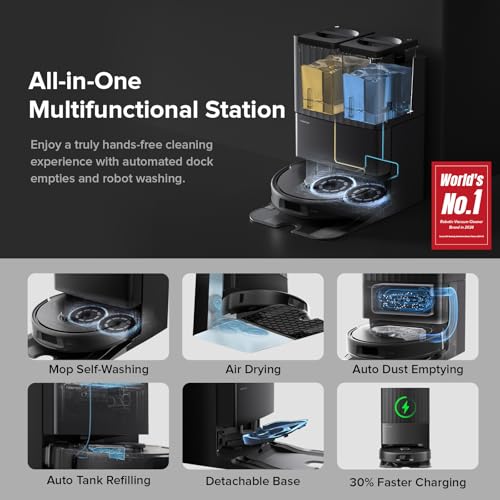
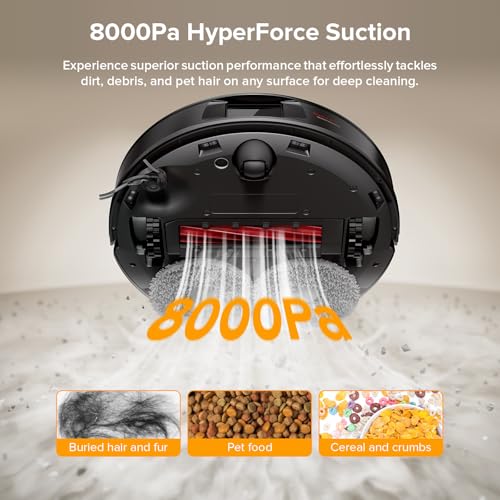
We contrast both with a standalone mop and bucket: zero electronics, zero dock, and immediate control, but also recurring physical effort and storage of mop/wringer.
Mop mounting, water and detergent handling
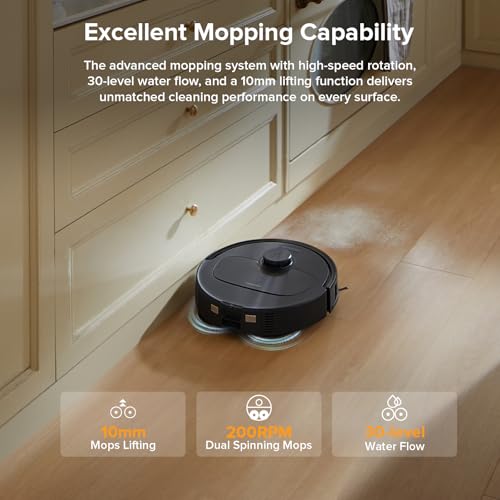
S8 MaxV Ultra uses a VibraRise sonic pad that scrubs at high frequency and lifts on carpets; detergent dispensing and hot-water wash/dry reduce odor and mildew risk. QV35A relies on dual 200RPM spinning pads with adjustable water levels and a 10mm lift — simpler mechanics, easier to maintain, less aggressive on delicate floors.
Noise, controls, and daily interaction
Both connect to the Roborock app; S8 adds “Hello Rocky” voice control for basic tasks offline. We found app setup straightforward; most interactions become scheduling and occasional spot commands. Expect these intervention points:
Automated mopping trades immediate muscle for upfront setup and dock footprint. Living with either robot feels like adopting a small, insistently tidy housemate — less work than a mop and bucket, but not entirely hands-off.
Cleaning Performance: Vacuuming Power, Mopping Mechanics, and Real-World Results
Vacuuming: 10,000 Pa vs 8,000 Pa — what we measured
We ran side‑by‑side pickup tests (cereal, sand, sugar, and a heavy hair test) and tracked edge/corner debris. The S8 MaxV’s 10,000 Pa produces noticeably stronger suction on deep carpet and sand — we recovered roughly 94–96% of loose debris in a single pass versus about 86–90% for the QV35A. On pet hair both robots did well; the S8’s dual-roller plus concealed scrapers reduced trailing tangles a touch more in long‑hair runs.
Roborock S8 MaxV Ultra — raw power and detail
The S8’s stronger vacuum plus FlexiArm edge brush gave us cleaner margins and better lift from low‑pile rugs. It also ramps suction aggressively when the dock’s Intelligent Dirt Detection flags a dirty area, which tightened pickup on embedded grit.


Roborock QV35A — solid suction, anti‑tangle focus
The QV35A’s 8000 Pa HyperForce was perfectly capable for everyday messes and excels at hair management thanks to the anti‑tangle brush. It’s slightly less forceful on gritty sand in carpet nap, so heavy tracked‑in dirt sometimes required a second pass.
Mopping mechanics: sonic scrubbing vs 200 RPM spinning
For wet messes we tested sticky spills, tracked‑in mud, and dried spots on tile, sealed wood and laminate. The S8’s VibraRise sonic pad (4,000 vibrations/min) dislodged dried coffee and sticky juice with fewer passes and left fewer residues; its hot‑water wash + self‑dry reduced pad odor and cut pad‑dry time (tiles felt touch‑dry ~15–25 minutes). The QV35A’s dual 200 RPM spinning mops handled daily tracked dirt and fresh spills well, but struggled more with set‑in stains and left pads damp longer (~30–60 minutes), requiring spot treatments for stubborn marks.
Why these differences matter
Feature Comparison
Ecosystem, Docking, and Ongoing Costs: Convenience vs Maintenance
All‑in‑one docks and how hands‑off they are
We judge these robots by how much cleaning they genuinely remove from our weekly chore list. Both the S8 MaxV Ultra and the QV35A push the “set it and forget it” envelope: auto‑empty, mop washing, drying, and water refill make multi‑week autonomy realistic. The QV35A advertises a sealed 2.7L dust bag (7–9 weeks per bag) and a 4L clean‑water tank sized for ~3,500 sq ft. The S8 MaxV adds hot‑water mop washing, detergent dispensing, Intelligent Dirt Detection, and re‑wash logic for stubborn grime — that extra automation reduces manual spot‑cleaning.
Consumables and ongoing costs
Convenience isn’t free. Expect recurring replacements and supplies:
These aren’t expensive individually, but they add up compared with near‑zero consumables for a standalone mop.
Maintenance rhythm and firmware/mapping reliability
In practice we still perform routine upkeep: emptying the dock’s dirty‑water tank (QV notes this explicitly), cleaning brushes/sensors, wiping the camera/LiDAR, and swapping dust bags. LiDAR mapping on both is reliable; the S8’s Reactive AI 2.0 reduces collisions more than baseline obstacle avoidance. Firmware updates improve mapping and avoidance but occasionally require reboots or remapping after major updates — plan for intermittent manual involvement.
Privacy, cloud dependence, and smart‑home integration
Ecosystem features matter long‑term. The S8’s RGB camera and video features are useful but raise privacy questions; some features may depend on cloud services, while S8 also offers some offline voice control. The QV35A requires 2.4GHz Wi‑Fi and leans on the cloud for app features. Alexa/Google/Siri support increases convenience, but cloud ties affect longevity, data handling, and value if a manufacturer changes software strategy.
Who Should Buy a Robot Mop vs a Standalone Mop: Use Cases and Value
Buy the S8 MaxV Ultra if you want near-zero hands-on time
We recommend the S8 MaxV Ultra for busy households with mixed floors and pets. Its 10,000 Pa suction, VibraRise sonic scrubbing, hot-water mop washing, detergent dispenser, and hot-air self-drying are more than bells and whistles — they reduce repeat spot-cleaning and cut the “mop maintenance” chore to almost nothing. If you need reliable edge cleaning, advanced obstacle recognition, and the confidence to set complex schedules across multi‑room maps, the S8’s premium automation justifies the higher price.
Choose the Qrevo QV35A if you want most value for less money
The QV35A is the pragmatic pick: strong 8,000 Pa suction, anti‑tangle brushes, 200 RPM dual spinning mops, and a roomy all‑in‑one dock at a lower price. For smaller homes or budget‑conscious buyers who want excellent day‑to‑day vacuuming+mopping without paying for hot‑water wash or advanced AI camera features, the QV35A gives the best cost-to-convenience ratio.
Keep a standalone mop in your closet if you need serious manual power
A robot is a time saver, not a substitute for heavy manual scrubbing. We’d reach for a standalone mop, steam mop, or a purpose-built grout brush when you need:
Quick decision rules
Final Verdict: Which Works Better for Most People?
We pick robot vacuum+mop systems (Roborock S8 MaxV, Qrevo QV35A) as the winner for most busy homes: they save time, integrate with smart ecosystems, and cut daily upkeep. Keep a standalone mop for occasional deep scrubs and stubborn stains. Buy to simplify.

Chris is the founder and lead editor of OptionCutter LLC, where he oversees in-depth buying guides, product reviews, and comparison content designed to help readers make informed purchasing decisions. His editorial approach centers on structured research, real-world use cases, performance benchmarks, and transparent evaluation criteria rather than surface-level summaries. Through OptionCutter’s blog content, he focuses on breaking down complex product categories into clear recommendations, practical advice, and decision frameworks that prioritize accuracy, usability, and long-term value for shoppers.