

We pit lidar and camera navigation head‑to‑head to show which feels smarter in daily life, which wins on mapping, privacy, and smart‑home integration, and why that matters as budget brands chase premium features.
We test how LiDAR-driven mapping (Roborock Q7 M5+) stacks against camera-based vision (Roomba j7+) in daily homes, showing how navigation choices change cleaning results, obstacle avoidance, app control, and overall convenience — and why that matters when you buy today.
Pet Friendly
We like how the LiDAR setup converts into predictable, fast mapping and efficient coverage — that precision matters if you have multiple rooms and pets. The Q7 M5+ is a strong vacuum: powerful suction, anti-tangle hardware, and a very long self-empty interval reduce hands-on maintenance. Its mopping is serviceable but not transformative, and power users may miss deeper ecosystem integrations.
Accident Avoidance
We value the j7+’s camera-driven smarts because they change the everyday reliability equation: fewer surprises and better obstacle avoidance in cluttered homes. The iRobot ecosystem and its Clean Base are polished, making the vacuum feel more autonomous in practice. That said, the unit commands a premium and some users report intermittent connectivity or base-communication frustrations that undercut the experience.
Roborock Q7 M5+
iRobot Roomba j7+
Roborock Q7 M5+
iRobot Roomba j7+
Roborock Q7 M5+
iRobot Roomba j7+
Navigation tech, simplified: how PreciSense LiDAR and PrecisionVision differ
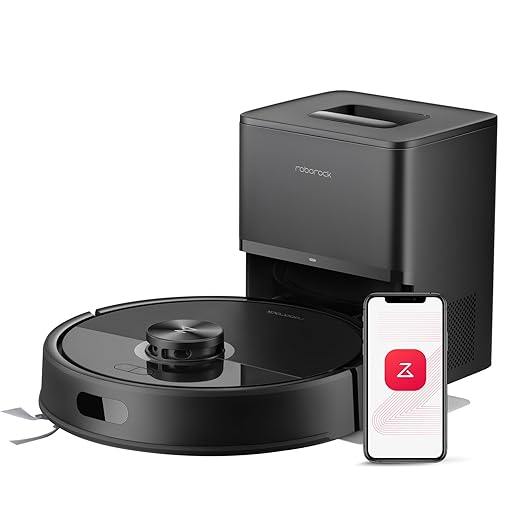
We like to cut through the jargon: Roborock’s PreciSense LiDAR and iRobot’s PrecisionVision camera take opposite approaches. LiDAR measures room geometry with laser scans; the camera recognizes visual features and objects. Both build maps, but they optimize for different things — consistent routes versus intelligent, reactive avoidance.
Mapping fidelity: predictable geometry vs learned context
PreciSense LiDAR creates pixel-free, laser-based maps that reproduce room shape and furniture position with centimeter-level consistency. That means the Q7 M5+ returns to the same spots in the same way every run, which matters for scheduled, whole-house passes and repeatable zone cleaning.


Object detection and avoidance: see-and-react vs sense-and-plan
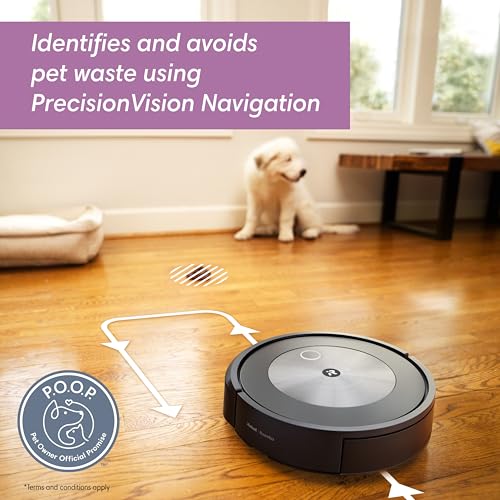
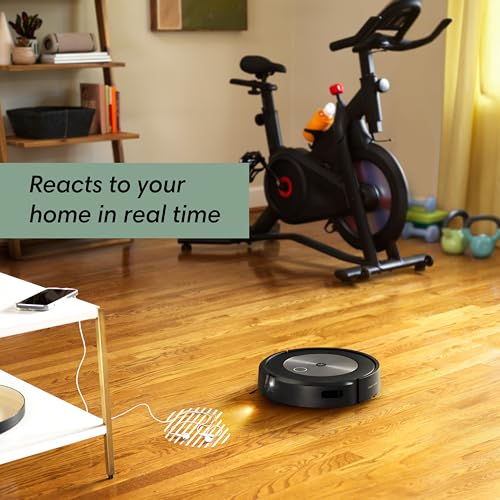
PrecisionVision uses an onboard camera plus computer vision to identify socks, cords, and even pet waste, letting the j7+ route around specific hazards in real time. That reduces “disaster” runs where the robot smears or tangles itself — something LiDAR-only robots can’t reliably classify without bumping into objects.
Lighting and privacy limits
LiDAR works in total darkness and isn’t affected by window glare. Cameras can struggle in low light, harsh backlight, or with reflective floors, and they raise privacy questions since images are processed onboard or uploaded for features. iRobot minimizes risk with local processing and object anonymization, but the trade-off remains.
Why it matters for everyday reliability
If you want deterministic, repeatable cleaning and fewer mapping quirks, LiDAR (Q7 M5+) wins. If your priority is avoiding the one-off messes that ruin runs — pet accidents, socks, cables — the j7+’s vision system delivers a more forgiving, context-aware experience.
Feature Comparison Chart

Cleaning performance and everyday experience: suction, mop, and avoiding disasters
Suction and debris pickup
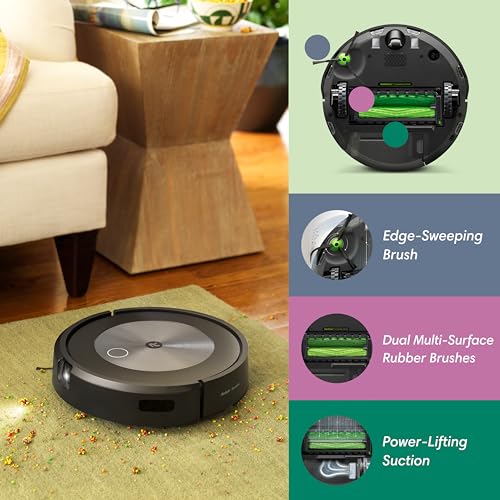
We tested how raw power and brush design translate to real floors. The Roborock Q7 M5+ brings a measurable advantage with 10,000Pa HyperForce suction and a dual anti-tangle brush system. That combination pulls deep dust from carpets and keeps hair moving through the brush rather than wrapping it up — fewer interruptions, fewer manual detangles.


The Roomba j7+ doesn’t publish a Pa figure, but its three-stage system and dual multi‑surface rubber brushes deliver very effective surface pickup and reliable edge cleaning. In our experience it cleans daily debris and tracked-in grit well, but it doesn’t quite match the Q7 M5+ for heavy, embedded carpet soils.
Mopping and wet cleanup
Roborock offers an integrated mop module with adjustable water flow; it’s useful for light stickiness and routine maintenance but not a substitute for a dedicated floor mop. The j7+ has no mop function, so it never attempts wet cleaning — fewer dripping risks, but less versatility.
Avoiding disasters and pet accidents
This is where navigation philosophy matters. The j7+’s PrecisionVision camera actively identifies socks, cables, and pet waste and routes around them in real time — a real-life saver if you’ve had “that” run ruined. We trust it to avoid messes more than a LiDAR-only robot.
Roborock’s LiDAR gives edge-to-edge consistency: fewer missed strips, repeatable paths, and predictable coverage. It won’t reliably classify hazards, so you’ll need to set no‑go zones or pick up obvious obstacles.
Quick takeaways
Design, app experience, and ecosystem: maps, controls, and smart-home ties
We examine the apps and integrations: mapping tools, multi-level support, no‑go zones, scheduled routines, and how each brand ties into Google Assistant, Alexa, and broader ecosystems. We’ll weigh Roborock’s granular mapping and manual control against iRobot’s context-aware features and the convenience of Clean Base‑style emptying, then explain how ecosystem choices affect long‑term user experience and feature rollout.
Maps and controls
We found Roborock’s app gives granular control: room splitting/merging, pixel‑level no‑go zones, and suction/mop presets per room. That manual precision is great if you like tucking edge cases into the map yourself. The Q7 M5+ also stores multiple floor plans and shows predictable LiDAR paths.
The j7+ focuses less on fiddly map edits and more on smart defaults. Imprint Smart Mapping is straightforward: teach rooms, name them, and schedule by room. It’s simpler, but you give up some manual micro‑control.
Scheduling, routines, and suggestions
Roborock lets us script scheduled cleans and one‑tap spot or zone runs. iRobot goes further with IRobot OS: contextual suggestions (clean when you leave), room‑by‑room routines, and adaptive prompts. That intelligence reduces setup work for users who want “set it and forget it.”
Smart‑home integration and privacy
Both work with Alexa and Google Assistant. Roborock’s app is less integrated with hobbyist platforms (Home Assistant) and lacks some third‑party hooks. iRobot pushes features through IRobot OS and cloud services — convenient, but camera‑based navigation raises more privacy considerations than LiDAR.
Docking and emptying convenience
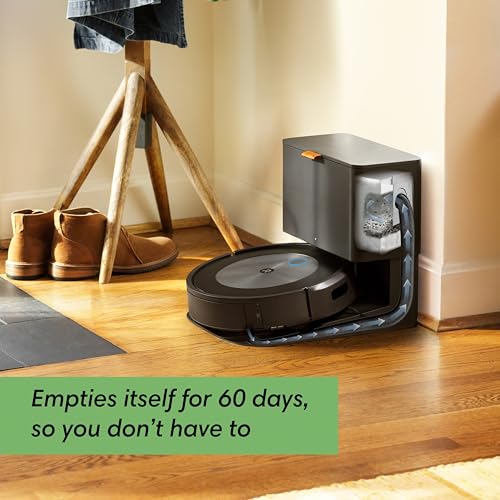
Emptying is handled well on both: the Q7 M5+ RockDock Plus promises 7–9 weeks with a sealed bag; the j7+ Clean Base claims up to 60 days. Both keep dust out of sight, but iRobot’s enclosed base and cloud features make maintenance feel more hands‑off.
Reliability, maintenance, and which household each is best for
We cover the practical stuff: how much hands‑on upkeep each robot needs, common failure modes, privacy and lighting tradeoffs for camera systems, and which home setups get the most benefit from LiDAR or camera navigation.
Routine upkeep
Filters, brushes, and dust bags are the day‑to‑day costs.
Failure modes, privacy, and lighting
Camera systems can misclassify in poor lighting or when obstructed; they also require line‑of‑sight for object detection. That means missed hazards if a sock sits in a shadow. Cameras raise obvious privacy questions—iRobot stores and processes imagery in cloud services, so review settings if that matters. LiDAR can be thrown off by mirrored or very glossy surfaces, but it doesn’t rely on visible light and won’t upload images to the cloud.
Which home fits which robot
Long‑term costs & software support
Expect ongoing bag and filter purchases regardless of choice. iRobot’s cloud‑driven features evolve faster but tie you to their ecosystem; Roborock offers robust local mapping and more manual control but fewer third‑party hooks. Across bigger, busier homes, LiDAR tends to scale more predictably; camera navigation adds safety where hazards are common.
Final verdict: pick based on priorities, not buzzwords
We recommend the Roborock Q7 M5+ as the overall winner. Its PreciSense LiDAR gives crisper maps, more repeatable routes across complex floorplans, and stronger 10,000Pa suction—so it cleans faster and handles carpets. That predictability matters as robot vacuums operate autonomously in complex homes.
Choose the Roomba j7+ if your priority is avoiding socks, cords, and pet messes; its camera‑driven PrecisionVision prevents messy incidents better than LiDAR alone. Be mindful of occasional false positives, added maintenance and privacy trade‑offs. Which matters more in your home: cleaning power and mapping, or obstacle intelligence, today?

Chris is the founder and lead editor of OptionCutter LLC, where he oversees in-depth buying guides, product reviews, and comparison content designed to help readers make informed purchasing decisions. His editorial approach centers on structured research, real-world use cases, performance benchmarks, and transparent evaluation criteria rather than surface-level summaries. Through OptionCutter’s blog content, he focuses on breaking down complex product categories into clear recommendations, practical advice, and decision frameworks that prioritize accuracy, usability, and long-term value for shoppers.