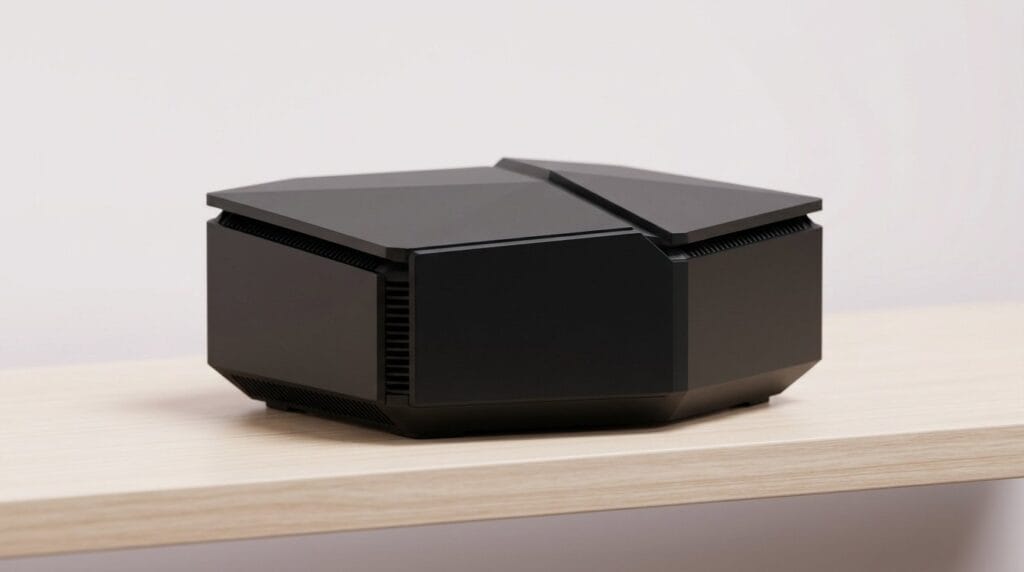
We break down whether a pocket‑sized powerhouse or a full‑size desktop actually improves our daily lives — from desk footprint, thermals, and upgrade paths to gaming chops and ecosystem integration — so you can pick the machine that makes the most sense in today’s space‑conscious, hybrid workflow market.
Tiny powerhouse or tower of dreams? We compare the Intel NUC 13 Pro mini PC and the Dell Ect1250 tower, weighing compact convenience against full-size expandability, focusing on design, real-world performance, connectivity, and value so you can pick confidently today.
Compact Power

Office Workhorse

Intel NUC Pro
- Outstanding CPU performance for a 4×4 mini form factor
- Modern I/O: Thunderbolt 4, HDMI 2.1, Wi‑Fi 6E and 2.5GbE
- Compact footprint and robust Windows 11 Pro business feature set
- Serviceable and repairable components (RAM/SSD) with a 3‑year warranty
- Higher price compared with entry-level towers for comparable storage/RAM
- Limited internal expansion (small chassis limits additional drives/cards)
Dell ECT1250 i3
- Good value for a tower with DDR5 memory and full‑size expandability
- Plenty of internal space and ports for future upgrades and add‑in cards
- Quieter sustained thermals and an internal 180W PSU suitable for upgrades
- 14th‑Gen Core i3 is competent for everyday tasks but lags behind higher‑end chips for heavy multitasking
- Lacks high‑end I/O like Thunderbolt and higher‑speed Ethernet by default
Feature Comparison
| Compact Power Intel NUC Pro | VS | Office Workhorse Dell ECT1250 i3 |
|---|---|---|
9 / 10 | Performance |
7 / 10 |
9.5 / 10 | Connectivity & I/O |
7.5 / 10 |
7 / 10 | Upgradability & Storage |
9 / 10 |
7 / 10 | Thermals & Noise |
8.5 / 10 |
$769.00 | Current price |
$699.98 |
| Buy for $769.00 | Buy for $699.98 |
Design & Footprint: How size shapes the experience
What the NUC’s small form factor actually gets you
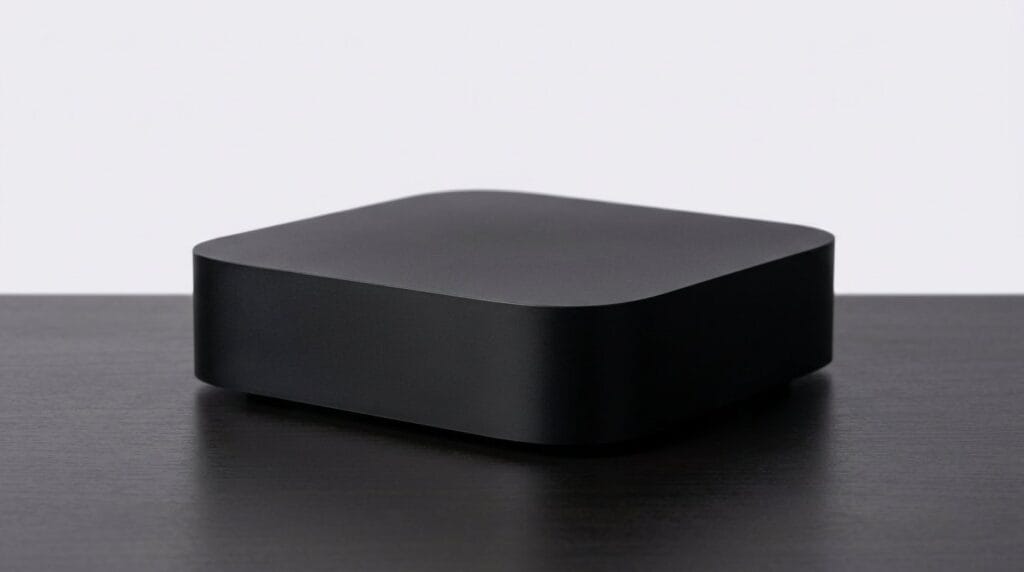
We start with the Intel NUC 13 Pro because its mini PC chassis defines where it can live. At roughly 4.6 × 4.4 × 2.1 inches and about 1.4 lb, this is a true 4×4 mini PC built to disappear behind a monitor or sit on a crowded desk. The NUC trades internal volume for polished finishes, VESA-mount compatibility, and a low visual footprint — great for hot‑desks, digital signage, and living‑room media boxes where space and tidy cabling matter. Its 13th‑Gen i5 bursts hard for short periods, but those bursts happen inside a confined thermal envelope.


Why the Dell tower looks the way it does
The Dell ECT1250 is a conventional tower: roughly 12.8 × 6.1 × 11.5 inches and noticeably heavier. That extra size buys usable internal room — drive bays, an internal 180W PSU, and easier access for upgrades or add‑in cards. The outward design is desktop‑first rather than subtle: it’s meant to sit on the floor or under a desk, not behind a monitor. For workplaces that prioritize serviceability and predictable thermals, the tower is the pragmatic choice.


Noise, thermals, and where you’ll put it
Small mini PCs run warmer under sustained load because there’s less air and smaller fans; the NUC’s cooling does well for office workflows and media playback but will climb in fan noise during extended video rendering or heavy simulation. The Dell’s larger fans and chassis keep temperatures and noise lower over long sessions, and its 180W PSU gives headroom for modest upgrades. Placement rules of thumb:
Performance & Upgradability: Real-world speeds and future-proofing
CPU behavior: bursts vs. sustained loads
We care about how CPUs feel day to day. The NUC 13 Pro’s Core i5‑1340P is a P‑series mobile chip with 4P+8E cores and aggressive turbo up to 4.6 GHz. That design gives strong single‑thread snappiness and very good bursty multi‑tasking — web, office suites, and short video exports all feel quick. The Dell’s 14th‑Gen i3‑14100 is a desktop‑class 4‑core (P‑cores only) chip that can hit similar single‑thread speeds and sustain load longer thanks to higher thermal headroom in a tower.
Thermals, throttling risk, and sustained workloads
In practice, the NUC will match or beat the Dell on quick tasks and mixed loads because of modern efficiency cores. But when you run prolonged multi‑core jobs — long video encodes, batch photo exports, or large VM workloads — the NUC’s small chassis raises chip temperatures and fan noise, increasing the chance of thermal throttling. The Dell’s bigger fans, airflow, and 180W PSU keep clocks higher for longer.
Upgrade paths: what we can actually change
NUC 13 Pro — compact but serviceable: the NUC exposes two SO-DIMM slots (up to 64GB DDR4‑3200) and an M.2 NVMe slot NVMe slot plus an M.2 2242 B‑key for SATA/PCIe1 — so RAM and SSD upgrades are straightforward, but there’s no room for full‑size GPUs or multiple 3.5″ drives.


Dell ECT1250 — full‑size desktop expandability: the tower uses DDR5, multiple drive bays, a full‑length PCIe x16 slot for a discrete GPU, and an internal 180W PSU that gives real headroom for modest upgrades. That makes the Dell a better platform if you plan to keep and evolve hardware over several years.


Comparison Chart
Ports, Displays & Connectivity: Docking, monitors, and networks
Connectivity and docking stations shape daily convenience. The NUC 13 Pro advertises support for 8K/4K quad displays along with Wi‑Fi 6E and Bluetooth 5.3, making it a strong pick for multi‑monitor productivity and modern wireless ecosystems. The Dell tower offers a mix of DisplayPort, HDMI, and Type‑C plus Wi‑Fi 6 and Bluetooth—more traditional I/O with easier access to extra USB ports and legacy displays. We’ll assess how each unit handles multi‑monitor workflows, external docks, wired networking, and peripherals, and why differences in port layout and wireless features matter for hybrid workers, conference‑room deployments, and people who rely on single‑cable docking.
Multi‑monitor support
The NUC’s Thunderbolt 4 / USB4 ports (with DisplayPort 2.1 support) plus dual HDMI 2.1 make true multi‑monitor setups practical—up to four high‑res displays or one 8K panel in the right config. That’s a big deal for content creators or traders who need more screen real‑estate from a tiny box.
The Dell exposes DisplayPort 1.4 and HDMI 2.1 from its iGPU and typically drives two monitors out of the box. That’s enough for most office multitasking, but it isn’t as flexible for 4‑display hi‑DPI rigs without adding a GPU or docking station.
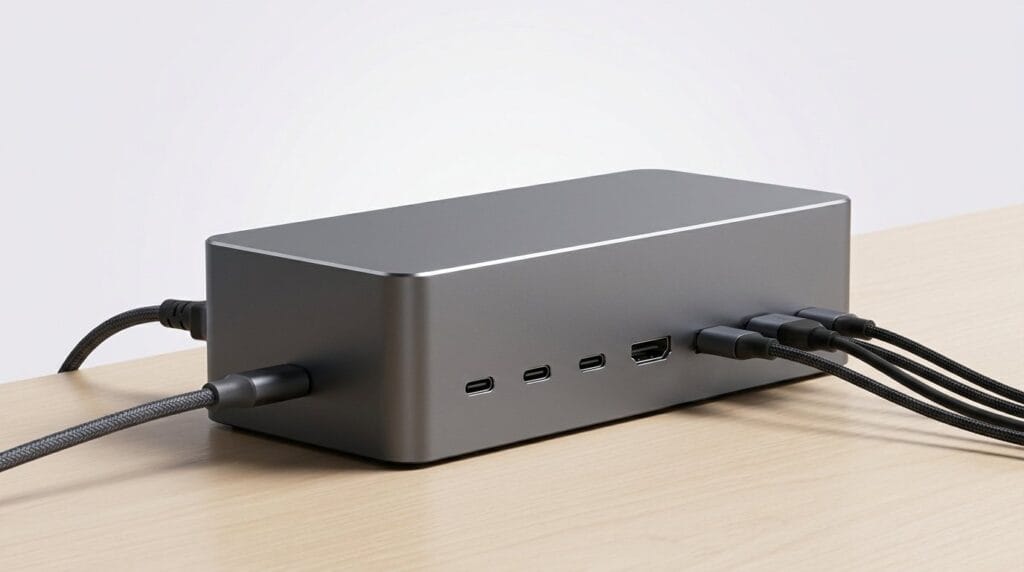
Docks, single‑cable workflows, and peripherals
We prefer Thunderbolt when we want a single‑cable dock to carry power, multiple displays, and high‑speed storage. The NUC is built for those modern docks. The Dell’s front Type‑C (USB 3.2 Gen1) is convenient for phones and peripherals, but it won’t replace a Thunderbolt dock.
Wired networking and wireless ecosystems
NUC: 2.5GbE + Wi‑Fi 6E + Bluetooth 5.3 — faster LAN and less crowded 6GHz Wi‑Fi for crowded offices.
Dell: 1GbE + Wi‑Fi 6 — reliable and widely compatible, but not as future‑proof for high‑bandwidth local networks.


Value, Use Cases & Recommendation: Which one fits your needs
We translate specs into buying advice: the NUC is compelling if you prioritize a tiny footprint, quiet operation, modern wireless and multi‑display support, and portability between locations — browse our product reviews before you commit. The Dell tower is the better long‑term value for sustained heavy workloads, easy upgrades (more RAM, storage, and discrete GPUs), and straightforward serviceability for small businesses. Below we map each to common personas and weigh cost, OS support, warranties, and expected lifespan.
Pick the NUC if you’re a…
Pick the Dell tower if you’re a…
Total cost of ownership, OS & lifespan
Choose the NUC mini PC for mobility and modern connectivity; choose the Dell tower if you expect to scale performance or service the machine in‑house.
Frequently asked questions
Which is better, Mini PC or Desktop PC?
There is no universal winner: Mini PC fits some buyers and Desktop PC fits others. We compare specs, daily use, and trade-offs in this guide so you can match the pick to your budget and workflow, not a single spec sheet.
What is the main difference between Mini PC and Desktop PC?
Mini PC and Desktop PC target overlapping but not identical use cases. The sections above break down design, performance, ecosystem, and value so you can see where each product pulls ahead and where it compromises.
Should I buy Mini PC or Desktop PC first?
Buy the product that removes your biggest daily friction first. If Mini PC solves your primary pain point, start there; if Desktop PC is the bottleneck in how you actually work or play, prioritize it. Many households add the other later.
Is Mini PC worth it over Desktop PC?
Mini PC is worth the premium over Desktop PC when you will use the features that justify the price—extra performance, build quality, or ecosystem lock-in. If those extras go unused, Desktop PC usually delivers better value.
Can Mini PC replace Desktop PC?
For some users, yes; for others, no. Mini PC can cover most tasks Desktop PC handles, but gaps in compatibility, accessories, or specialized workflows may still matter. Use our comparison table and verdict to see which gaps apply to you.
Who should choose Mini PC vs Desktop PC?
Choose Mini PC if its strengths match how you will use it every day; choose Desktop PC if you need its specific advantages or a lower entry price. When in doubt, favor the option that fixes your most frequent frustration—not the highest spec on paper.
Final Verdict
We lean toward the Intel NUC 13 Pro as our pick for most buyers. Its compact design, whisper-quiet operation, and modern connectivity (Wi‑Fi 6E, BT 5.3, 8K/4K quad‑display) fit tidy desks, living rooms, and hybrid work setups while delivering desktop-grade responsiveness. The NUC’s ecosystem advantages—small form-factor accessories, VESA mounting, and efficient cooling—matter now as people prioritize minimalist, multi-display workflows.
That said, the Dell Ect1250 tower wins for sustained heavy workloads and future-proofing: DDR5 memory, easier drive and GPU upgrades, and superior thermal headroom. If you plan to upgrade or push long render or compute jobs, choose the Dell. Otherwise, buy the NUC for space and convenience—ready to ship to a neat, modern desk. Decide: NUC or Dell?

Princess Rioboca is the Lead Editorial Writer at Option Cutter, bringing over seven years of hands-on experience in consumer technology journalism. Specializing in home networking and smart home architecture, she transforms complex technical data into practical, real-world upgrades. Princess personally tests and audits every product she reviews—evaluating real-world Wi‑Fi throughput, cable management durability, and streaming ecosystem stability—to filter out spec-sheet noise. Her rigorous, field-tested insights are designed to give readers transparent, unbiased buying advice on what to purchase, what to skip, and exactly why.