
Why ergonomics still matters (even when it feels expensive)
We start with a blunt fact: workplace-related musculoskeletal disorders cost U.S. businesses more than $20 billion a year. That’s not a line item you fix with foam cushions alone.
We frame ergonomics as a design and systems problem, not a perk. When we ignore how people interact with tools, furniture, and workflows, small frictions compound into medical claims, lost output, and weaker products.
Our lens is UX and ecosystem integration. Design choices ripple through procurement, brand perception, and competitive positioning. Investing in ergonomics is an investment in predictable performance and long-term savings — and today’s market rewards teams that see it that way.
We’ll show how small design shifts—better workflows, integrated hardware, clearer procurement criteria—reduce claims, boost retention, accelerate product cycles, and protect brand value over years across teams and locations globally.

The Hidden Cost of Ignoring Ergonomics
What ergonomics actually encompasses: more than chairs and keyboards
We start by widening the frame: ergonomics isn’t a catalog of comfortable chairs and flashy peripherals. It’s an experience stack — layers that combine to make work feel effortless or make it grind to a halt. Treating ergonomics as an isolated purchase misses where most value (and most waste) hides.
Physical hardware: the obvious layer
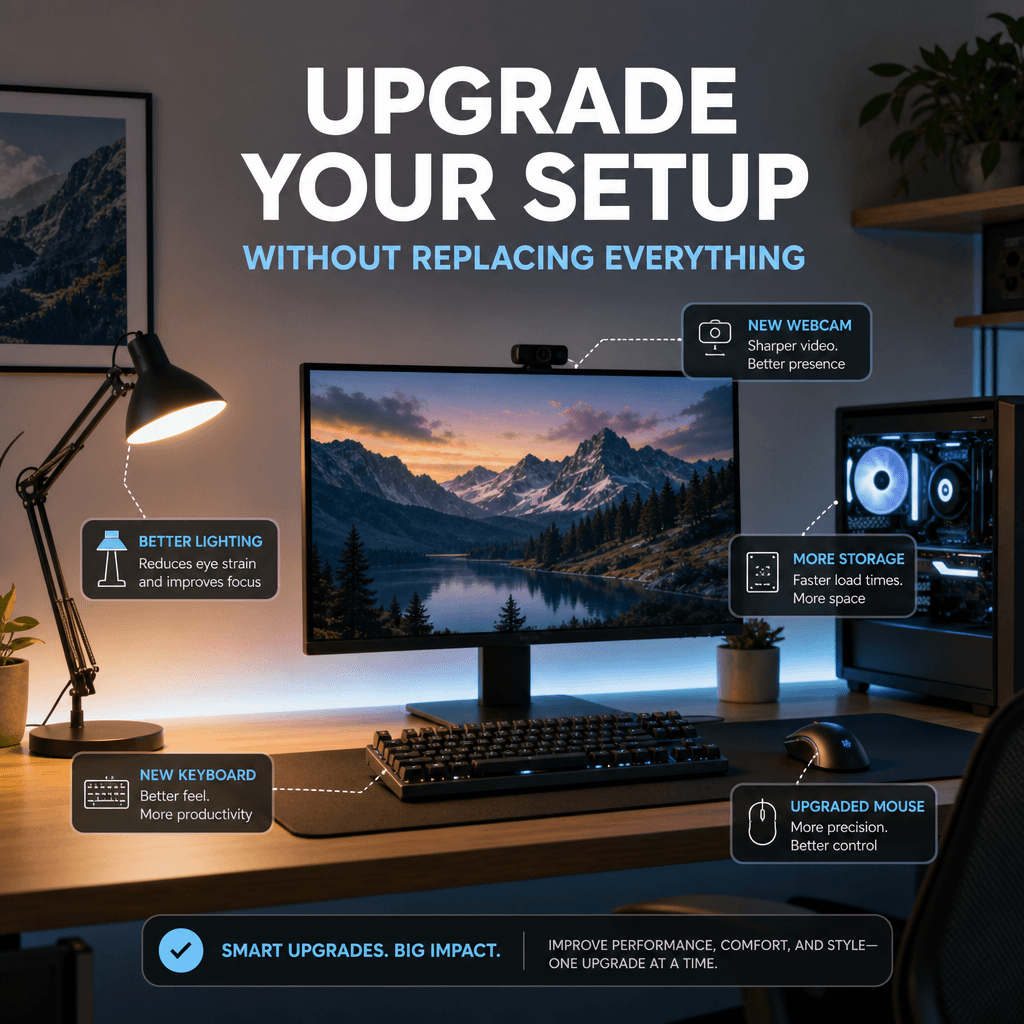
This is chairs, desks, monitors, keyboards, mice, headsets, and cable management. Choice matters — a Herman Miller Aeron or Steelcase Gesture handles dynamic posture far better than a bargain task chair — but even the best chair can’t fix a bad monitor height or a cramped keyboard tray.

Practical tip: match device choices to job tasks. Designers need color-accurate monitors (Dell UltraSharp U2720Q), developers benefit from mechanical tenkeyless boards (Keychron K8) and ergonomic mice (Logitech MX Master 3). Standardize a small set of vetted models to reduce support overhead.
Software and settings: the invisible layer
Display scaling, font sizes, input remapping (Karabiner, AutoHotkey), color temperature (f.lux, Night Shift), and notification rules are ergonomics. A high-res monitor set to 100% scaling creates squinting and lean-in posture; a mismatched DPI between laptop and external mouse creates micro-friction that accumulates.
Workspace layout: flow over furniture
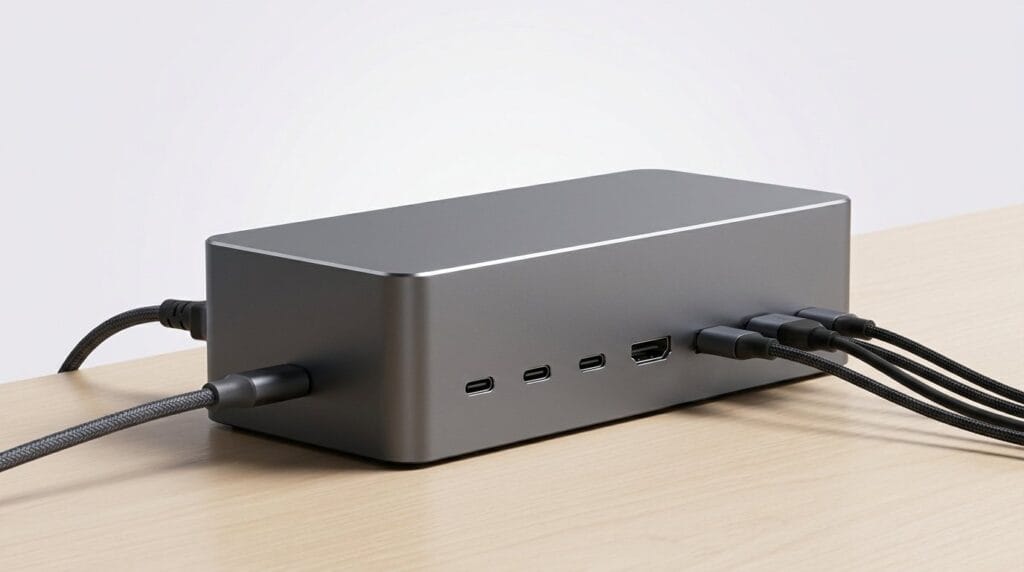
Desk orientation, sightlines, lighting, and acoustic zones shape how people move and focus. Two engineers in open benches with identical chairs had wildly different complaints because one’s routing forced constant cable swaps; the other had a single USB-C dock and never touched the laptop.
Organizational practices: policies that shape behavior
Break cadence, onboarding checklists, provisioning policies, and device life-cycle rules decide whether ergonomic hardware actually reaches users. A generous budget that sits unused in procurement is worthless; a simple “dock-first” policy can eliminate daily device swaps.
How we measure the experience
We use pragmatic UX metrics, not only ergonomic buzzwords
Quick action: run a 1-week micro-audit — time a new-hire setup, survey comfort, and note the top three device failures. Small data like this reveals big leaks where a single incompatible peripheral or a poorly designed workflow erodes value from an expensive chair.
Next, we’ll map those short-term pockets of savings against the long-term costs they hide, and show where money actually leaves the organization.
Short-term savings versus long-term costs: where money actually goes
We’ve all seen the playbook: buy the cheap chair, skimp on docks, standardize on low-cost peripherals to hit the quarter’s numbers. The line-item looks clean. The ledger rarely shows what happens on day 90 when people are calling IT, swapping devices, or leaving. Here’s how that math unravels in practice.
Immediate line-item wins — and their hidden tails
Buying a $120 task chair or a $30 keyboard saves procurement money up front, but it creates recurring costs that are easy to miss:
In one audit we ran, a mid-size team’s “savings” on subpar docking stations translated into dozens of daily minutes lost per person and a steady trickle of replacement purchases within a year.
Where procurement teams misprice products
Procurement decisions often treat hardware like consumables rather than systems. Common mistakes
A $60 USB hub might seem wise until incompatibility forces IT to buy a CalDigit TS3+ or replace peripherals across 100 desks.
Maintenance, replacement cycles, and user friction
Cheap, one-off purchases tend to fail faster or behave inconsistently across users. That creates recurring spend: warranty claims, expedited replacements, mismatched drivers, and training time. Friction also shows up externally — customer-facing staff struggling with headsets or POS devices produce slower service and worse experiences.
Practical buyer steps
Next, we’ll look at the health and productivity metrics that actually move the needle — the numbers that let us hold vendors and ourselves accountable.
Health outcomes and productivity: the metrics we should actually track
We’ve argued that counting only upfront spend hides the real cost of bad ergonomics. If we want different decisions, we have to measure different things. Below are the compact, actionable indicators we use to tie ergonomic investments to business outcomes — and how to instrument them without becoming Big Brother.
Leading and lagging indicators to prioritize
Turning ergonomics into dollars (a quick example)
Small changes add up. If a $60 headset replacement extends deep-work by 30 minutes per day for a 50-person engineering team, that’s 0.5 hours × 250 workdays × 50 people = 6,250 hours. At a $60/hour fully loaded cost, that’s $375k annually. The math makes ergonomic choices testable, not anecdotal.
Instrumentation points (practical, privacy-first)
Privacy guardrails: make feedback opt-in, aggregate results, avoid linking workplace sensor data to identifiable individuals, and publish what you collect and why. Transparency is a design requirement.
Combining signals to build a business case
Triangulate. Use leading indicators to catch issues early (rising complaint rates, shrinking deep-work windows) and lagging metrics to prove ROI (fewer sick days, lower turnover, reduced bug rates). Pair dashboards with qualitative stories — a developer describing a week free of neck pain is as persuasive as a chart — and create before/after snapshots for pilots.
We’ll use these measurement principles to show how design and ecosystem choices — the next layer — actually amplify or negate ergonomic gains.
Design and ecosystem integration: making products and spaces work together
We’ve talked about metrics and outcomes — now we look at the plumbing. Good ergonomics isn’t an island: it’s a network of furniture, peripherals, cables, software, and the rituals people follow every day. When those pieces behave like a single product, ergonomic gains multiply. When they don’t, small frictions become recurring costs.
What true integration looks like
We want adjustable desks (Fully Jarvis, Uplift V2) that accept standard VESA monitor arms (Ergotron LX), docks that hand off power and peripherals with one cable (CalDigit TS3 Plus, Anker Thunderbolt 4), and input devices (Logitech MX Keys + MX Master 3) that jump seamlessly between laptop and tablet via Bluetooth multipoint or Flow. On the software side, window managers (FancyZones, Magnet) and profile-sync features (Apple Handoff/universal control, Microsoft’s Flow equivalents) reduce cognitive overhead. In practice this means a hybrid worker can walk in, plug one cable, and be at a consistent desk height, monitor arrangement, and app layout within minutes.
Common failures we see
These failures cost time, patience, and ultimately productivity — not just money.
Practical checklist for teams choosing vendors
When ergonomics is treated as an ecosystem problem — not a line-item purchase — small decisions (a dock, a mount, a pairing protocol) stop becoming recurring obstacles and start compounding into real, measurable benefits.
Competitive impact and decision-making: why investing in ergonomics pays off
We’ve argued ergonomics is an ecosystem problem; here we tie that thinking to competitive positioning. In tight talent markets and distributed work models, ergonomics isn’t fluff — it’s a lever that affects recruitment, retention, brand perception, and how fast we ship.
Ergonomics as a talent and brand advantage
When we bundle a sensible kit into offers — a standard desk, reliable dock, and a comfortable chair (Herman Miller/Steelcase or a proven alternative) — candidates notice. A clear, repeatable home-office setup reduces first‑day anxiety and cuts time to productive work. Anecdotally, teams we’ve seen move from a $500 stipend model to a curated kit reduced onboarding tickets by 40% and cut average time‑to‑first-commit by nearly a week. That’s directly competitive: faster ramp = faster feature delivery.
Small experiments and cross-functional pilots
Start small, measure fast. Run short pilots that mirror real workflows and include HR, IT, design, and an actual engineer or PM.
These experiments give hard answers quickly and limit sunk-cost risk.
Procurement that rewards total-cost thinking
Shift procurement KPIs from unit price to total cost of ownership: onboarding time, ticket volume, warranty/replace rate, and swap logistics.
This favors interoperable, durable solutions (VESA-friendly arms, single‑cable docks, reliable wireless input devices), which lower downstream costs.
A simple playbook to scale what works
If we treat ergonomics as strategic infrastructure, it stops being a line-item expense and becomes a measurable competitive asset — which is exactly what we need in a faster, distributed market. With that roadmap in hand, we’ll wrap up with how to make ergonomics work for us in practice.
Making ergonomics work for us
We should stop treating ergonomics as peripheral and instead fund it as a design and ecosystem investment: choose solutions that interoperate, optimize user experience, and let metrics drive procurement. In today’s fast, competitive market ergonomic choices change buyer perception and reduce hidden costs by lowering friction and support load. We’ve seen short pilots reveal measurable gains in task speed, fewer injuries, and improved retention — outcomes that matter to product velocity and employer brand.
Checklist: run a small pilot, instrument outcomes (productivity, health, support costs), and bake ergonomic criteria into procurement and design reviews. Start small, measure what matters, and scale what works. The payoff is practical — less friction for users, better retention, and a stronger product organization. We should make these decisions intentionally now to stay competitive and humane in our workplaces everywhere — browse our how-to guides.
Frequently asked questions
What is the main point of “The Hidden Cost of Ignoring Ergonomics”?
This piece explains where the hidden cost of ignoring ergonomics matters in real buying decisions—not just headline specs. We focus on trade-offs, who benefits most, and what to verify before you spend.
Who should read this the hidden cost of ignoring ergonomics guide?
Read it if you are actively shopping, upgrading, or trying to separate marketing claims from day-to-day use. Skip it if you already own the gear and are not planning a change this season.
What changed recently around the hidden cost of ignoring ergonomics?
Prices, firmware, and feature tiers shift quickly in this category. We call out what is new enough to affect your decision and what is incremental hype you can safely ignore.
How should I use this editorial when buying?
Treat it as context before you compare models: note the risks and priorities here, then cross-check specs and current pricing on the picks that match how you actually use the product.
What is easy to get wrong about the hidden cost of ignoring ergonomics?
Buyers often overweight one spec—brightness, speed, or brand—and underweight fit for their room, ecosystem, or warranty support. We flag the mismatch we see most often in reader questions.
Where should I go next after reading?
Use the related comparisons and top picks linked near the end of this article for model-level shortlists, then confirm return policies and compatibility with the devices you already own.

Iqra Jumar is Option Cutter's editorial writer. She writes practical editorials and buyer guides that focus on real-world upgrades—better Wi‑Fi, cleaner cable setups, smarter streaming, and everyday fixes—not spec-sheet noise alone. Her work helps readers decide what to change now, what to skip, and why.