

Why We Don’t Have to Replace Everything
We feel the urge to buy a whole new setup—research shows people replace devices far earlier than needed—but that impulse often wastes money and creates e-waste. Instead, we approach upgrades like designers and reviewers: identify the real bottleneck, prioritize peripherals, and optimize internals and software for the biggest user-experience gains. Small swaps can deliver big returns.
This guide walks through six practical areas: Start with the Bottleneck, Prioritize Peripherals, Optimize Internals, Leverage Software and Settings, Design and Ergonomics, and Ecosystem and Compatibility. We explain what to change, why it matters in today’s market, and how to future-proof without a full overhaul. We favor cost-effective, user-centered choices that reduce hassle, cut waste, and last.


Start with the Bottleneck: How to Identify What’s Holding Us Back
Observe the friction first
Before opening our wallets, we watch how our gear actually fails us. Is it a five-second app launch, random stutters during video calls, or a daily fight with battery life? Those qualitative signals—workflow interruptions, frequent context switches, or a cramped desk—tell us where to look.
Reproduce and measure
Turn impressions into data. Try to reproduce the problem while running simple monitors and benchmarks:
Run the test under the same conditions as your workflow (multiple browser tabs, video call, editing file) so results reflect real use.
Isolate common root causes
Surface symptoms can map to different limits:
A quick isolation checklist: close background apps, test with wired network, swap cables/ports, and run a single-app benchmark.
Balance numbers with nuance
Numbers tell us where to act; our day-to-day pain tells us how much to spend. If RAM usage hits 90% during normal multitasking, a memory upgrade is a clear win. If CPU cores spike but average latency stays low, software tweaks or scheduling fixes may suffice. Manufacturers market whole-platform refreshes, but targeted fixes (RAM, an NVMe SSD, or a better router) often give the same or better experience with less cost and disruption.
Next, we’ll turn that diagnosis into practical choices—starting with the peripherals that most users can swap for immediate gains.
Prioritize Peripherals: Smart Swaps that Dramatically Improve Experience
Peripherals are the touchpoints of our setup—what we press, look at, and listen to. Swapping one or two of them usually gives a bigger day‑to‑day lift than upgrading a CPU. Below we break down the categories that return the most noticeable improvements and how to choose without forcing a full refresh.
Keyboards
UX impact: tactile feel and layout directly affect speed and comfort; wired keyboards minimize latency for gaming; hot‑swappable boards let us try switches without buying a second keyboard.
Design trade‑offs: low‑profile vs full‑travel, plastic vs aluminum frames, wired for reliability or wireless for clean desks.
Ecosystem: look for QMK/VIA support, OS key mapping, and vendor driver stability (Logitech G HUB vs Razer Synapse). Examples: Logitech MX Keys for typing, Keychron K-series for Mac/Windows switching.
Mice
UX impact: sensor accuracy, weight, and ergonomics change precision and fatigue. Wireless tech (Logi Bolt, Razer Hyperspeed) narrows latency gaps.
Trade‑offs: ambidextrous vs ergonomic, lightweight shells vs durable build.
Ecosystem: multi‑device pairing and flow features let us move across machines (Logitech MX Master 3 is a go‑to; Razer DeathAdder V2 for gamers).
Monitors
UX impact: size, resolution, and color accuracy transform productivity and creative work—more pixels equals less window juggling. High refresh helps motion clarity.
Trade‑offs: pixel density vs workspace, HDR vs uniform brightness.
Ecosystem: prefer USB‑C with PD for single‑cable desks; DisplayPort for daisy‑chaining. Consider Dell UltraSharp or LG Nano IPS panels for color work.
Audio
UX impact: clarity and isolation matter for calls and focus; latency matters for live monitoring.
Trade‑offs: closed‑back for focus, open for soundstage; ANC vs passive isolation.
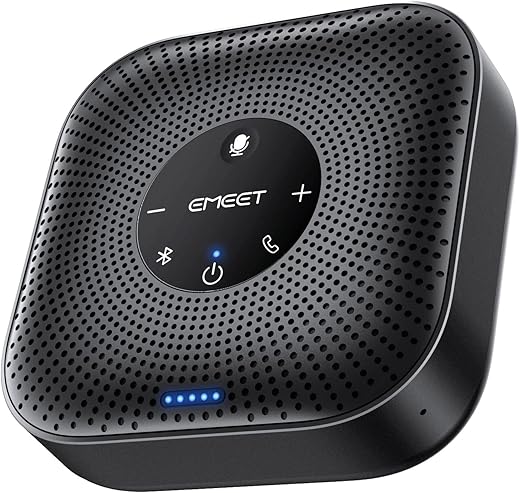
Ecosystem: codecs (SBC/aptX/LDAC), mic mute hardware, and companion apps (Sony WH‑1000XM series; Audio‑Technica ATH‑M50x).
Charging & Hubs
UX impact: faster charging and fewer cables reduce interruptions.
Trade‑offs: GaN chargers are compact; docks add ports but cost more.
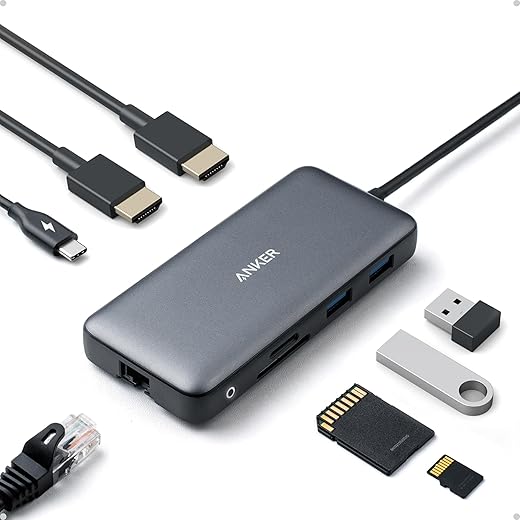
Ecosystem: match PD wattage to laptops; prefer hubs with firmware updates (CalDigit, Anker).
Checklist for picking a peripheral replacement:
Optimize Internals: Upgrading Parts That Punch Above Their Weight
We can often get the biggest day‑to‑day uplift by changing a single internal component. Below are the swaps that most reliably feel like new gear, how they behave in the real world, and the compatibility gotchas to watch for.
Storage: the most obvious jump
An NVMe SSD (e.g., Samsung 980 Pro, WD Black SN770, Sabrent Rocket) will usually beat a SATA drive or HDD in perceived speed—boot times drop from tens of seconds to near‑instant, and apps load faster. Action steps:
Memory: multitasking gets a real win
Going from 8GB → 16GB or 16GB → 32GB is the upgrade that reduces swapping and keeps many browser tabs and apps responsive. Practical notes:
Batteries: longer sessions, better sustained performance
A fresh battery restores runtime and prevents performance throttles caused by power/thermal limits. For phones/laptops:
GPUs and Wi‑Fi modules: high impact, but situational
Desktop GPU swaps (NVIDIA/AMD) are transformative for gaming and creative work; laptop GPU upgrades are rare—only on MXM‑based workstations. Wi‑Fi modules (Intel AX200/AX210) can give noticeable latency and throughput gains—just check for CNVio vs standard M.2 slots.
Compatibility & DIY guidance
Important checks before buying:
We use these rules to decide when a swap will be meaningful—and when a full replacement or technician is the safer, faster route.
Leverage Software and Settings: Free and Low-Cost Performance Wins
Software often delivers dramatic returns on time and attention. We start with the low‑risk, high‑reward interventions that change how a device feels — usually without a single new screw.
Keep OS, drivers, and firmware current
Patching fixes performance regressions and unlocks new power‑management features. We check:
Tame power, thermals, and background workloads
Power profiles often determine sustained speed more than raw specs. Practical levers:
App‑level tuning and browser sanity
Browsers and modern apps are resource hogs. Steps that immediately reduce friction:
Ecosystem services: weigh convenience vs. cost
Cloud sync, backup, and premium features smooth cross‑device life — and can also lock us in. We assess:
Quick diagnostics to decide if software suffices
Measure before you fix: boot times, Task/Activity Monitor peaks, powercfg /batteryreport, and simple file‑copy tests. If utilization is low but latency high, software tuning will usually recover the experience; if hardware resources are saturated, it’s time to consider a component swap.
Design and Ergonomics: Upgrades That Change How We Use Our Gear
Sometimes the single best upgrade isn’t faster silicon but less friction. We’ve seen a decade‑old laptop behave like a new tool simply by changing how it sits, how it’s lit, and how cables — and our posture — are managed. Design upgrades nudge behavior: standing more, reducing neck strain, or making switching devices almost effortless. That’s productivity you can’t benchmark on a spec sheet.
Where to spend first
Start with the interventions that change everyday interaction:

Practical how‑tos that pay off
Multi‑device workflows and ecosystem touches
Design and ergonomics intersect with docks and hubs. Before buying a dock, confirm PD wattage and video lanes — a cheap hub can force awkward cable gymnastics. Choose mounts and stands that keep ports accessible for quick disconnects.
Small investments in arms, lighting, and layout often yield the most immediate change in comfort and speed. Next, we’ll look at compatibility and standards so these physical changes don’t create new bottlenecks.
Ecosystem and Compatibility: Future-Proofing Without a Full Overhaul
We can make smart hardware swaps all day, but upgrades in isolation often create new headaches when our devices stop talking to each other. Here’s how we keep the whole system flexible so a single change doesn’t strand us in a proprietary cul‑de‑sac.
Choose standards, not flash
Opt for open, widely adopted standards: USB‑C with PD and DisplayPort Alt Mode, Bluetooth 5.x profiles, Wi‑Fi 6/6E, and the emerging Matter smart‑home spec. Those standards maximize compatibility and make future replacements painless. For example, a USB‑C dock that supports DisplayPort Alt Mode will work with a wider set of laptops than one that relies on vendor‑specific drivers.

Use hubs and bridges to preserve flows
Hubs, protocol bridges, and dongles let us extend life without swapping everything. A good Thunderbolt/USB‑C dock (CalDigit TS3 Plus, Anker PowerExpand) consolidates power, video, and Ethernet so older laptops can plug into a modern desk. In smart homes, a Matter‑enabled bridge keeps Zigbee or Thread devices usable across ecosystems.
Mind the software and platform lock‑in
Apps, cloud services, and authentication are the invisible ties that bind devices. Features behind proprietary stacks — Apple Continuity, Google Home integrations that require specific hubs — can make hardware useless outside a platform. Before buying, check whether key features rely on vendor cloud services or local APIs.
Practical, low‑risk rules
Thinking in ecosystems keeps us nimble: we extend device life, protect our data, and avoid costly lock‑ins. With those principles in place, we’re ready to wrap up with the smarter path to a better setup.
A Smarter Path to a Better Setup
Upgrading piecemeal lets us capture most benefits of a full refresh—less cost, less waste, faster ROI—by fixing the real bottleneck, swapping high-impact peripherals, and tuning software for immediate gains. We look at user experience, ergonomics, and ecosystem compatibility because those choices determine day-to-day satisfaction and longevity in a market that rewards interoperability over proprietary lock-in.
Quick checklist: identify the bottleneck, prioritize peripherals, upgrade one internal component, optimize software/settings, improve ergonomics, check compatibility. Favor reversible changes and open standards so we can iterate without regret. Let’s upgrade smarter, not replace sooner, and save resources.