
Menu

The Hidden Upgrade That Improves Every Zoom Call

Yogesh Kumar / Option Cutter
Picture of By Chris Powell
By Chris Powell

The small change that makes every meeting feel intentional

We obsess over cameras, backgrounds, and lighting as if presence is only visual. But what actually shapes a call is sound. A single, inexpensive hardware upgrade — a dedicated USB/Bluetooth speakerphone — quietly lifts clarity, presence, and workflow in ways a better webcam cannot.

This upgrade is hidden because it asks for almost no attention but delivers big impact. It’s compact, design-minded, and sits between headset and laptop audio. We’ll explain how these devices work, how they compare to built-ins and USB mics, and why ecosystem compatibility matters. Our aim is practical: show where a speakerphone fits in modern setups and how to pick one that keeps meetings efficient and more human naturally.

Best for Small Teams
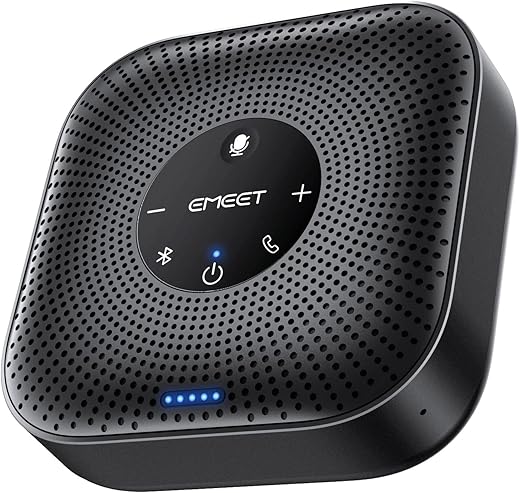
EMEET M0 Plus 360° AI Conference Speakerphone
360° AI mic array and daisy‑chain expandability
We like the M0 Plus for its four‑mic 360° pickup and upgraded VoiceIA noise‑reduction, which make remote participants sound clearer without fiddly tuning. Its USB‑C/Bluetooth simplicity, long battery life and daisy‑chain option to link units for up to 16 people make it a practical, scalable choice for small-to-medium meeting rooms where setup ease and consistent voice pickup matter.
Amazon price updated March 20, 2026 12:18 pm
Prices and availability are accurate as of the last update but subject to change. I may earn a commission at no extra cost to you.
1

Why audio, not video, is the overlooked multiplier

Voice over pixels

We spend hours tweaking webcams and virtual backgrounds because image quality is visible and gratifying. But in practice, what makes a meeting feel smooth and useful is audio. When we can hear every syllable, meetings move faster, decisions land, and fewer people politely nod and then follow up with “Can you resend that?” Good audio is the connective tissue of collaboration — it’s where attention, trust, and rhythm live.

What actually derails a call

Three audio properties determine whether a call feels productive: intelligibility, latency, and room acoustics. Intelligibility affects whether participants understand details and feel confident enough to act. Latency — even a couple hundred milliseconds — breaks conversational turn-taking and turns a discussion into a staccato Q&A. Room acoustics (echo, reverb, background noise) furthers cognitive load; we tire faster because our brains are doing extra work to parse muffled words. The familiar pains — talking over each other, misheard action items, and meeting fatigue — nearly always trace back to one of these audio culprits.

Best Value
FIFINE AmpliGame AM8 USB/XLR Streaming Microphone
Hybrid USB and XLR with RGB and monitoring
We appreciate the AM8’s hybrid USB/XLR approach because it lets streamers plug in and grow into dedicated audio interfaces later, giving a clear upgrade path. The on‑mic RGB, mute, headphone jack and gain control add instant streaming polish, though RGB and on‑mic controls are disabled over XLR—so it’s a versatile budget performer rather than a high‑end studio mic.
Amazon price updated March 20, 2026 12:18 pm
Prices and availability are accurate as of the last update but subject to change. I may earn a commission at no extra cost to you.

The market neglected the obvious

The last decade saw an arms race in webcams and conferencing apps: higher megapixels, AI backgrounds, and face framing. Hardware makers chased visible wins because they sell easily. Meanwhile, audio plodded along — laptop mics improved a little, headsets remained niche, and many small offices accepted mediocre sound as unavoidable. That left a practical opening: a small, intentional audio upgrade now returns outsized improvements in meeting quality.

Immediate, practical fixes we can use today

Move your mic closer to the speaker (closer = clearer, less gain).
Favor wired USB or dedicated speakerphones for lower latency over Bluetooth for critical calls.
Reduce room reverb with soft furnishings or a rug — cheap acoustic fixes pay off.
Do a 30-second audio check at the start of important meetings: speak, listen, confirm levels.

We find that addressing these basics—before upgrading cameras—turns awkward, exhausting calls into crisp, efficient conversations.

2

What a dedicated speakerphone actually does — inside and out

We’ve said audio matters; now let’s look under the hood. A dedicated USB/Bluetooth speakerphone isn’t just “a mic and a tiny speaker.” It’s a purpose-built signal chain and user interface designed to solve the real annoyances we hit in everyday Zoom calls: people sounding distant, rooms echoing, and awkward mute fumbling.

Microphone arrays and beamforming

Unlike a laptop’s single, omnidirectional mic that treats every sound equally, speakerphones use multiple microphones arranged around a puck. Those arrays let the device do beamforming: it electronically focuses pickup toward the active talker and away from incidental noise. The result is clearer speech from people who stand up, walk to a whiteboard, or lean back on the couch — without everyone needing a headset.

DSP: noise reduction and echo cancellation

Behind the scenes, digital signal processing (DSP) removes what we don’t want and preserves what we do. Common DSP functions:

Noise suppression that dials down keyboard clicks, HVAC hum, and traffic.
Acoustic echo cancellation so the speaker’s output doesn’t loop back into the mic.These systems are tuned for conversational levels — not concert dynamics — which matters because meeting audio is all about clarity, not loudness.
Editor's Choice
Anker PowerConf 6‑Mic Zoom‑Certified Speakerphone for Home Workspaces
24‑hour battery and AI voice radar
We find the PowerConf compelling for personal workspaces thanks to its six‑mic array, Voice Radar 3.0 AI and automatic voice balancing that reduce fuss and improve call clarity. Combined with 24‑hour battery life, Bluetooth 5.3 and PowerIQ charging, it outpaces most portable speakerphones for all‑day reliability and ecosystem convenience, though it’s optimized for personal and small meetings rather than large boardrooms.
Amazon price updated March 20, 2026 12:18 pm
Prices and availability are accurate as of the last update but subject to change. I may earn a commission at no extra cost to you.

Full‑duplex and speaker design

Full‑duplex lets both sides talk naturally, without the “ducking” or one-way behavior older devices exhibit. That capability depends on both mic processing and a speaker that reproduces voice frequencies accurately at low-to-moderate volumes. Good speakerphones preserve tonal balance for the 300–3,000 Hz range where speech intelligibility lives; cheap speakers either thin out voices or boom bass that makes speech muddy.

Industrial design and ergonomics

Hardware decisions shape daily use. We focus on:

Button layout: a dedicated mute button with a tactile click and visible LED prevents embarrassing slips.
Call controls: one-touch answer/end and pairing make transitions seamless when moving between desk, couch, and conference table.
Portability: size, weight, and battery life determine whether we actually carry it between rooms.Manufacturers like Jabra (Speak series) and Poly (Sync line) emphasize these details because ergonomic wins translate directly into fewer interruptions and faster meetings.

Practical tips to get the most from one

Prefer USB for critical calls; Bluetooth for quick, mobile use.
Place the speakerphone centered among participants, 1–2 feet from the nearest talker.
Keep the mute button within reach and test it in Zoom’s audio preview.
If the room is very reflective, pair the speakerphone with soft furnishings or move closer to the device.

Next, we’ll put these features into context and compare how speakerphones actually stack up against laptop mics, headsets, and standalone USB microphones.

3

How speakerphones stack up against built-ins, headsets, and USB mics

We want to give you a practical, side‑by‑side sense of where speakerphones live in the trade‑off space — and when another solution still makes more sense.

Head‑to‑head snapshot

Built‑in laptop audio: zero setup, OK for solo calls at a desk, poor pickup across a room; use when convenience trumps clarity.
Headsets (USB/Bluetooth or earbuds): excellent isolation and consistent send/receive for one person; private and great for noisy environments; not ideal when multiple people need to participate.
USB microphones (Blue Yeti, Shure MV7, Rode NT‑USB): broadcast‑quality capture for a single speaker or podcaster; needs a decent speaker or headphones for listening and usually fiddly gain/positioning.
Speakerphones (Jabra Speak 750, Poly Sync 40, Anker PowerConf): blends group pickup, full‑duplex listening, and simple controls — designed for shared conversation without wires or headsets.

Use cases — what we actually do

One‑on‑one calls in a small room

Headsets win for privacy and noise isolation; we use AirPods Pro or Jabra Evolve when we need to zone in.
Speakerphones are a close second if we want a less intrusive setup or to share the call with someone else.

Collaborative team meetings

This is speakerphone territory: centered pickup, echo cancellation, visible mute, and a speaker everyone can hear. Jabra/Poly devices scale well for small huddle rooms.

Presentation mode

USB mics shine when we’re broadcasting or recording talk‑heavy material (Shure MV7). But for live Q&A and back‑and‑forth, a speakerphone keeps the conversation flowing without a lavalier or multiple mics.

Travel and mobile work

Built‑in wins for minimalism; pocketable speakerphones like Anker PowerConf S3 or Poly Sync 20 offer a big step up while remaining portable. Headsets are a solid mobile alternative if you need focus.

Accessibility and etiquette implications

People with hearing loss: an external speakerphone gives clearer, louder, and more directional audio than laptop speakers; look for units with strong midrange clarity or aux/USB audio output for hearing aids.
Attention differences: headsets help reduce distraction; speakerphones can increase social presence but also make side conversations audible — announce when you’re leaving mute.
Etiquette: speakerphones implicitly invite shared conversation. If privacy or focused work is required, switch to a headset or headphones.

We find that for many hybrid scenarios — quick team huddles, ad‑hoc whiteboarding, and small meeting rooms — the speakerphone hits the pragmatic sweet spot between ease, social presence, and intelligibility.

4

Ecosystem compatibility and the software side of good calls

We’ve talked about why a dedicated speakerphone matters physically. Now we move from hardware to integration: how these devices actually behave in the messy real world of apps, OSes, and IT policies.

USB vs Bluetooth — reliability, latency, and real life trade-offs

USB (USB‑C/USB‑A): our go‑to for predictable performance. It’s lower latency, more reliable in dense RF environments, and usually powers the device and pushes firmware updates without extra steps. For scheduled rooms and desktop setups, USB minimizes surprises.
Bluetooth: great for quick, mobile use. Multipoint pairing is handy when you hop between phone and laptop, but we’ve seen more dropouts and codec mismatches (SBC vs AAC/aptX) in crowded offices. Bluetooth also adds measurable latency and can be affected by Wi‑Fi interference at 2.4 GHz.

Practical tip: test both in the environment you’ll use. If call stability matters — recurring client meetings, board calls — pick USB. If portability is priority, pick Bluetooth but expect occasional reconnects.

Platform features that matter day-to-day

Apps and OSes influence whether a speakerphone feels “plug‑and‑play” or “plug‑and‑pray.” Watch for:

Automatic device switching: macOS and Windows may switch to the last connected audio device; Zoom and Teams let you pin devices — test the flow so calls don’t start on laptop speakers.
Hot‑mic indicators: hardware LEDs + OS/app notifications reduce embarrassing unmuted moments. Devices that mirror mute state in Zoom/Teams are worth the extra dollars.
Exclusive audio routing: some apps hold audio exclusively, blocking other apps from hearing or using the device. That’s frustrating for presenters who need system sounds or multimedia.

Vendor ecosystems: apps, firmware, and fleet management

Good speakerphones come with more than plastic and mics these days. Companion apps (Jabra Direct/Jabra Xpress, Poly Lens, Logitech Sync) let us update firmware, tweak EQ, and push settings at scale. For teams, cloud management matters — zero‑touch provisioning, scheduled firmware windows, and security controls make a huge operational difference.

Why we prefer standards-friendly devices: USB Audio Class, Bluetooth profiles (HFP/HSP/A2DP), and SIP/OTA support mean cross‑platform predictability. Closed systems can lock features behind proprietary drivers or cloud services that don’t play well with MDMs or network rules.

Enterprise considerations (short checklist)

Confirm Teams/Zoom certification if your org relies on certified workflows.
Ask IT about device provisioning, allowed drivers, and Bluetooth policies.
Ensure the vendor has an active firmware cadence and enterprise management tools.

Next, we’ll turn this compatibility checklist into buying and placement decisions so you get the most reliable call every time.

5

How to choose, place, and get the most from one

We’ve covered why compatibility matters; now we make buying and setup stupid-simple. Below are the decision rules and setup moves we actually use when we want every call to sound deliberately good.

Match device to your use case

Think in real-world terms — room size, participants, mobility, budget, and primary device — and prioritize these features:

Room size & people: small room (4–6 people) → mic pickup 10–15 ft, higher speaker SPL (≥85 dB). Solo / one-on-one → omnidirectional mic with 3–6 ft range is fine.
Primary device: laptop-first → favor USB (low latency, reliable). Phone-first → Bluetooth with multipoint.
Mobility & battery: traveling consultants → small, rugged Bluetooth with ≥8–12 hr battery (Poly Sync 20, Anker PowerConf S3). Desktop hosts → USB-first devices (Jabra Speak 750, Poly Sync 60).
Budget: under $100 → compact travel units (Jabra Speak 410/510, Anker). $150–300 → better mic arrays, stronger speakers, firmware support (Jabra Speak 710, Poly Sync 40).
Mute ergonomics: hardware mute + LED + easy thumb reach. Prioritize this — it’s the difference between awkward interruptions and confident control.

Placement & acoustic quick wins

Small moves yield big returns.

Center the speakerphone on the table; all voices should be within the device’s rated pickup radius. If people sit around a long table, push the device to the center or use two units.
Keep it 6–12 inches from spillable items and away from laptop speakers to avoid echo loops.
Quiet reflective surfaces: throw a tablecloth, move a notepad under the device, hang a coat on a nearby chair, or close a glass door. Small soft items absorb reflections noticeably.
If you hear hollow or tinny audio, try raising the device 1–2 inches (on a coaster) to break direct table reflections.

Three quick workflows we use

Solo remote worker: USB-connected Jabra Speak 510 or Anker PowerConf, centered 6–12 in from you, use app to pin as default device.
Small conference host (4–6 people): Jabra Speak 750 or Poly Sync 60 via USB-C, center of table, mute LED visible to participants; test AEC in the meeting app.
Traveling consultant: Poly Sync 20 or Anker PowerConf S3 via Bluetooth, pocketable, use multipoint to pair phone + laptop, keep USB cable handy.

Troubleshooting cheat-sheet

Echo: mute laptop mic or lower speaker volume; ensure AEC is enabled; switch to USB if using flaky Bluetooth.
Pairing flakiness: forget device, reboot Bluetooth, update firmware, try USB to confirm hardware health.
Bad app audio: set the speakerphone as system default and in-app audio device; pin it in Zoom/Teams before joining.

With these pick-and-place rules, you can buy one device and immediately notice the difference. Next, we’ll round up why that small buy matters.

A small buy, a noticeably better call

We think a dedicated speakerphone is the highest-ROI, lowest-friction upgrade you can make for modern meetings. It fixes the two biggest invisible problems — capture and playback — by using purpose-built mics and speakers that bring voices forward without the artifacts and distance-smoothing of laptop arrays, and by delivering consistent playback so everyone hears the same balance. It also simplifies sharing: plug-and-play connectivity and platform-friendly USB/BT profiles mean fewer settings fights and faster handoffs.

Try one in your usual meeting and judge by how much conversational friction it removes. In a market crowded with marginal gains, this is a practical hardware win that changes how meetings feel and flow. Give it a week.

Newest Posts