

We break down how a blender and a food processor really perform in our kitchens—testing for ease of use, design, ecosystem integration, and real-world versatility—to show which device actually earns counterintuitive space on our countertops as smart appliances and subscription ecosystems reshape cooking today.
When our morning smoothie collides with weekend meal prep, we put the Vitamix 5200 blender and the Cuisinart 14‑cup food processor head-to-head to judge everyday performance, design, cleanup, and long‑term value—so you can choose the right appliance for your kitchen.
Power Blender
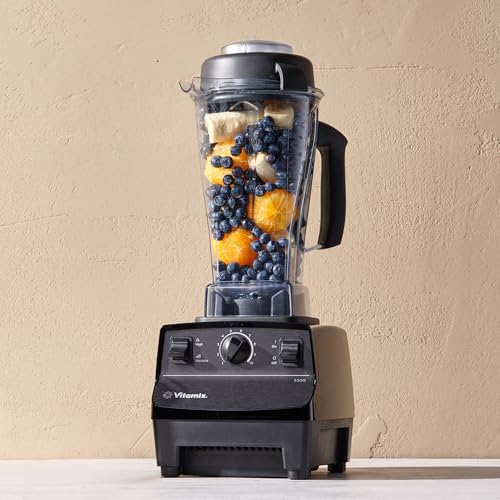
We appreciate how the motor and tactile speed dial deliver repeatable, restaurant‑quality textures — from silky smoothies to hot soups made by friction alone. The machine feels built to last and the self-clean cycle plus seven‑year warranty make ownership less fraught, but the price and footprint mean it’s a considered kitchen investment rather than an impulse buy.
Prep Workhorse
We like that it turns tedious prep into quick, repeatable work: the big bowl and sturdy motor make shredding, slicing, and kneading feel effortless. It’s a compelling value for cooks who prioritize capacity and accessory flexibility, though it won’t replace a high‑end blender when you need ultra‑smooth textures.
Vitamix 5200 Blender
Cuisinart 14-Cup Processor
Vitamix 5200 Blender
Cuisinart 14-Cup Processor
Vitamix 5200 Blender
Cuisinart 14-Cup Processor
Must-Have Kitchen Appliances Under $100
Performance: Blending Power vs Processing Precision
Motor design and raw power
We start with the obvious: the Vitamix 5200 is built around a 2‑horsepower motor tuned for sustained, high‑RPM rotation. That translates to a true vortex and enough torque to pulverize frozen fruit, crush ice into snow, and generate friction heat for hot soups. The variable speed dial plus a high‑speed setting gives us micro‑control over texture from chunky to glass‑smooth.
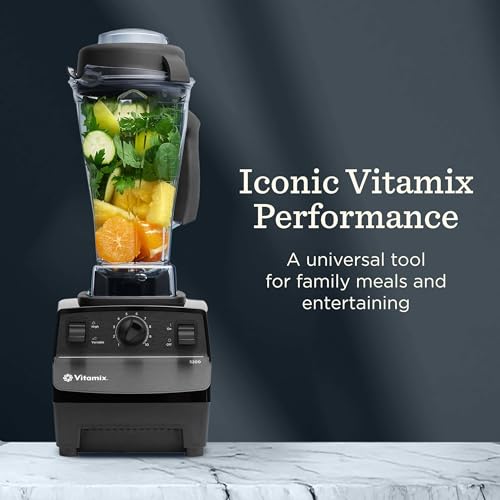
The Cuisinart DFP‑14 uses a 720‑watt motor that’s optimized for high‑torque, short bursts — exactly what you want for chopping, shredding, and kneading. It’s not trying to spin at blender RPMs; it’s designed to move heavy loads in the bowl and handle thick dough without bogging down.
Container geometry and airflow
The Vitamix’s tall 64‑oz container creates a consistent vortex: ingredients are drawn down into the blades, which reduces the need for repeated scraping or chopping. That geometry plus high RPMs is why a Vitamix makes smoother purees and handles fibrous greens better.
By contrast, the Cuisinart’s wide, shallow 14‑cup bowl and large feed tube are optimized for even slicing and shredding of whole vegetables. The bowl lets discs do the work of uniform cuts; there’s no vortex to chase, and that’s a feature, not a bug.
Blades and processing tasks
Blade shape equals outcome. Vitamix’s laser‑cut stainless blades are fixed, steep‑angled, and aggressive — great for emulsifying, crushing ice, and creating homogenous textures. Cuisinart supplies interchangeable discs and a chopping blade built for uniform slices, shreds, and dough work.
In practice, that means:
We find that specialized designs still win: if you want near‑restaurant smoothness and hot‑soup convenience, the Vitamix’s high‑RPM approach outperforms. If your life is meal prep, baking, and big batches of chopped veggies, the Cuisinart’s processing precision is more useful and efficient.
Feature Comparison


Design & User Experience: Controls, Cleanup, and Noise
Controls & ergonomics
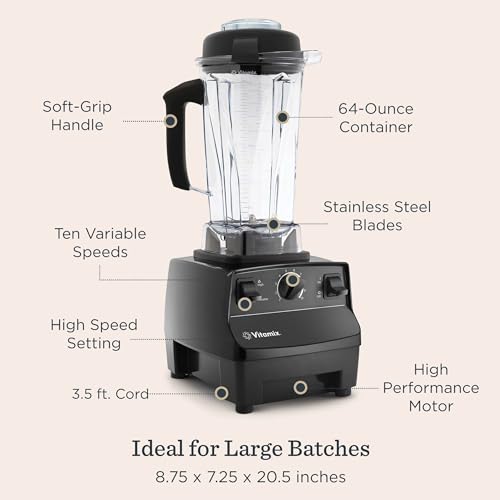
We like simple interfaces. The Vitamix 5200 uses a single, satisfying speed dial and a separate high‑speed switch — that lets us fine‑tune texture on the fly without wrestling with presets. Its tall 64‑oz jar creates a reliable vortex and the tamper lets us keep a full batch moving without stopping. That extra height matters: it blends large batches cleanly but can be awkward to store under low cabinets.
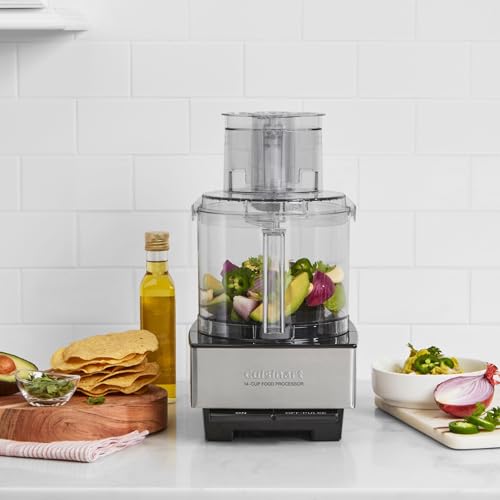
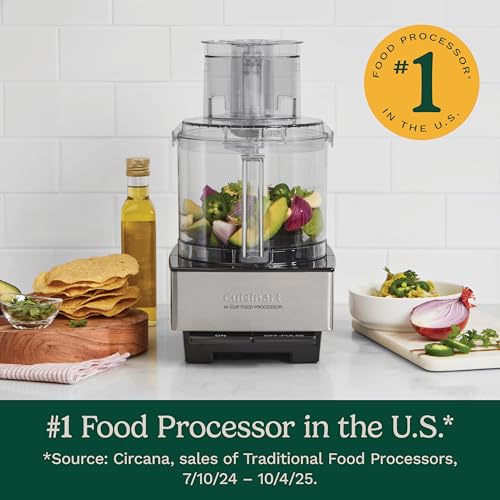
The Cuisinart is the opposite: functional and mechanical. On/off and pulse buttons are straightforward; the real precision comes from swapping discs and using the large feed tube. Loading whole carrots or a head of cabbage is faster here than pre‑chopping for a blender — that secure bowl‑and‑lid lock feels reassuring when running heavy loads.
Cleanup & maintenance
We appreciate that Vitamix offers genuine self‑cleaning: warm water, a drop of soap, 30–60 seconds, rinse — no disassembly for daily use. Its fewer parts mean less mental overhead, though stubborn dough or sticky nut butters still need a quick hand wash.
Cuisinart’s advantage is removable parts and discs that sit flat in the dishwasher. More parts equals more steps, but also better access for deep clean and blade storage.
Footprint, weight & noise
Versatility & Accessories: Ecosystem and Long‑Term Value
Included accessories and optional add‑ons
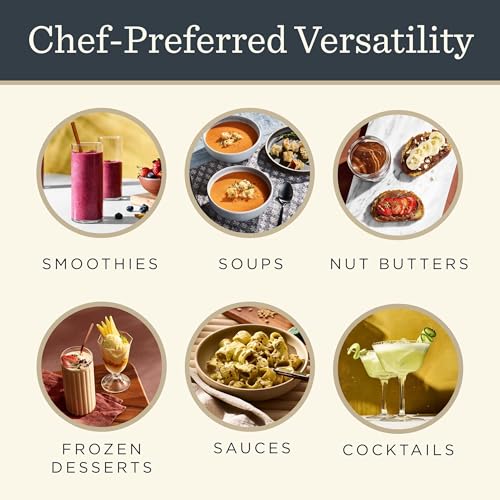
We look past the boxes. The Vitamix 5200 ships with the classic 64‑oz container and the tamper — and the real value is in the aftermarket: shorter containers, dry‑grains jars, and personal‑cup lids are available from Vitamix and third parties. That ecosystem turns a single high‑power motor into a countertop workhorse for smoothies, hot‑from‑blending soups, nut butters, and grinding grains.
The Cuisinart DFP‑14BCNY arrives with a full 14‑cup bowl, chopping blade, medium shred and 4mm slicing discs, and a recipe booklet. Those discs and the wide feed tube make high‑volume prep — shred, slice, knead — a different class of task than a blender.


Warranty, service, and repairability
Warranty length matters for longevity. Vitamix backs the 5200 with a 7‑year full warranty (parts, labor, return shipping) and a metal drive system that’s relatively straightforward to service; genuine parts are widely available. Cuisinart offers a 3‑year limited unit warranty and a 5‑year motor warranty; its bowl, discs, and blades are easy to replace and inexpensive, but the plastic work bowl is the component most likely to wear.
Why the ecosystem matters now
In a market where buyers expect one appliance to do many jobs, accessory depth and repairability determine long‑term value. Quick takeaways:
Price, Space & Who Should Buy Which
Street price and cost-per-use math
We look at street prices and a simple payoff example. The Vitamix 5200 runs about $445; the Cuisinart DFP‑14 about $244. If you blend every day, the Vitamix over its 7‑year warranty costs roughly $0.17 per use ($445 ÷ 7 years ÷ 365 days). If you use a Cuisinart three times a week for three years, that’s about $0.52 per use ($244 ÷ 3 years ÷ ~156 uses/year). The takeaway: the Vitamix is pricier up front but becomes cheaper per use for high‑frequency blender-first cooks.
Countertop footprint, storage, and noise
Quick spatial facts:
Both machines are loud under heavy load. Vitamix’s 2‑HP motor tends to run louder at sustained high speed; Cuisinart’s 720W motor is hefty but usually feels less piercing. If noise or under‑cabinet storage is a hard constraint, the Cuisinart is easier to store away; the Vitamix is best left on the counter.
Who we’d recommend
When owning both makes sense
Buy both if you want silky blending performance plus high‑volume slicing/shredding and dough work. Rule of thumb: pick one based on your primary weekly task; add the other only if you routinely hit the secondary task multiple times per month.
Final Verdict: Pick the Right Tool for Your Kitchen
Winner: Vitamix 5200. We pick it for unmatched texture, friction heat for soups, and professional design and ecosystem that justifies the price.
Cuisinart DFP‑14 excels on value: superior chopping, shredding and dough capacity for batch prep. Which workflow rules your kitchen?

Chris is the founder and lead editor of OptionCutter LLC, where he oversees in-depth buying guides, product reviews, and comparison content designed to help readers make informed purchasing decisions. His editorial approach centers on structured research, real-world use cases, performance benchmarks, and transparent evaluation criteria rather than surface-level summaries. Through OptionCutter’s blog content, he focuses on breaking down complex product categories into clear recommendations, practical advice, and decision frameworks that prioritize accuracy, usability, and long-term value for shoppers.