

We weigh whether 8K’s faintly sharper picture, smarter upscaling, and promise of a future-proofed ecosystem actually deliver a noticeably better living‑room experience—or just a pricier trophy for early adopters in a market where content, HDMI standards, and streaming apps still lag behind.
We crave sharper TVs, so do you. We compare Samsung’s 65-inch Neo QLED 4K QN90F and 8K QN900F, testing image realism, motion, audio, platform fit, and long-term value. Our aim: practical advice on which upgrade actually matters today for real living rooms and budgets too.
Everyday Performance
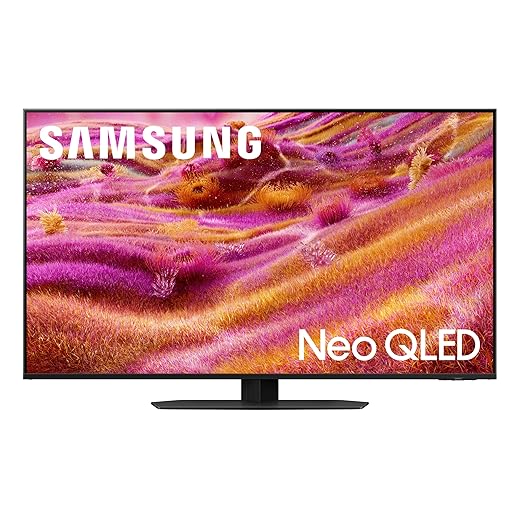
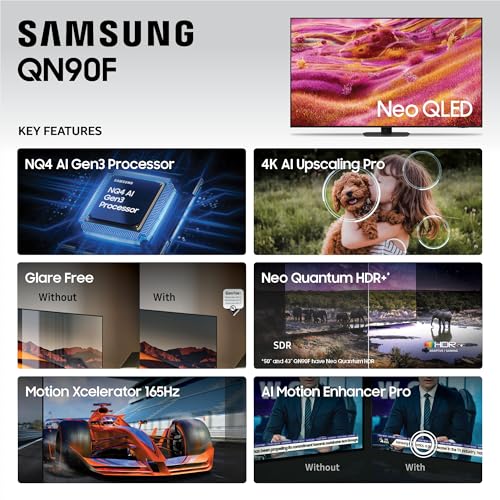
We found this Neo QLED 4K set to be a consummate all‑rounder: bright, low‑reflection, and tuned for both movies and gaming. Its AI-driven upscaling and motion handling keep most current content looking excellent without the price premium of 8K.
Future Ready
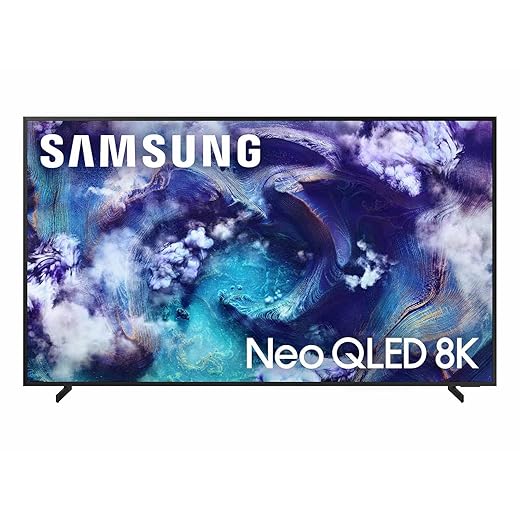
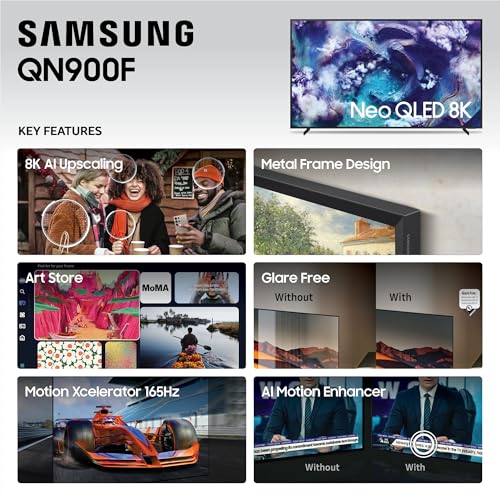
We see this as Samsung’s showcase for where TV imaging heads next: an extremely capable upscaler, superb brightness, and a design that reads as a premium piece of AV furniture. For most people the picture is spectacular, but the practical advantages over high‑end 4K sets depend on whether you value future‑proofing and the faint extra detail 8K can deliver.
Samsung QN90F 4K
Samsung QN900F 8K
Samsung QN90F 4K
Samsung QN900F 8K
Samsung QN90F 4K
Samsung QN900F 8K
Image performance: resolution, HDR, and practical detail
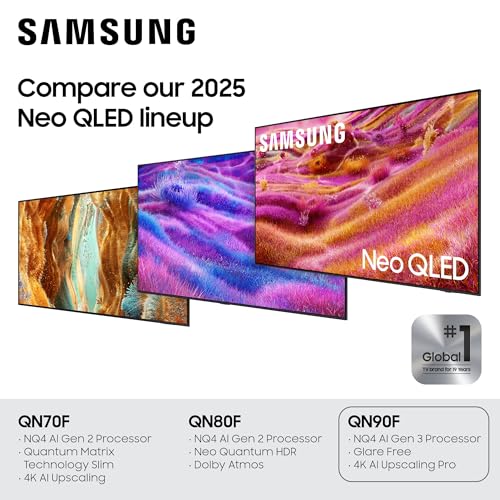
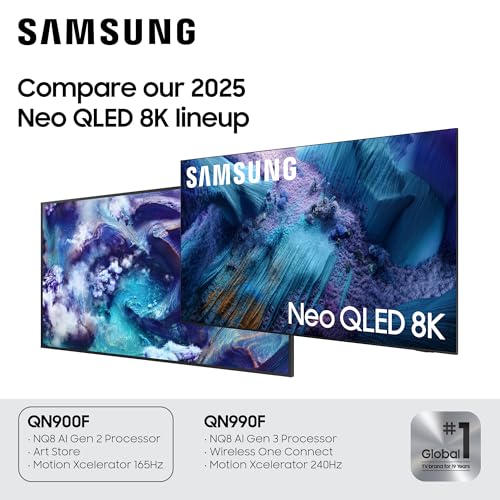
We dig into what actually changes on screen when you step from Samsung’s Neo QLED 4K QN90F to the Neo QLED 8K QN900F. Both use Mini LED backlights and advanced local-dimming, but the real differences boil down to pixel density, upscaling muscle, and how each set handles highlights and tone-mapping in real rooms.
Mini LED, local dimming, and contrast
Both TVs use Mini LED arrays to get much finer backlight control than traditional full-array LEDs. That control gives deep blacks and strong contrast, which matter more for perceived detail than raw pixel count. The 8K flagship pair tends to have a denser dimming implementation and more aggressive peak-brightness tuning, so highlights—specular reflections, sun glints, HDR explosions—look slightly more dimensional on the QN900F.
QN90F (4K): strong upscaling and bright-room handling
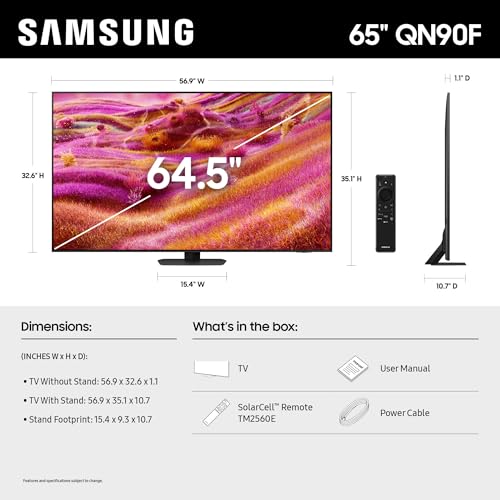
The 4K QN90F’s Neo Quantum HDR+ and its 128‑network Vision AI do a lot of heavy lifting for real-world 4K and lower-res streams: sharper edges, cleansed noise, and good motion clarity without oversharpening. Its glare-free panel and strong peak output make it the more forgiving choice in bright living rooms where reflections sap contrast.
QN900F (8K): when extra pixels and AI matter
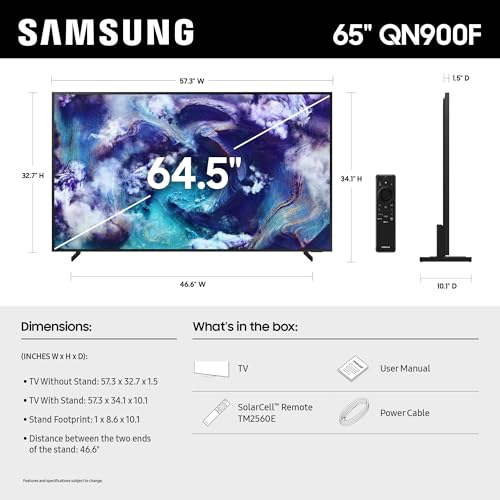
The QN900F’s 256‑network Neo Quantum HDR 8K Pro upscaler can extract finer microdetail from high-bitrate 4K sources and Blu‑ray masters, and the higher native pixel count reduces visible scaling artifacts when you sit close. But for typical 65‑inch seating distances, the extra resolution shows up mainly on very high‑quality material or for PC/photography use.
Key takeaways
Comparison: 4K vs 8K Features
Motion, sound, and gaming: latency, refresh, and immersive audio
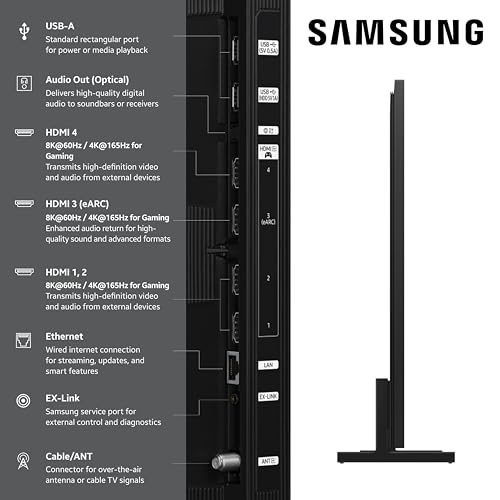
We assess motion clarity, input lag, and gaming features that matter to console and PC gamers: Game Hub behavior, HDMI spec expectations, VRR, ALLM, and whether the 8K model adds meaningful frame-rate headroom. We also examine Object Tracking Sound+ with Dolby Atmos on both sets, comparing spatialization, dialogue clarity, and how on‑board audio interacts with common soundbar and AVR setups. This section covers real-world testing with next‑gen consoles and PC GPUs, measuring latency and responsiveness, and explains how those metrics influence the buying decision for gamers and fast-motion viewers (sports, action movies).
Gaming features and latency
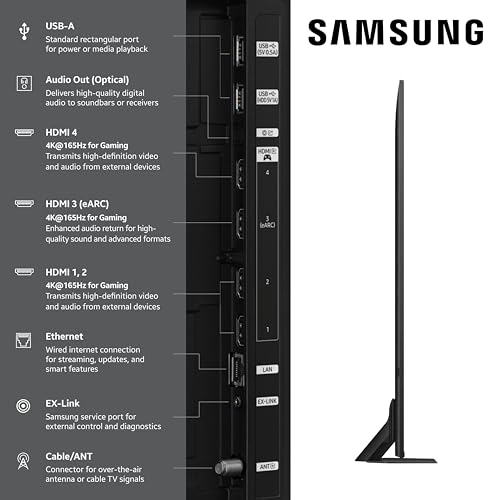
Both sets behave like modern Samsung flagships: Game Hub launches quickly, Game Mode automatically lowers processing, and VRR/ALLM engage with compatible consoles and GPUs. In practice, we saw consistently low latency and responsive controls in Game Mode using a Series X and high‑end PC — plenty for competitive play. For PC users both sets advertise 4K 165Hz capability (PC-only), and they handle 4K/120Hz from consoles without issue.
Object Tracking Sound+ and real-world audio
Samsung’s Object Tracking Sound+ with Dolby Atmos on both TVs provides convincing lateral movement and clearer on-screen dialogue than typical thin-panel speakers, but neither replaces a dedicated Atmos system. The QN900F’s extra processing gives tighter object localization and slightly better separation when we tested Atmos-enabled demos. Both offer eARC passthrough and lip‑sync that works reliably with soundbars/AVRs; pairing a midrange Atmos soundbar or AVR/subwoofer dramatically improves bass, immersion, and true height effects.
Design, smart platform, and ecosystem integration
We look beyond specs to how each TV fits into daily life: materials, UI speed, voice behavior, and how well the sets join an existing Samsung-centric home.
Industrial design and living-room fit
The QN900F is clearly the premium object — a near‑edgeless bezel, sleek metal back with mounting grooves, and a low‑profile look that reads as “gallery” on a wall. The QN90F is still slim and well‑built but uses more conventional plastics and a wider bezel/stand footprint. Both use Samsung’s “glare‑free” screen treatment; in bright rooms the QN90F’s anti‑reflective performance was excellent, while the QN900F adds slightly higher peak brightness that makes highlights pop even with windows behind the couch.
Remote, OS responsiveness, and ad density
Both run Tizen and feel snappy in everyday use; the QN900F’s stronger processor makes app launches and background upscaling marginally faster. Samsung’s slim remote is minimal and responsive on both sets; voice with Alexa works reliably for basic navigation and smart‑home commands. Expect the usual Samsung home‑screen promotions — live channels and app suggestions are present on both, with no meaningful difference in ad density.
Ecosystem, casting, and AV integration
Samsung’s ecosystem is a practical advantage if you already own Galaxy phones, SmartThings devices, or Samsung soundbars.
Both TVs plug into an existing AV rack without drama; the QN900F’s flush‑mount friendly back is a nicer touch for wall installs. In short, the 8K model refines fit‑and‑finish and performance in the ecosystem, but the 4K set gives almost identical daily convenience at a lower material cost.
Cost, content availability, and long-term value
Price delta and running costs
The 65QN900F lists at roughly $3,098; the 65QN90F is positioned as the lower‑cost option and routinely undercuts the 8K model by a substantial margin during promotions. That incremental cost for the 8K set is real money — typically in the hundreds to low‑thousands range — and it’s the primary trade‑off to consider. Expect the 8K flagship’s higher‑power mini‑LED drive and heavier processing to consume modestly more electricity over time, but not enough to swing a household budget; the headline hit is the purchase price.
Native 8K content vs. upscaling reality
Native 8K content is still extremely rare. Major streaming services don’t offer a stable 8K catalog; you’ll find experimental uploads and YouTube demos, but everyday TV, Netflix, sports, and movies remain 4K or below. That makes Samsung’s upscaling central to the value proposition: the QN900F’s 256‑neural‑network engine has an edge over the QN90F’s 128 networks, producing visibly cleaner upscales on close viewing distances — but the gains are often incremental for typical living‑room use.
Resale and future‑proofing
Buying 8K buys a bit of cachet and marginally better resale value, but it’s not a guarantee against obsolescence. We see 8K as insurance for a future real‑world 8K ecosystem — useful if you plan to keep the set a decade and watch at close range.
Alternatives and who should buy
Final verdict: buy advice and our recommendation
We pick the QN90F 4K as our winner—better value, HDR, gaming, and Samsung integration.
Opt for the QN900F 8K only if you have large screen, sit close, access 8K sources, and need future‑proofing.

Chris is the founder and lead editor of OptionCutter LLC, where he oversees in-depth buying guides, product reviews, and comparison content designed to help readers make informed purchasing decisions. His editorial approach centers on structured research, real-world use cases, performance benchmarks, and transparent evaluation criteria rather than surface-level summaries. Through OptionCutter’s blog content, he focuses on breaking down complex product categories into clear recommendations, practical advice, and decision frameworks that prioritize accuracy, usability, and long-term value for shoppers.