We break down whether smart locks’ seamless app ecosystems or keypad locks’ tactile simplicity actually make life easier — and why that distinction will decide which one fits your home today.
Locks matter. We compare the August Home Matte Black Wi‑Fi smart lock and Smart Keypad with the Schlage BE365 Camelot keypad deadbolt to decide which is more convenient for daily use, installation, smart‑home integration, and security in real‑world homes today.
Smart Retrofit

Simple Keypad

August Wi‑Fi Lock
- Built‑in Wi‑Fi for remote control without a hub
- Seamless ecosystem support (HomeKit, Alexa, Google, SmartThings)
- Includes a keypad for phone‑free guest access and virtual keys
- Retrofit design preserves existing exterior lock and key
- Discreet, low‑profile interior hardware that keeps curb appeal
- Uses CR123A batteries which are less common than AAs
- App region and setup limitations reported outside US/Canada
- Occasional app/lock syncing quirks reported in long term use
Schlage Keypad Lock
- Simple, tactile keypad with illuminated silicone buttons for reliable daily use
- Robust metal construction and ANSI Grade 2 durability
- Long battery life (typical up to 2 years) and easy battery replacement
- Straightforward screwdriver installation without hubs or apps
- No native Wi‑Fi or voice assistant integration in this model
- Limited modern remote management — requires upgrading to Z‑Wave/Zigbee variants for smart hubs
- Fewer advanced access management features compared with app‑centric smart locks
Feature Comparison
| Smart Retrofit August Wi‑Fi Smart Lock with Keypad | VS | Simple Keypad Schlage BE365 Camelot Keypad Deadbolt |
|---|---|---|
Retrofit smart deadbolt (attaches to existing deadbolt) | Lock Type |
Standalone keypad deadbolt (direct replacement for existing deadbolt) |
Built‑in Wi‑Fi and Bluetooth (no extra bridge required) | Connectivity |
No Wi‑Fi/Bluetooth (standalone keypad); smart variants available separately (Z‑Wave/Zigbee) |
2 × CR123A batteries (included) | Power Source |
9V battery (included) |
Apple HomeKit, Amazon Alexa, Google Assistant, Samsung SmartThings | Smart Home Compatibility |
None native for this model; upgrade to connected Schlage variants for hub integration |
App-based virtual keys (effectively unlimited); included keypad supports multiple unique codes | Number of User Codes / Keys |
Up to 19 user codes (pre‑programmed and additional assignable) |
Months of typical use; Wi‑Fi active mode increases drain relative to Bluetooth-only models | Battery Life |
Up to 2 years with typical use (9V battery) |
No | Requires Hub |
No |
Interior retrofit over existing deadbolt; typically ~10 minutes with basic tools | Installation Type |
Direct deadbolt replacement; installs with a screwdriver in minutes |
Maintains original exterior deadbolt appearance; low profile inside | Exterior Appearance |
Traditional keyed exterior with integrated keypad |
Relies on existing deadbolt standard; includes DoorSense sensor and modern firmware protections | Security Rating |
ANSI Grade 2 mechanical rating for residential/light commercial use |
1 year manufacturer warranty | Warranty |
Limited lifetime mechanical & finish warranty; 3‑year electronics warranty |
$$$ | Price |
$$ |
AUG-SL05-KY1-G05 (AUG-SL05) | Model Number |
BE365 V CAM 619 |
Wi‑Fi Smart Lock, Smart Keypad, DoorSense sensor, batteries, adapters, mounting hardware | Included Components |
Keypad deadbolt, keys, mounting hardware, battery |
Smart‑home users who want remote access, app guest keys, and a discreet exterior | Best For |
Users who want a durable, reliable keypad deadbolt without cloud dependency |
1.9 × 0.75 × 0.75 in; ~2.18 lb | Dimensions & Weight |
Standard deadbolt dimensions; verify trim size for compatibility |
$199.90 | Current price |
$118.41 |
| Buy for $199.90 | Buy for $118.41 |
Why the Most Convenient Smart Lock Isn’t Cheap
What they are and how they differ
What each lock does
We start by defining the two products so we can judge convenience on concrete terms. The August Home smart lock Matte Black bundle is a Wi‑Fi–enabled smart lock that replaces the interior hardware of your deadbolt and pairs with a slim touchscreen Smart Keypad. It gives remote access, temporary guest codes, activity logs, and integrations with HomeKit, Alexa, and Google — all managed through the August app.


The Schlage BE365 Camelot is a battery‑powered electronic keypad lock designed for offline, tactile access. It swaps in like a conventional deadbolt and lets you program up to 19 PINs. No native Wi‑Fi, no app dependence — just a robust metal lock and a silicone‑button keypad built for simple, everyday use.


Key practical differences
Installation and security approach
August prioritizes connectivity and frequent smart-lock software updates — convenience comes through software and cloud encryption. Schlage prioritizes mechanical reliability and battery economy with local PIN authentication and fewer external dependencies.
Why that matters now
Put simply: August is built for remote management, renters, and integrated smart door locks; Schlage is for low‑maintenance, reliable keyless access where offline simplicity wins.
User experience and design: installation, daily use, and build
Installation
For August we found the experience deliberately app-first. The interior retrofit installs in minutes and preserves the exterior thumbpiece, so curb appeal stays intact; setup, firmware updates, and guest links are all handled in the August app. Built‑in Wi‑Fi removes the need for a separate bridge for basic remote control, but that also means the app is your gateway to most functionality.


Schlage BE365 is the opposite: a straightforward deadbolt swap that installs with a screwdriver in the time it takes to read the instructions. Programming codes is done on the lock itself, no phone required — a big plus if you want low‑friction, offline convenience.


Daily use
We judged day‑to‑day smart-lock convenience by responsiveness, error modes, and how natural interactions feel. August shines when we need remote control: instant temporary codes, activity logs, and geofenced unlocks are genuinely useful for hosts and families. In our testing August felt faster for remote tasks but occasionally prompted reauthentication during updates or flaky Wi‑Fi. Schlage is predictably reliable: the keypad just works, consumes little power, and never depended on cloud services.
Build and tactile design
The August matte‑black finish and low‑profile inside unit read modern and premium; the included capacitive keypad is contemporary but relies on the app for most advanced management. Schlage’s Camelot faceplate and recessed, silicone buttons deliver confident feedback—easy with gloves and in the dark. Battery and maintenance tradeoffs matter: August uses CR123A cells and sends low‑battery alerts via app; Schlage runs on a 9V for up to ~2 years typical use.
Ecosystem integration, security, and smart features
Ecosystem compatibility
We value locks that plug into the rest of the house without friction. August ships as a Wi‑Fi native product and advertises first‑class support for Alexa, Google Assistant, and Apple HomeKit (this bundle) plus SmartThings and short‑term rental workflows. That means we can issue time‑limited virtual keys from anywhere, trigger camera recordings when a code is used, or pair an arrival with lights and thermostat changes — all without adding a separate bridge.

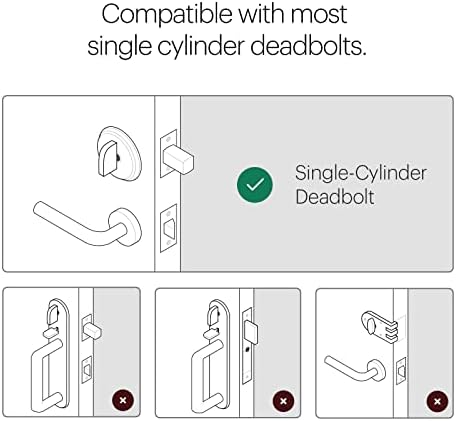
By contrast, the Schlage BE365 is a self‑contained keypad deadbolt. It’s not a Wi‑Fi device; to get centralized automations you’d need a different Schlage model or an external smart hub. That simplicity makes it robust, but it won’t participate in cloud routines or remote provisioning out of the box.
Security model and updates
Both locks use conservative local PIN protections and well‑tested mechanical designs. August relies on encrypted cloud services for remote features and pushes firmware through its ecosystem — good for quick security patches but introducing a dependency on vendor infrastructure and account security. Schlage’s BE365 keeps everything local, reducing exposure to server‑side account compromises, but it has no built‑in audit logs, push alerts, or remote lockout recovery.
Privacy, long‑term support, and failure modes
We care about whether a lock stays useful if a company changes course. August gives richer features today but is more vulnerable to subscription or server changes; its convenience degrades if online services vanish. Schlage’s offline model preserves basic lock functionality forever, but you trade away modern conveniences and remote troubleshooting.
Price, value, and recommended use cases
Upfront price vs ongoing cost
We look at total convenience as dollars now plus headaches later. The August bundle (~$200) costs more up front but bundles Wi‑Fi and a keypad so you don’t need a separate bridge. That extra convenience can come with optional subscriptions or feature changes over time, so factor in potential add‑ons. The Schlage BE365 (~$121) is materially cheaper and doesn’t depend on cloud services or monthly fees.
What your money buys
We care about predictable value. August gives remote access, virtual keys, and integrations that save time for hosts and automators — features many buyers will pay for. Schlage buys you long battery life (9V, up to ~2 years typical), robust metal hardware, and a truly set‑and‑forget experience with no app required.
Resale, longevity, and risk
Vendor policy changes matter. August’s integrations can increase resale appeal in a smart‑home market, but those conveniences depend on the company maintaining cloud services and firmware support; if policies shift, remote features can degrade. Schlage’s offline design preserves core lock functionality indefinitely and is less vulnerable to service changes; its stronger mechanical warranty also favors long‑term reliability.
Who should buy which
We recommend comparing multi‑year costs (batteries, optional subscriptions, and replacement warranties) before deciding which convenience you’re actually paying for.
Frequently asked questions
Which is better, Smart Lock or Keypad Lock?
There is no universal winner: Smart Lock fits some buyers and Keypad Lock fits others. We compare specs, daily use, and trade-offs in this guide so you can match the pick to your budget and workflow, not a single spec sheet.
What is the main difference between Smart Lock and Keypad Lock?
Smart Lock and Keypad Lock target overlapping but not identical use cases. The sections above break down design, performance, ecosystem, and value so you can see where each product pulls ahead and where it compromises.
Should I buy Smart Lock or Keypad Lock first?
Buy the product that removes your biggest daily friction first. If Smart Lock solves your primary pain point, start there; if Keypad Lock is the bottleneck in how you actually work or play, prioritize it. Many households add the other later.
Is Smart Lock worth it over Keypad Lock?
Smart Lock is worth the premium over Keypad Lock when you will use the features that justify the price—extra performance, build quality, or ecosystem lock-in. If those extras go unused, Keypad Lock usually delivers better value.
Can Smart Lock replace Keypad Lock?
For some users, yes; for others, no. Smart Lock can cover most tasks Keypad Lock handles, but gaps in compatibility, accessories, or specialized workflows may still matter. Use our comparison table and verdict to see which gaps apply to you.
Who should choose Smart Lock vs Keypad Lock?
Choose Smart Lock if its strengths match how you will use it every day; choose Keypad Lock if you need its specific advantages or a lower entry price. When in doubt, favor the option that fixes your most frequent frustration—not the highest spec on paper.
Final verdict
We prefer different locks for different priorities. If convenience means remote control, granular guest management, and tight smart‑home automation that actually simplifies daily routines, August Home’s Wi‑Fi Smart Lock and Smart Keypad are the clear winner: its design and cloud features let us automate comings and goings, hand out temporary codes, and stitch the lock into routines that save time. That advantage matters now because many homes are shifting toward voice, presence, and geo‑based automation — and August delivers those touchless conveniences despite higher upfront cost and some cloud dependence.
For predictable, low‑maintenance convenience, the Schlage BE365 Camelot wins: its simple keypad, robust mechanical build, and offline reliability cut complexity and long‑term cost. Our recommendation is pragmatic: choose August for integrated smart workflows; choose Schlage for durable, no‑fuss access. Confirm ecosystem compatibility and warranty terms before buying — which side will change your daily routine more? We recommend checking bridge and hub costs, and firmware update history.

Princess Rioboca is the Lead Editorial Writer at Option Cutter, bringing over seven years of hands-on experience in consumer technology journalism. Specializing in home networking and smart home architecture, she transforms complex technical data into practical, real-world upgrades. Princess personally tests and audits every product she reviews—evaluating real-world Wi‑Fi throughput, cable management durability, and streaming ecosystem stability—to filter out spec-sheet noise. Her rigorous, field-tested insights are designed to give readers transparent, unbiased buying advice on what to purchase, what to skip, and exactly why.