We test whether sleek, app-driven portable power stations really dethrone rowdy gas generators — and why user-centered design, ecosystem charging, real-world runtime, and cost-per-watt matter more than raw watts in today’s market.
We love quiet camping power—sometimes. We compare the Jackery Explorer 1000 v2 and the Honda EU2200i to see which fits modern camping power, RV, and emergency needs, stripping specs into practical trade-offs: noise, runtime, ecosystem, and ownership.
Fast Charging

Reliable Backup
Jackery 1000 v2
- Very fast one‑hour emergency charging and flexible charging modes
- Long‑life LFP battery with many charge cycles
- Lightweight and easy to carry for car camping or RV use
- Multiple outputs (AC, USB‑C PD 100W) for modern devices
- Quiet operation and app control for convenience
- 1500W continuous output limits heavier appliances
- Solar charging officially restricted to Jackery panels
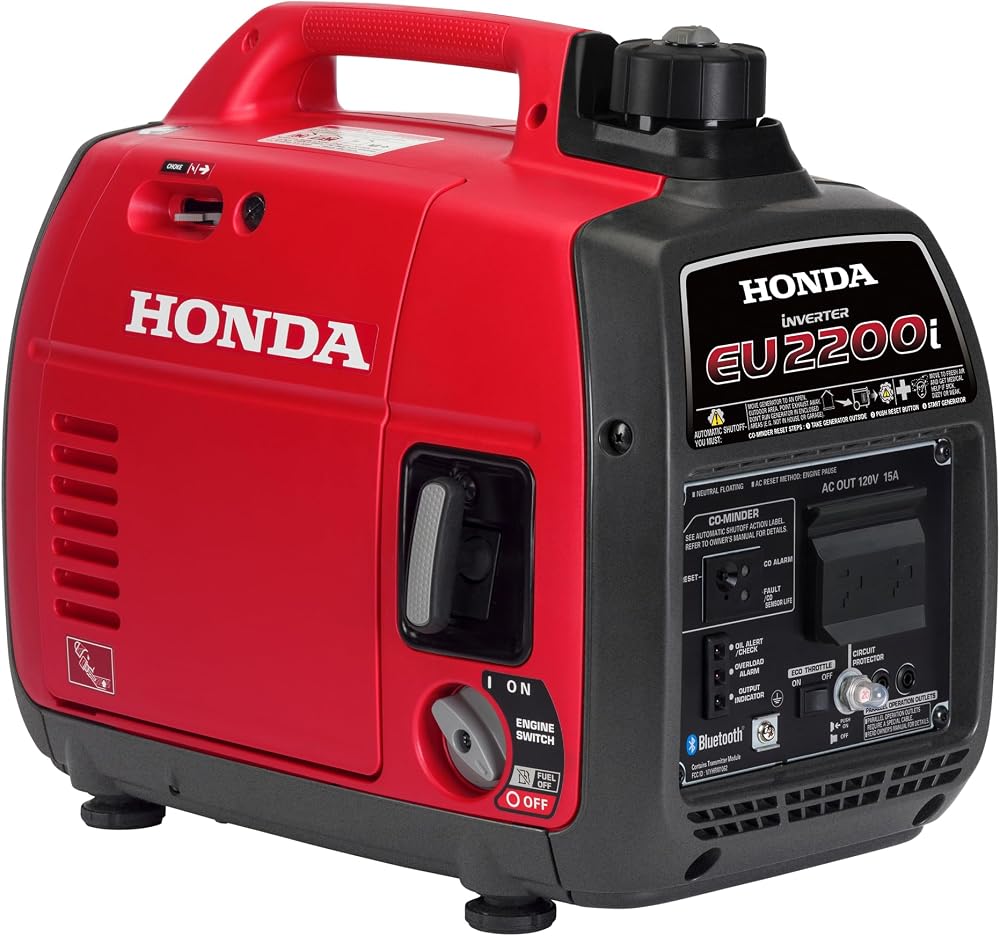
Honda EU2200i Generator
- Dependable, high continuous output that handles tougher appliances
- Excellent fuel efficiency with Eco‑Throttle and long run times
- Parallel capable to scale power with a second unit
- Co‑Minder carbon monoxide shutdown adds safety for portable use
- Proven Honda build quality and broad serviceability
- Heavier and bulkier than comparable power stations
- Requires gasoline and regular maintenance; louder than battery systems
Power Station or Generator: Which Is the Better Choice?
Feature Comparison
| Fast Charging Jackery Explorer 1000 v2 Portable Power Station | VS | Reliable Backup Honda EU2200i 2200W Portable Inverter Generator |
|---|---|---|
Portable battery power station | Product type |
Portable gasoline inverter generator |
Rechargeable LiFePO4 battery (electric/solar) | Power source |
Gasoline (fuel powered) |
1,070 Wh | Battery capacity (Wh) |
N/A (fuel tank capacity: 0.95 gal) |
1,500 W | Continuous AC output (W) |
1,800 W running (2,200 W peak listed) |
3,000 W peak | Surge / Starting watts |
2,200 W starting |
23.8 lbs | Weight |
46.5 lbs |
Varies by load; suitable for overnight charging and multi‑device use (hours at moderate loads) | Typical run time (example) |
4.0 to 9.6 hours on a single tank depending on load |
1.0 hr (emergency fast charge via app); default ~1.7 hrs | Recharge time (AC) |
N/A — refuel in minutes; instant power when started |
AC wall, car port, solar (Jackery panels recommended) | Refuel / recharge options |
Refuel gasoline (no battery recharge) |
Very quiet (≈30 dB reported in use) | Noise level |
48–57 dBA (depending on load) |
3 pure sine wave AC outlets (7 total power ports including DC/USB) | Total AC outlets |
2 AC outlets (model dependent) |
USB‑C PD 100W, USB‑A, car DC | USB / modern ports |
Limited or none (focus on AC output) |
LiFePO4 (LFP) | Battery chemistry |
N/A (engine based) |
Yes — compatible with Jackery solar panels (official) | Solar compatibility |
Not applicable (can be used with battery chargers but no direct solar integration) |
Not typically parallelable like inverter gens; modular expansion limited to ecosystem | Parallel capability |
Yes — can parallel two units with optional cable |
Electronic (plug/charge) | Start type |
Recoil starter (electric start not standard in this spec) |
Minimal — software updates via app; occasional battery health checks | Maintenance |
Requires regular engine maintenance (oil, spark plug, fuel) |
Built‑in BMS, surge and temperature protections | Safety features |
Co‑Minder carbon monoxide sensor/shutdown |
Manufacturer warranty (1 year noted in specs) | Warranty |
Manufacturer warranty (varies by region and seller) |
$$ | Price (relative) |
$$$ |
$469.00 | Current price |
$1,199.00 |
| Buy for $469.00 | Buy for $1,199.00 |
Power Delivery & Real‑World Performance: Battery vs Gas
We start with the core question in this comparison: what each unit can actually run and for how long. The Jackery Explorer 1000 v2 packs a 1,070 Wh LiFePO4 battery and a 1,500 W inverter (3,000 W surge on paper). That combination gives clean, instant power for phones, laptops, CPAPs, small fridges, and many RV basics — but runtime is finite and scales directly with load. The Jackery’s 1‑hour “emergency” fast charge and solar‑friendly architecture change the game for daytime top‑ups: you can run a fridge all morning, recharge quickly midday, and go again without hauling fuel.


Honda EU2200i — continuous grunt and long runtime on fuel
The Honda EU2200i delivers up to 2,200 W of AC power (about 1,800 W continuous in many ratings) with solid surge capacity and proven inverter stability. Because it runs on gasoline, runtime isn’t tied to a battery pack — it runs until you run out of fuel or hit required maintenance intervals. Honda quotes roughly 4.0–9.6 hours on a tank depending on load, and in practice that means reliable starting and sustained operation of kettles, microwaves, window ACs, and power tools.


Surge handling, continuous output, and real‑world choices
Design, Portability & User Experience: How They Feel to Use
How they carry
The Jackery Explorer 1000 v2 is compact and deliberate for car camping: at ~24 lbs, a molded handle, and a plastic shell it’s designed to be picked up and put in a car without thinking twice. That lightness changes what we bring camping — it’s more like another piece of gear than a chore.


By contrast, the Honda EU2200i is purpose-built to be moved when needed but not schlepped for a mile. At ~46.5 lbs with a steel frame and optional electric start on some trims, it feels like equipment. We respect that build for durability, but it changes logistics: two people or a cart become likely for repeated transport.


Noise, placement, and campsite comfort
The Jackery is near‑silent; we can set it inside an RV or just outside a tent with other camp power gear and sleep without disruption. The Honda is quiet for a gas engine (48–57 dBA) but still creates vibration, exhaust smell, and a required buffer for ventilation — which constrains where we can put it.
Maintenance and day‑to‑day care
Interface and ecosystem
We prefer Jackery’s many outputs and app control for modern devices in our portable power lineup; for Honda the physical controls, parallel capability, and serviceability matter when uptime and heavy loads are the priority. In short: Jackery optimizes convenience and quiet; Honda trades portability for rugged, long‑run utility.
Ecosystem, Charging Options & Safety: Integration Matters
Jackery — a modern, plug‑and‑play micro‑grid
We like how the Explorer 1000 v2 slots into a device‑first power station ecosystem: a 1,070Wh LiFePO4 battery, 1,500W AC output, 100W USB‑C PD and app control make it straightforward to run laptops, fridges, and phones. The 1‑hour emergency charge and official Jackery solar-panel pairing change how we plan trips — short solar windows can meaningfully top the unit. Battery chemistry and PD ports make it friendly for sensitive electronics and quick top‑ups.
Honda — fuel, service, and hard‑running safety
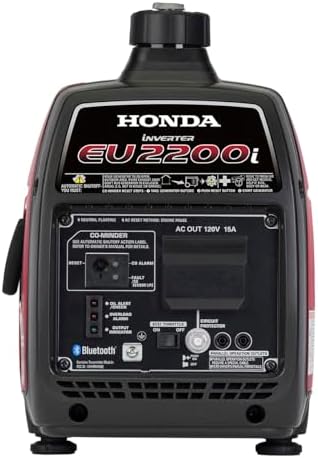
Honda integrates differently for emergency backup: gasoline ubiquity, a proven dealer/service network, and features like Co‑Minder give us confidence for long deployments. The EU2200i’s inverter delivers clean power for sensitive gear, and parallel capability scales to larger loads. For multi‑day continuous use, fuel logistics beat waiting on sun or wall outlets.

Deployment realities: rules, noise, and logistics
We account for regulation and site constraints. Noise limits, campground rules, and emissions can exclude gas generators. Battery stations sidestep fumes and most local permits, but they require charging infrastructure and lifecycle planning (LFP longevity helps here). Fast charging reduces downtime but depends on available AC or solar input.
Key tradeoffs we use when deciding
Cost, Reliability & Best Use Cases: Which One Pays Off?
Upfront price vs total cost of ownership
We look past sticker price to usable energy and ongoing spend. The Jackery Explorer 1000 v2 gives ~1,070Wh in a compact, quiet package; that pack’s cost per usable watt‑hour is higher than the raw dollars you spend on a gasoline generator. What offsets that is near‑zero marginal cost to operate: no fuel, no oil, no hourly wear on a combustion engine. Jackery’s LiFePO4 cell chemistry and advertised ~4,000 cycles mean predictable capacity years down the road.
Fuel, logistics, and ongoing expenses
The Honda EU2200i delivers more continuous power and can run for hours on cheap, widely available gasoline. For sustained, high‑draw work the per‑hour cost (fuel + oil + scheduled maintenance) can still be lower than repeatedly recharging or buying multiple battery packs. The tradeoff: you must manage fuel logistics, fresh gas storage, and periodic servicing.
Reliability and user friction
Battery systems give us silent, emission‑free reliability with consistent output until the pack is drained; they’re lower friction for weekend use or quiet neighborhoods. Small engines are mechanically simple and field‑repairable, and they win when there’s no opportunity to recharge.
Which to pick — quick scenarios
Frequently asked questions
Which is better, Portable Power Station or Generator?
There is no universal winner: Portable Power Station fits some buyers and Generator fits others. We compare specs, daily use, and trade-offs in this guide so you can match the pick to your budget and workflow, not a single spec sheet.
What is the main difference between Portable Power Station and Generator?
Portable Power Station and Generator target overlapping but not identical use cases. The sections above break down design, performance, ecosystem, and value so you can see where each product pulls ahead and where it compromises.
Should I buy Portable Power Station or Generator first?
Buy the product that removes your biggest daily friction first. If Portable Power Station solves your primary pain point, start there; if Generator is the bottleneck in how you actually work or play, prioritize it. Many households add the other later.
Is Portable Power Station worth it over Generator?
Portable Power Station is worth the premium over Generator when you will use the features that justify the price—extra performance, build quality, or ecosystem lock-in. If those extras go unused, Generator usually delivers better value.
Can Portable Power Station replace Generator?
For some users, yes; for others, no. Portable Power Station can cover most tasks Generator handles, but gaps in compatibility, accessories, or specialized workflows may still matter. Use our comparison table and verdict to see which gaps apply to you.
Who should choose Portable Power Station vs Generator?
Choose Portable Power Station if its strengths match how you will use it every day; choose Generator if you need its specific advantages or a lower entry price. When in doubt, favor the option that fixes your most frequent frustration—not the highest spec on paper.
Final Verdict: Pick According to Need (Or Pack Both)
We don’t name a single winner — context decides. For quiet, low-maintenance daily use, quick solar topping, and clean power for laptops, cameras and CPAPs, the Jackery Explorer 1000 v2 is the smarter, modern choice: lightweight design, LiFePO4 longevity, and seamless USB-C ecosystem make it the better fit for camping, RV life, and short outages. For prolonged runtime, powering compressors, pumps or larger appliances where refueling is simple and runtime is king, the Honda EU2200i is the responsible pick: mechanical simplicity, more continuous wattage and on‑the‑fly refuelability matter in long off-grid scenarios.
Our practical recommendation: carry the Jackery for everyday quiet power and add an inverter generator like the Honda when heavy loads or extended outages loom.

Princess Rioboca is the Lead Editorial Writer at Option Cutter, bringing over seven years of hands-on experience in consumer technology journalism. Specializing in home networking and smart home architecture, she transforms complex technical data into practical, real-world upgrades. Princess personally tests and audits every product she reviews—evaluating real-world Wi‑Fi throughput, cable management durability, and streaming ecosystem stability—to filter out spec-sheet noise. Her rigorous, field-tested insights are designed to give readers transparent, unbiased buying advice on what to purchase, what to skip, and exactly why.