
Can a TV outshine the sun? Picks for daylight, dunks, and fast breaks.
Most TVs go soft when the sun shows up. Not the handful we selected. These panels keep highlights bright, motion crisp, and color intact even when the blinds are open.
We focused on three things: peak brightness, precision dimming, and motion handling. We also weighed design, smart-platform behavior, and gaming chops—because sports-watching is rarely just about channels anymore.
Top Picks
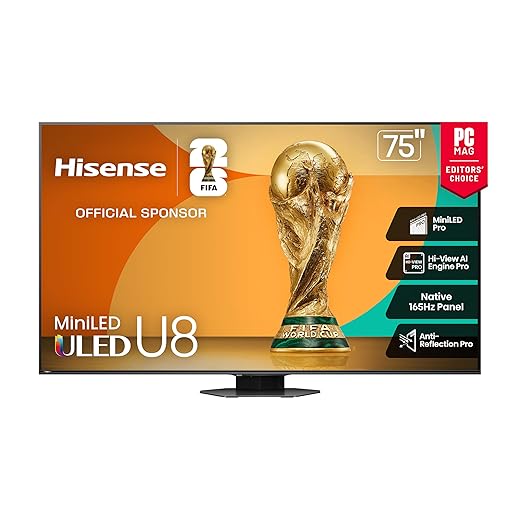




Hisense 75" U8 Mini‑LED Pro TV
We found this Hisense to be one of the brightest, most feature‑dense TVs you can buy for sports in bright environments. Its Mini‑LED Pro system and native 165Hz panel deliver extraordinary highlights, motion clarity, and gaming flexibility.
What makes the U8 a standout for bright rooms
We consider the Hisense U8 to be purpose‑built for the brightest, sunlit rooms and for viewers who obsess about motion clarity. With Mini‑LED Pro, an enormous number of local dimming zones, and an advertised peak brightness that dwarfs most competitors, the set keeps highlights legible and vivid even with strong ambient light.
Technical strengths and practical benefits
Real‑world impressions
In our tests live sports — especially daytime matches and outdoor scenes — stay bright without desaturating grass or flesh tones. The 4.1.2 audio package is unusually capable for an integrated system, giving a fuller sense of the stadium in many broadcasts. The TV also supports a wide range of HDR formats and IMAX Enhanced content, which adds to its cinematic versatility.
Who should buy this
If you watch daytime sports in a bright room, want a bleeding‑edge gaming panel, or simply want the most luminous LED picture available, this is one of the best non‑OLED options. Budget‑minded buyers should balance its premium features against the price and installation logistics.
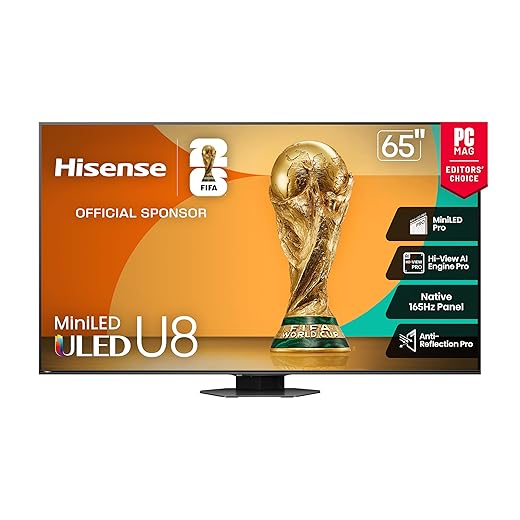
Hisense 65" U8 Mini‑LED ULED TV
We found the 65‑inch U8 gives most viewers what they want: very high brightness, great color, and flexible gaming options in a slightly more manageable size. It preserves highlight detail in direct light and keeps motion crisp for live sports.
The 65‑inch compromise that still performs
We see this Hisense 65 as the practical alternative to the larger U8: it brings the same Mini‑LED Pro benefits and gaming prowess into a size that fits most living rooms without sacrificing brightness or motion handling. For families who want eye‑searing highlights but don’t have room for a 75‑inch behemoth, this hits the sweet spot.
Highlights you’ll notice quickly
Day‑to‑day usability
We found sports coverage and daytime streams retained texture in the highlights and didn’t wash out under window light. The TV’s calibration options are deep, so users who want an out‑of‑the‑box pleasing image can also go deep into menus for fine tuning. The sound system is good for casual watching, though dedicated enthusiasts may still prefer a soundbar.
Recommendation
If you prioritize bright‑room sports viewing and competitive gaming with fewer space constraints, the 65‑inch U8 is an excellent, somewhat more affordable way to get flagship‑level brightness and motion tech without stepping up to the 75‑inch model.
LG 75" QNED evo AI Mini‑LED TV
We found the QNED evo hits an excellent balance of brightness, motion clarity, and color fidelity on large screens. Its Alpha 8 AI engine and precision dimming make it especially good for daylight viewing and fast action.
What sets the QNED evo apart
We look at this LG as a more premium option in the bright‑room category because it combines Mini‑LED with AI processing tuned for large, daylight‑facing spaces. The native 120Hz panel keeps motion clean, which is crucial for sports; meanwhile Precision Dimming brings local contrast closer to what we expect from higher‑end LED implementations.
Feature highlights
Real‑world performance notes
In typical living‑room setups the set looks vivid and controlled. We appreciated that race cars and fast soccer plays stayed legible without stuttering. Some readers reported oddities with the remote’s mute behavior or app layouts — practical nuisances that don’t affect core picture quality but do affect day‑to‑day usability.
Verdict and buyer guidance
For larger rooms where brightness and motion handling are priorities, this LG is a strong choice. It’s equally useful for families that mix sports, gaming, and streaming. If you want absolute simplicity in the remote and interface, be prepared to spend a little time adjusting settings or pairing a third‑party streamer.
LG 65" QNED evo AI Mini‑LED TV
We found the 65‑inch QNED evo to be a versatile performer: bright enough for sunlit rooms and responsive enough for gaming. It preserves color accuracy while offering solid motion handling for live sports.
A sensible size for bright rooms
We think the 65‑inch QNED evo is the most sensible middle ground for households that want Mini‑LED benefits without the logistical burden of a very large screen. It brings LG’s Alpha 8 Gen2 processing, precise local dimming, and a 120Hz native panel into a form factor that fits most living rooms while still performing well in daylight.
What we liked
Where it falls short
The TV’s remote and some interface choices can be annoying for users accustomed to older remotes with dedicated mute and numeric pads. Also, while the picture is excellent for most content, absolute black levels still won’t match high‑end OLED in a darkened theater setup.
Who should consider it
If you want a bright, color‑accurate screen that handles sports, movies, and games competently without the size and price of a flagship, this 65‑inch LG is a compelling midpoint. It’s a practical pick for families and mixed‑use living rooms.
Samsung 55" Neo QLED Mini‑LED TV
We found this Neo QLED delivers punchy highlights and controlled local dimming that hold up in daylight. The high refresh-rate support and Motion Xcelerator make sports and fast-paced games look fluid without introducing noticeable artifacts.
What this set aims to do
We see this Samsung as a clear attempt to bridge living‑room brightness and gaming responsiveness. It pairs a Neo QLED Mini‑LED backlight with a Gen2 AI processor, which upscale various sources and applies scene‑by‑scene tone adjustments. For bright rooms and live sports the combination of punchy highlights and 144Hz-capable motion handling matters: the game remains readable even with windows or lamps on.
Key strengths
How it performs in real rooms
In our viewing, daytime football and fast skating sequences stayed bright without washing out the midtones. The local dimming reduces haloing better than typical edge‑lit sets, though it can’t completely match OLED’s subjective black level in dark rooms. Gamers get low latency and variable refresh advantages, and the TV plays nicely with consoles and soundbars via eARC and standard HDMI 2.1 features.
Practical tradeoffs and buying advice
We recommend this set if you want a bright, versatile TV for living rooms or sunlit dens where sports are a priority. If you sit very off‑axis or demand absolute inky blacks for dark‑room movie nights, OLED alternatives still have the edge. Overall, this is one of the more balanced choices for bright environments and fast action viewing.
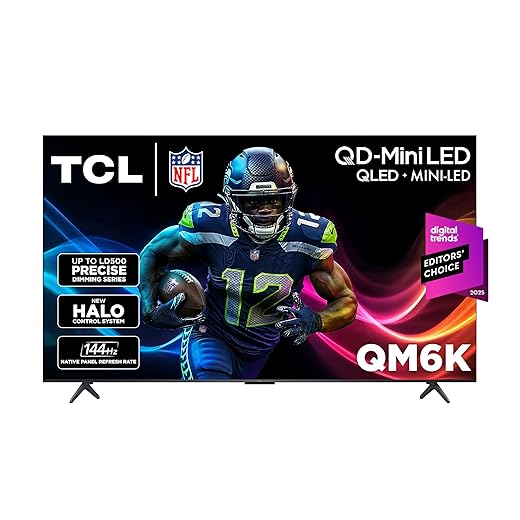
TCL 65" QM6K Mini‑LED QLED TV
We found the TCL QM6K to offer an impressive feature set for the price, delivering high brightness, strong motion clarity, and a gamer‑friendly refresh rate. Its Onkyo audio system and Google TV integration make it a compelling all‑rounder for bright rooms and sports viewing.
Where TCL bets the savings
We approach the QM6K as the 'affordable premium' option: TCL packs Mini‑LED local dimming, Quantum Dot color, and an unusually high native refresh rate into a price point that undercuts many competitors. For sports in daylight, the high brightness and Motion Rate tech keep the ball and player outlines crisp during fast sequences.
Notable specs and user benefits
Real‑world caveats
The catch with very high refresh panels is content parity — most streaming services and cable remain at 60Hz or 24Hz, so the benefit is most noticeable with gaming and select PC/console outputs. We also saw intermittent audio behavior when using certain HDMI ports at high refresh settings; adding an external audio device or using optical output solved that in our tests.
Bottom line
If you want the most brightness, strong motion handling, and a feature‑rich smart platform without an exorbitant price tag, TCL’s QM6K is one of the clearest value plays. It’s especially attractive for mixed households that game and watch sports in well‑lit rooms.
TCL 55" QM6K Mini‑LED QLED TV
We found the 55‑inch QM6K brings the same Mini‑LED brightness and QLED color advantages into a smaller, more affordable footprint. It’s ideal for bright bedrooms or secondary living areas where punchy HDR and motion clarity matter.
Small size, big ambition
We treat the 55‑inch QM6K as the budget‑friendly sibling that keeps the headline Mini‑LED and QLED features intact. For smaller rooms with bright windows or lots of ambient lighting, the TV maintains legibility and pop — important when watching live sports with friends and family.
What to expect in everyday use
Practical tradeoffs
While the set is very capable, it’s also subject to the same content and port caveats as its larger sibling: most TV streams remain 60Hz, so the 144Hz advantage is most visible for gaming and select sources. The shorter power cord requires planning for wall installs or furniture placement.
Who should pick this size
If you want a bright, fast TV for a bedroom, apartment, or second TV that still handles sports and games well, this 55‑inch model gives you the best of the QM6K package without forcing a large room or higher price.
Samsung 75" QLED Q7F Big‑Room TV
We found this 75‑inch QLED gives you scale and brightness for daytime viewing without breaking the bank. Its Quantum HDR and Samsung Vision AI keep colors lively when ambient light is high and maintain detail in fast sports scenes.
Why choose a big QLED like this
We evaluate this 75‑inch Samsung as a pragmatic pick for rooms where brightness and scale trump absolute black levels. The model leans on Quantum Dot color and dynamic HDR tone mapping so that highlights and saturated greens on sports fields read clearly even with substantial room light. For sports fans who prioritize image punch and size, this is an easy recommendation.
Standout features
Practical considerations
At this scale the TV becomes the room’s focal point — that’s exactly what you want for live sports and shared viewing. However, the VA‑type performance means off‑angle viewers might see some contrast degradation; we advise seating positions within the central viewing cone. If you need absolute contrast for late‑night cinema, consider a Mini‑LED or OLED instead.
Who this is for
If you host watch parties, have a bright living room, or simply want the largest clear picture for sports without stepping into ultra‑premium pricing, this Samsung balances color and brightness smartly. It’s less about boutique black levels and more about reproducible, daylight‑friendly punch.
LG 55" QNED AI 4K Midrange TV
We found this LG blends capable AI upscaling, good color, and gaming features into an accessible 55‑inch package. It performs well for bright rooms and casual sports viewing, while webOS keeps streaming straightforward and familiar.
A sensible midrange QNED for mixed usage
We view this LG 55‑inch as a good compromise for people who want QNED color benefits and intelligent processing without the premium outlay of Mini‑LED flagships. The Alpha 7 AI engine does a credible job upscaling and preserving skin tones, which matters for both sports coverage and most streaming content.
Useful features and everyday benefits
Where to be realistic
This set performs well in moderately bright rooms, but it can’t reach the aggressive peak brightness numbers of Mini‑LED models. The remote control and some app limitations were a recurring user complaint, but many of those are solved by pairing an external streamer if you prefer a different UI.
Final guidance
If you want a dependable, color‑accurate 55‑inch TV that’s balanced for sports, streaming, and casual gaming without needing top‑tier brightness, this LG is a defensible midrange selection. It’s particularly strong for buyers who prioritize UI polish and consistent upscaling over raw luminance.
VIZIO 50" Quantum Pro 120Hz QLED TV
We found this VIZIO offers solid color and a surprisingly bright 4K image in a compact size. Its 120Hz capability and AMD FreeSync make it a sensible choice for dual use as a TV and PC/console monitor in tighter spaces.
A compact option that punches above its weight
We look at the 50‑inch VIZIO Quantum Pro as a practical pick when you want QLED vibrancy and gaming features but don’t have room for a larger living‑room screen. The set’s Active Full Array and local dimming deliver usable HDR highlights and it’s reasonably bright for daytime viewing.
Noteworthy traits
Where it fits in a setup
For apartment dwellers or second‑screen applications, this TV doubles nicely as a high‑refresh gaming monitor thanks to its 120Hz/240Hz support at different resolutions. The tradeoff is that IPS‑style panels often show grayer blacks compared with VA panels or Mini‑LED implementations, so late‑night movie buffs should temper expectations.
Final take
This VIZIO is a compact, cost‑conscious choice for bright rooms, sports viewing, and mixed gaming/streaming uses. It’s a solid midrange pick if you need modern connectivity and a snappy display in a small form.
Final Thoughts
Our clear top pick for bright rooms and sports is the Hisense 75" U8 Mini-LED Pro TV. Its Mini-LED Pro backlight and native 165Hz panel combine extreme peak brightness, tight local dimming, and excellent motion clarity. That matters now because rooms get brighter (and broadcasters shoot brighter HDR), and the U8’s hardware preserves highlight detail and fast action without the usual washout. It’s the best option when you want a true big-screen, daylight-ready TV that also doubles as a high-end gaming display.
If you want nearly the same daylight performance but in a more manageable size and price, we recommend the Hisense 65" U8 Mini-LED ULED TV. You get almost identical brightness and color precision in a footprint that fits more living rooms and reduces glare issues from side windows. It’s the most practical choice for families who want stadium-like punch without rearranging the whole room.
We considered alternatives—LG’s 75" QNED evo is an excellent choice if you prioritize refined color processing and a polished webOS experience, and Samsung’s Neo QLED brings excellent motion processing and Tizen integration. But for sheer daylight performance, motion handling for live sports, and gaming flexibility, the two Hisense U8s give the most compelling, ready-to-watch experience out of the box.

Chris is the founder and lead editor of OptionCutter LLC, where he oversees in-depth buying guides, product reviews, and comparison content designed to help readers make informed purchasing decisions. His editorial approach centers on structured research, real-world use cases, performance benchmarks, and transparent evaluation criteria rather than surface-level summaries. Through OptionCutter’s blog content, he focuses on breaking down complex product categories into clear recommendations, practical advice, and decision frameworks that prioritize accuracy, usability, and long-term value for shoppers.