
We Think ‘Slow’ Is Mostly About Everything Around the CPU
When a laptop feels sluggish we usually blame the CPU. Yet most of the time the issue lives elsewhere: storage microbehavior, thermal limits, RAM pressure, background services, GPU compositors, or network hops. We’re interested in perceived speed—how fast the UI feels, how quickly apps launch, and how smooth multitasking is. Those are what users notice in everyday life.
In this piece we peel back the layers in our editorials that actually shape that experience. We’ll explain hardware choices, firmware. Along the way we’ll show why these factors matter now, as manufacturers push thin designs, aggressive power caps, and cloud integration. It’s not just silicon.


Fix Laptop Lag Fast: Simple, Practical Fixes
Storage First: Why Disk Type and I/O Patterns Shape Everyday Speed
Why the disk often decides “snappiness”
We’ve seen it a hundred times: a laptop with a modern CPU still feels pokey because the storage can’t feed it data fast enough. App launches, wake-from-sleep, Spotlight/Start menu searches and OS updates are all lots of tiny reads and writes. That workload favors low queue-depth random latency—milliseconds per 4k. In plain terms: throughput matters for copying big files; latency and IOPS matter for the UI feeling responsive.
Drive types, simply compared
The real cost of small, soldered drives
Manufacturers chasing thinness often solder small SSDs (128–256 GB). Those drives have less spare area and often no DRAM, which degrades random-write performance as they fill up. The result: everyday slowdowns, longer app installs, and throttled background updates. You can’t upgrade them, and relying on cloud storage only hides the problem for people with limited bandwidth.
Signals to look for when buying
Quick troubleshooting checklist
Thermals, Cooling, and Power Limits: The Hidden Brakes on Speed
Why peak clocks aren’t the whole story
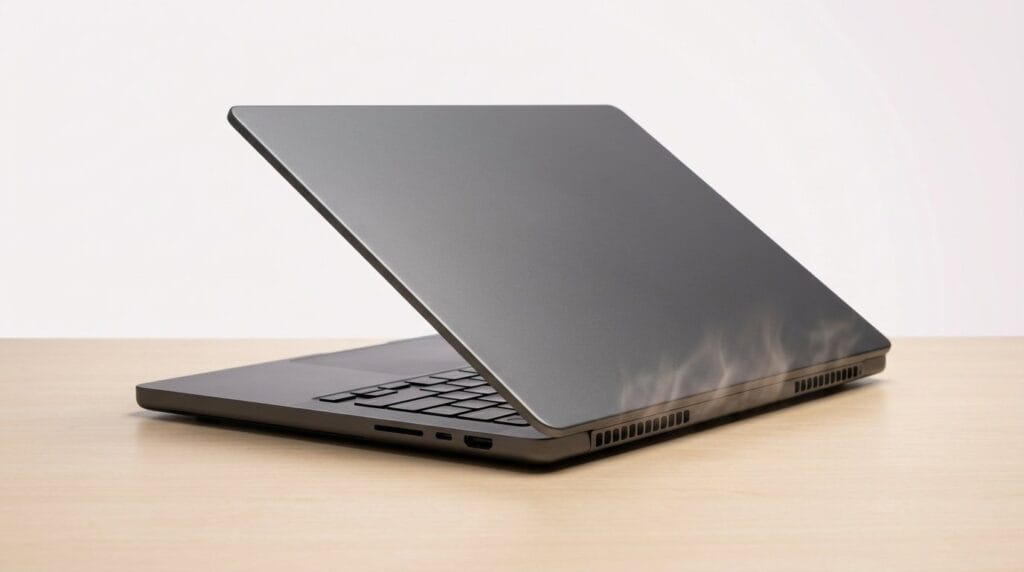
We love specs too, but raw ghz. Manufacturers build laptops to hit high turbo clocks for a few seconds—enough to launch an app or run a benchmark headline. Sustained work (compiles, video exports, long browser sessions) pushes heat and power demands past that momentary window. When the heat or power budget tops out, the system pulls clocks down: that’s thermal or power throttling, and it’s why a machine can feel zippy for a minute and then fade.
What design choices matter
Thin, quiet laptops trade cooling capacity for portability. The real mechanical parts that decide sustained speed are obvious when you look closely:
Compare a MacBook Air M2 (fanless) to a MacBook Pro 14 with bigger fans and vapor chamber: both feel fast out of the gate, but the Pro keeps going under long loads. Gaming machines (Razer Blade, Legion) typically allow much higher sustained power at the expense of noise and bulk.
How firmware, OS profiles, and chargers change the game
Power limits live in firmware and are exposed as OS power profiles. Dell’s thermal modes, Lenovo Vantage, or macOS “Low Power” vs “High Power” change how aggressively the system will burn juice and spin fans. Using a low-wattage adapter can cap performance even when plugged in—always use the rated charger for true sustained speed.
Measure it, then mitigate it
Quick tests
Practical fixes
Next up: how limited memory and aggressive swapping interact with these thermal and power constraints to shape perceived snappiness.
Memory and Multitasking: When RAM and Swap Determine Responsiveness
How RAM limits turn into visible lag
We often open a dozen tabs, a chat client, Slack, and a VM and expect instant switching. When physical RAM fills, the OS must make room: it either writes least‑used pages to disk (swap) or keeps them compressed in RAM. Both strategies are a budget — compressed memory trades CPU cycles to avoid I/O, while swapping trades I/O (slow on HDDs or low‑end NVMe) for space. The result is predictable: stutters, long app launches, and jerky UI when the system is trying to move memory pages around.
Integrated GPUs and unified memory
Many thin laptops use integrated GPUs that pull from system RAM (Intel Iris Xe, AMD iGPUs, and Apple’s unified memory on M1/M2). That reduces usable RAM for apps, so an “8GB” laptop can feel like a 6GB machine in real use. We’ve seen otherwise snappy ultrabooks become sluggish simply because the GPU and several Chrome tabs were sharing the same pool.
Why soldered RAM matters for longevity
Manufacturers solder RAM to save space, improve signal, and cut costs in thin designs. That helps chassis thinness and battery life, but it kills upgrade paths. Given rising software memory needs, a soldered 8GB config that passes benchmarks today can be borderline in two years. If you want a laptop for a long life, favor upgradeable lines (ThinkPad T/ X1 Extreme with SODIMMs, Framework, many Dell Precision models).
Practical checks and quick fixes
Next, we’ll look at how background software and vendor add‑ons further weigh down that limited memory pool.
Software, Background Services, and Vendor Add-ons: The Invisible Weight
Why background work feels like a hardware problem
We expect a laptop to “snap” when we open an app, but that snappiness is an emergent property of many small things running out of sight. Indexers (Windows Search, Spotlight), auto‑updaters, telemetry uploads, antivirus scans, and scheduled maintenance all compete for disk I/O, CPU slices, and wake the storage subsystem. On modest hardware, a single background scan can turn a fluid UI into a stuttering mess, so these invisible processes feel indistinguishable from a weak CPU.
OEM utilities: branding vs. baseline performance
Manufacturers ship utilities—battery managers, update assistants, branded control panels—to try to differentiate designs and lock users in. They’re useful in principle, but too often they run at startup, hog resources, or retry failed tasks aggressively. Think Lenovo Vantage, HP Support Assistant, or excess driver updaters that duplicate OS functionality. The result is a “feature tax”: prettier marketing at the cost of worse out‑of‑box responsiveness.
Cloud sync and constant background I/O
Services like OneDrive, Dropbox, Google Drive, and backup agents are continually reading, hashing, and uploading files. On laptops with slower NVMe controllers or when many small files change (think project folders or Photos libraries), continuous sync equals continuous I/O contention — especially during start, wake, or large app saves.
How we diagnose and tame the load (practical steps)
In practice, software discipline buys more perceived speed than the next CPU upgrade; next we’ll examine how the GPU and compositor layer shape the rest of that snappy experience.
Graphics, Compositors, and UI Design: Why the GPU and Software Stack Affect Snappiness
How the graphics pipeline shapes what we feel
UI smoothness isn’t just frames per second in games — it’s whether the OS and apps can hand off composed pixels to the display without hitching. Even with a fast CPU, a misbehaving driver, a busy compositor, or a weak GPU can cause dropped frames during scrolling, window resizes, and animations. We’ve seen webpages “jitter” with CPU at 10% simply because the compositor can’t finish its work in time.
Integrated vs. discrete GPUs for everyday use
Integrated GPUs (Intel Iris Xe, AMD RDNA2 iGPUs in Ryzen chips, Apple’s M-series GPU) are perfectly capable for a fluent desktop when drivers and the software stack are tuned. Discrete GPUs give headroom for high-res external displays or heavy effects, but they’re overkill for many of us and can add power/throttle complexity. The practical point: good integrated graphics plus solid drivers often beats a generic discrete chip paired with poor software integration.
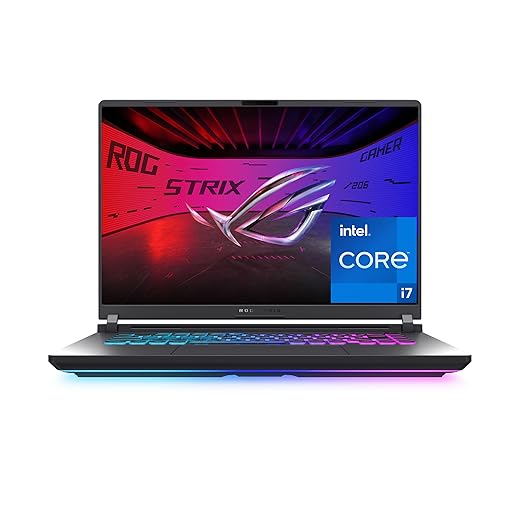
Compositors, OS differences, and visual effects
Compositors (Mutter/Wayland, Windows DWM, macOS WindowServer) do the heavy lifting. macOS benefits from vertical integration—hardware, drivers, and compositor are co‑designed, so animations feel predictably fast. On Windows and Linux, experience varies widely by vendor and driver maturity. High-refresh displays (120Hz, 165Hz) and blur/transparency effects shift more work to the GPU; if that work isn’t accelerated, everything feels sluggish.
Practical checks and fixes we recommend
Next, we’ll look at how network and cloud dependencies amplify these perceptual problems when the device is waiting on the internet.
Network and Cloud Dependencies: Perceived Speed Often Lives Off the Device
Why the internet often decides “snappy”
We’ve moved workflows off the local machine: documents autosave to the cloud, apps stream UI or compute, and single‑sign‑on waits for an auth server. That means a laptop with a zippy CPU can still feel lethargic if a REST call is slow, a sync engine is blocking IO, or an auth timeout stalls an app launch. In practice, latency (response time) hurts interactivity more than raw bandwidth — a 100 ms delay before an editor opens is more noticeable than a 50 Mbps download.
Ecosystems trade convenience for surface area
Tight vendor integrations (iCloud + iPhone, OneDrive + Windows, Google Drive on ChromeOS) make multi‑device continuity magical — but they also expand the failure surface. In well‑connected homes Apple or Microsoft can mask weaker hardware by offloading tasks; in rural or traveling scenarios that same design exposes us to disproportionate lag. We’ve seen midrange Windows laptops feel slower than older Macs because background OneDrive or Teams syncers saturate connections or block file access.

Quick tests to separate local vs network problems
How to reduce network‑caused slowness
These checks and habits help us know when the internet — not the silicone — is throttling our day, which leads into how to prioritize fixes and upgrades in the conclusion.
What We Take Away and How to Improve the Feeling of Speed
We conclude that perceived speed is multi‑dimensional: everyday snappiness is driven as much by storage type and I/O patterns, thermals and power limits, RAM and swap behavior, software cruft, the graphics/compositor stack, and network dependencies as by raw CPU clocks. In today’s market these trade‑offs matter because vendors sell peak cores and GHz while comfort, latency, and consistent performance hinge on system balance and cooling.
Quick fixes: upgrade to NVMe where possible, free up or reorganize storage, add RAM or quit heavy apps, tune power profiles, and audit background services. When buying, prioritize usable fast storage and good cooling over headline CPU specs. Understand your workflow.
Frequently asked questions
What is the main point of “Why Your Laptop Feels Slow (And It’s Not the CPU)”?
This piece explains where why your laptop feels slow (and it’s not the cpu) matters in real buying decisions—not just headline specs. We focus on trade-offs, who benefits most, and what to verify before you spend.
Who should read this why your laptop feels slow (and it’s not the cpu) guide?
Read it if you are actively shopping, upgrading, or trying to separate marketing claims from day-to-day use. Skip it if you already own the gear and are not planning a change this season.
What changed recently around why your laptop feels slow (and it’s not the cpu)?
Prices, firmware, and feature tiers shift quickly in this category. We call out what is new enough to affect your decision and what is incremental hype you can safely ignore.
How should I use this editorial when buying?
Treat it as context before you compare models: note the risks and priorities here, then cross-check specs and current pricing on the picks that match how you actually use the product.
What is easy to get wrong about why your laptop feels slow (and it’s not the cpu)?
Buyers often overweight one spec—brightness, speed, or brand—and underweight fit for their room, ecosystem, or warranty support. We flag the mismatch we see most often in reader questions.
Where should I go next after reading?
Use the related comparisons and top picks linked near the end of this article for model-level shortlists, then confirm return policies and compatibility with the devices you already own.

Iqra Jumar is Option Cutter's editorial writer. She writes practical editorials and buyer guides that focus on real-world upgrades—better Wi‑Fi, cleaner cable setups, smarter streaming, and everyday fixes—not spec-sheet noise alone. Her work helps readers decide what to change now, what to skip, and why.