We weigh hands‑free comfort against quick‑access convenience, testing design, device fit, and commute ecosystems to tell you which bag actually improves your workday — and why that choice matters now.
We set out to judge whether modern backpacks—specifically the Peak Design Everyday Backpack 30L and V3 20L—outperform messenger bags for work. We test real workflows in this comparison, ergonomics, and ecosystem fit, analyzing access, comfort, and modular camera and laptop integration so you can choose the best daily work carry without unnecessary compromise.
Camera Hauler

Everyday Commuter

Peak Everyday 30L
- Exceptional configurable organization with FlexFold dividers for camera and work gear
- Multiple access points (MagLatch top + dual side UltraZips) speed up retrieval
- Durable, weather-resistant recycled shell and thoughtful hardware details
- Expandable main compartment and external straps for oversize items
- Heavier profile when fully loaded—straps feel less supportive on long carries
- Price is on the high side for a commuter bag
Peak Everyday 20L
- Streamlined, office-friendly silhouette that still holds camera gear and a laptop
- Same thoughtful access and FlexFold organization in a more commuter-friendly size
- Weatherproof shell and excellent hardware make it reliable in daily use
- Better day-long comfort for lighter loads compared with larger variants
- Limited interior volume for larger camera kits or longer trips
- Still relatively expensive compared with generic commuter backpacks
Feature Comparison
| Camera Hauler Peak Everyday 30L | VS | Everyday Commuter Peak Everyday 20L |
|---|---|---|
6 / 10 | Comfort |
7.5 / 10 |
10 / 10 | Organization & accessibility |
9.5 / 10 |
9 / 10 | Build quality & weather resistance |
9 / 10 |
7 / 10 | Value for work/commute |
8 / 10 |
$299.95 | Current price |
$279.95 |
| Buy for $299.95 | Buy for $279.95 |
EDC Battle: Backpack vs. Messenger Bag — Ultimate Everyday Carry Guide
Design and Build: How Form Factor Shapes Your Workday
Materials and volume: durability vs carry weight
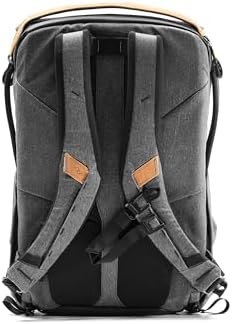
Peak Design uses a weatherproof, recycled shell and robust hardware on both packs — waterproof fabrics explain why coated shells resist rain better than untreated nylon. The 30L is a more capacious, travel-ready shell (roughly 4.5 lb empty) that swallows extra lenses, chargers, and a 16″ laptop. The V3 20L pares that down to a sleeker, lighter silhouette—easier for daily commutes but with less margin for extra kit. Those pounds matter on transit and when we dash between meetings.

Access: MagLatch top and dual side entry
Both use Peak Design’s MagLatch top for quick, one-handed top access and water-resistant UltraZips for side loading. That combination beats a single flap for secure, weatherproof reach: we can grab a notebook from the top, then pull a camera from the side without taking the bag off. The 30L’s expandable main compartment gives more room to reconfigure; the 20L keeps access identical but with a tighter internal envelope.


Organization and laptop fit: FlexFold vs fixed pockets
FlexFold dividers let us mix camera cubes and office layouts in our backpacks & bags guide. The 30L accommodates a 15″/16″ laptop plus documents with spare room for lenses; the 20L fits up to 15″ laptops but forces stricter choices about what accompanies our laptop. For client visits, the 20L reads as an office bag; the 30L reads as a hybrid kit bag that still works as a commuter.
How these choices compare to messenger-bag cues
Messenger bags offer immediate flap access and single-shoulder carry—great for quick retrieval and lightweight urban cycling. But they sacrifice even weight distribution, weatherproofing, and the secure multi-pocket organization the Peak Design backpacks provide. In practice, we find backpacks give better comfort and equipment protection for multi-stop workdays; messengers still win when you need the absolute fastest access and minimal bulk.
Key trade-offs
User Experience and Daily Use: Access, Comfort, and Organization
Load distribution and comfort
On the shoulder, the 30L is noticeably more travel-ready: its wider chassis and thicker back panel spread weight across our backs — dual-strap carry helps when we carry multiple lenses, chargers, and a 16″ laptop. That said, a fully loaded 30L can feel heavy on longer walks—strap padding is good, but the pack’s mass is still felt. We reach for it when we expect to haul extra kit or pack for a client shoot in our travel accessories aisle.


The 20L trades capacity for nimbleness. It sits closer to the body, moves less on transit, and feels lighter with a day’s worth of work gear. For single-camera setups, a 15″ laptop, and commuter essentials, the 20L is more comfortable across a full day.


Access and quick retrieval
MagLatch top plus dual side UltraZips makes rapid, weatherproof access a practical habit: we can open the top for a notebook or swing a side zipper to snatch a lens without fully doffing the pack. That pattern beats most backpacks and closes the gap on messenger-style immediacy.
Organization with FlexFold dividers
FlexFold gives us modularity: camera cells, chargers, and a laptop sleeve live without mutual clutter. On the 30L we stack more cubes and spare lenses; on the 20L we prioritize one camera, a lens or two, and daily office bits. The dividers reduce rummaging and keep fragile kit separated from cables and documents.
When sling-style access wins
Messenger or sling bags still win when you need instant, one-handed access while standing on a bike or passing documents quickly. But for multi-stop commutes, heavier kits, or wet weather, the Peak Design backpacks’ balanced carry, secure closure, and structured organization deliver a safer, more comfortable workday.
Key takeaways
Ecosystem Integration: Accessories, Camera Carry, and Compatibility
We’ll evaluate how these Peak Design bags fit into a broader kit—anchors, straps, tripod carry, laptop sleeves, and camera integration—showing how the brand ecosystem amplifies utility. We’ll also discuss marketplace expectations: hybrid bags and modular systems are trending, so we’ll explain how the 30L and V3 20L stack up versus messenger alternatives that promise similar versatility.
Anchors, straps, and third‑party gear
Peak Design builds a tightly integrated accessory ecosystem (Anchor Links, Capture Clip, straps, and tripod mounts) and both backpacks play well with it. That means we can convert either pack into a sling or secure a camera to the bag without jury‑rigging.


Tripod, external carry, and travel kit
The 30L’s larger chassis and beefier external straps make regular tripod carry and travel layering seamless. We can lash a travel tripod or an extra jacket without crowding the FlexFold interior. For shooting days or client work, that expandability matters.
Camera integration and internal organization
FlexFold dividers are the real bridge between camera and commute. They create dedicated protected cells while preserving quick access to cables or notebooks. The 20L keeps one-camera setups tidy and office‑friendly; it’s a better daily compromise if we don’t need spokes of lenses.


How they compare to hybrid messengers
Messengers still beat backpacks for one‑handed access and document retrieval. But most modular messengers lack the weatherproof shell, structured FlexFold system, and luggage‑ready design Peak Design offers. In short: choose a messenger for constant sling use; choose the 20L for daily hybrid carry; choose the 30L when you need true camera+travel capacity.
Value and Competitive Context: Who Should Buy Which and Why
We’ll analyze price-to-features and competitive offerings on Amazon and beyond, placing the 30L and 20L in context with messenger bags and other commuter backpacks. We’ll profile the ideal user for each Peak Design model—photographers and frequent travelers versus streamlined daily commuters—and list specific scenarios where a messenger bag still makes sense.
Price-to-features: are these worth the premium?
Both packs live in the premium commuter tier ($300 for the 30L, ~$280 for the 20L). What we get for that price is a weatherproof shell, MagLatch top access, dual UltraZip side zips, and the FlexFold modular system — features most sub-$150 commuter backpacks don’t offer. That extra cost buys durability, integrated camera protection, and a luggage-friendly silhouette; it’s value if you need those capabilities daily.
Who should buy the 30L
The 30L is for people who blend work with serious gear or frequent travel. It’s bigger, expandable, and better for multi-lens kits plus clothes and a 15″/16″ laptop. Buy this if you:
Who should buy the 20L
The 20L is the better pick for city commuters who prioritize a lower profile and lighter day-to-day comfort. It still holds a laptop and a camera body with 1–2 lenses, but won’t swallow a full kit. Buy this if you:
When a messenger bag still makes sense
In short: choose Peak Design for modular protection and weatherproofing; choose a messenger when instant one‑shoulder access or a lighter profile beats camera capacity.
Frequently asked questions
Which is better, Backpack or Messenger Bag?
There is no universal winner: Backpack fits some buyers and Messenger Bag fits others. We compare specs, daily use, and trade-offs in this guide so you can match the pick to your budget and workflow, not a single spec sheet.
What is the main difference between Backpack and Messenger Bag?
Backpack and Messenger Bag target overlapping but not identical use cases. The sections above break down design, performance, ecosystem, and value so you can see where each product pulls ahead and where it compromises.
Should I buy Backpack or Messenger Bag first?
Buy the product that removes your biggest daily friction first. If Backpack solves your primary pain point, start there; if Messenger Bag is the bottleneck in how you actually work or play, prioritize it. Many households add the other later.
Is Backpack worth it over Messenger Bag?
Backpack is worth the premium over Messenger Bag when you will use the features that justify the price—extra performance, build quality, or ecosystem lock-in. If those extras go unused, Messenger Bag usually delivers better value.
Can Backpack replace Messenger Bag?
For some users, yes; for others, no. Backpack can cover most tasks Messenger Bag handles, but gaps in compatibility, accessories, or specialized workflows may still matter. Use our comparison table and verdict to see which gaps apply to you.
Who should choose Backpack vs Messenger Bag?
Choose Backpack if its strengths match how you will use it every day; choose Messenger Bag if you need its specific advantages or a lower entry price. When in doubt, favor the option that fixes your most frequent frustration—not the highest spec on paper.
Final Verdict: Which Works Best for Work?
We choose the Everyday Backpack 30L as the overall winner for work: it balances capacity, ergonomic comfort, and ecosystem versatility for laptop, camera, and travel needs.
Pick the V3 20L for lighter daily carry and city commutes; choose a messenger for quick single‑shoulder access and client meetings. We suggest trying both sizes via Amazon returns to confirm fit — what will you bring tomorrow?

Princess Rioboca is the Lead Editorial Writer at Option Cutter, bringing over seven years of hands-on experience in consumer technology journalism. Specializing in home networking and smart home architecture, she transforms complex technical data into practical, real-world upgrades. Princess personally tests and audits every product she reviews—evaluating real-world Wi‑Fi throughput, cable management durability, and streaming ecosystem stability—to filter out spec-sheet noise. Her rigorous, field-tested insights are designed to give readers transparent, unbiased buying advice on what to purchase, what to skip, and exactly why.