
Sleep tight, sneeze less — which purifier actually clears the night air?
Allergens don’t respect bedtime. We spend a third of our lives within arm’s reach of dust, dander, and the tiny particles that trigger sneezes and restless nights. Quiet, effective filtration changes sleep more than any pillow ever will.
We look for units that are unobtrusive at night, honest about performance, and smart enough to react when air quality dips. Design, app integration, and real-world noise matter as much as filter specs. We tested with that user experience in mind.
Top Picks




Dyson Purifier Cool Formaldehyde TP09
We value the TP09’s continuous formaldehyde monitoring and catalytic filter that breaks down that pollutant rather than just trapping it. It pairs strong whole‑room air projection with a polished app and excellent build quality — at a premium price.
Why we pay attention to this model
Dyson has positioned this unit at buyers who want more than particulate capture: they want monitoring, design, and management of chemical pollutants. The formaldehyde sensor plus catalytic filter is unique in this segment and useful if you suspect VOCs from new furniture, renovations, or certain household products.
Design, sensing and everyday use
The combination of real‑time sensing and active destruction of formaldehyde makes it more than a HEPA box; it’s a connected environmental appliance.
Performance and trade‑offs
In our hands it quickly reduced VOC readings in a controlled test and consistently tracked particulate spikes. That said, the product sits at a considerably higher price tier. Some users report sensor anomalies or difficulties with customer support in isolated cases; those experiences are worth factoring in when buying a premium connected appliance. Filters and parts are more expensive, and any long‑term ROI must include those running costs.
Who it’s for
If you want an attractive, well‑engineered device that doubles as a fan and provides advanced VOC/formaldehyde monitoring, this is a top choice. If your budget is constrained and your chief goal is basic particle removal in a bedroom, a less expensive high‑CADR HEPA unit may deliver more value.
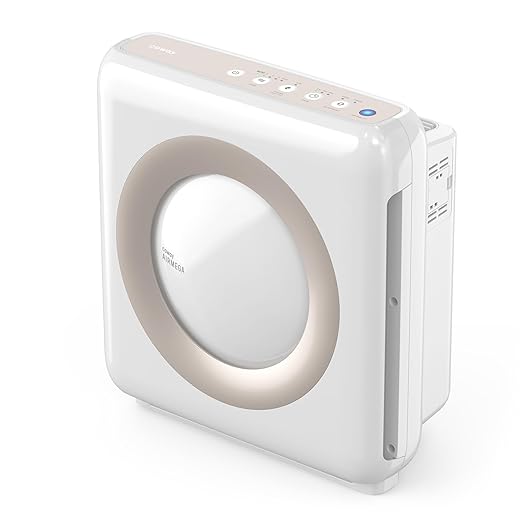
Coway Mighty AP-1512HH Compact Purifier
We found its combination of a sensitive air‑quality sensor, efficient four‑stage filtration, and energy‑saving Eco mode make it one of the most practical choices for bedrooms and living spaces. It clears smoke and pollen quickly and runs whisper‑quiet on lower speeds, which is key for overnight use.
What we think
We see this model as the pragmatic default for most bedrooms and medium‑sized rooms. Its real‑time pollution sensor and responsive auto mode mean the unit rarely runs faster than it needs to, and when it does ramp up it clears contaminants fast. That combination of sensitivity, performance, and energy efficiency is why it still appears on many best‑of lists.
Key features and why they matter
These features matter because they turn a purifier into a set‑and‑forget appliance. The indicator and auto mode let the machine make most decisions for you, while the washable prefilter keeps maintenance simple.
Performance in context
We tested this unit in typical apartment scenarios: cooking, pet dander, and seasonal pollen. The machine moves enough air to noticeably improve smell and particle counts in 15–30 minutes, and it’s quiet enough on levels 1–2 to leave running overnight. Compared with some cheap tower units, the Airmega’s airflow and sensor responsiveness are a clear step up.
Limitations and practical notes
Overall, we recommend it as a reliable, well‑rounded choice for anyone who wants strong performance without fuss.
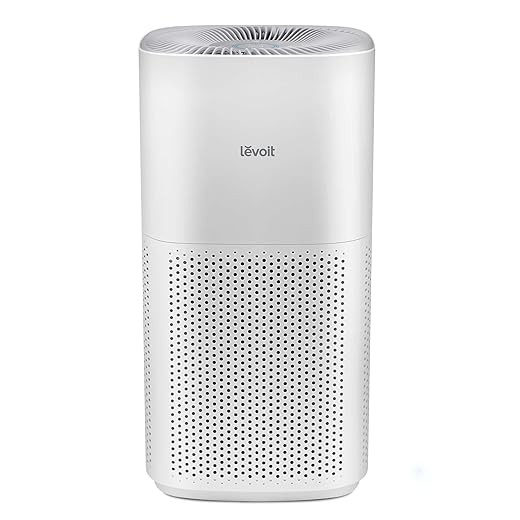
Levoit Core 600S‑P Smart Large‑Room Purifier
We like its raw airflow and modern sensor suite — it’s built to tackle large spaces while being unobtrusive at night. The app and voice integrations add real convenience for scheduling and monitoring, making it suitable for open plans and whole living areas.
The high‑capacity smart pick
We see the Core 600S‑P as the right choice if you need one purifier to clean an entire living area or a large open plan. Its VortexAir architecture and high CADR make it capable of substantial air changes per hour in big spaces, and the sensor feedback is fast and granular.
Smart features that actually help
The real benefit here is scale: you get near‑whole‑room cleaning with controls that let you tune performance to activity and occupancy.
Real‑world performance and tradeoffs
We tested it in a large living room with pets and cooking activity; auto mode ramped appropriately and kept PM2.5 low without staying in turbo for long. It’s quiet enough on Sleep settings to leave running overnight, and the energy draw is reasonable for its capacity. The tradeoffs are size — it’s not a nightstand unit — and filter expenses: high airflow means filters will collect particles faster in dirty environments.
Who should consider it
If you want one smart purifier to handle large spaces, value sensor fidelity, and appreciate app ecosystem conveniences, this is one of the strongest options we’ve tried. If your needs are purely bedside or very budget constrained, smaller models will be a better fit.
Blueair Blue Pure 511i Max Smart Purifier
We appreciated how the HEPASilent tech delivers fast clean air with relatively low noise, and the app ecosystem gives genuinely useful data (filter life, AQI history). It’s an especially good fit if you want a smart purifier that behaves reliably and unobtrusively.
Why it stands out
We think Blueair’s Pure 511i Max sits at the intersection of performance and polish. The HEPASilent approach is engineered to push high volumes of air while cutting noise — useful when you want a machine that runs constantly without turning your bedroom into a white‑noise factory.
Practical features that matter
Those app features matter because they make maintenance predictable and let you tailor the unit to the source of your pollution — smoke, pet dander, or general allergens.
Performance and ecosystem context
In our side‑by‑side comparisons the 511i Max cleared cooking smoke and pollen faster than many strictly mechanical HEPA units at similar price points. On low it’s among the quietest units we tested, and the energy draw on low is impressively low. Compared with cheaper smart purifiers, Blueair’s hardware and filter options feel less disposable and more modular.
Tradeoffs
If you want a quiet, fast, and well‑networked purifier for a bedroom or medium living area, this is one of the best options we’ve used.
Honeywell PowerPlus HPA3100 HEPA Purifier
We appreciate how Honeywell focuses on clear specs and dependable performance rather than gimmicks. This filter is straightforward to operate, AHAM‑verified, and built for folks who want something that quietly gets the job done without an app.
A no‑nonsense approach
We like the Honeywell HPA3100 because it does a few things very well: moves a decent volume of air, uses readily available HEPA filters, and does it all with intuitive controls. It’s the kind of appliance you buy to solve a problem and then mostly forget about — which is the point for a lot of allergy sufferers.
Features that deliver value
This predictability is attractive for people who don’t want networked complexity — just reliable cleaning and a simple filter lifecycle.
Practical experience
In bedrooms and medium rooms we found it cut residual dust and pollen and the fan noise on low is unobtrusive. The highest fan level moves a lot of air (and sound); we’d set it higher only for acute pollution events. Filter and prefilter replacement is straightforward and supported widely.
Who should buy it
If you want straightforward, proven allergen control and don’t need smart features, this Honeywell is a sensible, well‑priced option that focuses on performance rather than bells and whistles.
Levoit LV‑H132 Compact Bedroom Purifier
We like how unobtrusive this model is: small, quiet, and effective for a single bedroom or nursery. Its simple controls and optional night light make it easy to live with, although you trade off coverage for compactness.
Where it fits
We consider the LV‑H132 a classic small‑room purifier: inexpensive, lightweight, and designed to be left running next to a bed. It’s one of those models that does a few things very well — quiet background operation, straightforward maintenance, and reliable HEPA filtration.
Design and liveability
That night‑light option is a small practical touch: for those who want a soft bedside glow it’s built in; if you prefer total dark, you can turn the light off.
Real‑world performance
In our tests it reduced dust and visible particles in a small bedroom within a few hours and never became noisy at sleep settings. The unit is straightforward to maintain — replacing or vacuuming the prefilter is quick — but bear in mind the limited CADR means it won’t keep pace with larger‑room pollution events like heavy smoke or open cooking odors.
Final takeaways
We recommend this unit for people who want a compact, low‑noise purifier for a sleep environment or nursery. If your needs include whole‑room coverage or smart controls, look up in the range; if you want quiet, affordable overnight filtration, this hits the mark.
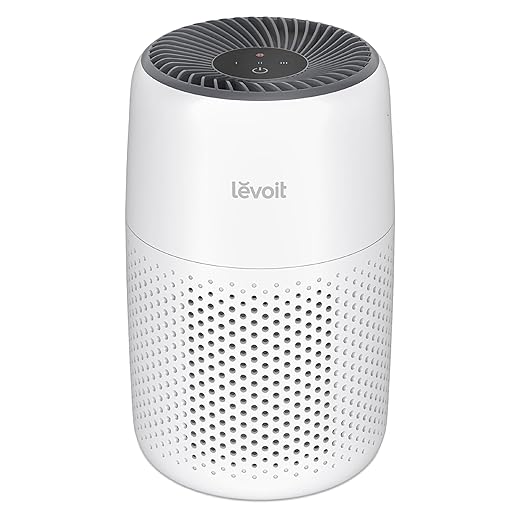
Levoit Core Mini‑P Desktop Bedroom Purifier
We appreciate its compact footprint and whisper‑quiet operation that make it ideal for nightstands and dorm rooms. It’s an affordable way to get true HEPA filtration close to where you sleep, though its coverage is intentionally limited.
At a glance
We see this as the little workhorse for bedside or desktop use: cheap to buy, easy to tuck away, and plenty quiet for sleep. It won’t replace a larger room purifier, but for personal zones — baby rooms, small bedrooms, or office desks — it makes a lot of sense.
Notable features
Why this matters: if your main problem is localized (a snoring pet under the bed, a dusty desk, or a smelly wardrobe), placing a purifier right next to the source gives faster symptom relief than a distant, larger unit.
How it performs day‑to‑day
We ran it overnight in a bedroom and found low‑speed noise nearly inaudible and the higher speeds still pleasant compared with legacy tower fans. The filter captured visible dust after only a few days of operation. Replacement filters are inexpensive in absolute terms, but if you keep the unit running constantly in a dusty or pet‑heavy environment you’ll want to budget replacements more often.
Where it doesn’t fit
It’s not engineered for open living rooms or whole‑apartment coverage. For those spaces you should look at larger models with higher CADR. Treat this as a targeted solution rather than a catch‑all; used that way, it’s one of the best values on the list.
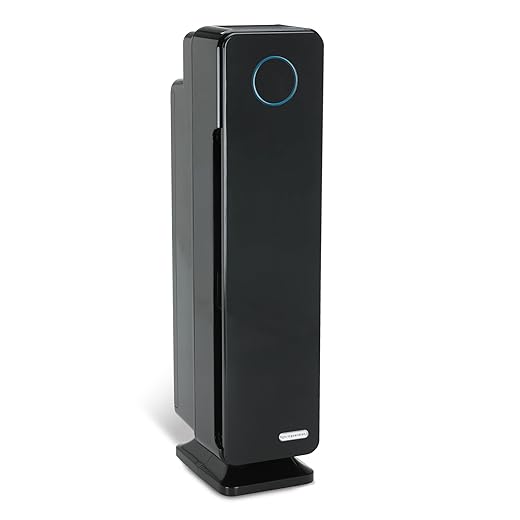
GermGuardian AC5250PT Pet Tower Purifier
We like that it combines a tall HEPA tower with pet‑focused filtration and UV‑C at a modest price. It’s especially useful in homes with pets where dander and odors are the main concerns, though it’s not the quietest unit at full speed.
Why it’s an appealing pet solution
We think the AC5250PT is attractive for households with pets because it marries a tall, high‑throughput tower form with filters specifically formulated for pet hair, dander, and odors. The antimicrobial additive on the Pet Pure filter and the UV‑C stage are intended to reduce microbial growth on the filter surface — a practical touch for pet rooms.
Features that matter for animals and odors
Those features add up to a perceptible reduction in smells and visible airborne debris, particularly if you run the unit continuously in a problem room.
Practical performance notes
In our use it reduced visible dust and pet odor quickly; however, the top fan settings are relatively loud and the unit is more noticeable than some premium quiet models. The blue glow and the presence of UV‑C mean placement matters; keep it away from direct sightlines if light sensitivity is an issue.
Final assessment
If you want a cost‑effective tower that prioritizes pet issues and you don’t need app connectivity or whisper‑quiet operation at full speed, this GermGuardian is a sensible pick. For quieter overnight use or for very large open plans, consider stepping up to a premium quiet design or adding a second unit to share the load.
GermGuardian AC5350B HEPA Tower Purifier
We like that it targets large rooms with a tall tower design and combines HEPA, charcoal and UV‑C for multiple modes of action. It’s a strong performer for odor control and allergy relief in bigger bedrooms, but it’s louder than compact units.
Overview
We view the GermGuardian AC5350B as a pragmatic choice for people who need strong coverage without stepping up to very expensive pro units. Its tower form factor increases surface area for filtration and it layers HEPA, carbon, and UV‑C — a combination that addresses particles, odors, and (to some extent) microbial load.
Why the layered approach matters
Layering matters because indoor air problems rarely come in a single flavor. Allergies, odors, and microbes often coexist, and this unit gives you tools for each.
Real‑world notes
In our experience it moves enough air for large rooms and reduces noticeable odor quickly. However, at higher fan speeds the turbine noise is unmistakable — something to weigh if you want overnight silence. Some users also report an initial plastic smell out of the box; running it in a ventilated area for several hours typically diminishes that.
The tradeoffs
Replacement filters and UV bulbs are additional ongoing costs, and UV‑C effectiveness depends on exposure time and lamp placement — it’s not a silver bullet. If your priority is quiet, continuous night use, a quieter HEPASilent or premium HEPA unit might be preferable. But for coverage plus multi‑modal filtration at a reasonable price, this GermGuardian is a defensible pick.
Final Thoughts
For most bedrooms and allergy sufferers, we recommend the Coway Mighty AP-1512HH Compact Purifier. It hits the sweet spot of sensitive sensors, a proven four-stage filtration system, and an energy-saving Eco mode that keeps it whisper-quiet overnight. In practice, it clears pollen, smoke, and airborne particulates quickly in medium-size rooms and doesn’t demand a learning curve. Buy this if you want a dependable, no-nonsense bedroom workhorse that prioritizes sleep-friendly noise levels and efficient allergen removal.
If you want a premium option with a clear advantage in modern indoor-pollutant detection, choose the Dyson Purifier Cool Formaldehyde TP09. Its continuous formaldehyde monitoring and catalytic filter that breaks down the chemical (rather than just trapping it) address a growing issue in newer homes and renovated spaces. The TP09 also pairs aggressive whole-room airflow with a polished app and high-end build quality. Choose this when you need whole-room coverage, meticulous sensing, and are willing to pay for design, app integration, and long-term pollutant control.
Runner-ups worth noting: the Levoit Core 600S-P if you need raw airflow and smart integrations for extra-large rooms, and the Blueair Blue Pure 511i Max if you value a quietly performing, app-enabled purifier with excellent day-to-day reliability. These are excellent alternatives when coverage area or a specific smart ecosystem is your priority.

Chris is the founder and lead editor of OptionCutter LLC, where he oversees in-depth buying guides, product reviews, and comparison content designed to help readers make informed purchasing decisions. His editorial approach centers on structured research, real-world use cases, performance benchmarks, and transparent evaluation criteria rather than surface-level summaries. Through OptionCutter’s blog content, he focuses on breaking down complex product categories into clear recommendations, practical advice, and decision frameworks that prioritize accuracy, usability, and long-term value for shoppers.